Understanding the Anatomy of a Junkyard: The Purpose Behind Cars on Wheel Rims
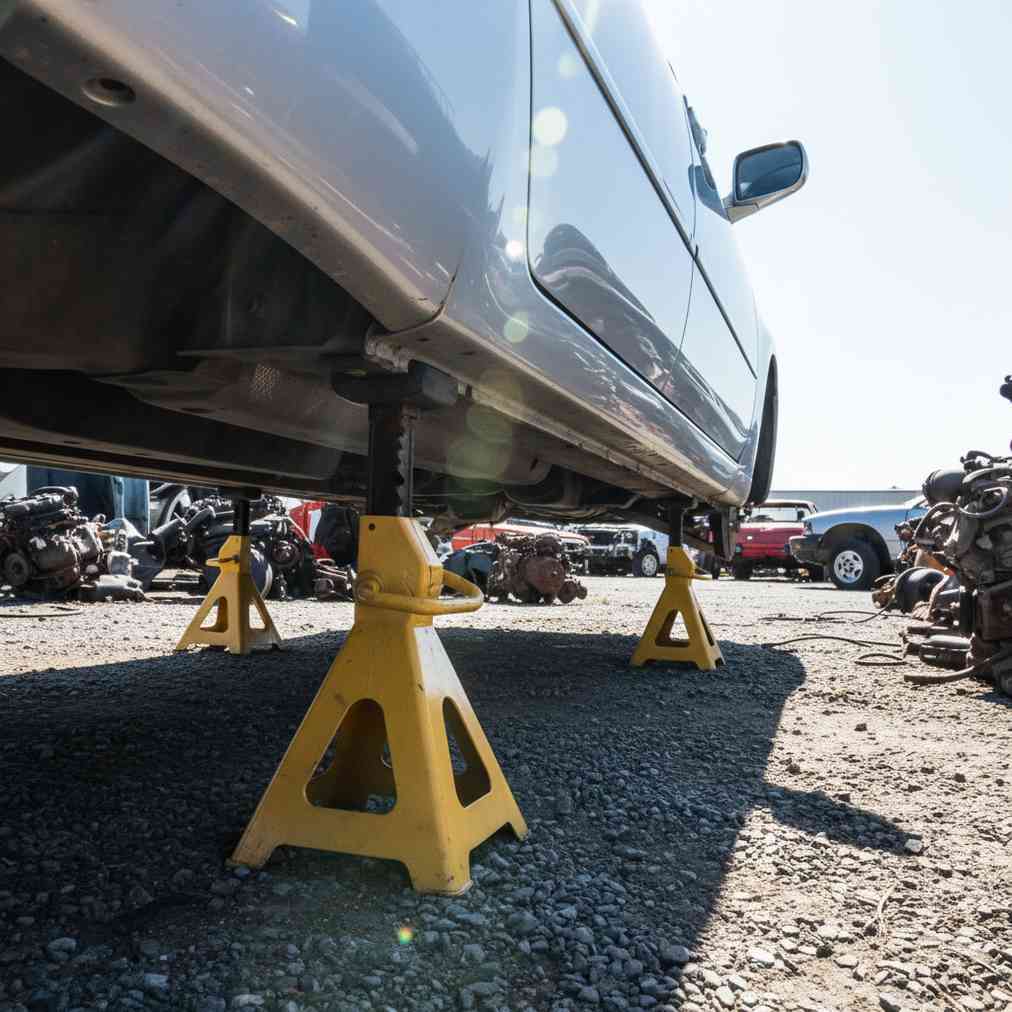
Walking through any self-service auto salvage yard, you’ll notice a peculiar sight: vehicles perched high off the ground, supported by wheel rims underneath their chassis. This isn’t an accident or laziness—it’s a carefully orchestrated system designed to maximize safety and accessibility for customers who want to pull their own parts. Understanding this practice reveals the thoughtful engineering behind what might initially appear chaotic.
The Strategic Elevation System
The practice of raising vehicles on steel wheel rims serves multiple critical functions in self-service yards. This elevation system allows customers to safely access undercarriage parts like mufflers, control arms, and exhaust systems without the need for personal jacks or lifting equipment.
- Enhanced Safety: Pre-lifted vehicles eliminate the risks associated with customers using unstable jacks
- Easy Access: Elevated cars provide clear access to underbody parts
- Standardized Height: Consistent elevation across the yard ensures uniform working conditions
- Cost-Effective Solution: Using old wheel rims as supports is economical and readily available
The Engineering Behind Rim Support Systems
The wheel rim support system isn’t as simple as randomly placing rims under cars. Many yards employ sophisticated approaches to ensure stability and safety:
| Support Method | Description | Stability Level |
|---|---|---|
| Single Rim Placement | Individual rims positioned under chassis points | Moderate |
| Welded T-Formation | Two rims welded together in T-shape for enhanced stability | High |
| Fixed Pipe Structures | Permanent concrete-anchored pipe supports | Maximum |
The most common approach involves welding two old rims together in a T-fashion to create a more stable base. This engineering solution provides the necessary height while ensuring the vehicle won’t shift or become unstable during part removal.
Safety Protocols and Industry Standards
Self-service salvage yards implement strict safety measures that complement the rim elevation system. These protocols protect both customers and businesses while maintaining efficient operations.
“The concern about cars being on simple stands is mitigated by the stability of the chosen support. The use of sturdy, often reinforced, wheel rims provides a solid base for safe part removal.”
Most yards prohibit customers from bringing hydraulic floor jacks onto the premises. This policy prevents potential accidents from improper jack usage and ensures all vehicles maintain their predetermined safe working height.
- No personal automotive jacks allowed
- Closed-toe shoes required
- Cutting torches banned for safety
- Pre-set vehicle heights maintained
The Challenge of Free-Spinning Wheels
One interesting side effect of the rim elevation system is that wheels often spin freely when vehicles are lifted. This creates a unique challenge for customers trying to remove wheels and tires, as traditional methods of bracing become ineffective.
Experienced yard visitors often employ creative solutions, such as jamming a bar between wheel bolts and the ground, or using specialized tools to counteract the free-spinning motion. Some progressive yards address this by removing wheels entirely and placing usable rims in the vehicle’s trunk or bed.
Self-Service vs. Full-Service Yard Operations
The rim elevation system is primarily found in self-service yards, where customers perform their own labor to access discounted parts. This model requires extensive safety measures and accessibility solutions that full-service yards don’t need.
| Yard Type | Customer Role | Elevation Needed | Cost Structure |
|---|---|---|---|
| Self-Service | Customer removes parts | Yes – rim supports | Lower prices |
| Full-Service | Staff removes parts | No – professional equipment | Higher prices |
Full-service yards can utilize professional hydraulic lifts and specialized equipment, while self-service operations must provide safe, accessible solutions for customers with varying skill levels. The rim system bridges this gap effectively.
Economic and Environmental Benefits
Beyond safety and accessibility, the wheel rim support system offers significant economic and environmental advantages. Using old aluminum rims—which are valuable scrap materials—as temporary supports before recycling maximizes resource utilization.
This approach aligns with modern data-driven recycling strategies that optimize material flow and minimize waste. Many yards track rim usage and recycling patterns to improve efficiency and profitability.
Modern Trends and Customer Experience
Today’s self-service yards are evolving beyond basic rim elevation systems. Many locations now offer enhanced customer experiences while maintaining safety standards:
- Online inventory searches to locate specific vehicles
- Tool lending programs with wheelbarrows and engine hoists
- Mobile apps for price checking and part identification
- Improved lighting and pathways for easier navigation
These improvements complement the traditional rim elevation system, creating a more user-friendly environment while preserving the cost advantages of self-service operations. For those looking to sell a junk car or find specific parts, modern yards offer unprecedented convenience.
Technical Considerations for Part Removal
Working with elevated vehicles requires specific techniques and considerations. The rim support system affects how customers approach different types of part removal:
| Part Type | Access Method | Special Considerations |
|---|---|---|
| Exhaust Systems | Direct underneath access | Check rim placement for clearance |
| Suspension Parts | Side and underneath approach | Ensure vehicle stability |
| Transmission Parts | Multiple access points needed | May require rim repositioning |
| Wheels/Tires | Standard removal with modifications | Account for free-spinning motion |
Industry Innovation and Future Developments
As the automotive recycling industry evolves, data science applications are beginning to influence how salvage yards operate. Advanced tracking systems help optimize rim placement and vehicle positioning based on customer access patterns and part popularity.
Some forward-thinking yards are experimenting with machine learning algorithms to predict which vehicles will be most frequently accessed, allowing for strategic placement and support system configuration.
Finding the Right Salvage Yard
When searching for quality parts, understanding the yard’s elevation system can indicate their commitment to safety and customer service. Well-maintained rim supports and organized vehicle placement often correlate with better overall operations and part quality.
Whether you’re looking for junkyards near me or researching specific yard policies, the rim elevation system serves as one indicator of a facility’s professionalism and customer focus.
Expert Tips for Navigating Elevated Vehicles
Experienced salvage yard customers have developed strategies for working efficiently with rim-supported vehicles:
- Bring appropriate tools: Include wedges or blocks for wheel stabilization
- Check stability first: Gently test vehicle stability before beginning work
- Plan your approach: Identify all needed parts before starting removal
- Work methodically: Remove lighter parts first to maintain balance
- Respect the system: Don’t attempt to adjust rim placement without yard permission
The Future of Salvage Yard Operations
As the automotive industry continues evolving with electric vehicles and advanced materials, salvage yard practices will adapt accordingly. However, the fundamental principle behind rim elevation—providing safe, accessible, cost-effective part removal—will likely remain constant.
The wheel rim support system represents decades of industry innovation and practical problem-solving. What appears to be a simple solution actually embodies sophisticated understanding of customer needs, safety requirements, and economic constraints. This seemingly humble system continues to enable millions of successful part transactions annually, supporting both professional mechanics and DIY enthusiasts in keeping vehicles running efficiently and affordably.
Understanding the anatomy of a junkyard reveals the thoughtful engineering behind every aspect of the operation. From the strategic placement of wheel rim supports to the comprehensive safety protocols, these facilities represent a perfect balance of accessibility, safety, and economic efficiency that has evolved over generations of automotive recycling.




Leave a Reply
You must be logged in to post a comment.