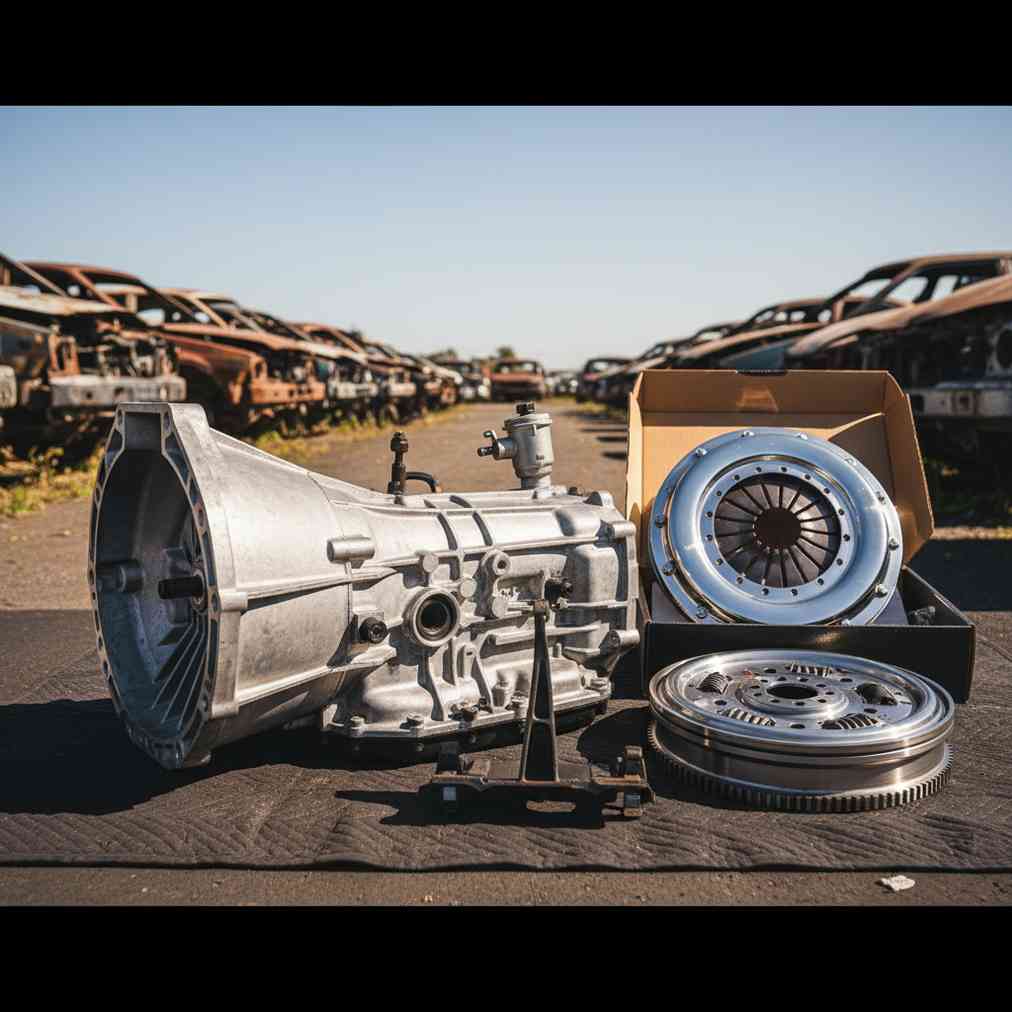
Converting Your Automatic to Manual: Why the Junkyard is Your Best Friend
Converting an automatic transmission vehicle to a manual setup is one of the most challenging automotive projects you can undertake. While it’s often considered not cost-effective for common vehicles, it becomes necessary for rare models or when you absolutely must have that manual transmission experience. The secret to making this project feasible? Sourcing parts from a junkyard.
Finding the right salvage yard near me can make the difference between a successful swap and a money pit. The key is thorough homework to ensure compatibility by checking casting numbers, production years, and VIN codes before you start pulling parts.
Essential Transmission and Drivetrain Parts for Your Manual Swap
The heart of your conversion lies in the transmission and drivetrain components. These are the heavy-duty parts that will make or break your project, and understanding what to look for can save you thousands of dollars.
| Component | Junkyard Sourcing Notes | New vs Used Recommendation |
|---|---|---|
| Manual Transmission | Must be correct type (hydraulic vs cable). Check for mainshaft play – any movement indicates bad input shaft bearing | Used acceptable if properly tested |
| Flywheel | Generally avoid used flywheels as they can be compromised internally | Buy new for reliability |
| Flywheel Bolts | CRUCIAL: Auto flexplate bolts are too short; must use manual-specific bolts | Always buy new bolts |
| Starter Motor | Manual starter has different shaft length than automatic version | Used acceptable from donor car |
| Axles/Half Shafts | Splines often differ between auto and manual applications | Used from compatible donor |
| Transmission Mounts | Upper bracket and front torque mount typically different. Check chassis mounting points | Aftermarket conversion mounts available |
When sourcing these parts, remember that compatibility is absolutely critical. A transmission from a similar year and engine code doesn’t guarantee it will work in your specific vehicle. Always verify part numbers and consult forums specific to your make and model.
Clutch and Hydraulic System Parts: The Heart of Manual Control
The clutch system is what separates manual transmissions from automatics, and getting these parts right is crucial for a successful conversion. Most experts recommend a combination of new and carefully selected used parts for this system.
- Clutch Master Cylinder: Pull with reservoir if possible from donor vehicle
- Clutch Slave Cylinder: Bolts directly to transmission, must match your specific setup
- Clutch Lines: Source ALL hard lines and soft lines, inspect carefully for rust or damage
- Clutch Fork: Essential for engaging the clutch mechanism
- Pilot Bushing/Bearing: Located in crankshaft end, often overlooked but critical
“Best bet is to get a brand new clutch kit, and find a 5spd flywheel. eBay is a good place to find the clutch kit, and either junkyard or search online forums for the flywheel.”
For the actual clutch components (disc, pressure plate, throw-out bearing), virtually all experts agree: buy new. Used clutch parts are a recipe for immediate failure and having to tear everything apart again.
Interior and Control Parts: Making It All Work Together
One of the most overlooked aspects of a manual transmission swap is the interior changes required. You can’t simply add a clutch pedal to your existing setup – the entire pedal assembly needs replacement.
| Interior Component | Why It’s Needed | Junkyard Tips |
|---|---|---|
| Complete Pedal Assembly | Even brake pedal is incompatible with manual setup | Must be from exact same model year and trim |
| Shifter Assembly | Includes handle, knob, boot, and base mechanism | Test all gates and ensure smooth operation |
| Shift Linkage | Connects shifter to transmission | Get all pins and hardware – the “bitch pin” is crucial |
| Console Trim | Automatic consoles often have wrong openings | May need specific manual transmission trim pieces |
“Unfortunately, even the brake pedal of your existing pedal assembly isn’t compatible and will need to be replaced.”
Electronics and ECU Considerations: The Brain of the Operation
Modern vehicles rely heavily on computer control, and your Engine Control Unit (ECU) knows whether your car came with an automatic or manual transmission. This creates several challenges that many DIYers discover too late in the process.
- ECU Replacement or Reflashing: Often required for proper operation
- Instrument Cluster: Optional upgrade to remove automatic transmission indicators
- Wiring Modifications: Reverse lights and starter safety systems need attention
- Bypass Safety Interlocks: Car must start without being in Park/Neutral
The wiring changes, while not expensive parts-wise, require careful attention to vehicle-specific diagrams. Modern cars have multiple safety systems that prevent starting unless the transmission is in Park or Neutral, and these need to be properly bypassed or modified to work with a manual transmission’s clutch safety switch.
What to Buy New vs. What to Source Used
Successful manual transmission swaps require a strategic approach to parts sourcing. Some parts are perfectly fine used, while others should always be purchased new for reliability and safety.
| Always Buy New | Good Used from Junkyard | Inspect Carefully |
|---|---|---|
| Clutch disc and pressure plate | Transmission case | Flywheel (surface condition) |
| Throw-out bearing | Pedal assembly | Clutch master/slave cylinders |
| Pilot bearing/bushing | Shifter assembly | Transmission mounts |
| Flywheel bolts | ECU (if compatible) | Axles/CV joints |
| All fluids | Wiring harnesses | Driveshaft (for RWD) |
“Junkyard torque converters and clutch/pressure plates should be avoided at all costs. It is a well spent $200-$500+ for a new torque converter or clutch/pressure plate.”
Hidden Challenges and Unexpected Needs
Every manual transmission swap seems to uncover unexpected requirements. Being prepared for these common “gotchas” can save you time and frustration:
- Chassis Modifications: Some vehicles have different mounting points welded for automatic vs manual
- Firewall Clearance: Clutch master cylinder may require firewall modifications
- Driveshaft Length: Often needs shortening or lengthening for proper fit
- Cooling System: Manual transmissions don’t need transmission cooling lines
- Exhaust Routing: May need modification to clear new transmission
These modifications often require fabrication skills and tools beyond basic mechanical work. Factor this into your project timeline and budget.
Junkyard Strategy: Finding the Perfect Donor Vehicle
The most efficient approach is often finding a complete donor vehicle rather than sourcing individual parts from multiple cars. This ensures compatibility and often provides parts you didn’t know you needed.
When searching for donor vehicles, focus on cars that are complete but have damage that doesn’t affect the drivetrain – front-end collisions, flood damage to interior, or vehicles with blown engines but good transmissions.
- Same Model Year Range: Stick within 2-3 years of your target vehicle
- Same Engine Code: Ensures transmission compatibility
- Similar Trim Level: Often determines available transmission types
- Complete Vehicle: Provides all the small parts and hardware you’ll need
Modern Trends and Considerations
The landscape of manual transmission swaps has evolved significantly with technological advances and changing market conditions. Modern data analysis tools now help identify parts compatibility more accurately than ever before.
Online forums and specialized aftermarket suppliers have made sourcing specific, hard-to-find items easier than relying solely on local junkyards, though this often increases overall costs compared to finding a complete donor car. The rise of online salvage yard inventories also makes it easier to locate specific vehicles before making the trip.
If you’re looking to sell a junk car to fund your manual transmission project, getting an instant quote can help you budget for the conversion costs.
Safety Considerations and Final Inspection
Before declaring your manual transmission swap complete, perform a comprehensive safety inspection. The complexity of this conversion creates multiple opportunities for critical failures if not done properly.
- Hydraulic System: Pressure test all clutch lines for leaks
- Mounting Points: Verify all transmission mounts are properly torqued
- Electrical Systems: Test all safety interlocks and starting systems
- Fluid Levels: Check both transmission fluid and clutch hydraulic fluid
- Linkage Operation: Verify smooth shifting through all gears
Remember that this modification may affect your vehicle’s insurance coverage and registration status. Check with your local DMV about any required inspections or documentation for modified vehicles.
Cost Analysis and Project Timeline
A realistic manual transmission swap budget should account for both expected and unexpected costs. While junkyard sourcing can significantly reduce parts costs, the labor intensity and potential for complications make this a substantial investment.
| Cost Category | Junkyard Route | New Parts Route |
|---|---|---|
| Transmission | $300-800 | $1,500-3,000 |
| Clutch Kit | $200-400 (new recommended) | $200-400 |
| Pedal Assembly | $50-150 | $300-600 |
| ECU/Wiring | $100-300 | $500-1,000 |
| Miscellaneous Parts | $200-500 | $600-1,200 |
| Total Range | $850-2,150 | $3,100-6,200 |
These estimates don’t include labor costs if you’re paying a shop, which can easily double or triple the total project cost. Most DIY swaps take 40-80 hours of work, spread over several weeks or months as you source parts and work through complications.
Conclusion: Is a Junkyard Manual Swap Worth It?
Manual transmission swaps sourced primarily from junkyards can be rewarding projects for dedicated enthusiasts, but they’re not for everyone. The complexity, time investment, and potential for unexpected complications make this a serious undertaking.
Success depends heavily on thorough research, patience in sourcing compatible parts, and realistic expectations about the scope of work involved. While junkyards provide the most cost-effective source for many required parts, the project’s complexity means that even with careful planning, you’ll likely encounter challenges that require creative problem-solving.
For rare or special vehicles where manual transmissions are highly desired, or for enthusiasts who enjoy complex automotive projects, a junkyard-sourced manual swap can provide immense satisfaction and significant cost savings compared to professional conversions or new parts.

Leave a Reply
You must be logged in to post a comment.