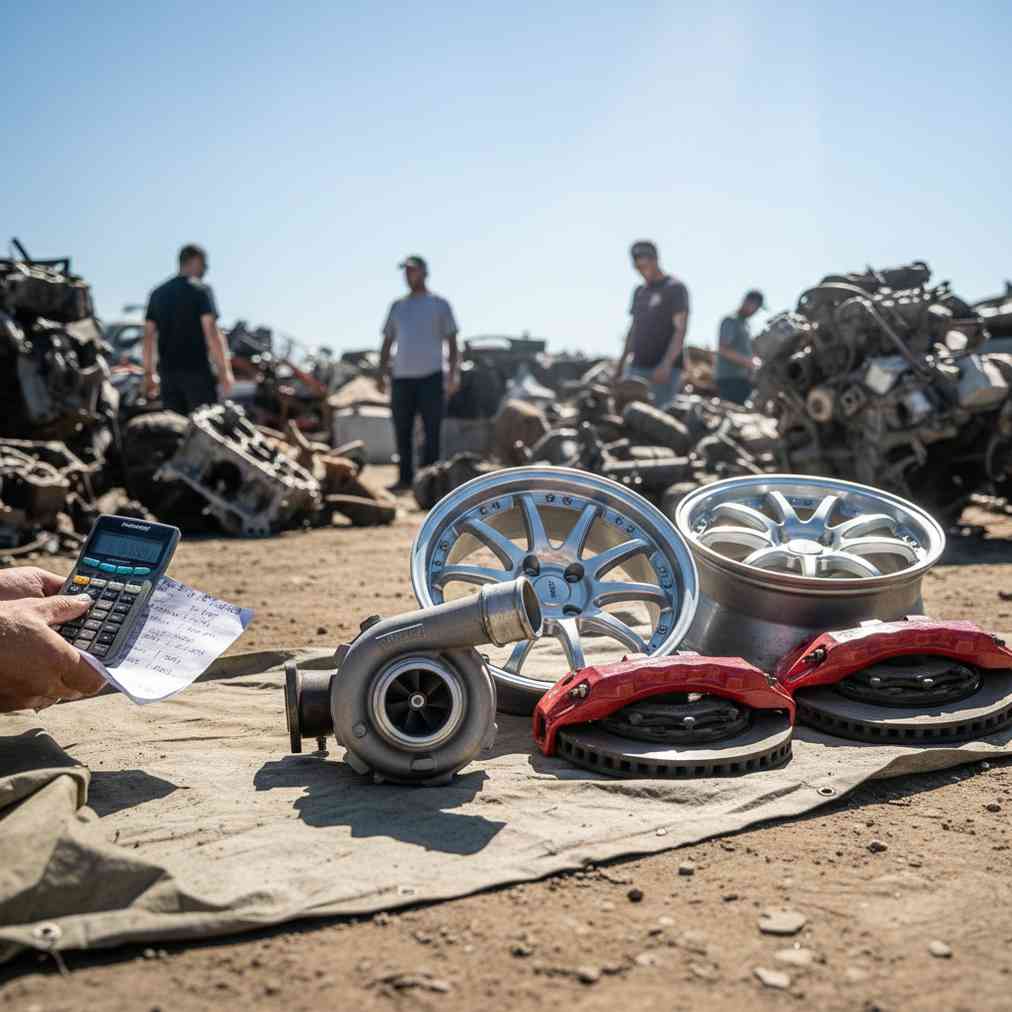
What is an “All You Can Carry” Sale?
The legendary “All You Can Carry” (AYCC) sale at auto salvage yards represents one of the most exciting opportunities for bargain hunters and DIY mechanics. These high-energy, limited-time events allow customers to pay a single flat fee and walk away with everything they can physically carry across a designated distance. While these sales have become increasingly rare compared to decades past, they remain highly anticipated events that can yield incredible value for those who come prepared.
Unlike traditional junkyards near me where you pay per part, AYCC sales challenge participants to maximize their physical capability and strategic planning. Success depends on understanding the rules, prioritizing high-value targets, and executing a well-planned strategy under time pressure.
Pre-Sale Preparation: Know the Rules and Plan Your Attack
The foundation of AYCC success lies in thorough preparation before you even step foot in the salvage yard. Every yard operates under different rules, and understanding these details can make the difference between triumph and disappointment.
Understanding the Fine Print
Rules vary significantly between salvage yards, making research essential:
| Rule Category | Typical Variations | Impact on Strategy |
|---|---|---|
| Entry Price | $50, $59.99, $60, $75 | Affects cost-benefit analysis |
| Carry Distance | 10-60 feet | Determines load size and weight limits |
| Carrying Aids | Banned vs. allowed wheelbarrows/straps | Fundamentally changes carrying strategy |
| Major Exclusions | Engines, transmissions, batteries, catalytic converters | Eliminates highest-value targets |
| Team Rules | Individual vs. team participation | Multiplies carrying capacity |
Prioritizing High-Value Targets
Since physical limitations constrain your haul, focus on parts offering the highest return on investment:
- Tier 1 Targets: Engines, transmissions, cylinder heads, complete brake kits (if rules permit)
- Tier 2 Targets: Complete interior parts (seats, dashboards), body panels (doors, fenders), electronic control units
- Tier 3 Targets: Smaller high-value items like intake manifolds, headlights, tail lights
According to industry research, participants who prioritize mid-range value items often achieve better overall returns than those attempting to carry single heavy parts like engines. Recent studies show that strategic planning significantly impacts sale outcomes.
Essential Gear and Preparation
Success at AYCC sales requires the right combination of tools, carrying aids, and personal preparation. Since most yards ban traditional carrying devices for the final distance, creativity becomes crucial.
Tool Requirements
- Basic removal tools: Socket sets, wrenches, screwdrivers
- Cutting tools: Reciprocating saw, bolt cutters
- Safety equipment: Heavy-duty work gloves, safety glasses
- Specialty tools: Pickle fork for ball joints, fluid drain pans
Creative Carrying Solutions
When traditional carrying devices are prohibited, successful participants employ ingenious solutions:
- Seatbelt straps: Cut from donor vehicles to create strong carrying straps
- Truck bed liners: Used as makeshift sleds or carrying platforms
- Team coordination: Multiple people sharing heavy items (if rules allow)
- Clothing modifications: Extra pockets or layers for small valuable parts
“One participant famously used a plastic truck bed liner, hung from poles, as a makeshift sling to carry multiple smaller parts worth over $800 in a single trip.”
Execution Strategy: The Carry
The moment of truth requires combining physical capability with strategic thinking. Your pre-planning pays off during these critical minutes.
The Load-Up Strategy
Successful participants follow a systematic approach:
- Staging area: Gather all parts near the exit point
- Weight distribution: Balance heavy items with lighter, valuable parts
- Carrying order: Secure largest items first, then fill remaining capacity
- Backup plan: Have secondary targets ready if primary goals fail
Physical Execution Tips
- Pace yourself: Don’t sprint the carrying distance
- Maintain stability: Keep the load balanced and secure
- Follow set-down rules: Understand if items can touch the ground
- Stay realistic: Don’t attempt more than your physical limits
Understanding hybrid research methods can help analyze successful strategies from past AYCC events.
Popular Target Parts and Their Value
Experienced AYCC participants consistently target specific parts that offer the best value-to-weight ratios:
| Part Category | Typical Weight | Retail Value Range | Difficulty Level |
|---|---|---|---|
| Body panels (doors/fenders) | 20-40 lbs | $200-600 | Medium |
| Interior seats | 30-60 lbs | $150-500 | Low |
| Cylinder heads | 40-80 lbs | $300-800 | High |
| Brake assemblies | 15-25 lbs | $100-300 | Medium |
| Electronic modules | 2-5 lbs | $100-400 | Low |
High-Value Small Parts Strategy
Smart participants often focus on smaller, easily bundled items that collectively offer substantial value:
- Tail lights and headlights: Often worth $50-200 each
- Electronic control units: Compact but valuable at $100-400
- Interior trim pieces: Light weight, decent resale value
- Switches and controls: Small size, consistent demand
For those looking to sell a junk car rather than buy parts, understanding these values helps determine if selling the whole vehicle or parting it out makes more financial sense.
Safety Considerations and Best Practices
AYCC sales create intense pressure to maximize value, but safety must remain the top priority. The competitive atmosphere and physical demands increase injury risks.
Personal Safety Equipment
- Heavy-duty work gloves: Essential for grip and protection
- Safety glasses: Protect against metal shavings and debris
- Steel-toed boots: Guard against dropped parts
- Back support belt: If attempting heavy items
- First aid kit: For minor cuts and scrapes
Physical Limitations and Team Strategy
Many successful participants emphasize the importance of knowing personal limits. Video documentation of AYCC events shows participants often joking about needing back surgery after attempting overly ambitious loads.
If rules permit team participation, consider these strategies:
- Divide responsibilities: One person removes, others carry
- Coordinate timing: Synchronize efforts for maximum efficiency
- Share entry costs: Multiple fees may still yield better overall value
Common Pricing and Rules Across Different Yards
Historical and recent examples reveal consistent patterns in AYCC sale structures:
| Price Point | Typical Distance | Common Exclusions | Carrying Aid Rules |
|---|---|---|---|
| $50-60 | 20-30 feet | Engines, transmissions | Muscle power only |
| $60-75 | 30-60 feet | + Batteries, bulk electronics | Wheelbarrows for transport only |
| $75+ | 60+ feet | + Catalytic converters | Ratchet straps allowed |
Research from recent methodology studies indicates that yards with longer carry distances often compensate with more permissive carrying aid rules.
Creative Success Stories and Inspiration
AYCC events generate legendary stories of ingenuity and determination. These examples illustrate the potential for creative problem-solving:
“One team successfully carried an entire car interior by having four people coordinate the removal of seats, dashboard, and door panels, then using cut seatbelts to bundle everything together for a single trip worth over $1,200 in parts.”
Record-Breaking Hauls
- The Engine Achiever: Solo participant carried a small 4-cylinder engine using makeshift straps
- The Bundle Master: Used truck bed liner to transport 47 separate small parts
- The Team Champions: Five-person team carried complete truck interior plus body panels
Video evidence from various AYCC events showcases these remarkable achievements and provides inspiration for future participants.
Post-Sale Considerations
Success doesn’t end when you complete the carry. Proper handling of your haul ensures maximum value from your AYCC investment.
Immediate Post-Sale Actions
- Inventory documentation: Photograph and catalog all acquired parts
- Condition assessment: Evaluate each part for damage during transport
- Storage planning: Arrange proper storage to prevent deterioration
- Return policy review: Understand yard policies for defective parts
Maximizing Your Investment
Transform your AYCC success into long-term value:
- Priority installation: Use most-needed parts immediately
- Resale opportunities: Market excess parts online or locally
- Future project planning: Organize parts for upcoming vehicle modifications
- Knowledge sharing: Document techniques for future AYCC events
The Future of “All You Can Carry” Sales
While AYCC sales have become increasingly rare, they remain popular marketing tools for salvage yards. Understanding current trends helps participants prepare for future opportunities.
Advanced research methodologies suggest that yards are experimenting with hybrid models, combining AYCC elements with modern inventory systems and online participation.
Emerging Trends
- Digital integration: Pre-registration and part reservation systems
- Specialized events: AYCC sales focused on specific vehicle types
- Safety enhancements: Improved yard layouts and carrying aid permissions
- Team competitions: Organized challenges with prizes for creative solutions
Conclusion: Making the Most of Your AYCC Experience
Success at “All You Can Carry” sales demands preparation, strategy, and execution. By understanding the rules, prioritizing high-value targets, bringing appropriate gear, and maintaining safety focus, participants can achieve remarkable returns on their investment.
Whether you’re seeking specific repair parts or hoping to stock up for future projects, AYCC events offer unique opportunities unavailable through traditional auto parts purchasing. The combination of physical challenge, strategic thinking, and potential for significant savings creates an experience that goes far beyond simple parts acquisition.
Remember that success isn’t measured solely in dollars saved, but also in skills learned, problems solved, and the satisfaction of creative problem-solving under pressure. The next time an AYCC sale appears at a salvage yard near you, approach it with preparation, respect for safety, and enthusiasm for the challenge ahead.
For those inspired by these strategies but looking to liquidate their own vehicle instead, consider exploring research-backed approaches to vehicle valuation and the various options available in today’s automotive recycling market.


Leave a Reply
You must be logged in to post a comment.