Essential Tools and Equipment for Engine Removal
Pulling your first engine from a self-service salvage yard near me requires careful preparation and the right equipment. Having the proper tools can mean the difference between a successful extraction and a frustrating, potentially dangerous experience.
Key Takeaways
Lifting Equipment – Your Most Critical Investment
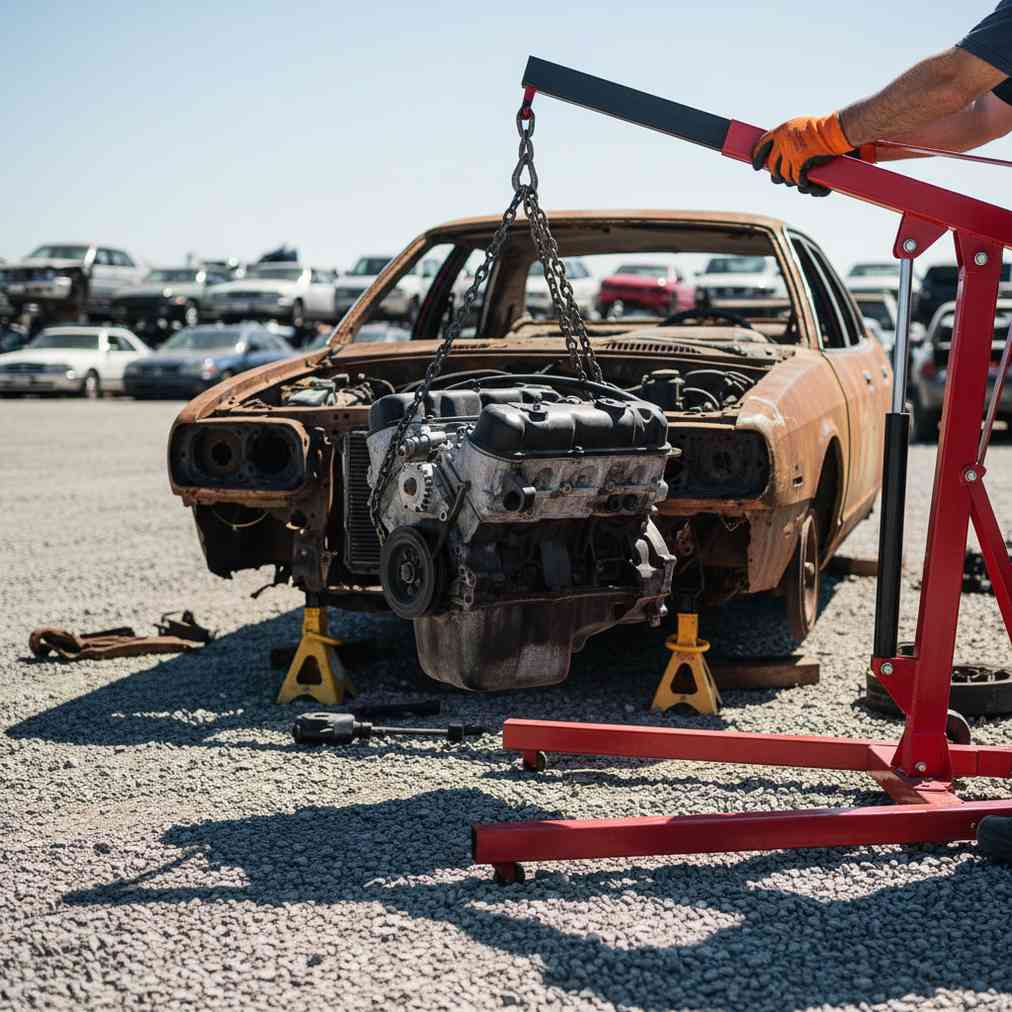
Engine hoists (often called “cherry pickers”) are absolutely essential for safely lifting engines out of vehicle bays. Most salvage yards rent these for a reasonable fee, typically ranging from $20-40 per day. Never attempt to lift an engine without proper equipment.
- Engine hoist – rated for at least 50% more weight than your target engine
- Engine leveler – controls angle and balance during extraction
- Lifting chains or straps – connects to designated engine lift points
- Load binders – secures engine during transport
| Tool Category | Essential Items | Size Range |
|---|---|---|
| Sockets & Wrenches | Complete metric and standard sets | 8mm – 32mm |
| Breaking Tools | Breaker bars, pipe extensions | 1/2″ and 3/4″ drive |
| Cutting Tools | Reciprocating saw, cutting blades | Various blade lengths |
| Fluids & Organization | Drain pans, parts trays, markers | 5+ gallon capacity |
Hand Tools and Accessories
A comprehensive toolkit is crucial for disconnecting the numerous connections that hold an engine in place. Professional mechanics recommend bringing more tools than you think you’ll need, as different manufacturers use varying bolt sizes and configurations.
- Socket sets in both metric and standard sizes
- Combination wrenches for tight spaces
- Breaker bars for stubborn, rusted bolts
- Various pliers (needle-nose, standard, locking)
- Pry bars for separating stuck parts
- Screwdrivers (flathead and Phillips, multiple sizes)
“Time-saving tools like a reciprocating saw can cut through unneeded hoses and wires quickly, but always check yard rules first – some facilities restrict certain tools for safety reasons.”
Critical Safety Precautions
Engine removal involves heavy loads, hazardous fluids, and working around vehicles that must be properly secured. Safety should always be your top priority, as accidents can result in serious injury or death.
Personal Protective Equipment (PPE)
Proper safety gear is non-negotiable when working in salvage environments. The combination of heavy parts, sharp edges, and automotive fluids creates multiple hazards that quality PPE can help mitigate.
- Steel-toe boots – protects feet from dropped parts
- Safety glasses or goggles – shields eyes from fluid splashes and debris
- Work gloves – provides grip and protects from cuts
- Long pants and long sleeves – protects skin from sharp edges
- Hard hat (recommended for overhead work)
Vehicle Security and Workspace Safety
Never trust hydraulic jacks alone to support a vehicle during engine removal. Always use properly rated jack stands and ensure the vehicle is on level, stable ground. Many salvage yards have specific protocols for vehicle security that you must follow.
Additionally, engine bays contain numerous hazardous fluids including engine oil, coolant, and brake fluid. Always drain fluids properly and have appropriate containers for collection and disposal.
Step-by-Step Engine Removal Process
The actual engine removal process follows a logical sequence that minimizes complications and ensures safe extraction. Rushing through any step can lead to damaged parts or personal injury.
Preparation and Documentation Phase
Before touching any tools, spend time documenting the engine bay configuration. Take extensive photos from multiple angles, showing how hoses, wires, and mechanical connections are routed. This documentation will be invaluable during installation.
- Disconnect the battery – prevents electrical shorts and surprises
- Photograph everything – multiple angles of all connections
- Drain all fluids – oil, coolant, transmission fluid
- Label connections – use masking tape and markers
Systematic Disconnection
Modern engines have dozens of connections that must be carefully disconnected. Working systematically prevents missed connections that can cause damage during lifting. Professional engine rebuilders recommend starting with the easiest connections and working toward more complex ones.
| Connection Type | Typical Quantity | Special Considerations |
|---|---|---|
| Vacuum Hoses | 10-20 | Label routing carefully |
| Electrical Connectors | 15-30 | Note connector colors/positions |
| Coolant Hoses | 4-8 | Have drain pans ready |
| Exhaust Connections | 2-4 | May require cutting rusty bolts |
Engine Mount Removal and Final Preparation
Engine mounts are typically the last mechanical connection between the engine and chassis. These mounts often require significant force to remove, especially in older vehicles where corrosion has set in. Take your time and use proper leverage rather than force.
Before attempting to lift, perform a final check by gently raising the engine slightly with the hoist. If anything binds or feels resistant, stop immediately and identify what’s still connected.
Lifting and Extraction Techniques
The actual lifting phase is where most beginners encounter problems. Understanding proper technique and having realistic expectations about timing will help ensure success.
Proper Hoist Setup and Connection
Locating proper lifting points on an engine is crucial for balanced, safe extraction. Most engines have designated lifting points or threaded holes specifically for this purpose. Never attempt to lift using random attachment points like valve covers or intake manifolds.
- Identify factory lift points – usually marked or obvious threaded holes
- Use proper lifting hardware – chains or straps rated for the load
- Check clearances – ensure adequate room for vertical extraction
- Have helpers ready – never attempt heavy lifting alone
The Extraction Process
Lift slowly and steadily, watching for any unexpected binding or resistance. It’s common for first-timers to miss a connection or two, so don’t be discouraged if you need to lower the engine and disconnect something you missed.
“Modern emission controls and electronics have made salvage engine swaps more complex compared to older vehicles. Expect the process to take longer than anticipated – rushing leads to errors and potential injury.”
Transport and Storage Considerations
Once your engine is free from the vehicle, proper transport and storage become critical. Engines are valuable investments, and damage during transport can quickly turn a good deal into an expensive mistake.
Securing for Transport
Most salvage yards provide engine dollies or carts for moving engines around the facility. For transport home, you’ll need a properly rated trailer or truck bed with adequate tie-down points. Professional haulers recommend using multiple tie-down points and checking security frequently during transport.
- Use an engine stand for long-term storage
- Cover openings – prevent debris from entering cylinders
- Plan lifting equipment for unloading at destination
- Document engine details – mileage, condition, VIN matching
Understanding Salvage Yard Policies and Pricing
Different salvage yards have varying policies regarding engine removal, tool usage, and pricing. Understanding these policies before you arrive can save time and prevent disappointment.
Common Yard Rules and Restrictions
Many yards prohibit certain tools like propane torches or hydraulic jacks for safety and insurance reasons. Some facilities require you to purchase engines before removal, while others allow inspection first. Call ahead to understand specific policies.
| Policy Area | Common Restrictions | Typical Alternatives |
|---|---|---|
| Tool Usage | No propane torches, limited power tools | Reciprocating saws often permitted |
| Engine Hoists | Must rent from facility | Daily rental rates vary |
| Fluid Disposal | Yard handles all drainage | Environmental fee charged |
| Payment Timing | Pay before removal required | Inspection period may be limited |
Pricing Factors and Negotiation
Engine prices at salvage yards depend on multiple factors including vehicle age, mileage, demand, and condition. Market research shows that prices can vary significantly between yards, making it worthwhile to call multiple locations.
Some yards offer removal services for an additional fee, which can be cost-effective when you factor in tool rental and time investment. This option is particularly appealing for first-timers who want to learn the process without the full responsibility.
Common Mistakes and How to Avoid Them
Learning from others’ mistakes can save you significant time, money, and frustration. Here are the most common errors first-time engine pullers make and strategies to avoid them.
Preparation Mistakes
- Inadequate tools – bringing incomplete socket sets or wrong sizes
- Poor documentation – failing to photograph connections adequately
- Underestimating time – rushing leads to mistakes and injuries
- Ignoring yard rules – not calling ahead to understand policies
- No backup plan – what to do if extraction becomes impossible
Safety and Technique Errors
Safety mistakes can have serious consequences, from minor injuries to fatal accidents. The most dangerous assumption is thinking that “just this once” shortcuts won’t matter. Professional mechanics emphasize that every safety rule exists because someone was seriously injured ignoring it.
“Never drink alcohol while wrenching, as reflexes and judgment are impaired. Do not rush the process; methodical work prevents accidents and broken parts.”
When to Consider Professional Removal
While pulling your own engine can be rewarding and educational, certain situations make professional removal the smarter choice. Understanding when to call in experts can save money in the long run.
Complexity Factors
Modern vehicles with extensive electronics, all-wheel drive systems, or unusual engine configurations may require specialized knowledge and tools. Industry studies indicate that engines from luxury vehicles often have additional complexity that can challenge even experienced DIYers.
- Electronic integration – extensive wiring and control modules
- Access limitations – engines in tight spaces or unusual positions
- Specialized fasteners – requiring tools you don’t own
- Time constraints – when yard policies limit working time
Cost-Benefit Analysis
Factor in tool rental, time investment, and potential complications when deciding between DIY and professional removal. Many yards offer engine removal services for $200-500, which can be competitive when you consider all costs involved in self-removal.
If you’re considering selling your old vehicle for cash to fund this project, professional quotes can help you understand the total investment required for your engine swap project.
Future Trends in Salvage Engine Removal
The automotive landscape is changing rapidly, with implications for salvage operations and engine availability. Understanding these trends can help you plan future projects and investments.
Electric Vehicle Impact
As electric vehicle adoption accelerates, traditional internal combustion engines may become more scarce in salvage yards over the coming decades. Current projections suggest this transition will create both challenges and opportunities for DIY enthusiasts.
However, the immediate impact is minimal, as most vehicles entering salvage yards today are still traditional internal combustion engine vehicles. The transition timeline means plenty of conventional engines will remain available for years to come.
Technology and Tool Evolution
Emerging technologies like augmented reality guidance systems and improved diagnostic tools are beginning to appear in professional salvage operations. These tools may eventually become available to DIY enthusiasts, making engine removal more accessible to beginners.
Advanced scanning and inventory systems are also improving part availability information, making it easier to locate specific engines and verify their condition before visiting salvage yards.
Conclusion: Your Engine Pulling Journey
Successfully pulling your first engine from a salvage yard requires careful planning, proper equipment, and strict attention to safety. While the process can seem overwhelming initially, breaking it down into manageable steps makes it achievable for most DIY enthusiasts.
Remember that this is a skill that improves with practice. Your first engine removal will likely take longer and feel more challenging than subsequent attempts. Focus on safety first, take your time, and don’t hesitate to ask yard personnel for guidance when needed.
The knowledge and experience gained from this hands-on learning will serve you well in future automotive projects. Whether you’re building a hot rod, restoring a classic, or simply keeping an older vehicle running, understanding engine removal opens up new possibilities for affordable automotive enthusiasts.



Leave a Reply
You must be logged in to post a comment.