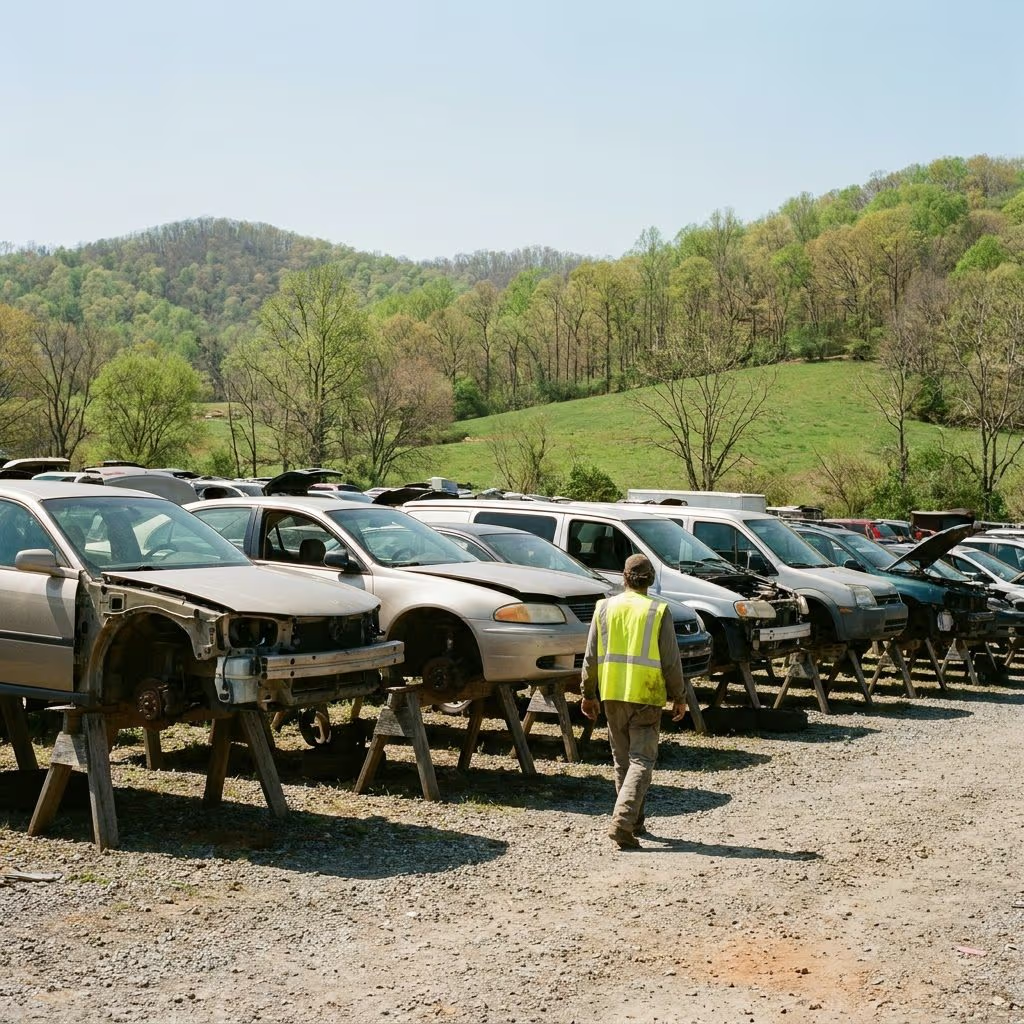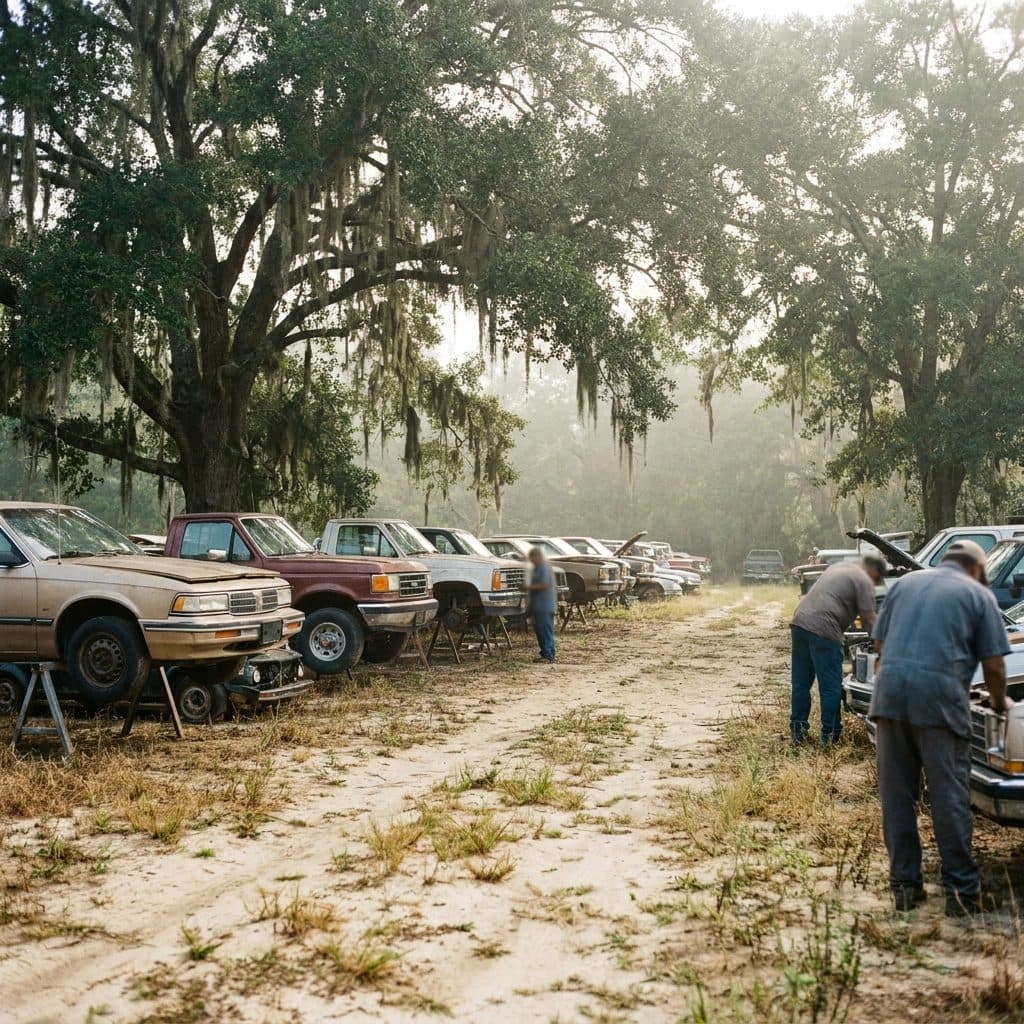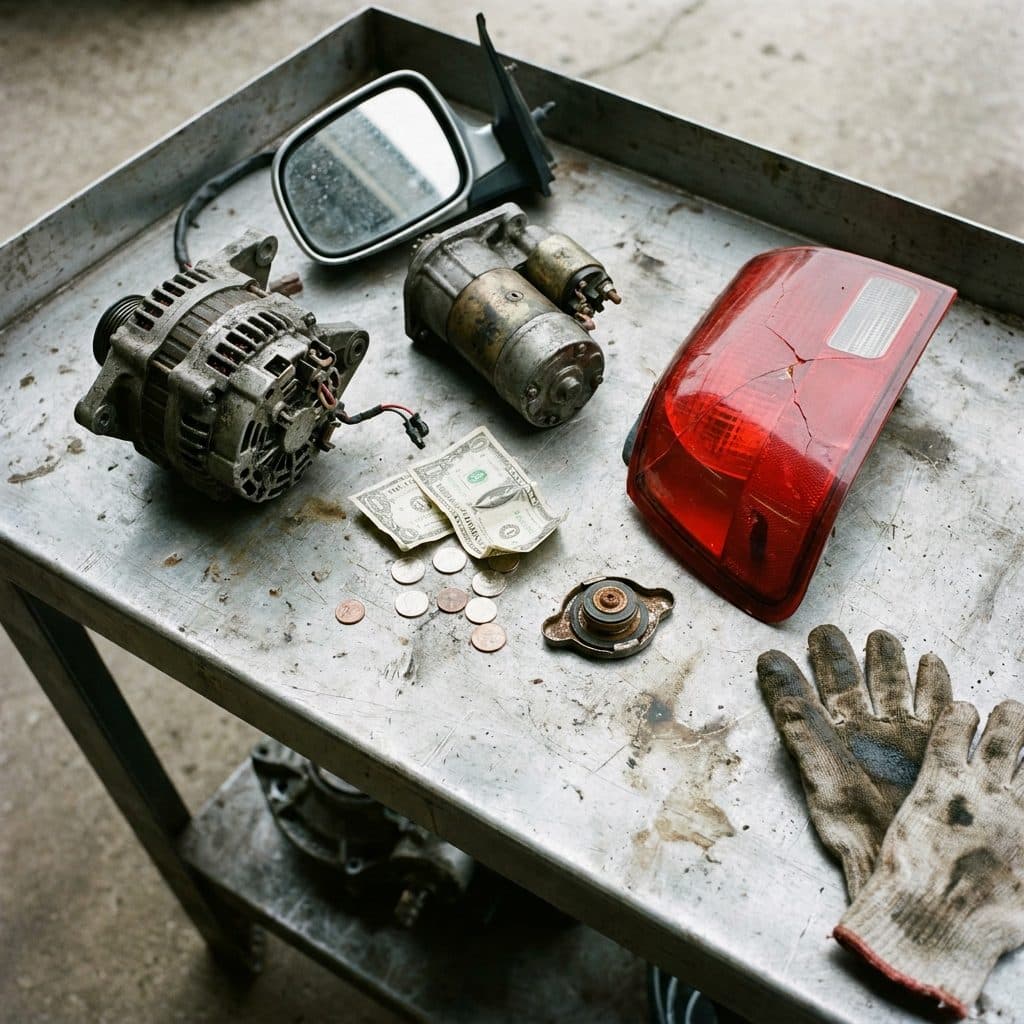
Short answer: A self-service junkyard charges one flat price for each kind of part, whatever car it comes off. An alternator cost between $26.00 and $35.45 on the eight price lists we read, before the core charge. Most operators publish the list on their website, by location. Three things are added to the listed price: a core charge, an environmental fee at some yards, and sales tax. The gate fee is separate.
Last checked: September 29, 2026. Every price is from the operator's own price list page, which we opened on that date. Fees and refund terms are from the same websites. This article replaces a 2025 version.
Where are the official junkyard price lists?
| Operator | Official price list | Alternator | Another example |
|---|---|---|---|
| Pick Your Part | pyp.com/prices, by yard | $31.00 plus $10.00 core, Anaheim | Starter $35.00 plus $10.00 core |
| Pick-n-Pull | picknpull.com/part-pricing, by yard | $32.99 plus $9.99 core, Columbus, Ohio | Search the list by part name |
| Pull-A-Part | pullapart.com parts pricing, by yard | $26.95 plus $3.29 fee and $9.25 core, Montgomery | Starter $27.55 plus $3.37 fee and $8.25 core |
| U-Pull-&-Pay | upullandpay.com parts pricing, by yard | $26.95 plus $3.29 fee and $9.25 core, Denver | Starter $27.55 plus $3.37 fee and $8.25 core |
| Harry's U-Pull-It, Pennsylvania | wegotused.com/price-list | $33.80 plus $5.00 core | Starter $29.90 plus $5.00 core |
| U Pull It Davie, Florida | upullitdavie.com/prices | $35.45 plus $10.00 core | Radiator $41.19 plus $13.00 core |
| U Pull-It, Nebraska and Iowa | upullitne.com/parts-pricelist | $30.00 plus $7.00 core | Complete engine $550.00 plus $100.00 core |
| Barry's U Pull It, Alabama and Mississippi | barrysupullit.net/part-pricing | $26.00 plus $5.00 core | Radiator $51.00 plus $9.00 core |
| Wrench-A-Part, Texas | wrenchapart.com price lists, by yard | Not shown when we checked | 2% environmental fee on each sale |
All prices were read on September 29, 2026. Every page in the table loaded that day. The Wrench-A-Part page opened and listed its seven yards, but the part prices did not appear in the page when we read it, so we quote none.
The chains price by location, so the figure for Anaheim or Columbus is not a promise for your yard. Pick your yard on the chain's price page before you go. We keep links to more lists on our own junkyard price list page.
How does flat pricing work?
The yard keeps one list. A door is a door and an alternator is an alternator, whether it comes off a ten-year-old luxury sedan or a twenty-year-old compact. Pull-A-Part states it on its price page: each specific part has the same price regardless of make, model or year.
That has two consequences. Parts for expensive cars are a bargain, because the list does not know what the car cost new. And there is nothing to negotiate, because the cashier charges what the list says. Haggling and bulk discounts, which an older version of this article suggested, do not apply at a flat-price yard.
Full-service yards work differently. Staff pull the part, and each one is priced on its age, condition and demand, so there is no list and you ask for a quote. Our comparison of the two kinds of yard explains when each is worth it, and parts search covers yards that price part by part.
What is a core charge?
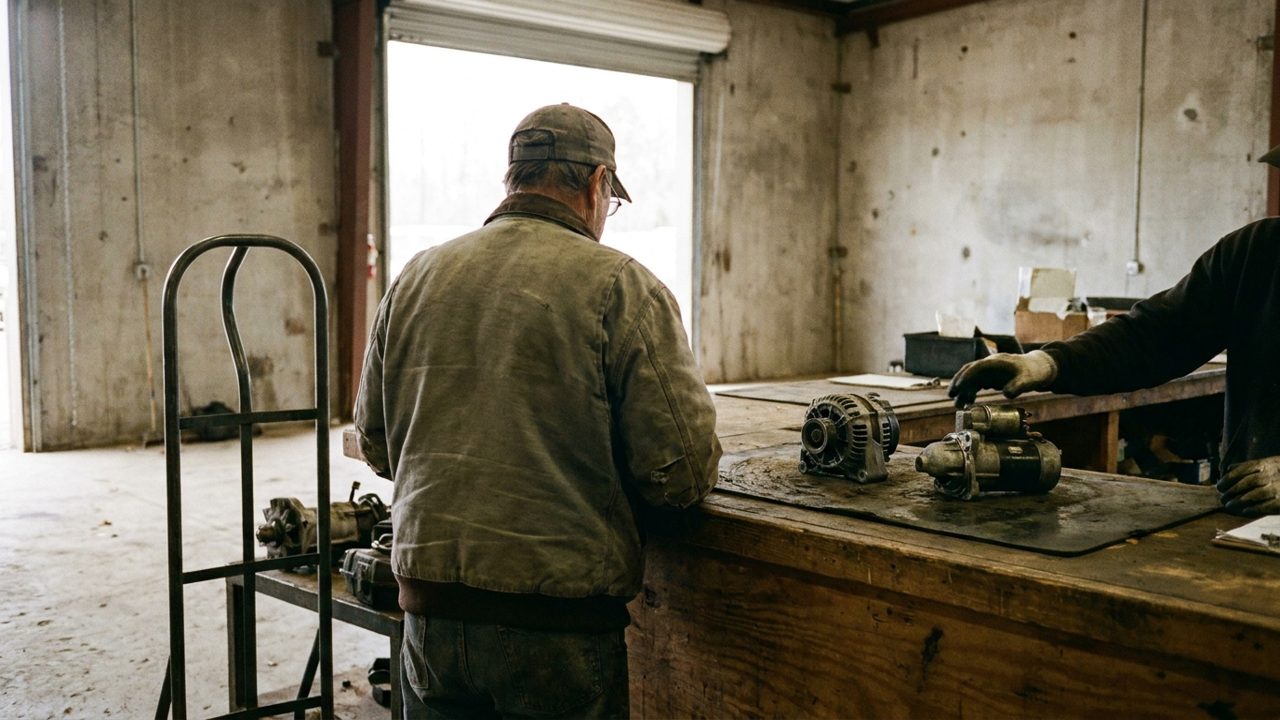
A core charge is a deposit on parts that can be rebuilt or recycled, such as alternators, starters, radiators, engines and transmissions. You pay it with the part and get it back when you hand in your old one. If you bring the old part with you, some yards do not collect the deposit at all.
| Operator | What it says about core refunds |
|---|---|
| Pick-n-Pull | Cash refund within 30 days when you return the core item or a matching one to the store where you bought it |
| Pull-A-Part and U-Pull-&-Pay | The price list labels it a cash refundable core charge |
| EZ Pull N Pay | Refunded as store credit if the old part comes back within 14 days. No deposit if you turn in the old part when you buy |
On the lists above, the core on an alternator ran from $5.00 to $10.00, and the core on a complete engine at U Pull-It was $100.00. Ask how long you have and whether the refund is cash or credit. Our post on core charges goes further.
What are environmental fees and entry fees?
An environmental fee is a charge the yard adds to cover draining fluids and disposing of batteries, tires and refrigerant. It is handled in three ways on the lists we read.
| Operator | How the fee is charged |
|---|---|
| Pull-A-Part and U-Pull-&-Pay | An environmental and services fee is shown for each part, $3.29 on a $26.95 alternator |
| Wrench-A-Part | 2% of each transaction, not refundable |
| Barry's U Pull It | A $2.00 environmental fee appears as a line on the price list |
| Pick Your Part and U Pull It Davie | The list says prices do not include taxes or environmental fees where they apply |
The entry fee is what you pay at the gate, whether or not you buy anything. Pull-A-Part in Montgomery charges $2, or $1 for members of its VIP club. U Pull-It in Nebraska and Iowa charges $3. Many yards do not publish the gate fee, so ask when you call.
Optional warranties are the last add-on. Pick Your Part prices a 90-day guarantee for each part, $9.30 on the Anaheim alternator, and shows a total with it included. You can decline it. Pull-A-Part's totals include a 30-day warranty at no charge, and its list shows an optional Part Assurance Plan at extra cost.
Pull-A-Part's own three-minute walk-through of buying parts at its yards, published February 2019. It is the company's video.