Navigating the Yard: How to Find Your Make and Model Quickly
Understanding How Salvage Yards Organize Their Inventory Walking into a large self-service auto salvage yard can feel overwhelming, especially when you're faced with hundreds or thousands of vehicles spread across acres of land. However, successful salvage yards near me don't randomly scatter their inventory. These businesses rely on systematic organization to help customers efficiently locate [...]
Article image
Understanding How Salvage Yards Organize Their Inventory
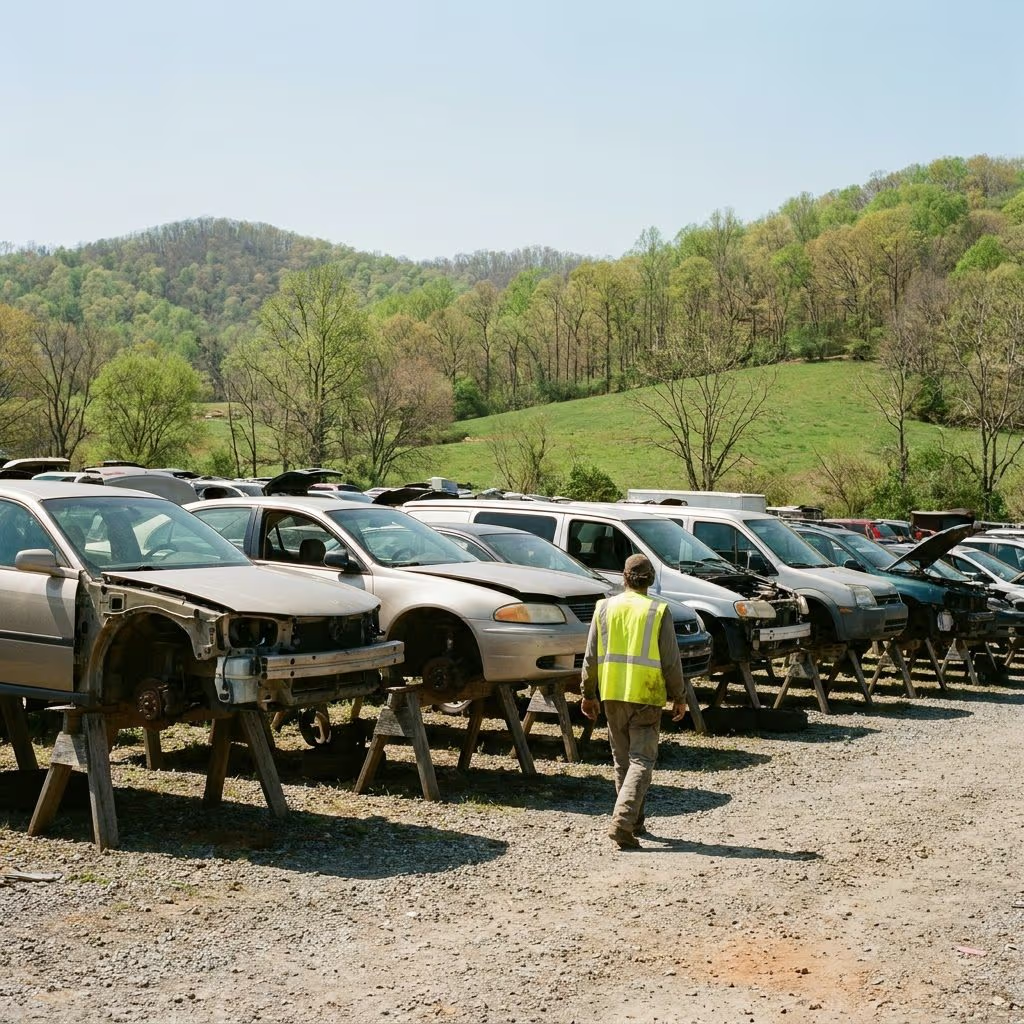
Walking into a large self-service auto salvage yard can feel overwhelming, especially when you're faced with hundreds or thousands of vehicles spread across acres of land. However, successful salvage yards near me don't randomly scatter their inventory. These businesses rely on systematic organization to help customers efficiently locate the parts they need while maximizing their own operational efficiency.
Most profitable salvage yards employ a logical structure that revolves around vehicle classification, making your search more manageable once you understand the system.
Primary Organizational Systems Used by Large Salvage Yards
Large, well-established salvage yards typically organize their inventory using one or more of these proven methods:
Organization by Make and Manufacturer
This represents the most common organizational structure you'll encounter at self-service yards. Vehicles are grouped together by manufacturer, creating distinct sections for:
General Motors (GM) – Including Chevrolet, Cadillac, GMC, and Buick
Ford Motor Company – Ford and Lincoln vehicles
Chrysler/Stellantis – Dodge, Chrysler, Ram, and Jeep
Import Section – Toyota, Honda, Nissan, Hyundai, and other foreign manufacturers
European Imports – BMW, Mercedes-Benz, Volkswagen, and Audi (sometimes separated from Asian imports)
This system allows customers looking for specific brands to navigate directly to the appropriate section, significantly reducing search time.
Secondary Organization by Vehicle Type
Within manufacturer sections, many yards further organize vehicles by type:
Vehicle Category
Typical Examples
Full-Size Trucks
F-150, Silverado 1500, Ram 1500
Compact Cars
Civic, Corolla, Sentra
Mid-Size SUVs
Explorer, Tahoe, 4Runner
Vans
Express, Transit, Caravan
Fresh Inventory Designation
Smart salvage yards designate specific rows or areas for their newest arrivals, often called “fresh inventory” sections. These vehicles offer several advantages:
Highest likelihood of having intact, usable parts
Less picked-over inventory
Better condition interior and exterior parts
More complete engine and transmission assemblies
When researching effective navigation strategies, prioritizing fresh inventory areas can dramatically improve your success rate.
Pre-Visit Digital Reconnaissance Strategy
The most successful salvage yard visits begin before you leave home. Modern technology has revolutionized how customers can prepare for their trips to the yard.
Utilizing Online Inventory Systems
Many established yards now offer online inventory systems that provide real-time or near-real-time updates on available vehicles. Popular chains like LKQ Pick Your Part Houston and Pull-A-Part Knoxville maintain comprehensive online databases.
When using these systems effectively:
Search by your vehicle's make, model, and year
Note the inventory date – newer listings indicate fresh arrivals
Check multiple locations if you have access to several yards
Save or print relevant inventory information for reference
Mapping Your Route
Some progressive salvage yards provide online maps of their facilities. These digital resources allow you to:
Identify the general location of specific manufacturer sections
Plan an efficient route through the yard
Locate facilities like restrooms, tool rental, and checkout areas
Understand the yard's layout before arrival
Staff Consultation
Don't underestimate the value of calling ahead. Experienced yard staff can provide insights about:
Recent arrivals matching your needs
Specific row locations for your target make and model
Current promotions or discount days
Special tools you might need for your particular part removal
On-Site Navigation and Route Planning
Once you arrive at the salvage yard, your preparation pays dividends. However, successful navigation requires adapting your digital research to the physical reality of the yard.
Obtaining Physical Maps and Information
Upon check-in, always ask staff for:
A physical map of the yard layout
Information about recent arrivals
Directions to your specific make/model section
Updates on any temporary changes to organization
Many yards like U-Pull-and-Pay Orlando provide detailed maps that show not just manufacturer sections, but also service areas and emergency stations.
Strategic Route Planning
Develop your route using this priority system:
Priority Level
Target Area
Rationale
1st Priority
Fresh inventory matching your make/model
Best parts availability
2nd Priority
Main section for your vehicle's manufacturer
Highest concentration of compatible vehicles
3rd Priority
Related manufacturers (platform sharing)
Cross-compatibility opportunities
Creating Your Own Navigation System
If no official map is available, create a crude mapping system using:
A notebook to track aisle numbers and manufacturer locations
Smartphone photos of key landmarks and section markers
Notes about “hot spot” vehicles with desirable parts
Marking your path to avoid retracing steps unnecessarily
This systematic approach proves especially valuable at larger facilities like those found when searching for junkyards near me in metropolitan areas.
Advanced Target Identification Techniques
Once you've reached the appropriate section, efficiently identifying your target vehicle becomes crucial. Experienced salvage yard visitors employ several visual recognition techniques to quickly spot promising candidates.
Reading Vehicle Identification Tags
Most organized salvage yards tag their vehicles with essential information. These tags, typically attached to the rear quarter panel or windshield, display:
Year, make, and model – For quick verification
Arrival date – Indicating freshness of inventory
Row and space number – For inventory tracking
Special codes – Indicating damage type or part availability
Understanding these tags allows you to verify compatibility without approaching every vehicle, saving valuable time and energy.
Assessing Vehicle Condition from Distance
Develop your ability to quickly assess vehicle condition by looking for these indicators:
Pro Tip: Vehicles with rear-end damage often have excellent front-end parts, while front-end collision vehicles may have pristine rear parts and interior items.
Identifying High-Value Indicators
Learn to spot signs that indicate a vehicle may have superior parts:
Aftermarket upgrades – Performance wheels, upgraded brakes, or custom parts
These “gem” vehicles often contain parts in significantly better condition than typical salvage yard inventory.
Maximizing Efficiency with Technology Integration
Modern salvage yard navigation increasingly relies on technology integration. Advanced research methodologies can enhance your yard experience significantly.
Using Mobile Apps and Digital Tools
Several digital tools can enhance your salvage yard experience:
Yard-specific mobile apps – Real-time inventory and location mapping
Part compatibility databases – Verify fitment before removal
Digital measuring tools – Ensure parts will fit your application
Price comparison apps – Compare salvage yard prices with new and aftermarket options
Leveraging Social Media and Community Resources
Connect with other salvage yard enthusiasts through:
Facebook groups dedicated to specific yards or regions
Reddit communities focused on automotive DIY and salvage yard finds
Local car enthusiast forums with salvage yard tips
YouTube channels featuring salvage yard walkthroughs and tips
Safety Considerations and Best Practices
Efficient navigation shouldn't compromise safety. Understanding proper salvage yard protocols ensures both personal safety and successful part acquisition.
Essential Safety Equipment
Always bring appropriate safety gear:
Safety Item
Purpose
Why Essential
Safety glasses
Eye protection
Debris, rust, and metal fragments
Work gloves
Hand protection
Sharp edges, hot surfaces, chemicals
Closed-toe shoes
Foot protection
Heavy parts, uneven terrain
Long pants
Leg protection
Scratches, cuts, chemicals
Navigation Safety Tips
Stay aware of your surroundings and other customers
Watch for unstable vehicles or stacked parts
Be cautious around vehicles on inclines or uneven ground
Avoid crawling under vehicles without proper support
Stay hydrated and take breaks, especially in hot weather
Common Navigation Mistakes to Avoid
Learn from common errors that can waste time and reduce success rates:
Planning and Preparation Errors
Skipping online research – Arriving without checking inventory
Forgetting tools – Not bringing appropriate removal equipment
Poor timing – Visiting during peak hours or adverse weather
Inadequate preparation – Not researching part compatibility beforehand
On-Site Navigation Mistakes
Random searching – Wandering without a systematic approach
Ignoring fresh inventory – Starting with older, picked-over sections
Tunnel vision – Focusing only on exact year/model matches
Poor documentation – Not recording successful finds for future reference
Seasonal Considerations and Optimal Timing
Understanding seasonal patterns and optimal timing can significantly improve your salvage yard success rate. Research indicates that certain times of year and specific days offer better opportunities for finding quality parts.
Best Times to Visit
Time Period
Advantages
Considerations
Weekday mornings
Fresh inventory, fewer crowds
Limited hours for working customers
After weather events
Insurance salvage influx
Higher competition for good parts
End of month
Inventory clearance, potential discounts
Lower overall inventory levels
Spring months
Winter damage vehicle arrivals
Popular time, more customers
Advanced Techniques for Experienced Visitors
Once you've mastered basic navigation, these advanced techniques can help you find rare parts and better deals:
Cross-Platform Part Hunting
Many automotive platforms share parts across different brands and models. Understanding these relationships expands your search possibilities:
GM Platforms – Parts often interchange between Chevrolet, GMC, Cadillac, and Buick models
Ford Family – Mercury and Lincoln often share Ford parts
Developing good relationships with salvage yard employees provides several benefits:
Advance notice of incoming inventory
Assistance locating specific parts
Insights about yard organization changes
Potential access to parts before they hit the yard floor
Making the Most of Your Salvage Yard Investment
Successful salvage yard navigation extends beyond just finding parts. Consider the total value proposition of your visit.
Maximizing Each Trip
Since salvage yard visits require time and effort, maximize each trip by:
Bringing a comprehensive shopping list of needed parts
Checking multiple vehicles for the same part to find the best condition
Grabbing small, inexpensive items you might need later
Taking photos of interesting finds for future reference
If you're also considering selling a vehicle, remember that many salvage yards like those found through our cash for junk cars services offer competitive prices for end-of-life vehicles.
Long-term Strategy Development
Develop a long-term approach to salvage yard visits:
Keep detailed records of successful finds and their locations
Track seasonal patterns at your local yards
Build relationships with other regular customers
Stay informed about yard policy changes and new locations
The Future of Salvage Yard Navigation
The salvage yard industry continues evolving, with technology playing an increasingly important role in customer navigation and part location. Understanding these trends helps you stay ahead of the curve.
Emerging Technologies
Several technological advances are reshaping the salvage yard experience:
RFID tracking – Real-time inventory management and location tracking
Mobile apps with GPS – Turn-by-turn navigation to specific vehicles
Augmented reality – Enhanced part identification and compatibility checking
AI-powered search – Intelligent matching of customer needs with available inventory
These developments, supported by advanced research methodologies, promise to make salvage yard navigation even more efficient in the coming years.
Conclusion: Mastering Your Salvage Yard Experience
Successfully navigating a salvage yard to find your make and model quickly requires a combination of preparation, strategy, and on-site execution. By understanding how yards organize their inventory, leveraging digital tools for pre-visit research, and employing systematic navigation techniques, you can dramatically improve your success rate while reducing time spent searching.
Remember that practice makes perfect. Each visit to your local salvage yards builds your knowledge and efficiency. Whether you're visiting major chains like Victory Auto Wreckers or Houston Auto Recyclers, the principles outlined in this guide will serve you well.
The key to salvage yard success lies in combining thorough preparation with systematic execution. By following these proven strategies and continuously refining your approach, you'll join the ranks of efficient salvage yard navigators who consistently find the parts they need at prices that make the effort worthwhile.
For those looking to find the best junk yards near me, remember that the most organized and customer-friendly facilities typically offer the best navigation experience and highest success rates for DIY automotive enthusiasts.