The Junkyard as a Classroom: How to Practice Repairs Risk-Free
Understanding The Junkyard as Your Personal Training Ground Learning to repair cars can be intimidating, especially when your daily driver is at stake. But what if you could practice risk-free? The junkyard classroom concept revolutionizes how aspiring mechanics and DIY car enthusiasts learn, offering hands-on experience without the pressure of potentially damaging a functional vehicle [...]
Article image
Understanding The Junkyard as Your Personal Training Ground
Learning to repair cars can be intimidating, especially when your daily driver is at stake. But what if you could practice risk-free? The junkyard classroom concept revolutionizes how aspiring mechanics and DIY car enthusiasts learn, offering hands-on experience without the pressure of potentially damaging a functional vehicle or incurring costly mistakes.
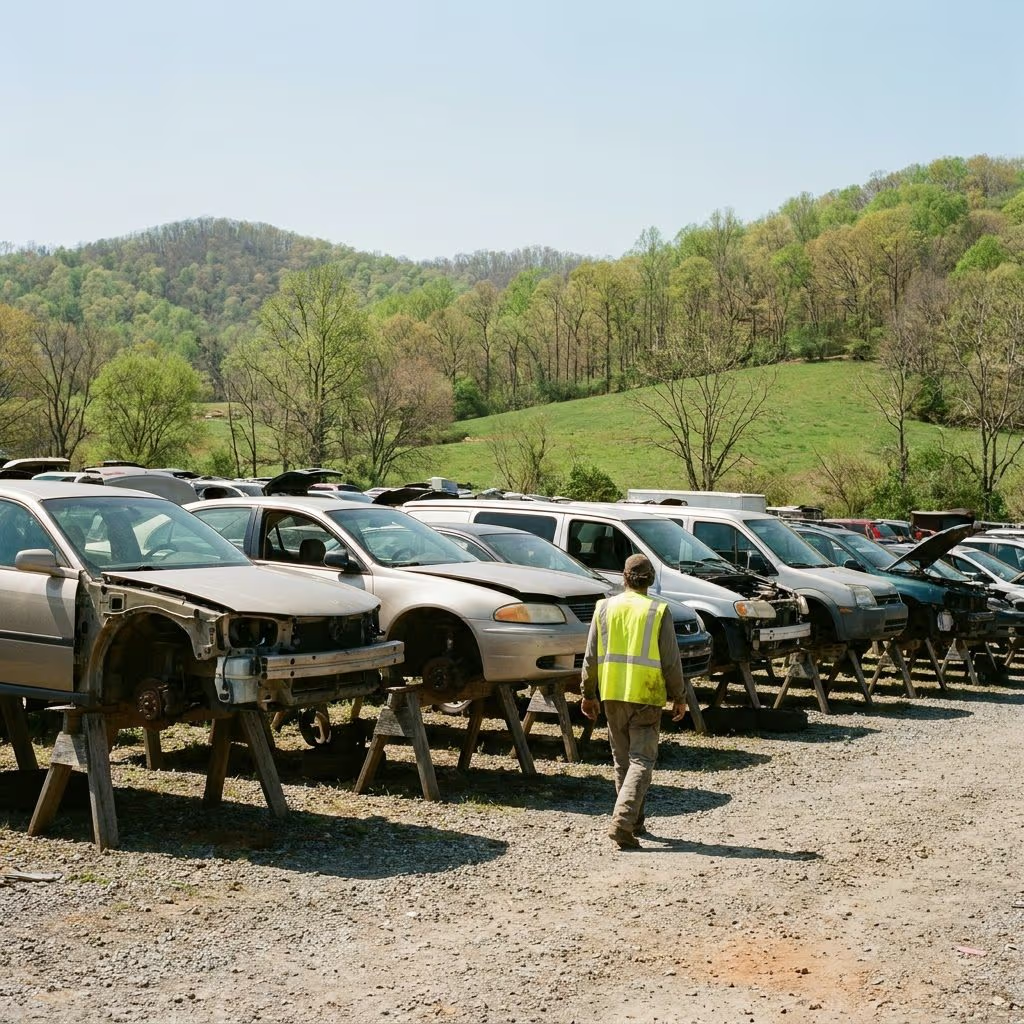
This innovative approach uses discarded cars at salvage yards near you as free or low-cost training models. The beauty of this method lies in its risk-free nature – if you break a bolt, strip a thread, or damage a part during removal, the consequences are minimal since the vehicle is destined for scrap anyway.
Why Junkyards Make Perfect Classrooms
Traditional automotive education often involves expensive equipment and limited hands-on time. Junkyard training eliminates these barriers while providing unparalleled benefits for learning automotive repair skills.
Zero pressure environment: Practice difficult procedures without fear of damaging a working vehicle
Physical familiarity building: Learn the actual relationship between parts and how they physically attach
Tool mastery: Gain experience with real tools in realistic conditions
Cost-effective learning: Entry fees often as low as $2 make it economical for repeated practice
Real-world scenarios: Encounter the same challenges you'll face on actual repairs
Essential Skills You Can Master at the Junkyard
The junkyard environment allows for focused practice on major automotive repairs that would be too risky to attempt first on your own vehicle.
Engine Top-End Work
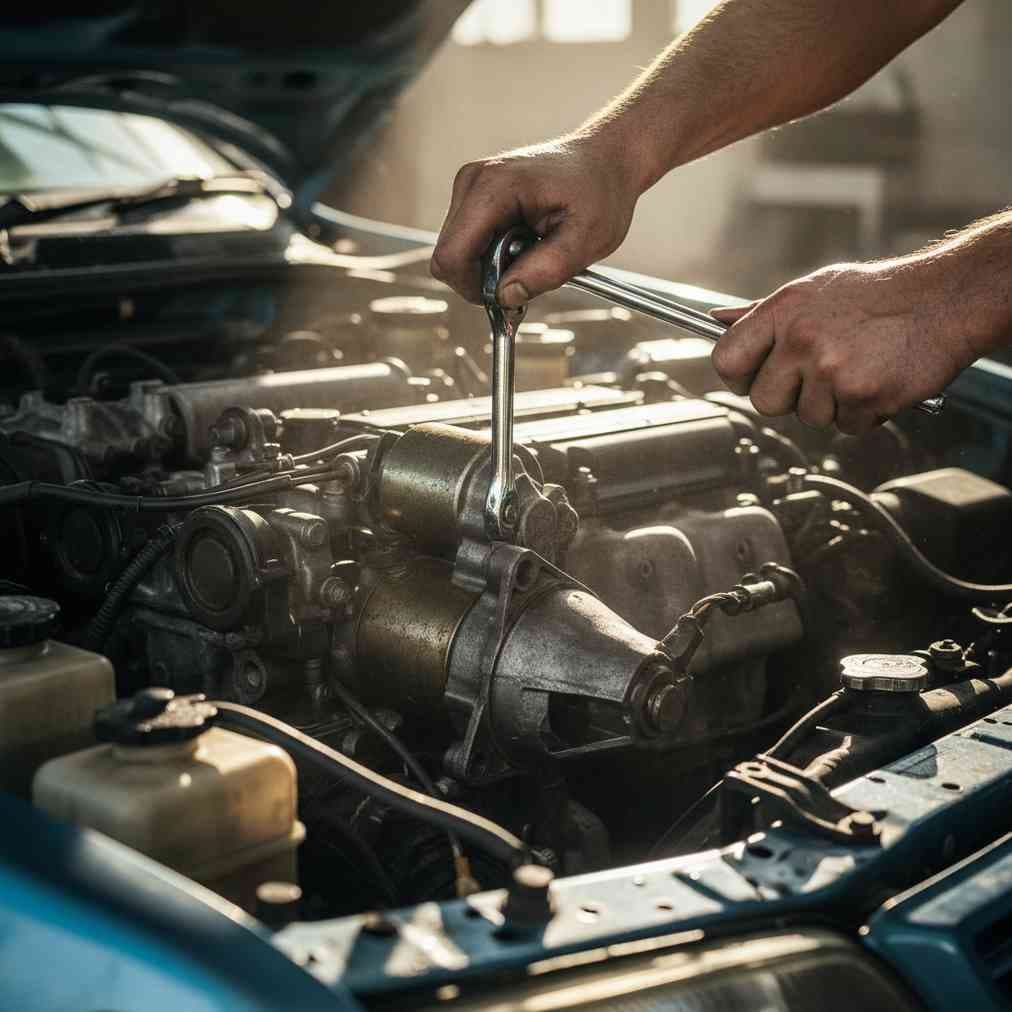
Pulling heads and intake manifolds represents some of the most complex automotive work. These procedures require specific bolt removal patterns, careful handling of gaskets, and understanding of internal engine structure. Practicing on a junker allows you to:
Master the proper sequence for bolt removal
Learn to handle delicate gasket surfaces
See internal engine parts like pistons, lifters, and the crankshaft
Understand how everything fits together
Water Pump Replacement Techniques
Water pump replacement often involves specific tricks and techniques that can only be learned through experience. For instance, slightly jacking up the engine to pivot it for better access to difficult-to-reach bolts is a technique best mastered without the time pressure of having your daily driver out of commission.
Repair Type
Junkyard Practice Benefits
Real-World Application
Engine Head Removal
Learn bolt patterns, gasket handling
Confident head gasket repairs
Water Pump Access
Master engine positioning techniques
Faster, more efficient repairs
Electrical Diagnostics
Trace wiring without fear
Better troubleshooting skills
Suspension Work
Practice with spring compressors
Safer suspension repairs
The Learning Process: From Disassembly to Understanding
While watching instructional videos provides theoretical knowledge, physically taking an engine apart creates understanding that no amount of reading can match. When you pull an intake manifold to see the crank, pistons, and lifters firsthand, the mechanics truly “start to make sense.”
“The junkyard is one of the best free training methods available. It forces you to bring and use your own tools, which is a necessary first step for any repair.”
This hands-on approach builds muscle memory and spatial understanding that proves invaluable when working on your own vehicle. Modern data science approaches to automotive diagnostics are revolutionizing the field, but fundamental mechanical skills remain essential.
Important Limitations to Consider
While junkyard training offers exceptional benefits, experts note several important limitations that aspiring mechanics should understand.
Disassembly vs. Repair Skills
Disassembly represents only half the equation. The true test of mechanical skill lies in reassembly and ensuring long-term functionality. Successful repair requires understanding tolerances, proper torque specifications, and system integration that junkyards can't fully teach.
Diagnostic Skills Gap
Junkyard cars show you broken parts, but they don't teach the crucial skill of diagnosing why parts failed. This diagnostic capability represents the difference between parts replacement and true automotive repair expertise.
Risk of Bad Habits
Some dismantlers use destructive techniques that ruin parts for quick removal. Novices might inadvertently adopt these poor methods, developing habits that could prove costly on actual repairs.
Maximizing Your Junkyard Learning Experience
To get the most from your junkyard classroom experience, combine hands-on practice with complementary learning resources.
Study service manuals before attempting procedures
Document your work with photos for later reference
Practice on multiple similar vehicles to understand variations
Safety First: Junkyard Best Practices
Working in junkyards requires attention to safety. These environments can present hazards from sharp metal, unstable vehicles, and potentially hazardous fluids.
Safety Equipment
Purpose
Essential Level
Safety Glasses
Protect eyes from debris
Critical
Work Gloves
Prevent cuts and abrasions
Critical
Steel-Toe Boots
Protect feet from heavy parts
Highly Recommended
Long Pants
Protect legs from sharp edges
Critical
Building Your Automotive Knowledge Base
The automotive industry continues evolving with AI and data science trends shaping modern vehicles. However, fundamental mechanical knowledge remains the foundation for all automotive work.
Consider junkyard training as part of a comprehensive learning approach that includes:
Formal automotive education programs
Online training resources
Mentorship from experienced mechanics
Continuous practice and skill development
From Practice to Profit: Monetizing Your Skills
Once you've developed confidence through junkyard practice, you might consider turning those skills into income. Whether you're looking to sell a junk car or purchase parts for repairs, understanding automotive systems gives you significant advantages in the marketplace.
Advanced practitioners often develop expertise in specific areas, from engine rebuilding to electrical diagnostics. The data science research applications in modern automotive systems create new opportunities for technically-minded individuals.
The Future of Automotive Learning
As vehicles become increasingly complex, the junkyard classroom concept adapts to include hybrid and electric vehicle training opportunities. Strategic planning for data science influences automotive education, but hands-on mechanical knowledge remains irreplaceable.
Emerging technologies like big data research applications are transforming automotive diagnostics, creating new learning opportunities for mechanically-inclined individuals willing to bridge traditional skills with modern technology.
Getting Started: Your First Junkyard Visit
Ready to begin your junkyard education? Start with these essential steps:
Research local yards: Find pick-n-pull style facilities that allow self-service
Prepare properly: Bring tools, safety equipment, and a specific learning goal
Start simple: Begin with basic procedures before attempting complex repairs
Document everything: Take photos and notes to reinforce learning
Be patient: Allow plenty of time for thorough, safe work
Remember that the junkyard classroom offers a “great place to start” your automotive education journey. While it won't make you a complete mechanic on its own, it provides invaluable hands-on experience that forms the foundation for automotive repair expertise. Combined with formal education and ongoing practice, junkyard training can accelerate your path to automotive competency while building confidence in your mechanical abilities.