U-Pull-It vs. LKQ: Why Prices and Policies Are So Different
Understanding the Business Model Differences When you're searching for affordable used auto parts, you'll quickly notice significant price differences between LKQ Corporation (operating as LKQ Pick Your Part) and traditional U-Pull-It style salvage yards. These differences aren't arbitrary – they stem from fundamentally different business approaches that affect everything from pricing to customer service policies. [...]
Article image
Understanding the Business Model Differences
When you're searching for affordable used auto parts, you'll quickly notice significant price differences between LKQ Corporation (operating as LKQ Pick Your Part) and traditional U-Pull-It style salvage yards. These differences aren't arbitrary – they stem from fundamentally different business approaches that affect everything from pricing to customer service policies.
The automotive recycling industry has evolved dramatically over the past decades, with corporate consolidation creating distinct tiers of service. Understanding these differences can save you hundreds of dollars on your next repair project while helping you choose the right junkyard near me for your specific needs.
LKQ Corporation: The Corporate Giant's Approach
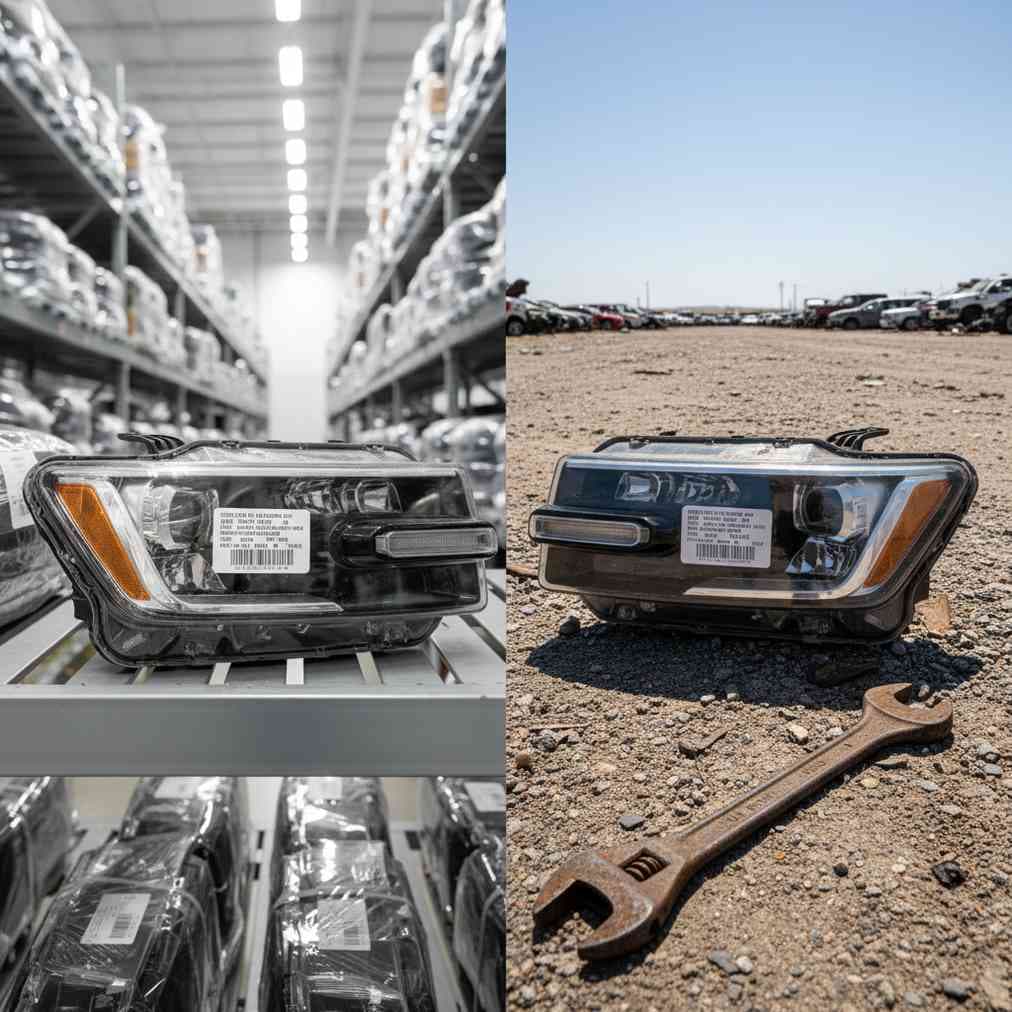
LKQ Corporation represents the corporate face of auto recycling, with a business model heavily focused on serving professional repair facilities rather than individual consumers. This publicly traded company has grown through over 200 acquisitions, creating a standardized network that prioritizes efficiency and volume over individual customer savings.
Primary Business Focus: B2B and Insurance Markets
LKQ's core revenue streams come from wholesale distribution to collision repair shops across North America and Europe. Their primary customers include:
Professional body shops requiring quick turnaround times
Insurance companies seeking cost-effective alternatives to OEM parts
Automotive dealerships needing reliable parts sourcing
This B2B focus significantly influences their pricing structure. When insurance companies specify LKQ parts for collision repairs, they're often dealing with pre-negotiated contracts and volume pricing that doesn't translate to savings for walk-in customers.
LKQ Pricing Structure and Policies
Policy Area
LKQ Approach
Impact on Customers
Pricing Model
Flat-rate standardized pricing
Higher costs for simple parts
Warranty
Automatic warranty inclusion
Increased base price
Part Assembly
Full assembly pricing
Pay for unused parts
Standardization
Corporate uniformity
Limited price flexibility
LKQ's flat-rate pricing system means a starter motor costs the same regardless of whether it came from a luxury vehicle or an economy car. This standardization, while efficient for corporate operations, often results in higher costs for DIY customers who might find better value elsewhere.
“LKQ's pricing often approaches the cost of new parts when you factor in their required guarantees and assembly charges,” reports a recent automotive industry analysis.
Traditional U-Pull-It Model: Customer-Focused Value
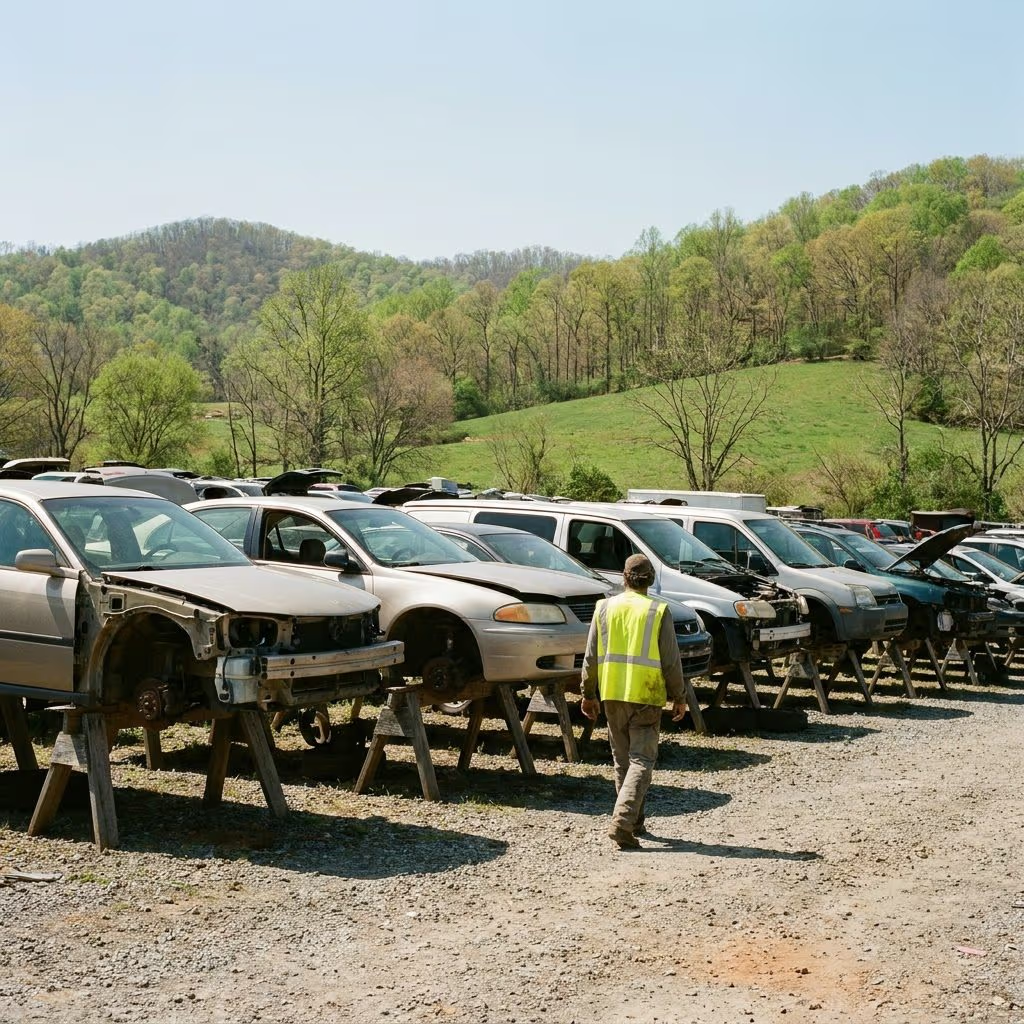
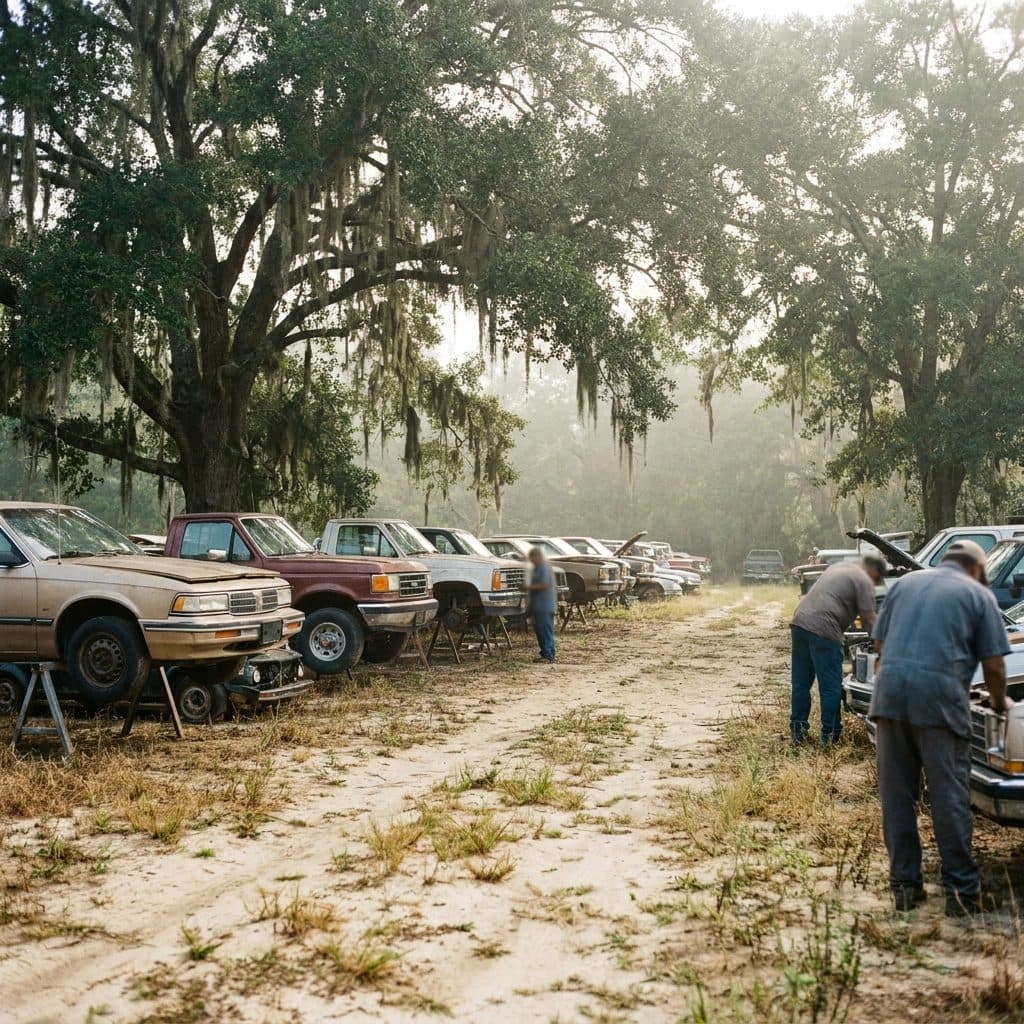
Traditional U-Pull-It yards maintain the original self-service model that appeals directly to budget-conscious individuals and automotive enthusiasts. These operations, often independently owned or part of smaller regional chains, prioritize affordability and accessibility over corporate standardization.
DIY-Centered Business Philosophy
The traditional U-Pull-It model operates on a simple principle: customers trade labor for savings. This approach creates several advantages:
Lower overhead costs passed directly to customers
Part-type pricing rather than vehicle-specific rates
Flexible policies allowing for negotiation
Volume-based savings through simplified operations
When you sell a junk car to these yards, you're contributing to an inventory system designed to keep prices low for fellow DIY enthusiasts. The savings model depends on customer participation in the parts removal process.
Pricing Advantages of Traditional Yards
Traditional U-Pull-It operations typically offer significant cost advantages across multiple categories:
Part Category
Traditional U-Pull-It
LKQ Corporate
Potential Savings
Alternators
$25-45
$65-85
40-50%
Starters
$20-40
$55-75
35-45%
Transmissions
$200-400
$450-650
30-40%
Engine Blocks
$300-600
$700-1000
35-45%
Corporate Overhead vs. Operational Efficiency
The price differential between LKQ and traditional yards reflects different operational philosophies and cost structures. LKQ's corporate model includes expenses that don't exist in traditional operations.
Standardized inventory systems requiring constant updates
National logistics networks for B2B distribution
Corporate compliance and regulatory reporting
Shareholder obligations and profit maximization pressure
Extensive warranty programs with associated costs
These systems, while efficient for serving professional customers, add layers of cost that ultimately get passed to retail customers through higher pricing.
Traditional Yard Operational Advantages
Independent U-Pull-It operations benefit from streamlined business models focused on core functions:
Minimal administrative overhead
Direct customer relationships without corporate intermediaries
Flexible pricing policies adapted to local market conditions
Lower facility costs in industrial areas
Simplified inventory management systems
Customer Service Philosophy Differences
The approach to customer service varies dramatically between corporate and traditional salvage operations, affecting everything from part availability to return policies.
LKQ's Standardized Service Model
LKQ locations operate under corporate protocols designed for consistency across their network:
Uniform pricing policies with limited flexibility
Standardized return procedures following corporate guidelines
Professional appearance but potentially less personal service
Technology integration for inventory searches and processing
While this approach ensures predictability, it can limit the personal touch and flexibility that many DIY enthusiasts appreciate in their parts sourcing experience.
Traditional Yard Personal Service
Independent operations typically offer more personalized customer experiences:
Negotiable pricing for regular customers or bulk purchases
Flexible return policies based on individual circumstances
Personal relationships with knowledgeable staff
Local market understanding and community focus
Technology and Inventory Management
Modern salvage operations utilize different approaches to inventory management and customer access, with varying levels of technological integration.
LKQ's Digital Integration
LKQ has invested heavily in digital inventory systems that serve their B2B customers:
Online inventory searches across multiple locations
Real-time availability updates for professional customers
Integrated billing systems for wholesale accounts
Digital cataloging with detailed part specifications
While these systems benefit professional users, they represent significant operational costs that contribute to higher retail pricing.
Traditional Yard Simplicity
Most independent yards maintain simpler systems that reduce overhead while still serving customer needs:
Basic inventory tracking focusing on vehicle arrival dates
Personal knowledge of yard inventory by experienced staff
Market Positioning and Target Demographics
The fundamental difference in pricing reflects different target markets and value propositions that each business model serves.
Factor
LKQ Corporation
Traditional U-Pull-It
Primary Market
Professional repair facilities
DIY enthusiasts and budget-conscious consumers
Value Proposition
Reliability, consistency, warranty coverage
Maximum savings through self-service model
Customer Volume
Lower volume, higher per-transaction value
Higher volume, lower per-transaction value
Service Speed
Quick professional transactions
Leisurely exploration and discovery
Geographic and Regional Variations
The competitive landscape varies significantly by region, with different markets showing distinct patterns in pricing and service availability.
Urban vs. Rural Market Dynamics
Urban markets often see more corporate consolidation, while rural areas maintain traditional independent operations. This geographical distribution affects pricing strategies and service approaches across different regions, as documented in recent market research.
Metropolitan areas: More LKQ locations, standardized pricing
Industrial zones: Mixed operations serving diverse customer bases
Suburban markets: Competition between both models
Making the Right Choice for Your Needs
Understanding these fundamental differences helps you choose the right type of salvage yard for your specific project and budget requirements.
When to Choose LKQ
LKQ locations may be appropriate when you need:
Warranty coverage for peace of mind
Consistent availability of common parts
Professional service with minimal time investment
Insurance claim compatibility for repair work
When to Choose Traditional U-Pull-It
Independent yards offer advantages for:
Maximum cost savings on parts and repairs
DIY project enthusiasm and learning opportunities
Rare or specialty parts hunting
Bulk purchasing for multiple projects
Negotiable pricing situations
Future Trends in Salvage Yard Operations
The automotive recycling industry continues evolving, with technological advances and market pressures shaping future operations. Electric vehicle proliferation, advanced materials, and changing consumer preferences will influence how both corporate and independent operations adapt their business models.
As documented in emerging industry analysis, the gap between corporate and traditional pricing may narrow as competition intensifies and operational efficiencies improve across the sector.
The Bottom Line on Pricing Differences
The price differential between LKQ and traditional U-Pull-It operations reflects fundamental differences in business strategy, target markets, and operational philosophy. LKQ's higher prices result from their corporate structure, B2B focus, standardized systems, and integrated warranty services – all designed to serve professional customers efficiently.
Traditional U-Pull-It yards maintain lower prices by focusing on the DIY market, minimizing overhead, and operating with greater flexibility. For budget-conscious consumers willing to invest time and effort, these yards offer substantial savings opportunities.
Understanding these differences empowers you to make informed decisions about where to source your automotive parts, whether you prioritize convenience and warranty coverage or maximum cost savings through self-service shopping. Both models serve important roles in the automotive recycling ecosystem, catering to different customer needs and preferences.