A Beginner’s Guide to Cutting Body Panels and Sheet Metal
Understanding the Fundamentals of Sheet Metal Cutting Cutting automotive body panels and sheet metal from donor vehicles is a crucial skill for anyone involved in auto body restoration, repair work, or DIY car maintenance. Whether you're harvesting parts from salvage yards near you or working on your own project vehicle, mastering proper cutting techniques ensures [...]
Article image
Understanding the Fundamentals of Sheet Metal Cutting
Cutting automotive body panels and sheet metal from donor vehicles is a crucial skill for anyone involved in auto body restoration, repair work, or DIY car maintenance. Whether you're harvesting parts from salvage yards near you or working on your own project vehicle, mastering proper cutting techniques ensures you preserve the integrity of valuable parts while maintaining safety standards.
The key to successful sheet metal cutting lies in understanding that precision and planning are just as important as having the right tools. Every cut you make affects both the usability of the harvested part and the structural integrity of the surrounding metal. Before making any cuts, it's essential to identify the joining methods used by manufacturers and plan your approach accordingly.
Identifying Connection Methods: Spot Welds vs. Seam Sealer
Before you can effectively cut any body panel, you must first understand how manufacturers join metal sheets together. The two primary methods you'll encounter are spot welds and seam sealer, each requiring different removal approaches.
Spot Welds
Spot welds are small, fused metal connections created by clamping two pieces of metal together and passing high electrical current through them. This process creates a “nugget” of fused material that holds the panels together. These welds appear as small circular indentations on the metal surface and are the primary structural connection points.
Look for small circular marks or indentations
Typically spaced 1-3 inches apart along seams
May be painted over but still visible as slight depressions
Require drilling or grinding to separate
Seam Sealer
Seam sealer is a flexible material applied over or between spot welds to prevent water and air intrusion. It's not structural and must be removed to access the underlying spot welds. This material is often painted over and can obscure the location of actual welds.
Appears as a raised bead along panel joints
Flexible and can be scraped or ground away
Often covers spot welds underneath
Not load-bearing – purely for sealing
Essential Tools for Sheet Metal Cutting
Having the right tools makes the difference between clean, professional cuts and damaged, unusable parts. Here's a comprehensive list of tools you'll need for different cutting scenarios:
Tool
Primary Use
Key Benefits
Spot Weld Drill Bit
Removing outer layer of spot welds
Precise, clean separation
Angle Grinder
Grinding down welds, rough cutting
Fast material removal
Pneumatic Saw
Initial rough cuts on large panels
Quick sectioning of large parts
Air Hammer/Chisel
Separating panels after weld removal
Controlled panel separation
Cutoff Wheels
Straight cuts through metal
Clean, precise cutting lines
Safety Equipment and Precautions
Safety should always be your top priority when cutting sheet metal. High-speed cutting tools create flying debris, sparks, and sharp edges that can cause serious injuries. The data science research community has extensively studied workplace safety protocols, and similar systematic approaches apply to automotive work.
Eye Protection: Safety goggles or face shields are mandatory
Hand Protection: Cut-resistant gloves, though some prefer thin gloves for dexterity
Respiratory Protection: Dust masks when grinding painted surfaces
Hearing Protection: Ear plugs or muffs for power tools
Work Area Safety: Keep area clear of metal shards and debris
“The metal surface will be hot and sharp immediately after cutting. Always allow cooling time and handle cut edges carefully.”
Before making any cuts, thoroughly assess the panel and surrounding structure. This planning phase determines the success of your entire operation.
Identify cut lines: Mark where you'll cut on the donor vehicle
Plan for installation: Cut outside your intended use area when possible
Access evaluation: Ensure you can reach all necessary spot welds
Section large panels: Break down oversized parts into manageable pieces
Step 2: Removing Spot Welds
The goal when removing spot welds is to drill through only the outer panel layer, leaving the weld nugget intact on the inner panel. This preserves both the harvested part and the underlying structure.
Start with a pilot hole using a 1/8″ bit to prevent wandering
Use a spot weld cutter or specialized drill bit
Apply firm, steady pressure
Stop immediately when you feel resistance change
Only drill through the first metal layer
Step 3: Alternative Cutting Methods
When spot weld drilling isn't feasible, alternative methods can achieve similar results with proper technique.
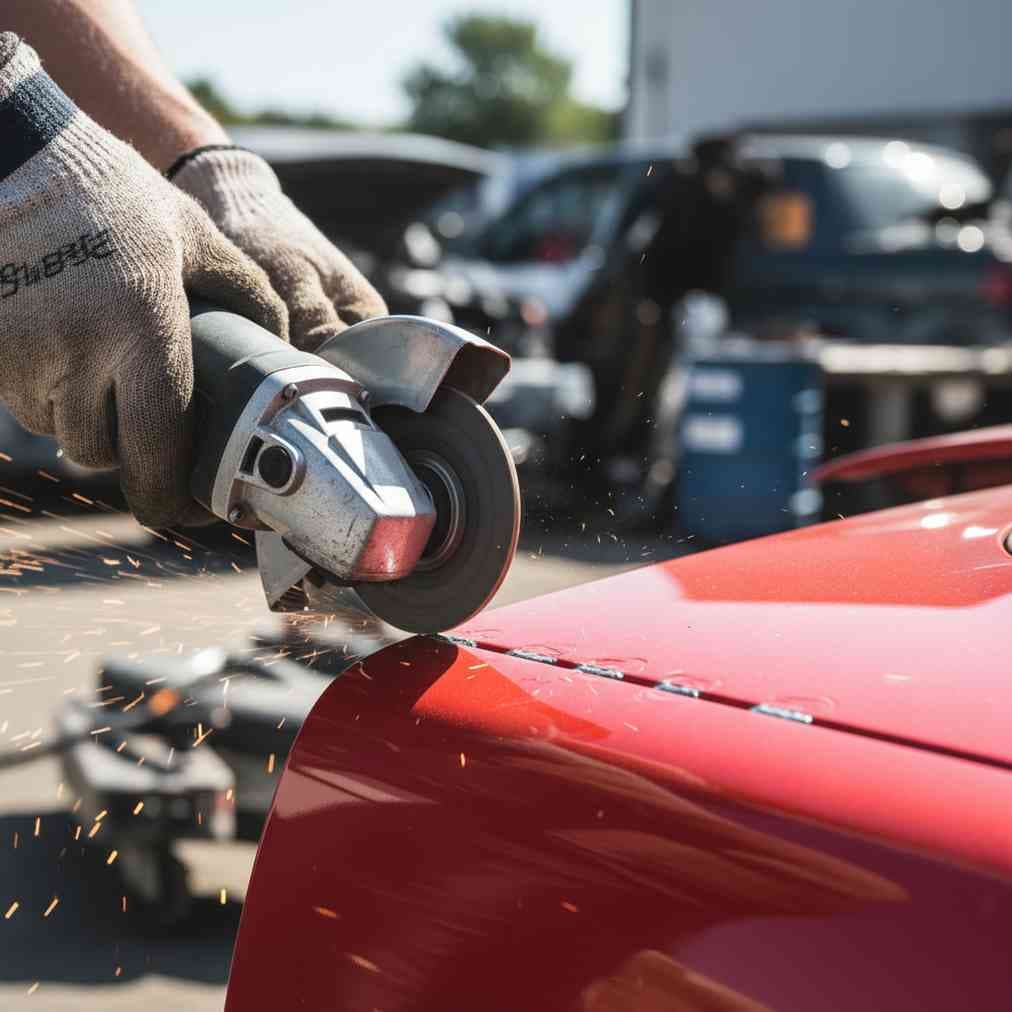
Angle Grinder Technique: Hold the grinder nearly flat against the surface and lightly grind back and forth over spot welds until the indentation disappears. Stop before cutting into the lower panel.
Reciprocating Saw Method: Useful for rough sectioning of large panels, but requires extreme caution to avoid cutting too deep into underlying structures.
Step 4: Panel Separation
Once spot welds are weakened, carefully separate the panels using appropriate tools.
Insert chisel between panel layers
Work gradually along the seam
Use leveraging motion rather than force
Air hammers speed the process but require skill to avoid distortion
Pliers can help twist and peel stubborn sections
Advanced Cutting Techniques
As you develop proficiency with basic cutting methods, advanced techniques can improve efficiency and part quality. These methods require additional skill but offer superior results for challenging situations.
Heat Management
Excessive heat from cutting tools can warp sheet metal, making harvested parts unusable. Proper heat management preserves part integrity:
Take frequent breaks during extended grinding
Watch for metal turning blue (indicates overheating)
Use cutting fluid when possible
Allow cooling time between cuts in the same area
Preserving Factory Flanges
Factory flanges provide crucial reference points for installation and can simplify welding processes. When cutting donor parts:
Cut larger than your final repair area
Preserve original flanges whenever possible
Leave extra material for final trimming during installation
Mark orientation before removal for easier positioning
Common Cutting Mistakes and How to Avoid Them
Learning from common mistakes can save both time and valuable parts. Here are the most frequent errors beginners make when cutting sheet metal:
Mistake
Consequence
Prevention
Drilling too deep through spot welds
Damages underlying panel
Use pilot holes and feel for resistance change
Cutting too close to desired part
Insufficient material for installation
Always cut larger than needed
Ignoring heat buildup
Warped, unusable parts
Take breaks and monitor metal color
Improper tool selection
Rough cuts, damaged parts
Match tool to specific cutting task
Inadequate planning
Difficult access, poor results
Assess completely before cutting
Specific Panel Cutting Strategies
Different types of body panels require tailored approaches for optimal results. Understanding these variations helps you choose the most effective cutting strategy for each situation.
Quarter Panels
Quarter panels are among the most challenging parts to remove due to their size and multiple attachment points. Success requires systematic sectioning:
Make initial cuts to create manageable sections
Work from outside edges toward center
Preserve wheel well flanges for positioning reference
Document piece orientation with photos before removal
Roof Skins
Roof skins present unique challenges due to their size and the need to maintain structural integrity:
Remove interior trim for better access
Cut along factory seams when possible
Support large sections during removal
Work systematically around the perimeter
Door Skins
Door skins are typically easier to remove but require attention to edge preparation:
Remove door handles and trim first
Cut through crimped edges carefully
Preserve inner door frame when possible
Clean up edges for easier installation
Quality Assessment and Part Preparation
Once you've successfully removed a panel, proper assessment and preparation ensure the part will serve its intended purpose. This evaluation process determines whether the harvested part meets your quality standards.
Structural Integrity Check
Examine for cracks or stress fractures
Check for excessive heat distortion
Verify proper edge condition
Assess overall flatness and shape retention
Surface Condition Evaluation
The surface condition affects both appearance and functionality of the harvested part:
Rust assessment: Surface rust vs. structural corrosion
Dent evaluation: Repairable vs. replacement needed
Paint condition: Affects primer adhesion
Contamination check: Oil, grease, or chemical residues
Storage and Transportation
Proper storage and transportation protect your investment in time and effort. Large panels are particularly susceptible to damage during handling and storage.
Storage Guidelines:
Store panels flat when possible to prevent warping
Use padding between stacked parts
Protect from moisture and temperature extremes
Label parts clearly with donor vehicle information
Transportation Tips:
Secure parts to prevent movement during transport
Protect edges and corners from damage
Consider professional transport for valuable or large parts
Document condition before and after transport
Environmental Considerations and Disposal
Responsible cutting practices include proper disposal of waste materials and environmental protection. The automotive recycling industry plays a crucial role in environmental sustainability, similar to how data science research focuses on sustainable practices.
Metal scraps: Separate by type for recycling
Fluids: Properly dispose of oils, coolants, and other automotive fluids
Hazardous materials: Handle airbags, mercury switches, and other dangerous parts appropriately
Paint waste: Contains heavy metals requiring special disposal
Building Your Skills Through Practice
Mastering sheet metal cutting requires hands-on experience and continuous learning. Start with less critical parts and gradually work up to more valuable or challenging panels.
Skill Development Progression:
Begin with small, simple panels like trim pieces
Practice spot weld identification and removal techniques
Progress to larger panels as confidence builds
Learn from mistakes and adjust techniques accordingly
Study professional techniques through videos and training
Cost-Effective Sourcing and Planning
Smart planning can significantly reduce the cost and effort required for successful sheet metal cutting projects. If you're working with donor vehicles that are no longer serviceable, you might consider getting cash for your junk car after harvesting needed parts.
Understanding market values and part availability helps you make informed decisions about which parts to harvest and which to source elsewhere. Sometimes it's more economical to purchase certain parts new rather than invest time in cutting and preparation.
Future Trends in Sheet Metal Cutting
The automotive industry continues evolving with new materials and joining techniques that affect cutting strategies. Advanced high-strength steels, aluminum panels, and hybrid construction methods require adapted approaches.
Electric vehicles introduce new challenges with different panel materials and integration of electronic parts. As the industry evolves, cutting techniques must adapt to handle these emerging technologies effectively.
Professional Development and Resources
Continuous learning enhances your sheet metal cutting capabilities. Professional training programs, online tutorials, and industry publications provide valuable insights into advanced techniques and safety practices.
Many technical schools offer automotive body repair courses that include comprehensive sheet metal cutting instruction. These formal programs provide structured learning environments and access to professional-grade equipment.
Online resources, including detailed video tutorials, offer visual demonstrations of complex cutting techniques that complement written instructions.
Conclusion
Mastering the art of cutting body panels and sheet metal opens up numerous possibilities for automotive repair and restoration projects. Success depends on understanding the fundamental principles, using appropriate tools, and prioritizing safety throughout the process.
Remember that every cutting project is a learning opportunity. Start with simple parts, focus on developing proper technique, and gradually tackle more challenging panels as your skills improve. With patience, practice, and attention to detail, you'll develop the expertise needed to harvest high-quality parts efficiently and safely.
The combination of proper planning, right tools, and systematic execution will serve you well whether you're working on a single repair or managing multiple restoration projects. Take time to perfect your technique on less critical parts before attempting valuable or difficult-to-find panels.