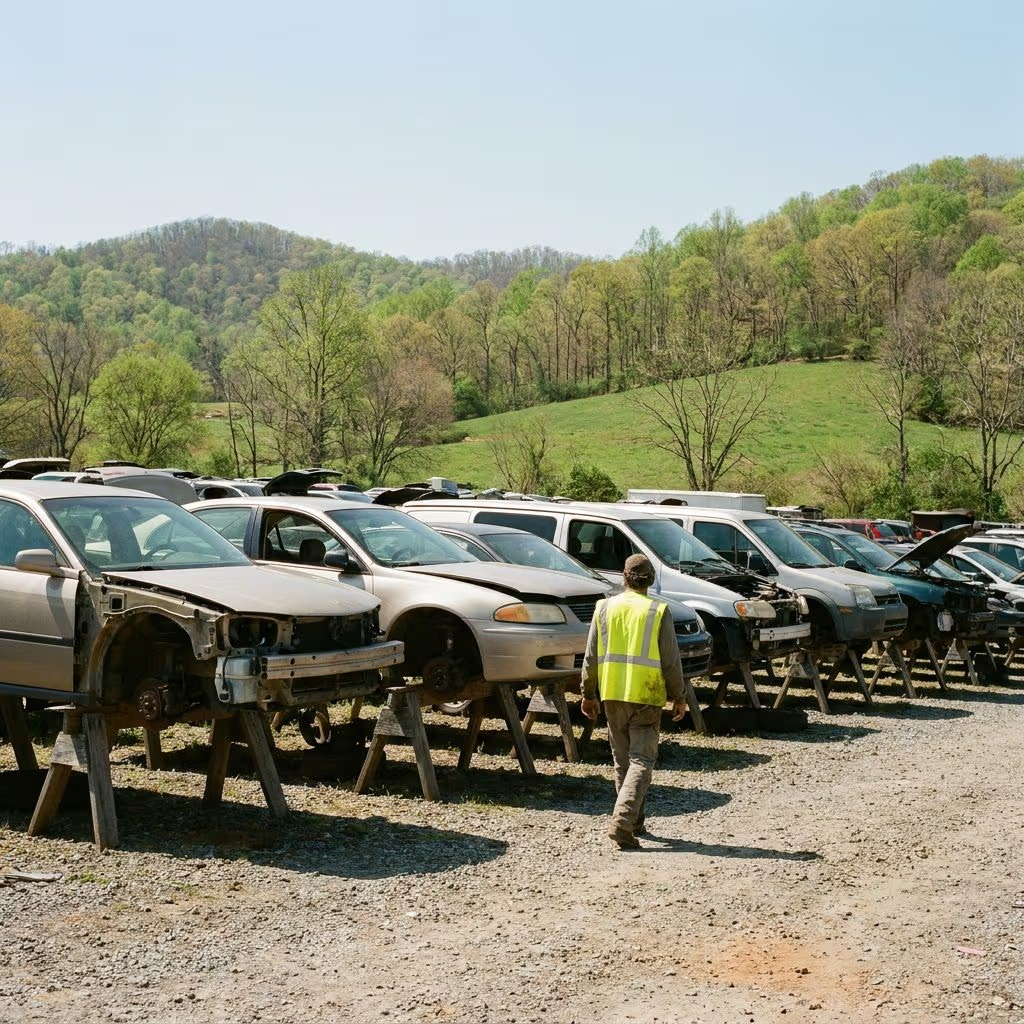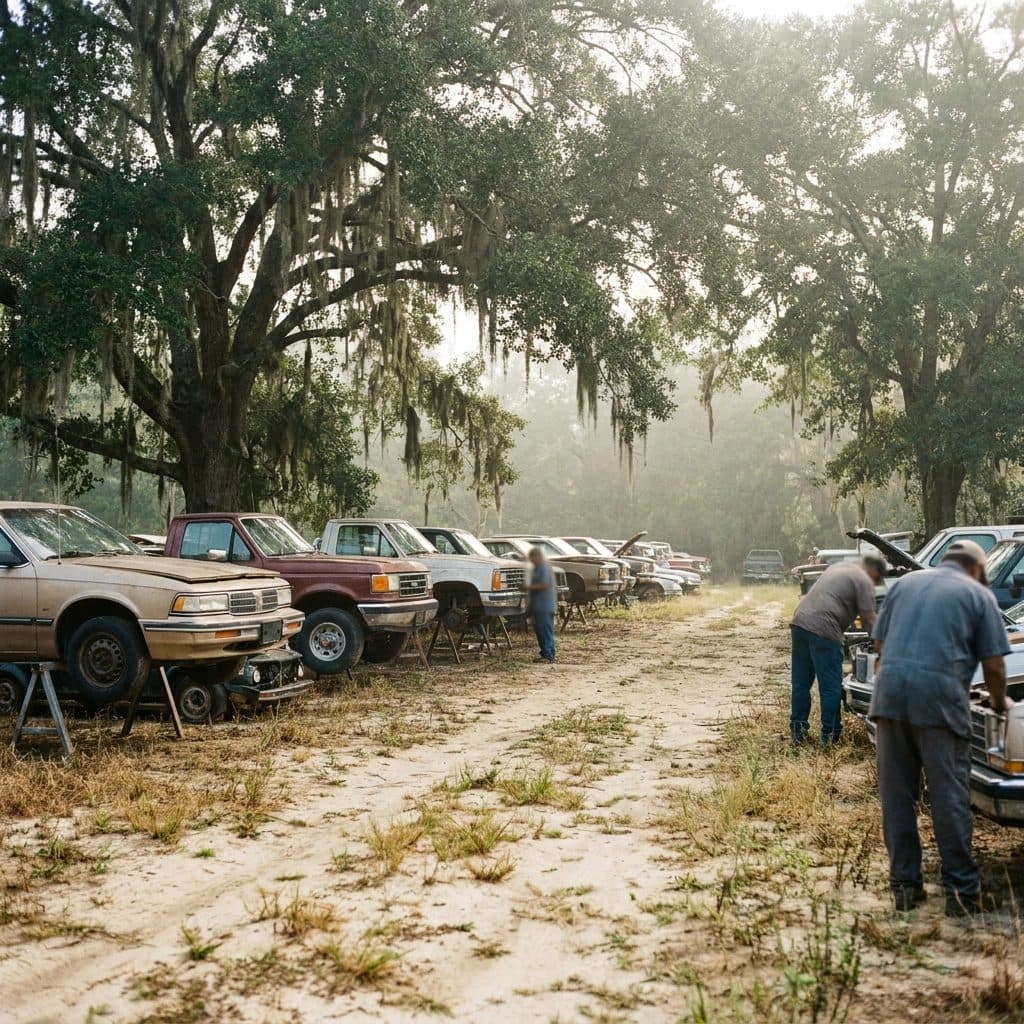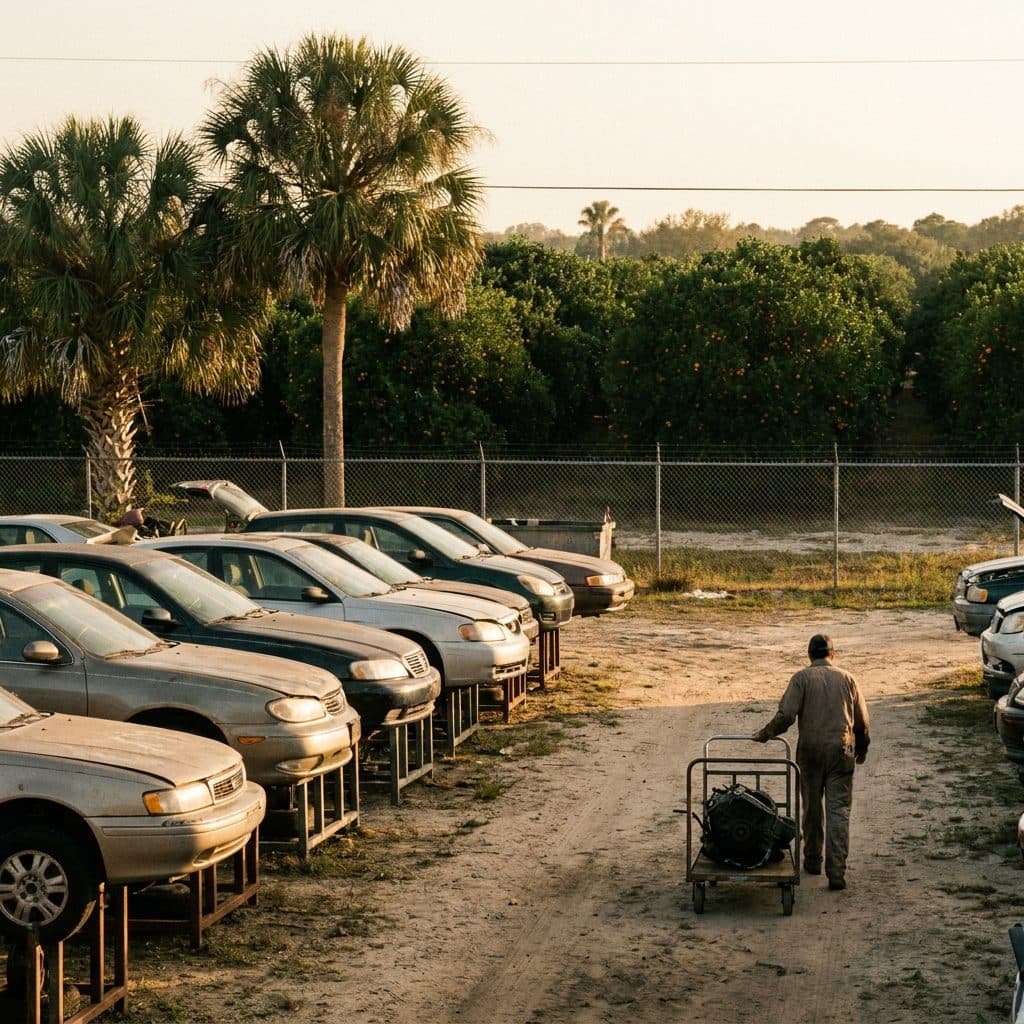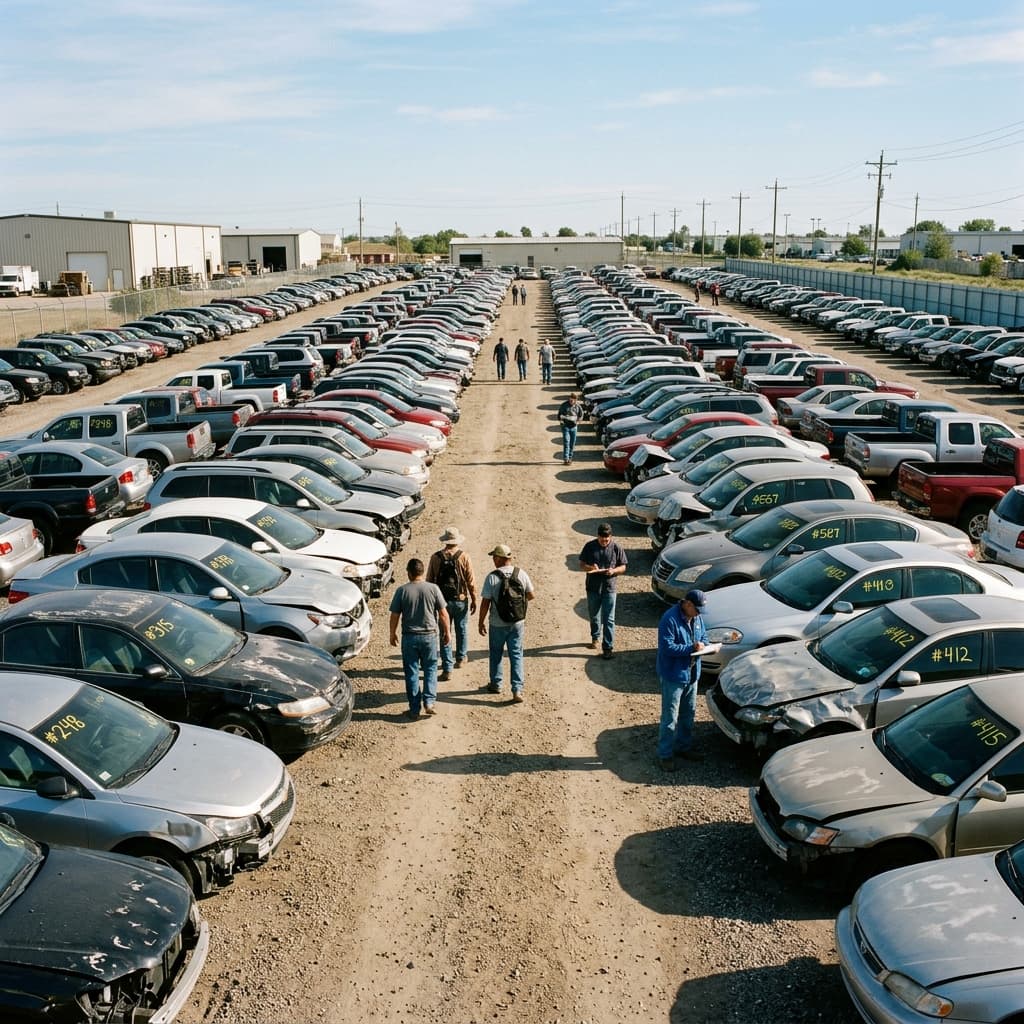
Copart and IAAI (Insurance Auto Auctions) sell over 3 million salvage vehicles per year combined. You can find cars at 40-60% below retail — but only if you account for the fees. The hammer price is just the starting point. Buyer premiums, gate fees, documentation charges, and towing typically add 30-45% on top. A $5,000 winning bid becomes $7,000-$7,500 out the door. Here is how the process works from account creation to driving it home.
Step 1: Can you even buy?
Both Copart and IAAI allow public buyers in most states, but there are restrictions:
| Buyer Type | Access | Restrictions |
|---|---|---|
| Public (Guest/Basic) | Free registration; can bid on "Public" vehicles | Cannot bid on "Dealer Only" lots; deposit required |
| Licensed Dealer | Full access to all inventory | Requires valid dealer/dismantler license |
| Broker | Third-party bids on your behalf | Adds $100-$400 in broker fees; they use their license |
The broker shortcut
If your state restricts public buying, or you want access to dealer-only vehicles, use a licensed broker. Companies like AutoBidMaster, SalvageReseller, and A Better Bid charge $100-$400 per transaction and handle all bidding, payment, and paperwork. It's the simplest entry point for first-time buyers.
Step 2: Find and research vehicles
- Search by make/model/year on copart.com or iaai.com. Filter by damage type, title type, and location.
- Run the VIN through NMVTIS (free at vehiclehistory.bja.ojp.gov) and optionally Carfax/AutoCheck. Look for flood damage, prior salvage titles, or odometer discrepancies.
- Study every photo. Auction photos are your primary inspection tool. Look for frame rail damage (visible under the car), deployed airbags, and fluid stains under the engine bay.
- Check the "loss type." "Collision" damage is usually repairable. "Flood," "fire," and "vandalism" vehicles carry higher risk of hidden damage.
Step 3: Understand the title types
| Title Type | What It Means | Can You Drive It? |
|---|---|---|
| Salvage | Insurance total loss; can be rebuilt | After repairs + state inspection |
| Clean | No major insurance history on file | Yes — register and drive |
| Non-Repairable / Junk | Parts or scrap only | Never — cannot be titled for road use |
| Certificate of Destruction | Must be destroyed; parts only | Never |
Avoid "Non-Repairable" unless you want parts
A non-repairable or certificate of destruction vehicle can NEVER be titled for road use in any state. If your goal is to rebuild and drive, only bid on vehicles with a "Salvage" or "Clean" title. This is the single most common mistake new auction buyers make.
Step 4: The bidding process
- Place a pre-bid. Before the live auction, you can set a maximum bid. The system bids incrementally on your behalf up to your max.
- Join the live auction. Auctions run online in real-time. Bidding is fast — a vehicle can sell in 30-60 seconds.
- Watch for "On Approval." Some vehicles are listed where the seller must approve the winning bid. You might win and still not get the car if the seller rejects your price.
- Set a hard walk-away price. Calculate your total cost (bid + fees + towing + repairs) before bidding. Never exceed it.
Step 5: The real cost — fees breakdown
This is where most beginners get burned. Here's a real-world example for a $5,000 hammer price at Copart:
| Fee | Amount | Notes |
|---|---|---|
| Hammer price | $5,000 | Your winning bid |
| Buyer premium | $650 | Varies by price bracket; ~13% for public buyers |
| Internet bidding fee | $139 | Charged for online bids |
| Gate/handling fee | $79 | Moving the vehicle to the pickup area |
| Environmental fee | $10 | Hazardous materials disposal |
| Title/documentation | $55 | Processing paperwork |
| Sales tax (varies by state) | $350 | 7% of hammer in this example |
| Towing to your location | $200-$500 | Distance-dependent; you arrange this |
| Total out-the-door | $6,483 – $6,783 | 30-36% above hammer price |
Step 6: Payment and pickup
- Payment: Due within 2-3 business days of winning. Wire transfer, cashier's check, or credit card (with additional fees). No personal checks.
- Pickup: You have 3-5 days after payment clears. After that, storage fees start ($10-$50/day).
- Towing: The car does not drive off the lot (most are non-running). Arrange a flatbed tow truck or transport company in advance.
When salvage auction buying makes sense
- You're a DIY mechanic: You can fix the damage yourself using junkyard parts at a fraction of body shop rates.
- Cosmetic damage only: The car was totaled because body panels are expensive, but the engine, transmission, and frame are perfect.
- You want a parts car: Buying a complete car for parts is often cheaper than buying individual parts.
- Project/track vehicle: You don't care about a clean title because it'll never be a daily driver.
When to walk away
- Flood vehicles: Water damage destroys wiring, computers, and sensors in ways that take months to surface. Hard pass.
- Frame damage: Structural repairs cost $3,000-$10,000+ and the car is never the same. See our totaled car guide.
- No photos of undercarriage: If you can't see what's underneath, assume the worst.
- Certificate of destruction: You literally cannot title this vehicle. Parts only.
Already have a totaled car? Sell it for cash instead.
We buy salvage vehicles as-is. No repairs, no auction fees, no hassle. Free towing included.
Get an Instant OfferIn many states, yes. Both allow public registration and bidding on eligible vehicles. Some lots are dealer-only. If restricted, use a licensed broker ($100-$400 fee) who bids on your behalf.
Expect 30-45% above the hammer price. A $5,000 winning bid becomes $6,500-$7,500 after buyer premiums, internet fees, gate fees, documentation, sales tax, and towing.
Yes, if you can repair it yourself and stick to collision-damaged vehicles with clean drivetrains. Avoid flood, fire, and non-repairable titles. The savings can be 40-60% vs. retail when done right.
Avoid "Non-Repairable" and "Certificate of Destruction" — these vehicles can never be registered for road use. Only bid on "Salvage" (rebuildable) or "Clean" titles if you plan to drive the vehicle.