Published: April 29, 2026
· By U-Pull-It.com Editorial Team
To legally junk a car in California, you need the signed title, a valid photo ID, and you must file a REG 138 (Notice of Transfer and Release of Liability) with the DMV within 5 days of the sale. If you skip the REG 138, you are legally responsible for every parking ticket, toll charge, and red-light camera violation that hits the car after you sell it. California also offers a $1,500 to $2,000 state buyback through the CAP retirement program for vehicles that fail smog.
This guide walks through every form, fee, and deadline so you can junk your car in California without getting burned by the DMV later.
The paperwork you need (California's non-negotiables)
California doesn't mess around with vehicle transfers. The state tracks every car from purchase to crush, and they want a paper trail at every step.
⚠️ California junk car paperwork checklist
- California Certificate of Title: The pink slip, signed on the back by the registered owner exactly as the name appears on the front. No nicknames, no initials — exact match.
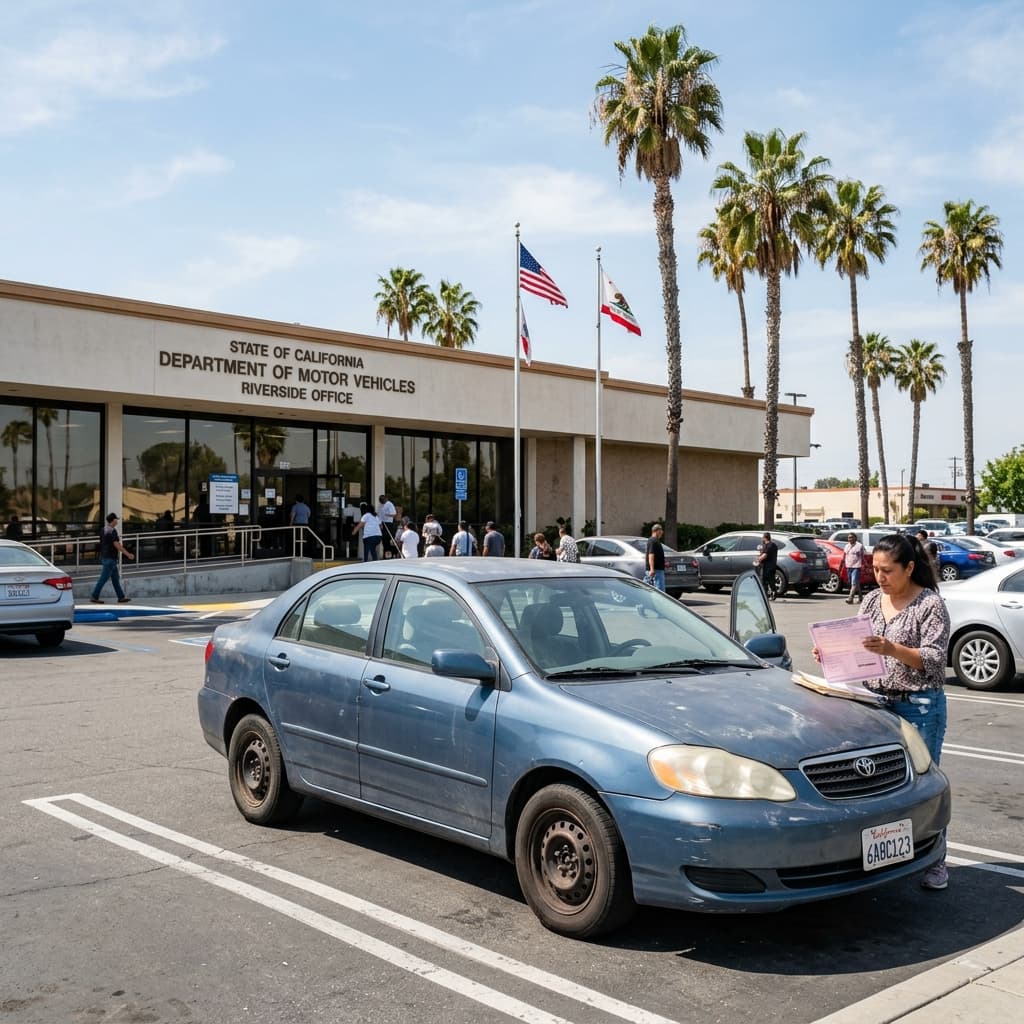
- REG 138 — Notice of Transfer and Release of Liability: File this with the DMV within 5 days of selling. This is what legally separates you from the car. You can file it online at dmv.ca.gov, by mail, or in person.
- Valid California ID: Driver's license or state-issued ID card. The name must match the title.
- License plates: Remove both plates. In California, plates stay with the owner, not the car.
- Odometer disclosure: Required for vehicles less than 10 model years old.
Lost your title? Here's the fix (REG 227)
If your title is lost, stolen, or destroyed, you need to file a REG 227 (Application for Replacement or Transfer of Title) with the California DMV before you can legally sell the car to a salvage yard.
Two options for getting a replacement:
- In-person at a DMV office: Make an appointment online. Bring your ID and current registration. You can get a duplicate title the same day in most cases. Fee: $23.
- By mail: Download REG 227 from dmv.ca.gov, complete it, and mail it with the $23 fee to the DMV headquarters in Sacramento. Processing takes 4 to 6 weeks.
If there's a lienholder listed on the title (like a bank or credit union), Section 5 of the REG 227 must be notarized, and the lienholder must sign off or provide a lien release letter. This is the step that trips up most people — call your lender first and ask for a lien release if the loan is paid off.
💡 No title AND no registration?
If you have neither, some licensed California auto dismantlers can accept vehicles using a REG 488C (Junk Vehicle Affidavit of Non-Interest). This requires a law enforcement verification and is typically used for abandoned or very old vehicles. Call your local dismantler to ask if they handle 488C transactions — most prefer a clean title.
Salvage title vs. non-repairable: know the difference
California uses two separate classifications for damaged vehicles, and they have very different outcomes:
| Classification |
What it means |
Can it be driven again? |
| Salvage Certificate |
Insurance company declared total loss. Vehicle can be repaired. |
Yes — after repairs, CHP inspection, smog check, and DMV issues a "Revived Salvage" title |
| Non-Repairable Vehicle Certificate |
Vehicle is only good for parts or scrap metal. |
No — once issued, the vehicle can never be titled or registered again in California |
If you're selling to a junkyard for scrap, the distinction doesn't matter much to your payout — the yard pays based on weight and parts either way. But if you're buying a salvage car to rebuild, make sure it has a Salvage Certificate, not a Non-Repairable Certificate. That second one is permanent.
Does your junk car need a smog check?
No — if you are selling directly to a licensed auto dismantler or salvage yard for scrapping, a smog check is NOT required. The smog requirement applies to private-party sales where the buyer plans to register and drive the vehicle.
Vehicles that are always exempt from smog checks in California:
- Gasoline-powered vehicles model year 1975 or older
- Diesel-powered vehicles 1997 and older or with a GVW over 14,000 lbs
- Electric vehicles and hybrids running only on electric power
- Gasoline vehicles less than 8 model years old (though a smog abatement fee applies)
The CAP retirement program: get $1,500–$2,000 from the state
Before you sell your car to a junkyard, check if you qualify for California's Consumer Assistance Program (CAP) run by the Bureau of Automotive Repair. The state will pay you $1,500 or $2,000 to permanently retire high-polluting vehicles.
Eligibility requirements:
- You must be the registered owner for at least two years
- Vehicle must be currently registered and operational (it has to run)
- Vehicle must have failed or be likely to fail a smog check
- Household income at or below 225% of federal poverty level ($1,500 payout) or 300% ($2,000 payout with some local programs)
- Subject to available funding — the program runs out of money periodically
CAP vs. junkyard — which pays more? The CAP program pays $1,500–$2,000 flat regardless of the vehicle's weight or parts. A junkyard typically pays $200–$800 for a standard sedan. If you qualify for CAP, the state almost always pays more. Apply at bar.ca.gov or call 1-800-952-5210.
Step-by-step: junking your car in California
- Check CAP eligibility first. If you qualify, the state pays more than most yards. Apply at bar.ca.gov.
- Locate your title. If lost, file a REG 227 at the DMV ($23 fee).
- Get 2–3 quotes. Call local salvage yards, check online cash-for-cars services, and compare. Prices vary by $200+ in the same metro area.
- Remove personal belongings and plates. Check the glovebox, under seats, and trunk. Remove both license plates. See our guide on what to remove before scrapping your car.
- Sign the title and hand it to the buyer. Sign on the back, exactly as your name appears on the front.
- File REG 138 within 5 days. Do this online at dmv.ca.gov immediately after the car leaves your driveway. This is the single most important step.
- Cancel your insurance the same day. Call your insurer and tell them the vehicle was sold/scrapped. Get confirmation in writing.
- Return plates to DMV (optional but recommended). You can surrender them at any DMV office or destroy them.
Ready to junk your car in California?
Get an instant quote based on your vehicle's weight, parts, and current scrap market. Free towing statewide.
Get a Free California Quote
California-specific scams to watch for
The California junk car market has a few recurring scams worth knowing about:
- The "we'll handle the paperwork" scam: Some buyers will tell you not to worry about the REG 138 — they'll "take care of it." They won't. You'll get toll bills and parking tickets for months. Always file the REG 138 yourself.
- Unlicensed curbstoners: California law requires anyone buying vehicles for resale or dismantling to hold an active auto dismantler license (California Vehicle Code §11500). Ask for the license number and verify it at bar.ca.gov. Selling to an unlicensed buyer can make you liable.
- The "catalytic converter deduction": Some buyers will quote a price on the phone, then deduct $200–$400 when they arrive claiming the catalytic converter is "aftermarket" or "missing." Know your car's catalytic converter value before they show up.
What paperwork do I need to junk a car in California?
You need the California Certificate of Title signed by the registered owner, a completed REG 138 (Notice of Transfer and Release of Liability) filed with the DMV within 5 days, and a valid California driver's license or state-issued ID. If the title is lost, file a REG 227 for a duplicate ($23 fee).
Can I junk a car in California without a title?
Not easily. You need to get a replacement title first by filing a REG 227 with the DMV. Some licensed dismantlers accept vehicles with current registration and a REG 488C (Junk Vehicle Affidavit), but most prefer a clean title. Processing a replacement takes same-day in person or 4–6 weeks by mail.
Does my junk car need to pass smog in California?
No. Selling to a licensed salvage yard or dismantler does not require a smog certificate. The smog check is only required for private-party sales where the buyer will register and drive the vehicle. Vehicles 1975 or older are always exempt.
What is the California CAP vehicle retirement program?
The Bureau of Automotive Repair's Consumer Assistance Program pays $1,500–$2,000 to retire high-polluting vehicles. You must be the registered owner, the car must be operational, it must fail or be likely to fail smog, and your household income must be at or below 225% of the federal poverty level. Apply at bar.ca.gov.
What is a REG 138 and why is it important?
The REG 138 (Notice of Transfer and Release of Liability) tells the California DMV that you no longer own the vehicle. If you don't file it within 5 days of selling, you are legally responsible for any parking tickets, toll charges, or accidents involving the car after you sell it. File it free at dmv.ca.gov.
About this guide: Written by the U-Pull-It.com Editorial Team. Information reflects California DMV and BAR regulations as of April 2026. Laws change — verify current requirements at dmv.ca.gov before proceeding.