No Title? No Problem: How to Sell a Car Without a Title and Get Cash
Lost your car title? A missing, damaged, or destroyed title doesn't mean you're stuck. Here's exactly what documentation you need, what your state requires, and how to get paid quickly.
Article image
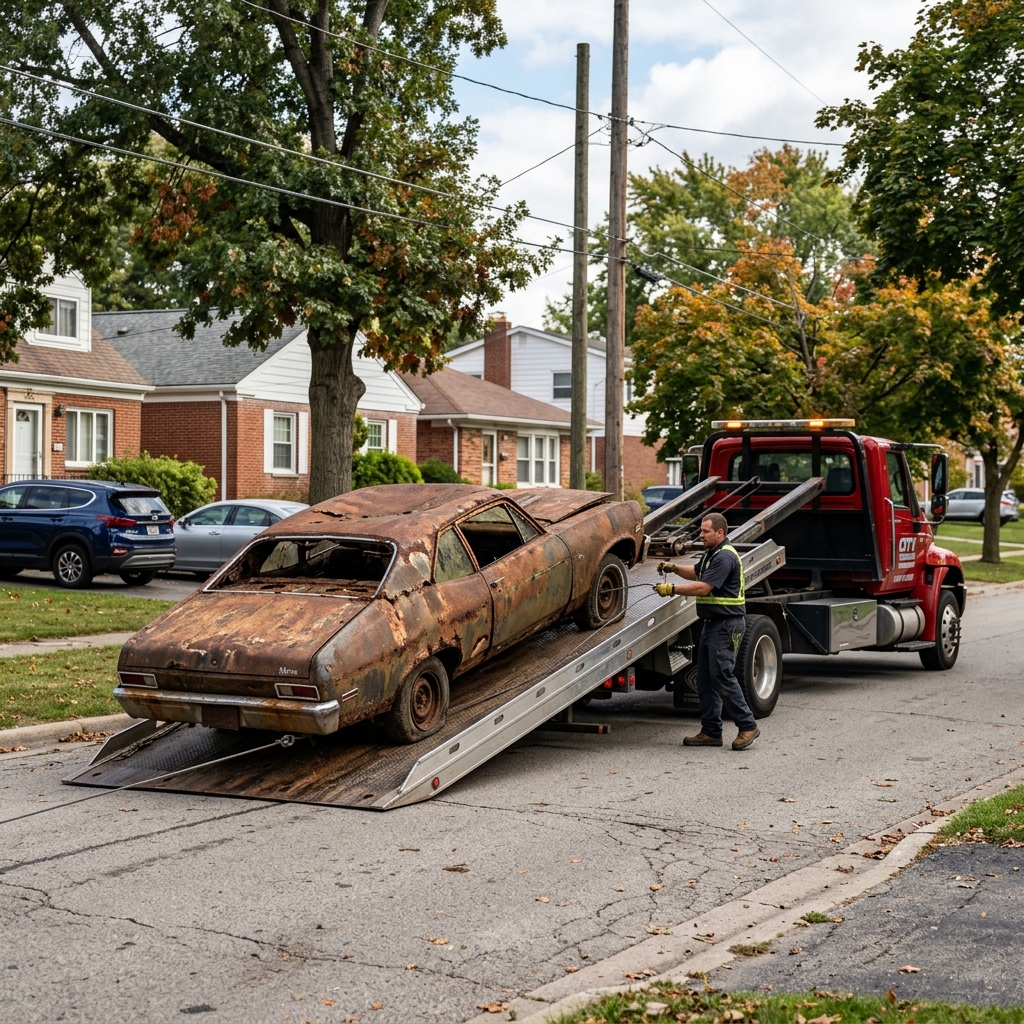
A lost, stolen, or damaged title is the #1 reason people let junk cars rot in their driveways — but you don't have to.
I've talked to hundreds of people who assumed a missing title meant a car was permanently stuck. It almost never is. While a car title — sometimes called the "pink slip" — is the standard proof of ownership, most reputable salvage yards, including U-Pull-It, have legal workflows in place to handle exactly this situation. The car sitting in your driveway has real value. Here's how to get it out.
⚠️ The Safety & Legal Check
Before you call a tow truck, understand two rules that are non-negotiable:
Ownership Verification
You must be the registered owner or have documented legal right to sell. Selling a car you don't own is theft — full stop.
Lien Check
If there's an active bank lien on the vehicle (a loan not fully paid off), you cannot sell it until the lien is released. Call your lender first.
Why titles go missing (and why it's more common than you think)
Titles get lost all the time. A move across states, a flooded filing cabinet, buying the car from a private party who never transferred it properly — any of these can leave you holding a car but not the paperwork. The good news is that state DMVs and most junkyards have seen every version of this problem and built systems around it.
Option 1: Replace the title before you sell
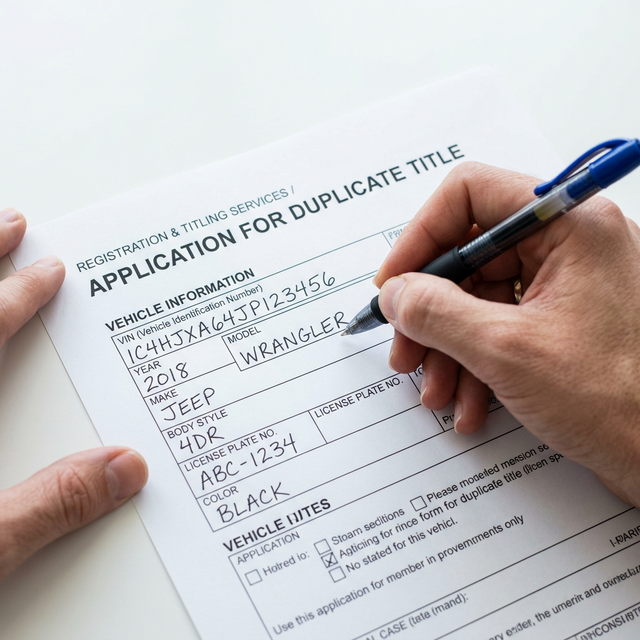
This is the cleanest path. Most states let you apply for a duplicate title online or in-person at the DMV for a small fee ($15–$25 typically). You'll need:
A government-issued photo ID
The vehicle's VIN (on the dashboard, driver-side door jamb, or insurance card)
Proof of ownership (registration, insurance, or prior title in your name)
Replacing a title takes 1–3 business days in most states. It's the smoothest path to maximum value.
Turnaround is 1–3 business days in most states. If you're not in a hurry, this is always the best first step — a titled car is worth more to any buyer, not just junkyards.
Option 2: Sell without a title using the "Paperwork Survival Kit"
If replacing the title isn't practical — or you need the car gone quickly — you can sell without one. Reputable salvage buyers accept a combination of documents that prove ownership without a physical title. Here's what to gather:
The "Paperwork Survival Kit" — four documents that together prove you own the car.
Valid Photo ID
A state-issued driver's license or passport. This is the foundation — everything else confirms the car belongs to the person in that ID.
Vehicle Registration
Proves you are the owner of record in your state's DMV system. Even an expired registration is useful as supporting evidence.
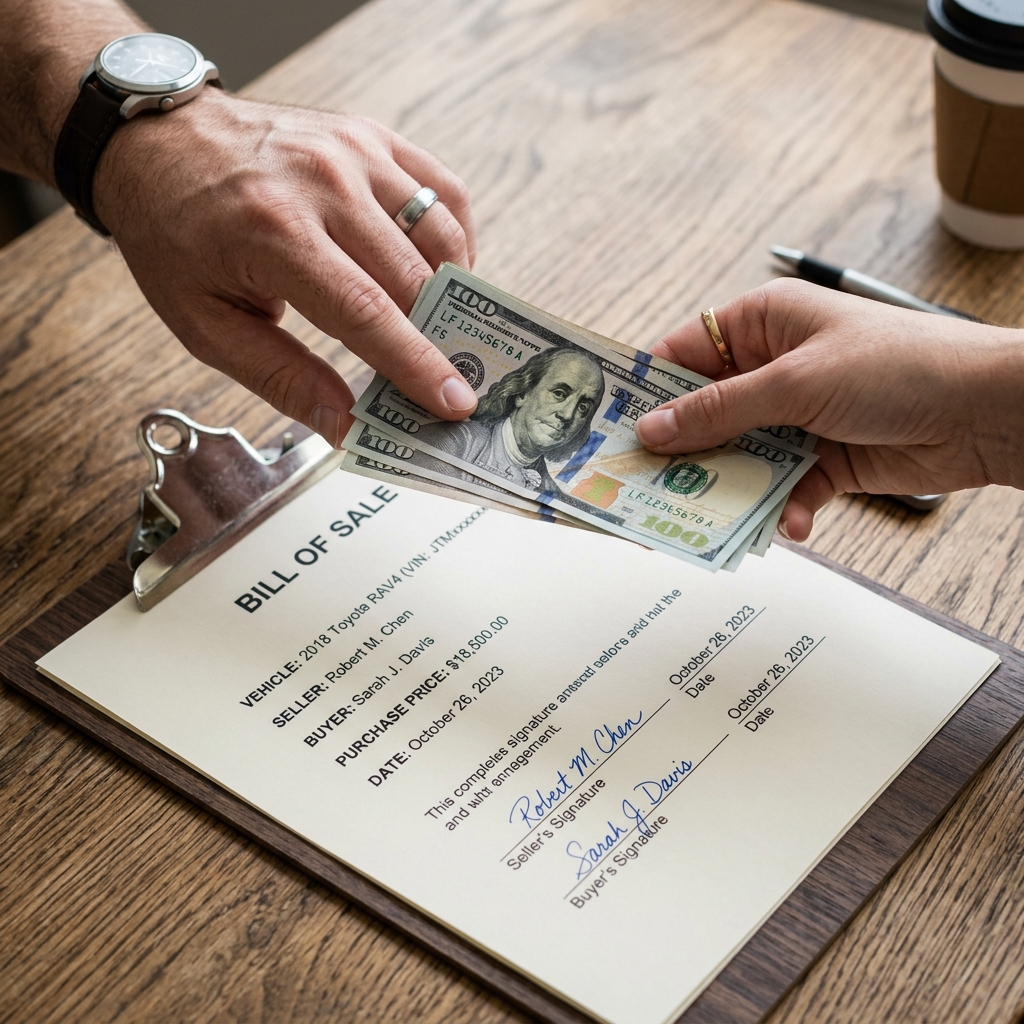
Bill of Sale
Documents the prior transfer. If you bought the car from someone else and they didn't give you a title, a signed bill of sale with VIN, year, make, model, purchase price, and both parties' signatures matters.
Affidavit of Ownership
A notarized statement declaring that the title is lost or destroyed and that you are the rightful owner. Notaries are available at most UPS stores, banks, and credit unions for $5–$15.
Real numbers: Last month, U-Pull-It helped over 300 customers clear their driveways of title-less vehicles, with an average payout of $350 per car. The paperwork took most people under an hour to gather.
State-specific requirements: What your state actually needs
Every state has its own rules for junking a vehicle without a title. Here are three common states where customers ask us about this:
Texas
Form VTR-34 (Affidavit of Heirship for Motor Vehicle) is accepted for vehicles older than 10 years when no title exists. Available at the Texas DMV.
Florida
Form HSMV 82101 (Application for Certificate of Title) is required to declare a title lost or destroyed. Filed at a local tax collector office.
Illinois
For vehicles valued under $1,000, a "Junking Certificate" process exists that skips the standard title requirement for older vehicles headed to scrap.
Not sure what your state requires? Call your local DMV or ask us — we've processed no-title sales across multiple states and know exactly what each jurisdiction accepts.
What happens to the title after you sell a no-title car?
When a licensed salvage yard accepts a vehicle for scrap without a title, they typically issue a Certificate of Destruction. This document:
Formally records that the vehicle was sold for scrap and will never be driven or re-titled again
Removes any future liability from you as the seller for accidents, tickets, or other issues tied to that VIN
Clears the vehicle from your name in the state's DMV registry
A no-title sale at a licensed salvage yard is a legitimate, documented transaction — not a workaround.
How to get the most money for a no-title car
Vehicle condition
Running cars command significantly more than non-runners, even without a title. If yours starts, mention it upfront.
Completeness
Catalytic converters, batteries, and wheels have real scrap value. A car stripped of these parts before sale will get a lower offer.
Location
Towing costs factor into the offer. Closer to the yard generally means a better net payout.
Year, Make, Model
Some vehicles have more valuable parts in the yard. Trucks and SUVs typically yield better scrap metal weight.
Can I sell a car if the title is in someone else's name?
No — not without additional documentation. You need either a title that has been properly signed over to you, or a Power of Attorney from the person named on the title authorizing you to sell on their behalf.
What is a Certificate of Destruction?
It's the document a licensed salvage yard issues when a vehicle is accepted for scrap without a title. It permanently retires the VIN from the state's road system, removing the car (and your liability for it) from the registry.
How long does it take to get a duplicate title?
Typically 1–5 business days for standard mail delivery. Many states offer same-day or next-day processing in person at the DMV for a slightly higher fee.
Will I get less money without a title?
Sometimes, but not always. At U-Pull-It and locations like Houston, TX, we price based primarily on the vehicle's condition, year, make, and model. Submit your VIN online and we'll give you an honest number before you commit to anything.
What if the car has been sitting for years and I have no paperwork at all?
Start at your state's DMV website and search for your VIN — they can confirm the last registered owner name and tell you exactly which replacement forms to file.