TL;DR: Junking a Car with a Blown Engine
A catastrophic engine failure (thrown rod, cracked block, or blown head gasket) frequently costs between $3,000 to $6,000 to fix. If the repair bill exceeds 70% of your car's retail value, you should scrap it. Junkyards will still pay top dollar for the car because the heavy steel frame, transmission, catalytic converter, and electrical components are completely undamaged by engine failure.
The Heartbreaking Diagnosis: "Your Engine is Shot"
You saw the white smoke billowing from the tailpipe, or you heard that unmistakable metal-on-metal knocking sound right before the dashboard lit up like a Christmas tree. Now it's sitting at the mechanic's shop, and they just handed you an estimate that made your stomach drop. Paying $4,500 for an engine swap on a car that's only worth $3,500 simply makes no sense.
This is the moment when the "sunk cost fallacy" traps most vehicle owners. You think about the $800 you spent on new tires last month, or the fresh brakes. Don't fall for it. It's time to learn how to cut your losses and cash out the remaining equity in the vehicle.
engineering The Engine Death Sentence Checklist
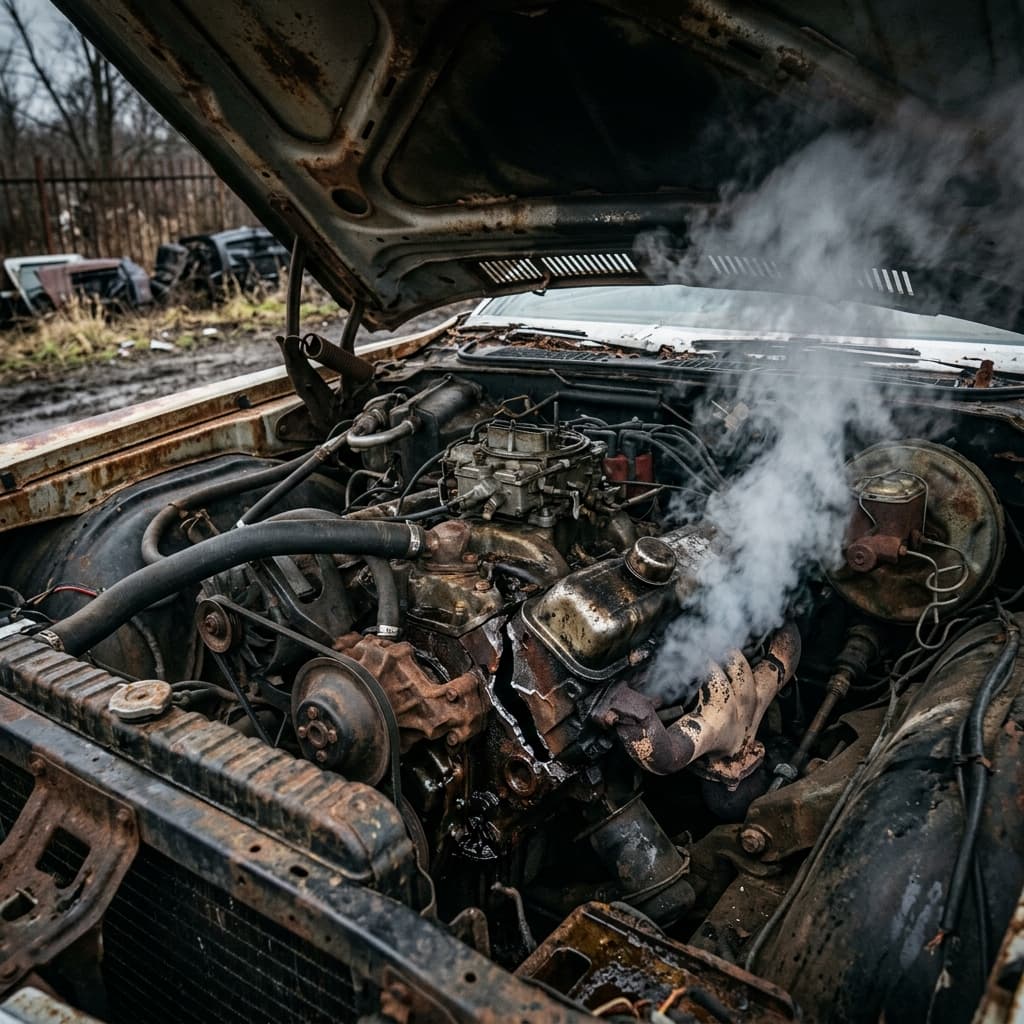
- Thrown a Rod: A piston rod snapped and physically punched a hole through the side of the metal engine block. The engine is catastrophic scrap.
- Cracked Block/Head: Usually caused by severe overheating or freezing coolant. Often invisible until the engine is torn apart, costing thousands in labor.
- Blown Head Gasket: White smoke, milky oil, and extreme overheating. While a gasket is cheap, the labor to rip the engine apart to replace it costs $1,500 to $3,000.
Why Your Car is Still Valuable With a Dead Engine
Your car is an incredibly complex assembly of valuable metals and highly sought-after replacement parts. To an auto recycler, a blown engine is just one bad component out of thousands.
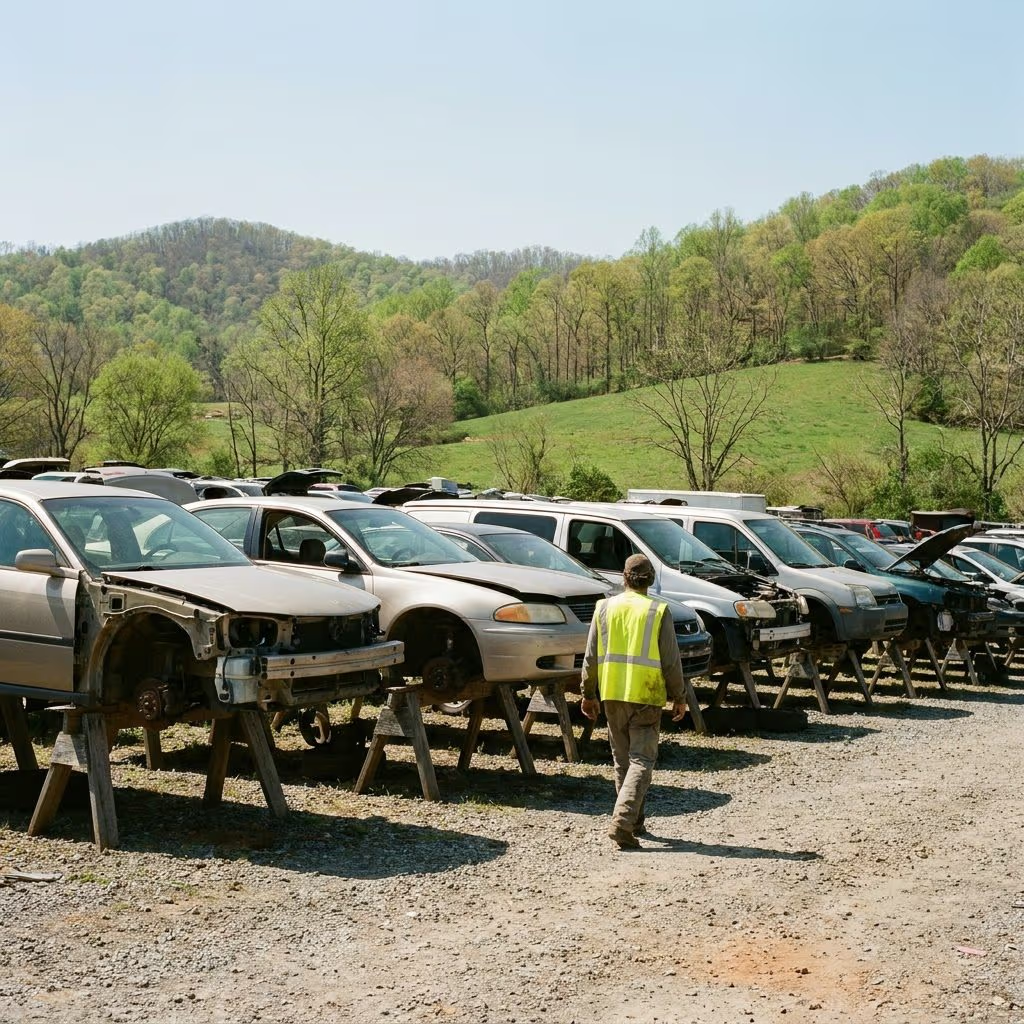
If the engine seized because you forgot to check the oil, the automatic transmission bolted behind it is likely still in perfect working order. The doors, the glass, the leather interior, the airbag modules, the computer (ECU), and the catalytic converter hold significant resale value to DIY mechanics pulling parts. Furthermore, you're sitting on roughly 3,000 to 5,000 pounds of raw steel scrap. We pay you based on that massive footprint, completely ignoring the fact that it doesn't run.
The Hidden Towing Trap (Don't Get Scammed)
If your car won't start, you physically cannot drive it to the salvage yard. Shady online scrap buyers know this. They will quote you a massive offer of $900 on the phone. But when the tow truck arrives, the driver will claim there's a "$250 hook fee" and a "$100 dead-engine deduction," leaving you with a fraction of what you were promised.
Only work with reputable buyers that guarantee free nationwide towing with absolutely zero hidden deductions. The offer made on your phone screen should be the exact amount on the check handed to you in the driveway.
Turn Your Dead Engine Into Cash
We buy non-running cars, blown engines, and bad transmissions with free towing and no hidden fees.
Get a Free Towing Quote NowRemoving Modifications Before The Tow
If you have recently spent serious cash on aftermarket upgrades or maintenance items right before the catastrophic failure, take them off. If you bolted on a $400 custom exhaust, $800 rims, or just bought a brand new AGM battery, swap them out before the flatbed arrives. Just remember, as we cover in our guide on what to remove before selling to a junkyard, if you remove the wheels, the junkyard will require you to supply rolling donut spares so the car can be winched.