Safety First: The Ultimate Guide to PPE for the Junkyard
The Ultimate Guide to PPE for the Junkyard The junkyard environment presents a complex mix of physical hazards including falling objects, sharp metal, chemical hazards from fluids and heavy metals, and various environmental risks. OSHA mandates that employers assess these hazards and provide appropriate PPE, enforcing its use when engineering controls are insufficient. Understanding proper [...]
Article image
The Ultimate Guide to PPE for the Junkyard
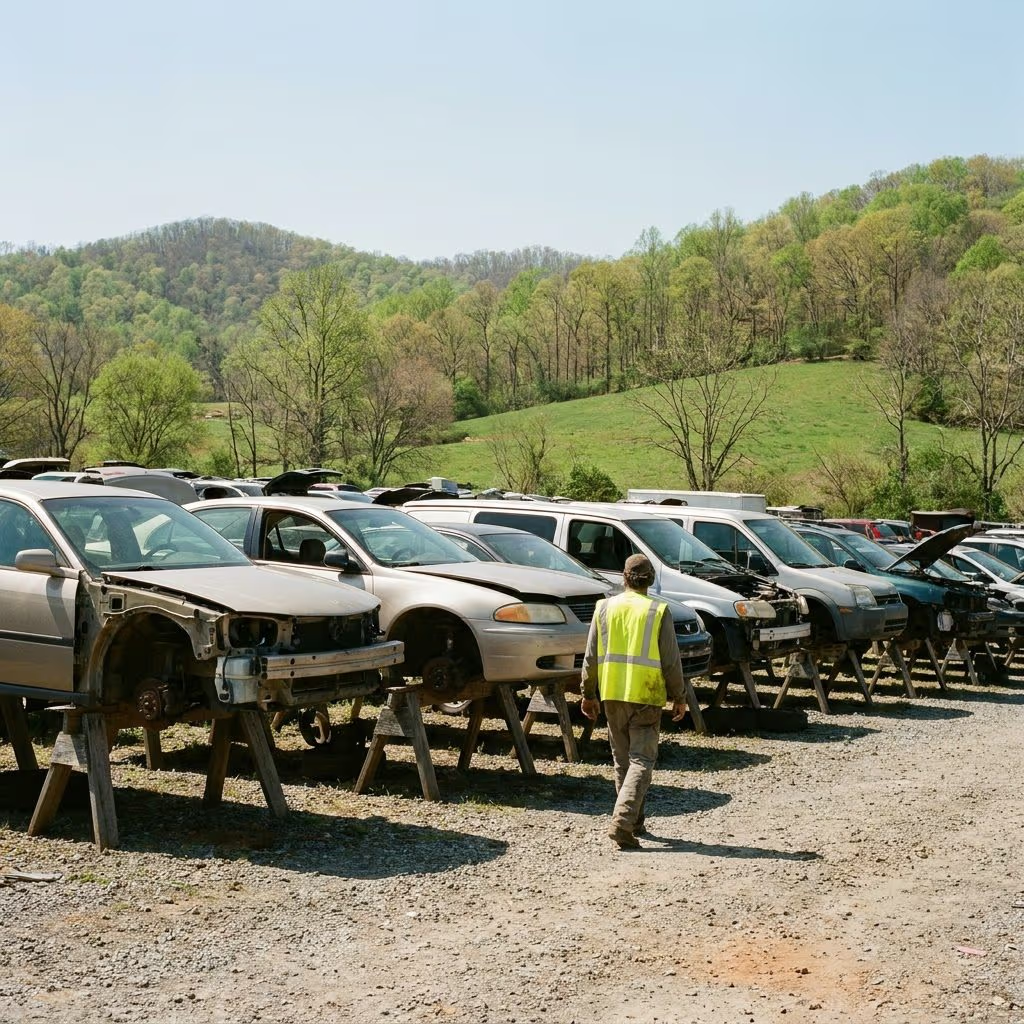
The junkyard environment presents a complex mix of physical hazards including falling objects, sharp metal, chemical hazards from fluids and heavy metals, and various environmental risks. OSHA mandates that employers assess these hazards and provide appropriate PPE, enforcing its use when engineering controls are insufficient. Understanding proper personal protective equipment is crucial for anyone working in or visiting auto salvage operations.
Why PPE is Critical in Salvage Yard Operations
According to the Bureau of Labor Statistics, mechanics and related automotive workers are more likely to experience both minor and fatal injuries than the average worker. In salvage yards near you, these risks are amplified due to the unpredictable nature of damaged vehicles, exposed sharp edges, and potentially hazardous materials that haven't been properly contained.
Key hazard categories include:
Physical hazards: Falling objects, sharp metal edges, heavy machinery
Chemical hazards: Automotive fluids, battery acid, heavy metals
Biological hazards: Contaminated materials and waste
OSHA Requirements and Compliance
OSHA requires employers to conduct a written hazard assessment to determine the specific PPE required for each task. This assessment must be thorough, documented, and regularly updated as conditions change. The regulation emphasizes that PPE is the last line of defense after engineering and administrative controls have been implemented.
“PPE must fit properly to be effective; ill-fitting gear can lead to dangerous exposure or discourage use. Employers must also ensure PPE is maintained, clean, and replaced when worn out.”
Complete Head-to-Toe PPE Protection Guide
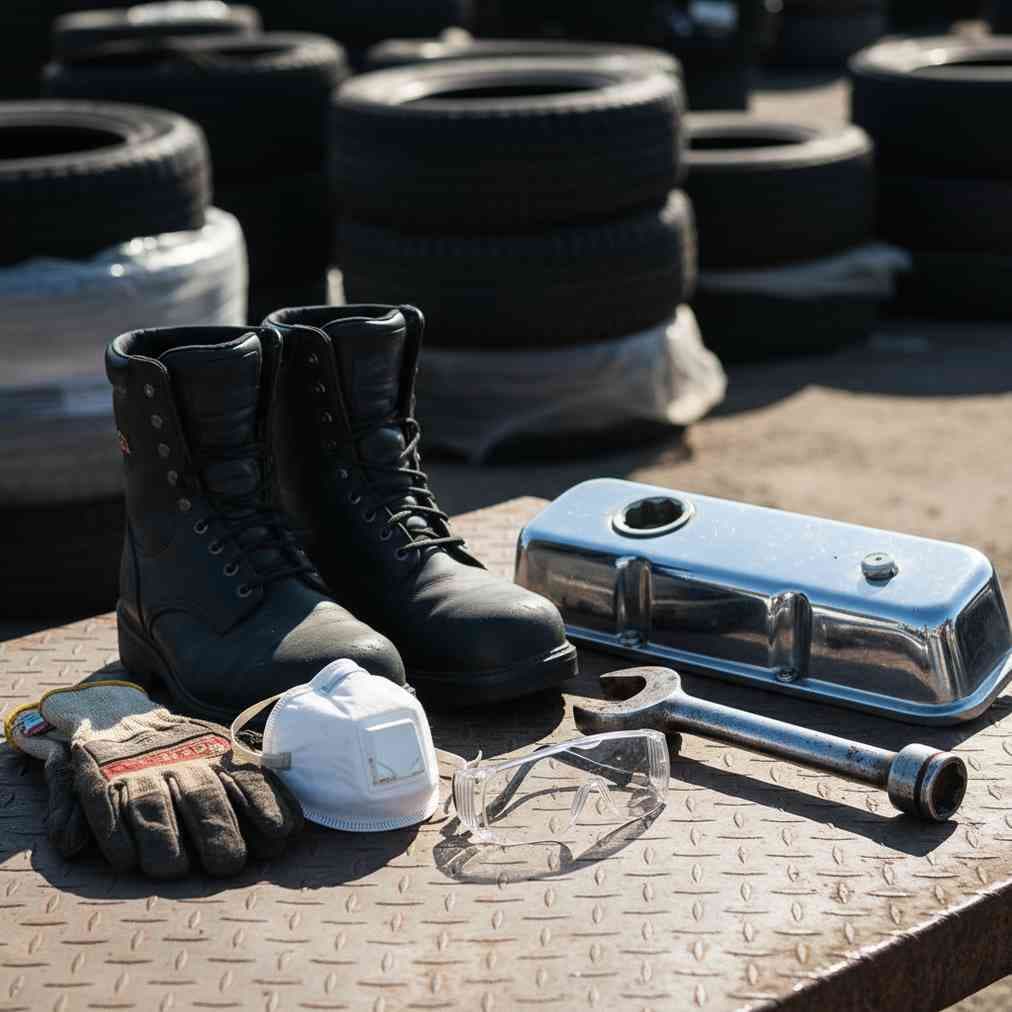
The following comprehensive checklist outlines essential PPE for junkyard operations, explaining specific hazards each piece protects against and why it's crucial in auto salvage environments.
Body Part
Required PPE
Hazard Protection
Junkyard Application
Head
Hard Hat (ANSI/ISEA compliant)
Falling objects, overhead impact
Protection from parts falling from stacked vehicles or overhead racks
Eyes/Face
Safety Glasses/Goggles (ANSI Z87.1)
Flying debris, fluid splashes, fragments
Essential for dismantling, cutting, or fluid handling tasks
Protection from rough surfaces and hazardous liquids
Ears
Hearing protection (earplugs/earmuffs)
Excessive noise from machinery
Required in high-noise areas to prevent permanent hearing loss
PPE Levels for Different Junkyard Operations
Different tasks in salvage yards require varying levels of protection. Understanding these levels helps ensure appropriate safety measures for each type of work performed.
Level D – Minimum Protection (Low-Risk Tasks)
Suitable for: Browsing the yard, light parts removal, administrative duties
Sturdy closed-toe shoes (preferably steel-toe)
Safety glasses
Durable work gloves
Long pants and sleeves
Level C – Enhanced Protection (High-Risk Tasks)
Suitable for: Engine/transmission removal, metal cutting with torches/grinders, fluid drainage, heavy machinery operation
All Level D items PLUS:
Chemical-resistant gloves (nitrile for fluids)
Appropriate respirator for fumes/dust
Face shield over safety glasses
Chemical-resistant coveralls or apron
Specialized PPE Selection by Task
Modern junkyard safety emphasizes task-specific PPE selection rather than one-size-fits-all approaches. This trend toward specialization has proven more effective in preventing injuries and improving compliance.
Glove Specialization
Leather gloves: General handling, rough surfaces
Nitrile gloves: Chemical resistance for automotive fluids
Cut-resistant gloves: Sharp metal handling, glass removal
Heat-resistant gloves: Hot parts, welding operations
Respiratory Protection Programs
OSHA emphasizes the need for formal Respiratory Protection Programs, especially when dealing with automotive restoration projects involving paint or solvent exposure. These programs must include:
Medical evaluations for respirator use
Proper fit testing procedures
Training on proper use and maintenance
Regular equipment inspection and replacement
Recent Developments in Junkyard Safety
The automotive recycling industry continues to evolve its safety practices, incorporating new technologies and methodologies to improve worker protection.
Digital Compliance Systems
Many modern salvage operations now use digital systems for tracking PPE inspections, training completion, and hazard assessments. This ensures OSHA compliance is documented and verifiable, similar to approaches used in industrial safety programs.
Enhanced Training Protocols
Training now emphasizes not just what PPE to wear, but why specific protection is necessary. Workers learn to identify hazards and select appropriate protection based on task-specific risk assessments.
Common PPE Mistakes and How to Avoid Them
Understanding common mistakes helps prevent injuries and ensures compliance with safety regulations.
Improper fit: PPE that doesn't fit properly provides inadequate protection
Wrong glove selection: Using leather gloves for chemical handling
Neglecting eye protection: Not wearing safety glasses for “quick” tasks
Inadequate respiratory protection: Using dust masks for chemical vapors
Poor maintenance: Continuing to use damaged or worn PPE
Cost-Effective PPE Solutions
Quality PPE doesn't have to break the budget. Many effective solutions are available at reasonable costs, especially when purchased in bulk or through safety supply distributors.
PPE Item
Budget Option
Premium Option
Key Considerations
Safety Glasses
$3-8
$15-30
ANSI Z87.1 certification essential
Work Gloves
$5-12
$20-40
Task-specific material selection
Steel-toe Boots
$50-80
$150-300
Comfort for all-day wear
Hard Hat
$15-25
$40-80
ANSI compliance required
Maintenance and Replacement Schedules
Proper PPE maintenance extends equipment life and ensures continued protection. Establish regular inspection schedules and replacement protocols.
Daily Inspections
Check for cracks or damage in hard hats and safety glasses
Inspect gloves for cuts, punctures, or chemical degradation
Verify respirator seals and filter condition
Examine footwear for sole separation or toe protection damage
Replacement Guidelines
Hard hats: Every 2-5 years or after impact
Safety glasses: When scratched, cracked, or damaged
Respirator filters: According to manufacturer specifications
Work boots: When sole or toe protection is compromised
Special Considerations for Electric Vehicle Parts
As electric vehicles become more common in salvage yards, additional safety considerations become necessary. EV safety protocols require specialized training and equipment.
Electrical protection: Insulated gloves rated for high voltage
Arc flash protection: Flame-resistant clothing
Lockout/tagout procedures: Proper isolation of electrical systems
Emergency response: Knowledge of EV-specific hazards
Creating a Culture of Safety
Effective PPE programs go beyond simply providing equipment. They create an environment where safety is valued and practiced consistently.
Leadership Commitment
Management must demonstrate commitment to safety through actions, not just policies. This includes providing quality PPE, ensuring proper training, and enforcing safety rules consistently.
Employee Engagement
Workers who understand the “why” behind safety rules are more likely to comply. Regular safety meetings, hazard reporting systems, and recognition programs all contribute to a positive safety culture.
Emergency Procedures and First Aid
Even with proper PPE, accidents can occur. Having proper emergency procedures and first aid capabilities is essential for any junkyard operation.
Eye wash stations: For chemical splashes
First aid kits: Stocked with appropriate supplies
Emergency contact procedures: Clear communication protocols
Incident reporting: Documentation and follow-up procedures
Conclusion: Your Safety Investment
Proper PPE represents an investment in worker safety and business continuity. The costs of quality protective equipment pale in comparison to the potential costs of workplace injuries, OSHA violations, and lost productivity. Whether you're operating a salvage yard, working as a mechanic, or looking to sell your junk car for cash, understanding and implementing proper safety protocols protects everyone involved.
Remember that PPE is just one part of a comprehensive safety program. Combining proper protective equipment with good training, hazard identification, and safety-conscious work practices creates the safest possible working environment in the challenging junkyard setting. Stay safe, stay protected, and make safety your first priority in every salvage yard operation.