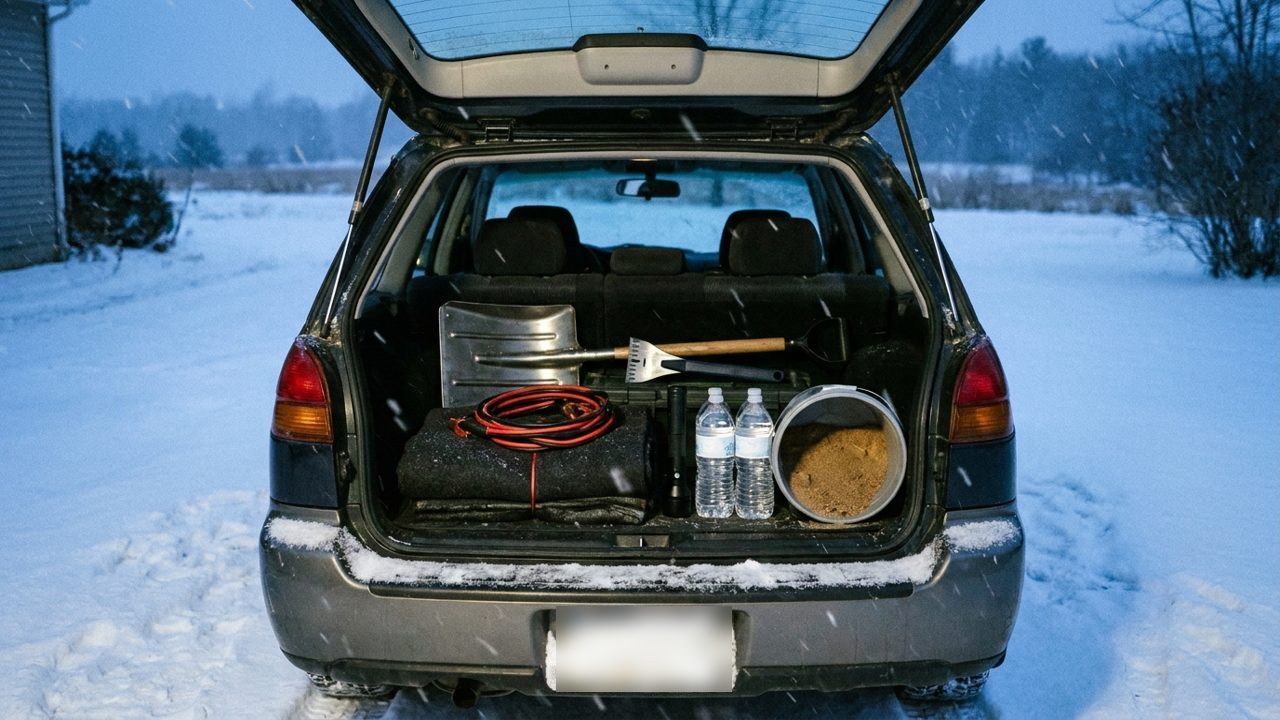
Short answer: To winterize a car, start with what strands you first. Test the battery, check the coolant, set tire pressure and measure tread, then fill up with washer fluid rated for your coldest nights. After that, check the wipers, lights, heater, defroster and oil grade, and pack an emergency kit. Your owner's manual decides the coolant type and the oil grade.
Last checked: November 1, 2026. Maintenance and kit advice is from NHTSA's winter driving page, AAA clubs and Ready.gov. The battery and coolant figures are from an AAA Northeast release dated January 3, 2022. Washer fluid ratings are from the makers' product pages. This article replaces a 2025 version.
What should you check first on a winter car checklist?
This order puts the failures that leave you stuck, or unable to see, ahead of the rest.
| Priority and item | How to check | When to replace or fix |
|---|---|---|
| 1. Battery and charging system | Engine off, a multimeter should read about 12.6 volts, AAA says. A load test tells you more, and Optima says many parts stores do it free. | It fails a load test or will not hold a charge. AAA says to test any battery over three years old. |
| 2. Coolant | Engine cold. Check the level, look for leaks and worn hoses, and test protection with an antifreeze tester. | Protection falls short of your coldest weather, the level keeps dropping, or the manual's change interval has passed. |
| 3. Tires and pressure | Measure after the car has sat for three hours. Use the pressure on the door-frame label, not the number on the tire. Do the penny test with Lincoln's head upside down. | You can see the top of Lincoln's head, wear is uneven, or tread is under 2/32 inch. Winter driving calls for more. |
| 4. Wipers and washer fluid | Run the wipers on wet glass. Read the temperature rating on the fluid label. | Blades streak, miss spots, crack or tear. Refill with fluid rated below your coldest nights. |
| 5. Lights | Check headlights, brake lights, turn signals, flashers and interior lights, with a helper if you can. | Replace dead bulbs. |
| 6. Heater and defroster | Warm the engine, run the defroster on high and see how fast the glass clears. | Weak or no heat. Read our car heater troubleshooting post before you buy parts. |
| 7. Oil | Check the level, then look up the grade in the owner's manual. Some manuals list grades by temperature range. | Change it if it is due, using the grade the manual gives for your climate. |
NHTSA also suggests a mechanic's look at belts, hoses and the charging system. In 2024 it counted 365 fatal crashes and an estimated 24,383 injury crashes in snow or sleet, which is not weather to be stranded in.
How much does cold weather hurt a car battery?
AAA Northeast says even a good battery can lose up to 50 percent of its capacity at zero degrees. It also says a cold engine can take up to 30 percent more power to start at 32 degrees. So the battery has less to give just when the engine asks for more.
A battery that seemed fine in October can die on the first hard morning. Interstate Batteries says batteries typically last three to five years. Get yours tested before the first deep cold.
What coolant mix does a car need for winter?
AAA Northeast says a 50/50 mix of antifreeze and water protects the engine to -34 degrees. An inexpensive tester from a parts store will show what yours protects to, and AAA recommends testing every year. Never open a hot radiator cap.
Your owner's manual decides the coolant type. NHTSA says the coolant must meet the manufacturer's specifications, so do not pick a jug by color or by what your last car used.
Which windshield washer fluid works in winter?
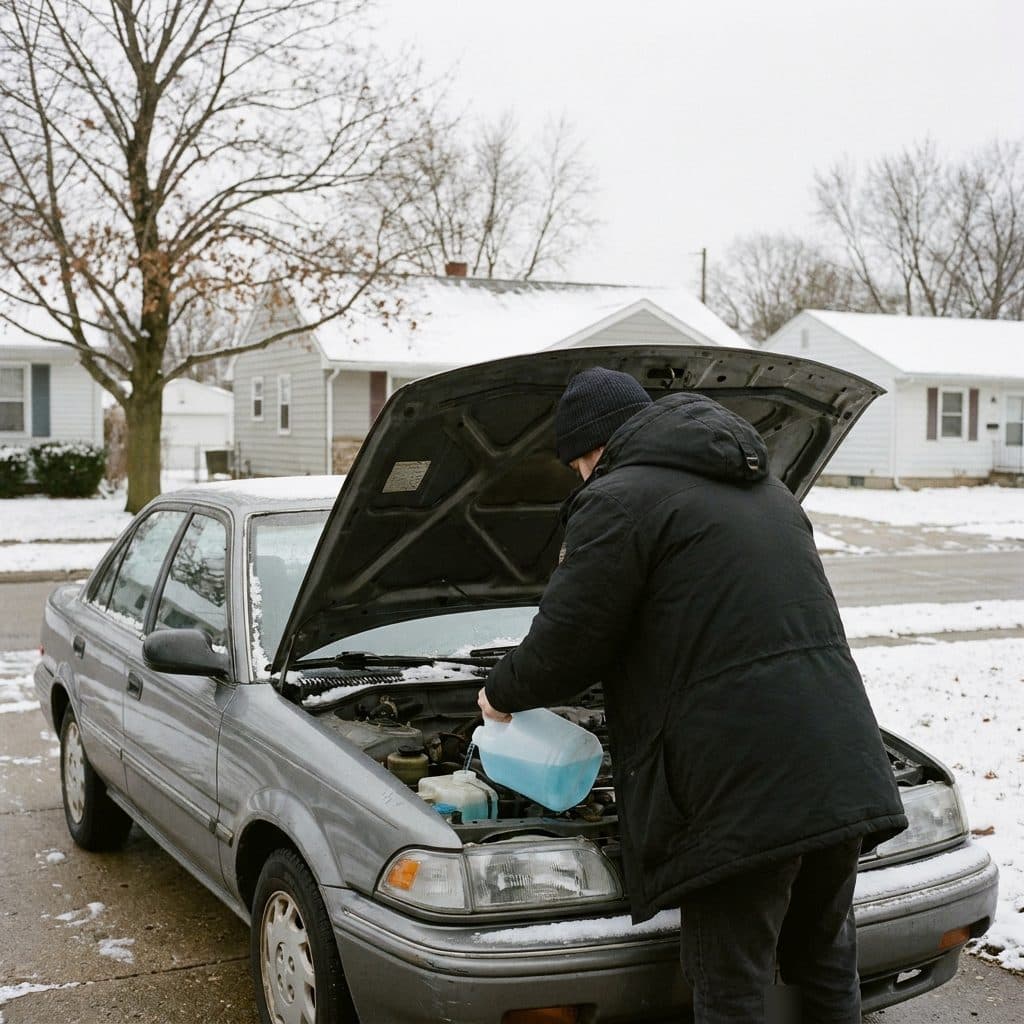
Use fluid rated for your cold, and read the bottle, because the ratings vary a lot. Rain-X All-Season is listed as effective to 0 degrees F, while Prestone De-Icer claims -34 degrees F. NHTSA recommends winter fluid with de-icer and a full reservoir before the season, because one snowstorm can use a lot of it.
If the tank still holds summer fluid, run it nearly empty before you fill it, since what is left dilutes the new fluid. Keep a spare jug in the trunk. In heavy snow areas, NHTSA suggests heavy-duty winter wipers.