Direct answer: A part can look identical and still be wrong. Engines change by VIN digit, radios change by trim, mirrors change by wiring, and doors change by body style. Verify fit before the first bolt comes out.
Quick facts
Primary keyword used auto parts fit Related searches- interchangeable auto parts
- Hollander interchange
- junkyard parts
What is the fastest way to check junkyard part compatibility?
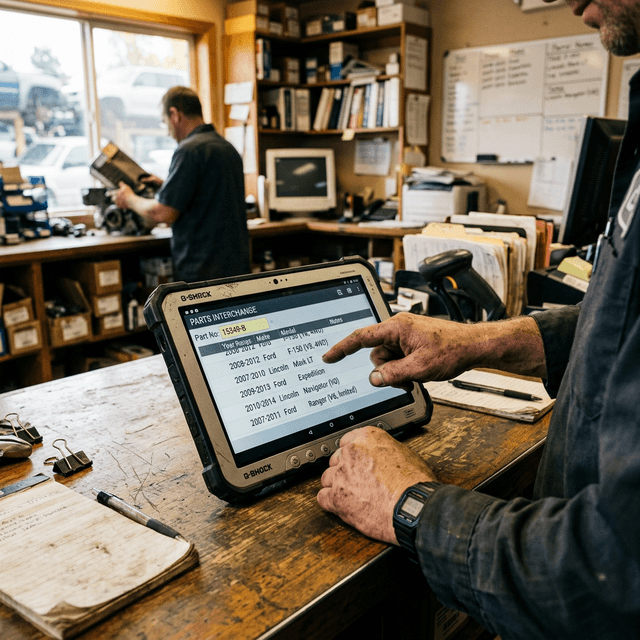
Start with year, make, model, engine, transmission, body style, and trim. Then verify the part number or casting number. If the yard has Hollander-style interchange data, use it to widen the donor list without guessing.
- Match the 8th VIN digit for engine-specific parts
- Count connector pins and compare lock tabs
- Check bolt pattern, mounting ears, and brackets
- Compare option codes for tow package, AWD, ABS, and premium audio
- Search Car-Part.com or a parts catalog for cross-reference clues
Why do sister cars matter?
Many vehicles share platforms. A Pontiac Vibe may share parts with a Toyota Matrix, and a Chevy Silverado may share many parts with a GMC Sierra. Sister cars expand the donor pool when the exact model is not in the yard.
When should you walk away?
Walk away when the connector is different, the casting number conflicts, the donor car shows flood or fire damage, or the yard cannot offer a return on an electronic part. Guessing is where cheap parts get expensive.