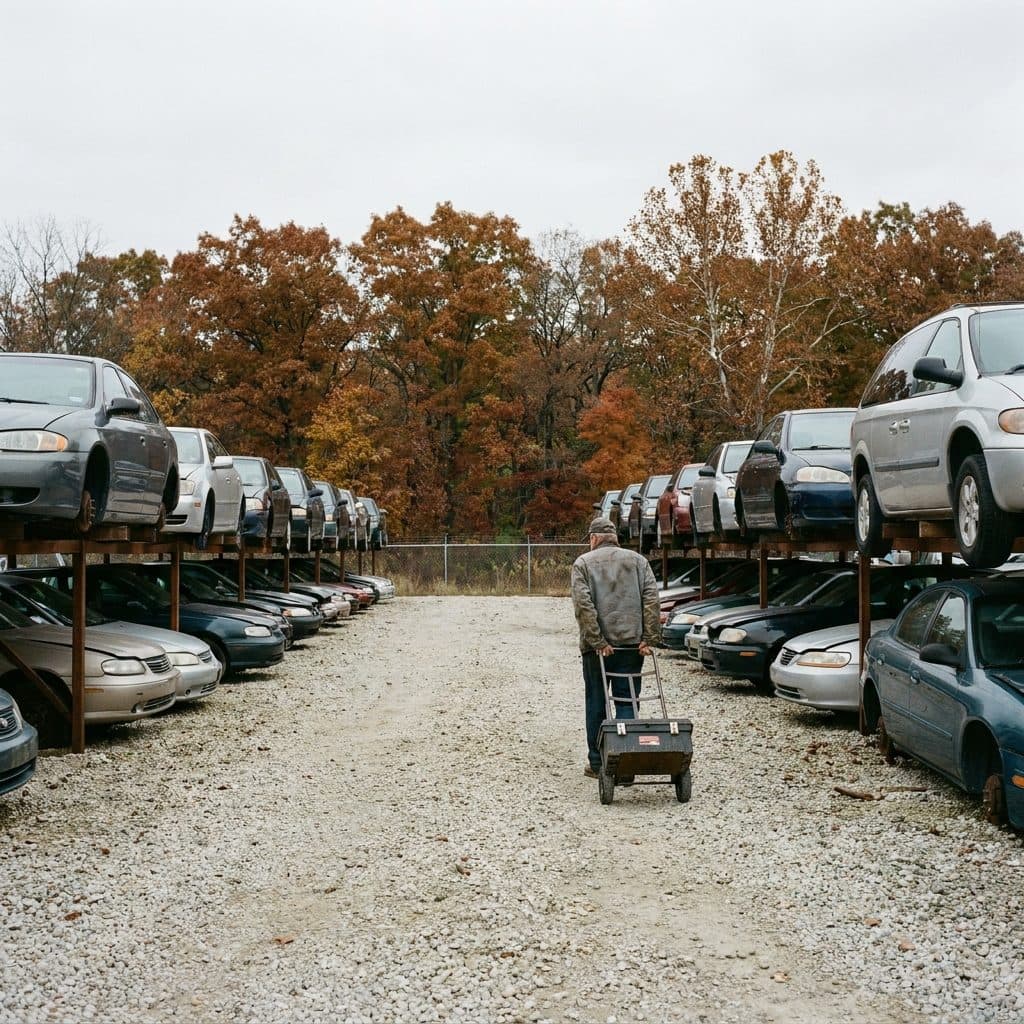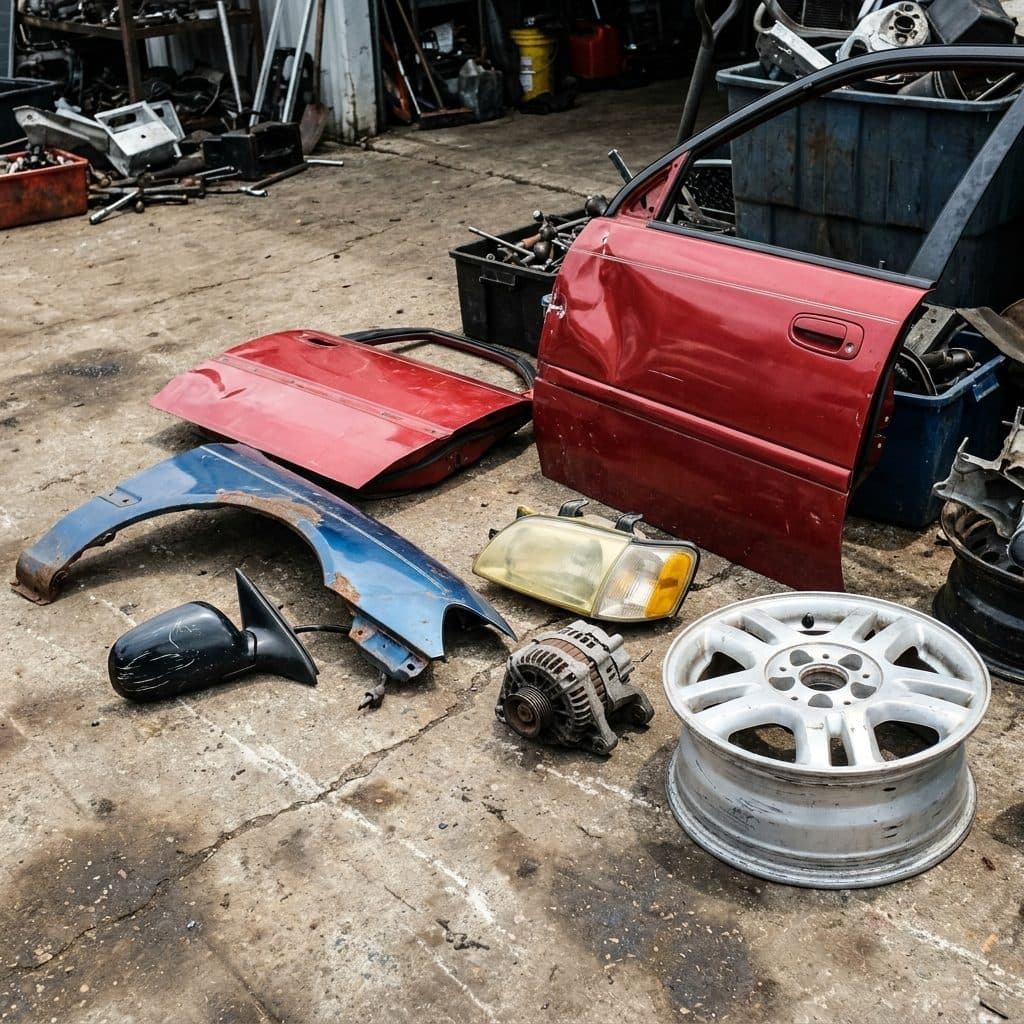
Short answer: Many imported auto parts have carried a 25% tariff since May 2025, and repair prices rose 5.2% in the year to August 2026, according to the Bureau of Labor Statistics. A self-service yard sells parts already in the country at a posted price. The biggest savings are on body panels, mirrors, lights, alternators, starters, modules and wheels. Buy brake wear parts, timing belts and safety restraint parts new.
Last checked: October 5, 2026. Tariff facts are from the White House and the Congressional Research Service. Repair prices are from the BLS consumer price index. Parts figures are from PartsTrader via Autobody News, LKQ's July 30 SEC filing and Cox Automotive. Yard prices and policies are from Pick-n-Pull's posted Oakland list.
What changed with auto parts tariffs?
A proclamation of March 26, 2025 put a 25% tariff on imported automobile parts from no later than May 3, 2025. Parts that qualify under the USMCA trade agreement with Canada and Mexico were left out of it for now. A Congressional Research Service report updated on May 11, 2026 says vehicles from the EU, Japan and South Korea face a 15% total tariff under trade deals, and most UK vehicles 10%.
| Figure | Value | Source and date |
|---|---|---|
| Tariff on imported auto parts | 25%, USMCA parts exempt | White House, in effect from May 2025 |
| Vehicle maintenance and repair prices | Up 5.2% from August 2025 to August 2026 | BLS consumer price index |
| Parts and equipment, including tires | Up 0.9% over the same year | BLS consumer price index |
| All consumer prices | Up 3.4% over the same year | BLS consumer price index |
| OEM collision parts made overseas | About 44% | PartsTrader, Autobody News, January 2, 2026 |
| Average new-vehicle price | $50,089 in August 2026, up 1.9% in a year | Kelley Blue Book, September 10, 2026 |
Repair prices are rising faster than prices overall. PartsTrader estimated that tariffs add roughly $100 to the parts line of an average collision repair order, according to Autobody News. The BLS figures are in the maintenance and repair series.
More repairs are using parts that are not new from the factory. LKQ, a large seller of recycled and aftermarket parts, said in its second-quarter results filed on July 30, 2026 that its North America segment grew on "record alternative-parts utilization of over 40%".
Which used parts save the most?
Parts that do not wear out, that you can inspect on the car, and that cost a lot new. Self-service yards sell them at fixed prices. These are from Pick-n-Pull's posted price list for its Oakland, California yard on October 5, 2026.
| Part | Price | Core deposit |
|---|---|---|
| Fender | $74.99 | $8.99 |
| Door with hinges | $99.99 | $8.99 |
| Bumper cover | $72.99 | $4.99 |
| Outside mirror, electric | $45.99 | None |
| Headlight assembly | $40.99 | None |
| Alternator | $37.99 | $9.99 |
| Starter | $34.99 | $9.99 |
| Engine computer | $70.99 | $4.99 |
| Aluminum wheel | $35.99 | $14.99 |
The list prices by part type, not by make, so a headlight for a luxury car costs what one for an economy car does. Body panels gain the most: a used fender is a factory part, and it may already be the right color. Modules need the exact part number, and some must be programmed to the car, so ask a shop before you pull one. Prices vary by chain and location; our self-service price list and the page for Pick-n-Pull Oakland are good starting points.

Which parts should you buy new?
This is our advice and not a rule from a safety agency. Buy new anything that wears out with use or that protects you in a crash.
| Part | Why buy it new |
|---|---|
| Brake pads, rotors, hoses | You cannot tell how much life is left |
| Timing belt | Its age and mileage are unknown, and a failure can wreck some engines |
| Water pump on a high-mileage engine | It is often changed with the timing belt, so the labor is already paid |
| Airbags, seat belts, sensors | You cannot test them, and the donor car was often in a crash |
Our list of parts you should never buy used covers more.
How do yard warranties and core deposits work?
At Pick-n-Pull, any part except tires can be returned within 30 days to the yard where you bought it, with the receipt. You get a matching part or store credit, not cash. The part must still carry the yard's marking and must not have been taken apart. Labor is never covered.
For 30% more on the part price, Pick-n-Pull sells a 12-month WarrantyPLUS on some parts. It replaces a failed part and does not pay for labor.
A core deposit is a refundable charge. Buy a $37.99 alternator and you also pay a $9.99 deposit. Bring back your old alternator, or a matching one, within 30 days and you get the $9.99 back in cash. Our explainer on core charges goes into more detail.
A PBS NewsHour report on how the auto parts tariffs could affect car prices and repair bills, published May 2025.