"Safe" vs. "Risky" Buys: What Parts Should You Never Buy Used?
Understanding the Fundamentals of Safe vs. Risky Used Auto Parts When shopping for used auto parts at salvage yards near me, understanding which parts are safe investments versus risky gambles can save you hundreds of dollars and prevent dangerous failures. Not all junkyard parts are created equal, and making informed decisions requires knowledge of wear [...]
Article image
Understanding the Fundamentals of Safe vs. Risky Used Auto Parts
When shopping for used auto parts at salvage yards near me, understanding which parts are safe investments versus risky gambles can save you hundreds of dollars and prevent dangerous failures. Not all junkyard parts are created equal, and making informed decisions requires knowledge of wear patterns, safety criticality, and testability factors.
Reputable auto recyclers often sell Original Equipment Manufacturer (OEM) parts with lower statistical failure rates than new aftermarket alternatives. However, the key lies in knowing which categories of parts maintain their reliability when used and which pose unacceptable risks to your safety and wallet.
Safe Bet Categories: Low-Risk Used Auto Parts
These parts represent the best value propositions in the used parts market because their function is straightforward, they experience minimal internal wear, or their potential failure doesn't pose immediate safety hazards.
Body Panels and Exterior Parts
Part Type
Examples
Why They're Safe
What to Inspect
Doors & Panels
Doors, fenders, hoods, trunk lids
Bolt-on installation, visible damage assessment
Rust, dents, alignment points
Bumpers
Front/rear bumper assemblies
Structural integrity easily verified
Cracks, mounting tabs, paint condition
Mirrors
Side mirrors, heated mirrors
Significant savings on expensive OEM units
Glass condition, motor function, heating elements
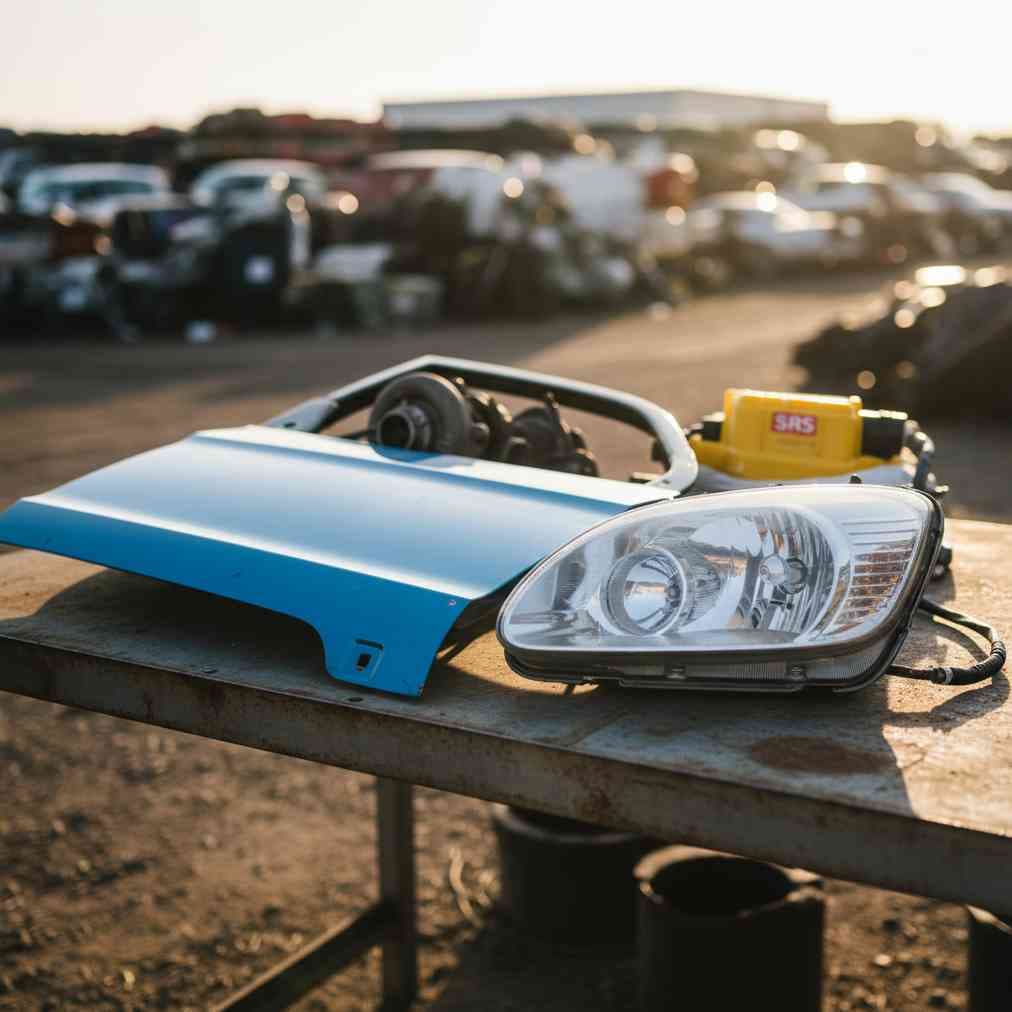
Body panels offer exceptional value because their functionality is immediately apparent. A used car hood that isn't damaged will function identically to a new one, often at 60-70% cost savings.
Interior Parts
Seats and upholstery – Easy to assess condition visually
Dashboard parts – Minimal wear on non-electronic pieces
Door panels and trim – Cosmetic function with straightforward replacement
Center consoles – Structural integrity rarely compromised
Glass and Lighting
Glass parts represent some of the safest used purchases because functionality is immediately visible. Headlights and taillights from salvage yards can provide substantial savings, especially for luxury vehicles where new units cost $500 or more.
“Buying used glass and lighting saves me 40-60% compared to dealership prices, and the functionality is identical if you inspect properly.” – Auto restoration expert
High-Risk Categories: Parts to Avoid or Buy Cautiously
These parts categories pose significant risks due to safety criticality, unknown wear history, or complex systems that can't be properly tested in salvage yard conditions.
Safety-Critical Systems
Part Category
Risk Level
Why Risky
Recommendation
Airbags
Extremely High
Single-use, unknown deployment history
Always buy new
Seat Belts
High
Hidden structural damage from crashes
New recommended
Brake Pads/Shoes
High
Unknown remaining life, safety critical
New only
The National Highway Traffic Safety Administration (NHTSA) has specifically warned about suspect replacement airbags from questionable sources, emphasizing that safety restraint systems should almost always be purchased new.
Wear Items and Consumables
Tires – Rubber degradation occurs regardless of tread depth
Timing belts – Failure can cause catastrophic engine damage
Filters (oil, air, fuel) – Designed for single-use applications
Spark plugs – Low cost makes used purchase impractical
The U.S. Tire Manufacturers Association explicitly advises against purchasing used tires due to aging-related failure risks that aren't visible during inspection.
Complex Electronic Systems
Modern vehicles contain sophisticated electronic modules that pose unique challenges for used parts buyers:
Engine control modules (ECM) – Programming compatibility issues
Airbag control modules – Safety-critical with complex diagnostics
Advanced sensors – Oxygen, mass airflow, ABS sensors
Major Mechanical Parts: Proceed with Extreme Caution
Engines and transmissions represent the highest-stakes used parts purchases. While potential savings can reach thousands of dollars, the risks are equally substantial.
Engine Considerations
When considering a junkyard engine replacement, focus on units from low-mileage vehicles that were totaled due to collision rather than mechanical failure. Even with warranties offered by some yards, labor costs for installation aren't typically covered if the engine fails.
Transmission Risks
Transmissions pose similar challenges with the added complexity of fluid contamination and internal wear that's impossible to assess without disassembly. Finding the right used transmission requires extensive research into the donor vehicle's history.
Key Decision-Making Factors
Cost-Benefit Analysis
Factor
Safe Parts
Risky Parts
Potential Savings
50-70% of new price
30-50% of new price
Failure Consequences
Cosmetic or minor inconvenience
Safety hazard or major expense
Installation Labor
Often DIY-friendly
High labor costs if part fails
Testability
Visual inspection sufficient
Requires complex diagnostics
Inspection and Testing Capabilities
The ability to properly evaluate a part before purchase directly correlates with purchase safety. Parts requiring sophisticated testing equipment or operational history knowledge should be approached with extreme caution.
Smart Shopping Strategies
Research Before You Go
Verify part compatibility using VIN numbers
Check new part prices for comparison
Research common failure points for your specific model
Identify reputable yards with return policies
Inspection Best Practices
Bring proper tools and lighting for thorough inspection. Essential junkyard tools include flashlights, basic hand tools, and cleaning supplies to properly assess part condition.
When to Choose New Over Used
Certain circumstances mandate new parts regardless of potential savings:
Safety systems – Airbags, ABS modules, seat belt assemblies
Wear items approaching service intervals – Timing belts, water pumps during engine work
High-failure rate parts – Known problematic sensors or modules
Warranty considerations – When vehicle warranty could be affected
Making the Right Choice for Your Situation
The decision between new and used parts should factor in your mechanical expertise, available time, and risk tolerance. For DIY mechanics comfortable with troubleshooting, certain electronic parts may be worth the risk given proper return policies. However, safety-critical parts should never be compromised regardless of potential savings.
If you're looking to sell a junk car for cash, understanding parts values can help you maximize your return by removing valuable parts before sale.
Successfully navigating the used parts market requires balancing data-driven decision making with practical experience. Research thoroughly, inspect carefully, and never compromise on safety to save money.
Conclusion: Building Your Used Parts Strategy
Smart used parts buying centers on understanding risk categories and making informed decisions. Focus your salvage yard efforts on body panels, interior parts, and non-critical mechanical parts where savings are substantial and risks are minimal. For safety-critical systems and complex electronics, the modest savings rarely justify the potential consequences of failure.
Remember that myths about junkyard parts often overshadow the reality that quality used parts can provide excellent value when chosen wisely. The key is matching the right part category to your specific needs while maintaining appropriate safety standards.