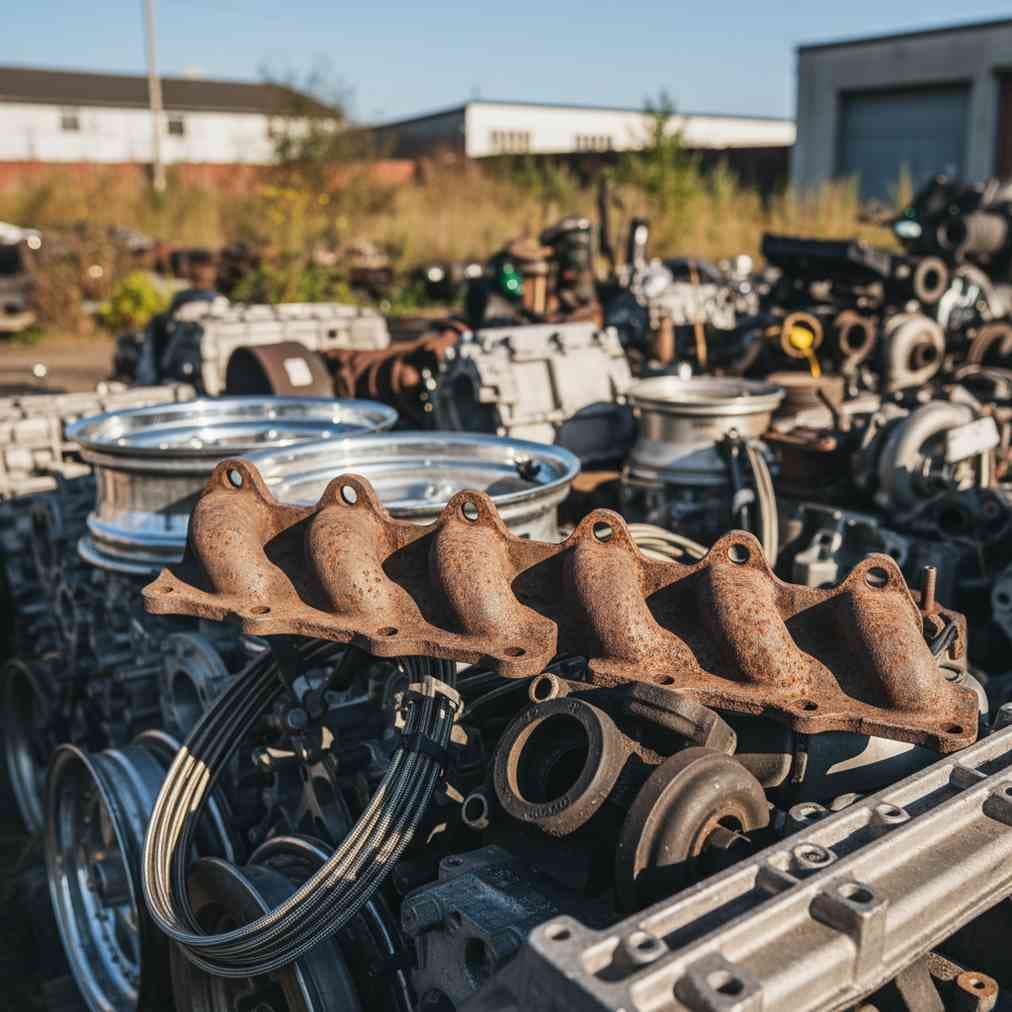
Why Choose a Used Exhaust Manifold from a Junkyard? When your car's exhaust manifold fails, purchasing a used exhaust manifold from a junkyard can save you up to 75% compared to buying new. The exhaust manifold's primary role is to collect exhaust gases from the engine's combustion chambers and direct them into the exhaust system. [...]
Article image
Why Choose a Used Exhaust Manifold from a Junkyard?
When your car's exhaust manifold fails, purchasing a used exhaust manifold from a junkyard can save you up to 75% compared to buying new. The exhaust manifold's primary role is to collect exhaust gases from the engine's combustion chambers and direct them into the exhaust system. While these components experience significant thermal cycling that makes them susceptible to damage over time, many used exhaust manifolds still offer years of reliable service when properly inspected.
Beyond cost savings, buying used exhaust manifolds aligns with environmentally responsible recycling practices. Recycled auto parts help reduce manufacturing waste while providing budget-friendly solutions for vehicle repairs. Many salvage yards now maintain comprehensive inventories with various makes and models available both in-person and through online platforms.
Critical Inspection Points for Used Exhaust Manifolds
Before purchasing any used exhaust manifold, thorough inspection is paramount to avoid costly installation problems. Understanding what to look for can mean the difference between a successful repair and a frustrating failure. Here's what experienced mechanics recommend checking when buying used auto parts.
Checking for Cracks and Damage
Cracks represent the most common failure point in exhaust manifolds due to repeated heating and cooling cycles. These thermal stress fractures can lead to exhaust leaks, affecting engine performance and potentially allowing toxic fumes into the cabin. When inspecting a used manifold:
Perform a thorough visual inspection for hairline cracks
Pay special attention to mounting bolt areas and curved sections
Look for signs of previous welding repairs, which often indicate structural weakness
Use a flashlight to illuminate hard-to-see areas
“In my opinion, it's OK to use a used exhaust manifold, but you need a new gasket and you must check that the used manifold doesn't also have heat shield bolts broken off in it and that the hole for the oxygen sensor is in good condition.”
Experienced Mechanic Forum Discussion
Detecting Warping Issues
Warping occurs when extreme heat causes the manifold's mating surface to distort, preventing a proper seal with the cylinder head. Even with a new gasket, a warped manifold will continue to leak. To check for warping:
Use a straight edge across the manifold's mounting surface
Employ a feeler gauge to measure any gaps
Check all mounting surfaces, not just the primary flange
Minor warping can sometimes be machined flat, but severe warping requires replacement
Some experts suggest that a used manifold that has already experienced its heat cycles without cracking might actually be safer, especially if the mounting surface can be resurfaced. This approach is similar to strategies used when buying used transmissions, where components that have proven their durability offer better long-term reliability.
Gasket Surface and Hardware Evaluation
The gasket surface condition directly impacts sealing effectiveness. When installing a used manifold, always plan to replace the gasket with a new one, but the manifold's mating surfaces must be in good condition:
Inspect for erosion or damage that a new gasket cannot compensate for
Check all mounting points (studs or bolt holes) for integrity
Verify oxygen sensor threads are undamaged
Look for broken-off bolts or damaged threads
Component
What to Check
Red Flags
Remedy
Manifold Surface
Flatness, cracks, corrosion
Visible cracks, severe warping
Avoid or resurface if minor
Bolt Holes
Thread condition, damage
Stripped threads, broken bolts
Repair threads or replace
O2 Sensor Port
Thread integrity, accessibility
Cross-threaded or damaged
Professional thread repair
Heat Shield Mounts
Attachment points, corrosion
Broken mounting tabs
May require shield modification
OEM vs Aftermarket Headers: Making the Right Choice
Understanding the difference between OEM exhaust manifolds and aftermarket headers helps determine the best option for your specific needs and budget. This choice parallels decisions made when selecting OEM car parts versus aftermarket alternatives.
OEM Exhaust Manifolds
Original Equipment Manufacturer (OEM) exhaust manifolds are the factory-installed components, typically constructed from thick cast iron. These manifolds offer several advantages:
Guaranteed fitment and compatibility with your specific vehicle model
Designed to balance performance, fuel economy, and noise reduction for daily driving
Usually more durable than thin aftermarket alternatives
Aftermarket headers are performance-oriented upgrades designed to maximize engine output by reducing backpressure and improving exhaust gas scavenging. Key characteristics include:
Usually constructed from thinner stainless steel tubing
Feature longer, equal-length primary tubes for better flow
Cost 20-50% more than OEM alternatives
May require tuning adjustments for optimal performance
Can sometimes trigger check engine lights on stock vehicles
According to automotive experts, performance headers provide the most benefit on highly modified or performance-oriented engines. For stock or lightly modified daily drivers, the performance increase may be minimal while potentially creating compatibility issues.
Smart Shopping Strategies at Junkyards
Successful junkyard shopping requires preparation and knowledge. Following proven strategies can help you find quality parts while avoiding common pitfalls that plague inexperienced buyers.
Pre-Visit Preparation
Before visiting any local salvage yard, proper preparation increases your chances of finding the right part:
Research your vehicle's specifications including engine size, model year, and any relevant option codes
When you locate potential exhaust manifolds, systematic evaluation helps identify the best candidates:
“When buying from random junkyards, you can also try to get the used exhaust manifold checked by a mechanic before you buy it so that you can be sure that it is in good condition.”
Professional Mechanic Recommendation
Inspect the donor vehicle's overall condition as an indicator of part quality
Look for vehicles that appear well-maintained with recent service records
Prefer manifolds from complete engine assemblies rather than partially disassembled units
Ask yard personnel about the vehicle's history if available
This evaluation process mirrors techniques used when selecting used transmissions or other major components where reliability is paramount.
Installation Considerations and Best Practices
Even with a quality used exhaust manifold, proper installation determines long-term success. Understanding installation requirements helps avoid common mistakes that can lead to leaks and premature failure.
Essential Replacement Components
When installing a used exhaust manifold, certain components should always be replaced regardless of their apparent condition:
Exhaust manifold gasket – Never reuse old gaskets
Mounting bolts or studs if showing signs of corrosion or stress
Heat shield hardware if applicable
Oxygen sensor if threads are damaged during removal
The exhaust manifold gasket serves as the critical sealing mechanism between the exhaust manifold and the engine's cylinder head. Even if the used manifold is in excellent condition, gasket failure will result in exhaust leaks that affect performance and emissions compliance.
Professional vs DIY Installation
While some automotive repairs can be tackled by enthusiastic DIYers, exhaust manifold replacement presents specific challenges that may warrant professional assistance. Consider your skill level and available tools when deciding whether to attempt installation yourself or seek help from qualified repair shops.
Installation Aspect
DIY Considerations
Professional Benefits
Tool Requirements
Specialized tools may be needed
Complete tool access
Access Difficulty
Limited workspace in engine bay
Lift access and experience
Torque Specifications
Must follow exact specifications
Professional torque equipment
Warranty Coverage
No installation warranty
Work guarantee included
Cost Analysis: New vs Used vs Rebuilding Options
Understanding the complete cost picture helps make informed decisions about exhaust manifold replacement. Beyond the initial part cost, consider installation expenses, potential complications, and long-term reliability.
Complete Cost Breakdown
When comparing replacement options, factor in all associated costs rather than just the part price. This comprehensive approach mirrors the decision-making process used when evaluating junk car values where multiple factors influence the final outcome.
New OEM Manifold: $200-800 depending on vehicle
Used Junkyard Manifold: $50-200 for most applications
Aftermarket Headers: $300-1200+ for performance applications
Installation Labor: $200-600 depending on accessibility
Additional Components: $50-150 for gaskets, bolts, and hardware
Long-term Value Considerations
While used exhaust manifolds offer immediate cost savings, evaluating long-term value helps ensure the best overall investment. Consider factors like:
Expected service life based on manifold condition
Potential for future repairs or adjustments
Impact on vehicle reliability and daily usability
Resale value implications for your vehicle
For vehicles with common automotive problems, investing in quality used OEM parts often provides the best balance of cost savings and reliability.
Environmental and Recycling Benefits
Choosing used exhaust manifolds contributes to environmental sustainability while supporting the growing automotive recycling industry. Understanding these benefits adds another dimension to the cost-savings argument for used parts.
The automotive recycling industry plays a crucial role in reducing manufacturing waste and conserving raw materials. When you purchase a used exhaust manifold instead of buying new, you're participating in a circular economy that:
Reduces demand for new metal production and associated mining operations
Decreases energy consumption required for manufacturing new parts
Diverts functional components from landfills and scrap processing
Supports local businesses and employment in the recycling sector
Modern auto salvage operations have evolved into sophisticated recycling facilities that carefully inventory, test, and warranty their parts, making used components a viable and environmentally responsible choice.
Common Mistakes to Avoid
Learning from common mistakes helps ensure a successful used exhaust manifold purchase. Avoiding these pitfalls can save time, money, and frustration during your repair project.
“It's amazing how many parts that you can buy for cheap in the junkyards that were just recently installed, judging by condition.”
Experienced Junkyard Shopper
Inspection Oversights
Skipping the straight-edge test for manifold flatness
Incorrect torque specifications during installation
Failing to clean mating surfaces properly
Using damaged or corroded mounting hardware
Not following proper installation sequence
These mistakes often occur when people rush through repairs or try to cut corners beyond reasonable limits. Taking time for proper inspection and installation pays dividends in long-term reliability, much like the careful approach needed when ensuring car repairs are done correctly.
Expert Tips for Success
Professional mechanics and experienced DIYers offer valuable insights for successful used exhaust manifold purchases and installations. These tips can help you avoid common problems and achieve professional results.
Inspection Techniques
“If you had a set that was used and not cracked yet, you could sand the surface flat and use them, essentially solving the issue, because they have already warped, but resurfaced, so heat won't warp them any further.”
Professional Mechanic Forum
Use a penetrating dye test for detecting hairline cracks invisible to visual inspection
Bring a small mirror and flashlight for examining hard-to-reach areas
Test-fit critical connections before committing to purchase
Consider the resurfacing potential of slightly warped manifolds
Negotiation and Purchase Strategy
Successful junkyard shopping involves more than just technical inspection. Smart purchasing strategies can help you secure better deals while building relationships with salvage yard operators:
Build relationships with yard personnel for access to incoming inventory
Consider purchasing multiple related components for bulk discounts
Ask about warranty or return policies for defective parts
While used exhaust manifolds offer significant savings, certain situations warrant purchasing new components. Understanding these scenarios helps make appropriate decisions based on your specific circumstances and vehicle requirements.
Consider purchasing new exhaust manifolds when:
High-performance applications require maximum reliability and flow characteristics
Your vehicle has a history of repeated manifold failures indicating underlying issues
Used parts availability is extremely limited for your specific make and model
The cost difference between new and used is minimal after factoring in installation and potential future repairs
Warranty coverage is essential for your peace of mind
This decision-making process parallels choices made when evaluating safety-critical components where reliability outweighs cost savings considerations.
Conclusion: Making the Smart Choice
Purchasing a used exhaust manifold from a junkyard can provide excellent value when approached with proper knowledge and inspection techniques. The key to success lies in thorough evaluation, understanding the differences between OEM and aftermarket options, and following professional installation practices.
Remember that regular inspection and swift repair of exhaust leaks are crucial for avoiding more serious manifold damage. By following the guidelines outlined in this comprehensive guide, you can confidently navigate the junkyard marketplace and find quality used exhaust manifolds that provide years of reliable service.
Whether you're looking to explore other essential junkyard parts or focusing specifically on exhaust system components, the principles of careful inspection, proper installation, and realistic expectations will serve you well in your automotive repair endeavors.
For more information about finding quality used auto parts, visit expert resources that provide additional insights into salvage yard shopping strategies and community discussions about specific manifold recommendations for various vehicle makes and models.