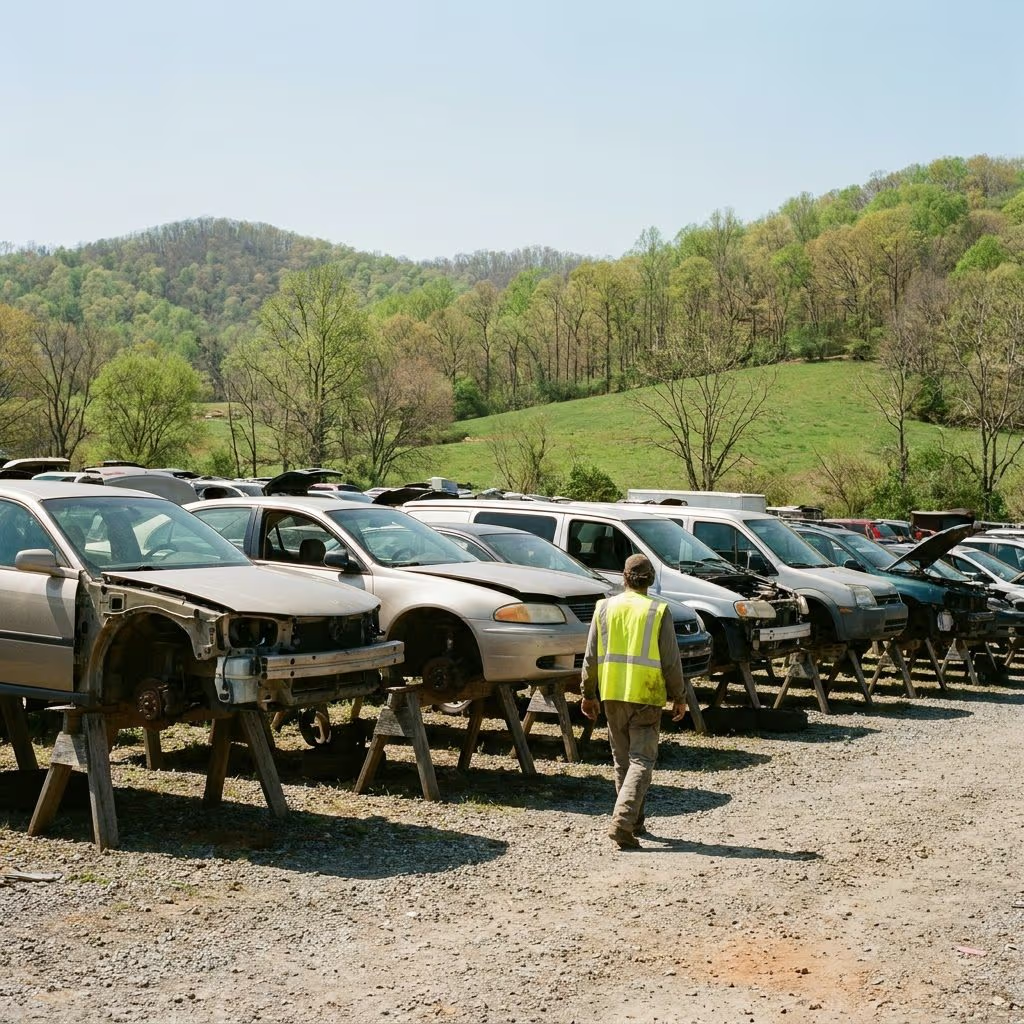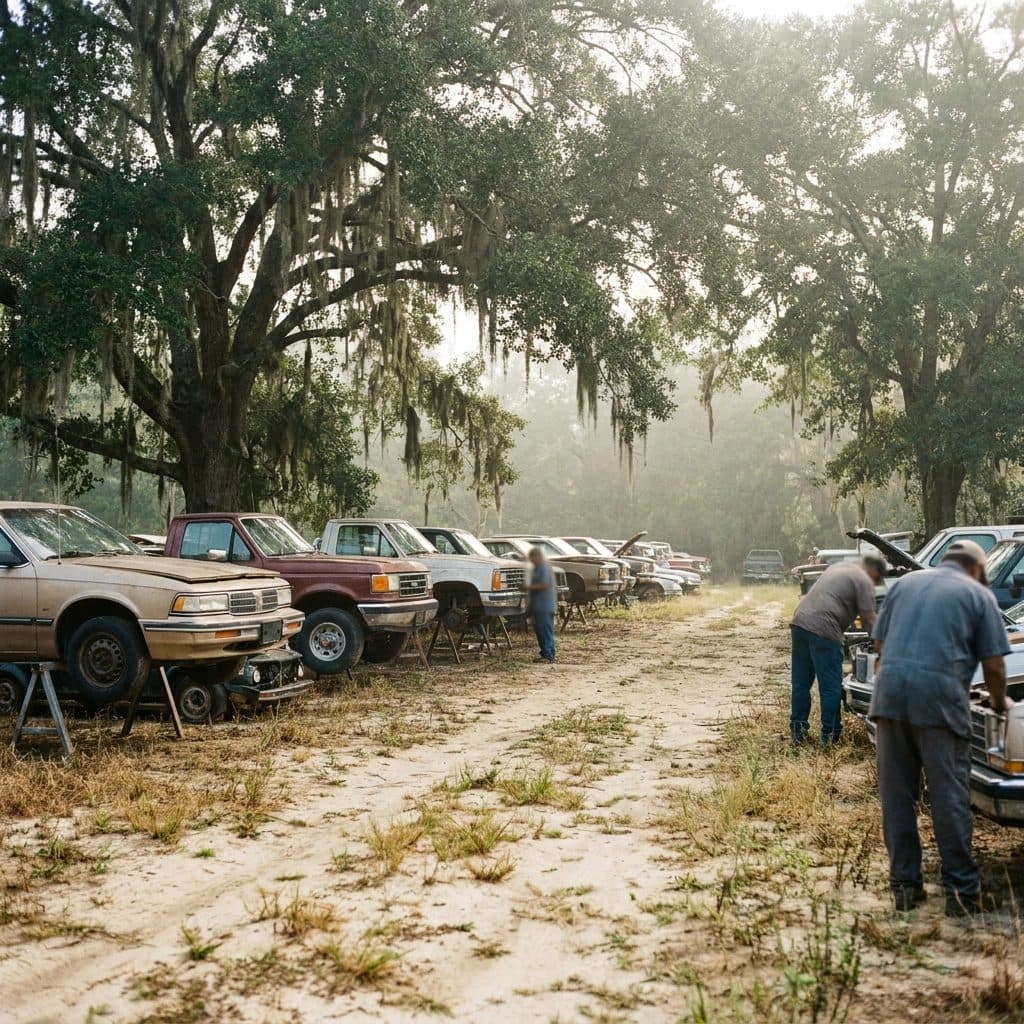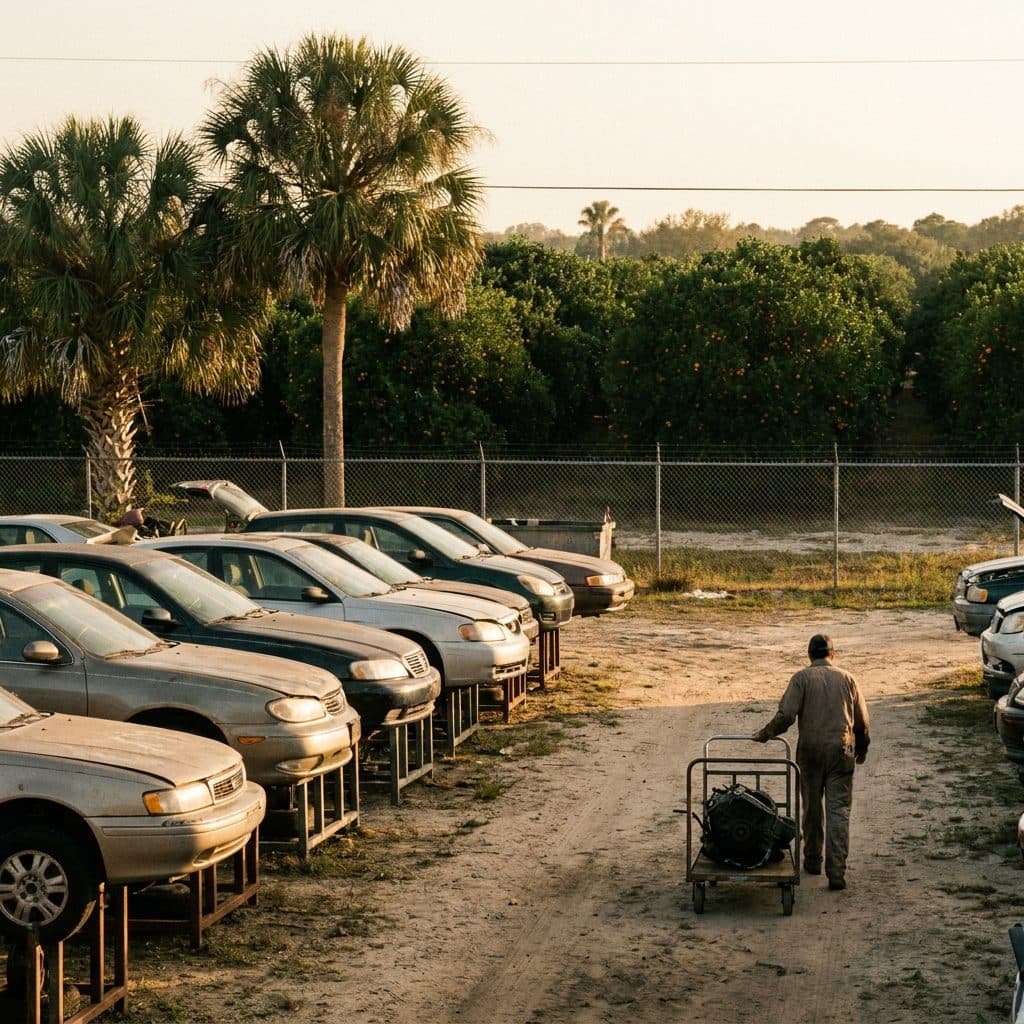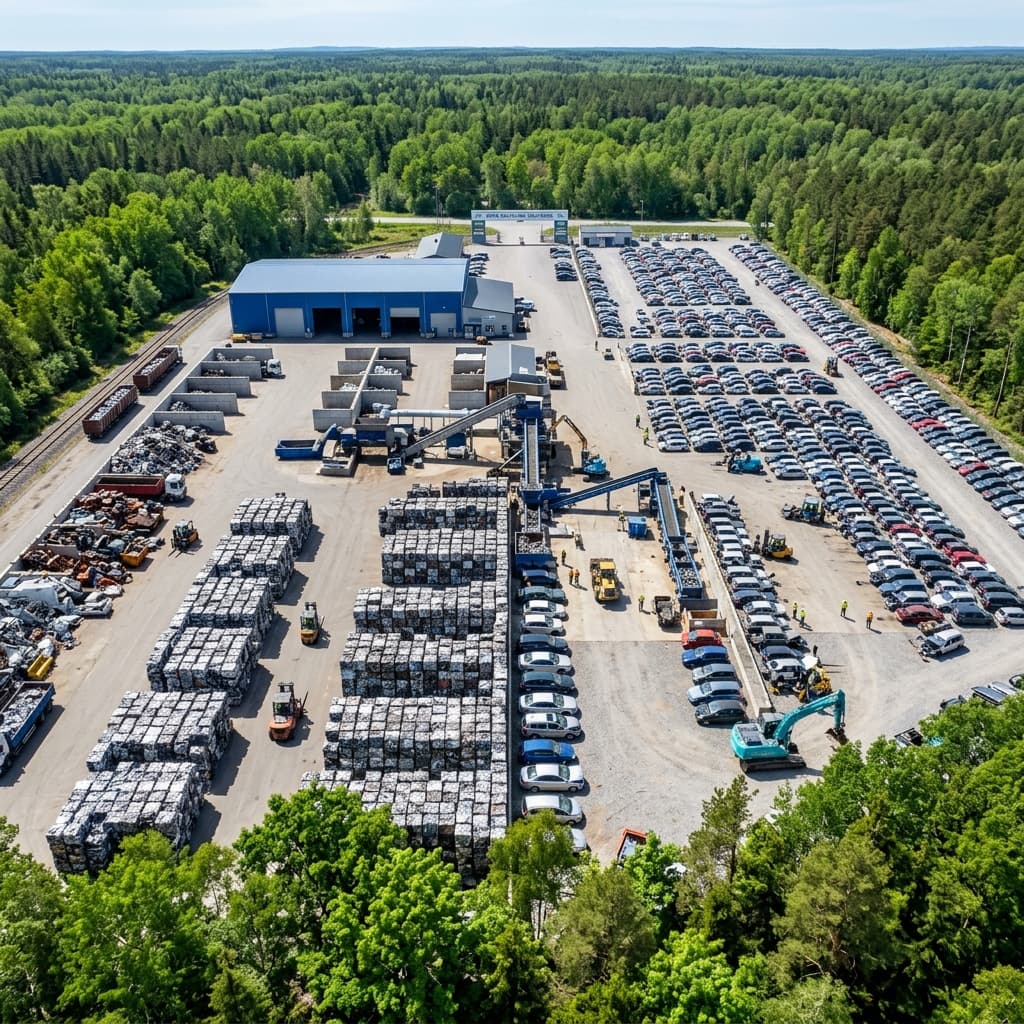
The auto recycling industry is the 16th largest in the United States and one of the oldest circular economies in existence. Every year, approximately 12-15 million vehicles reach end-of-life in America. About 80% of each vehicle — by weight — gets recycled. That's 14 million tons of steel kept out of landfills annually. When you pull a part from a junkyard, you're participating in a system that prevents 85 million barrels of oil from being used for new manufacturing each year.
What gets recycled from a junk car
| Material | % of Vehicle | Recovery Rate | What It Becomes |
|---|---|---|---|
| Steel & iron | 55-65% | ~98% | New vehicles, construction steel, appliances |
| Aluminum | 8-10% | ~90% | Engine blocks, wheels, beverage cans |
| Copper & wiring | 1-2% | ~95% | Electrical wire, plumbing, electronics |
| Platinum group metals | <0.01% | ~90% | New catalytic converters, jewelry, electronics |
| Lead (batteries) | 1-2% | ~99% | New batteries (most recycled product in the U.S.) |
| Rubber (tires) | 3-4% | ~80% | Playground surfaces, asphalt, fuel |
| Glass | 2-3% | ~70% | Fiberglass insulation, glass bottles, aggregate |
| Fluids | 2-3% | ~85% | Re-refined oil, recycled coolant |
| Plastics & composites | 10-15% | ~30% | Largest recycling challenge — most goes to ASR |
The lifecycle of a junk car
- Collection: The vehicle is towed to a licensed salvage facility or recycling center.
- Fluid draining: All hazardous fluids (engine oil, transmission fluid, brake fluid, coolant, refrigerant, fuel) are drained into sealed containers. These are either recycled or disposed of per EPA regulations.
- Parts harvesting: Usable components are removed, tested, inventoried, and sold. This is where self-service junkyards and full-service dismantlers operate.
- Crushing: The stripped shell is flattened by a car crusher to reduce volume for transport.
- Shredding: The crushed hull goes through an industrial shredder that tears it into fist-sized pieces.
- Separation: Magnets pull out ferrous metals. Eddy current separators capture aluminum. Air classifiers and hand-sorting separate remaining materials.
- Smelting: Recovered metals are melted and reformed into new raw materials, completing the loop.
Environmental impact by the numbers
- 14 million tons of steel recycled from vehicles annually in the U.S.
- 85 million barrels of oil saved by reducing the need for virgin material manufacturing
- Recycled steel uses 74% less energy than producing steel from iron ore
- Recycled aluminum uses 95% less energy than producing aluminum from bauxite
- Lead-acid batteries: 99% recycling rate — the most recycled consumer product in America
Every used part you buy = zero manufacturing emissions. Pulling an alternator from a salvage yard means one fewer alternator needs to be manufactured, packaged, and shipped. The cumulative effect across millions of parts transactions per year is enormous. Self-service junkyards are, functionally, the most sustainable auto parts stores in existence.
The EV recycling challenge ahead
As electric vehicles enter the waste stream, the recycling industry faces new complexities:
- Lithium-ion batteries require specialized, temperature-controlled facilities for safe disassembly
- Critical minerals (lithium, cobalt, nickel, rare earths) are recoverable but require hydrometallurgical processing
- "Design for disassembly" is gaining traction — newer EVs are being built with easier recycling in mind
- Second-life applications: EV batteries at 70-80% capacity can serve 5-10 more years in stationary energy storage
Recycle your car responsibly
We work with licensed recyclers who follow EPA guidelines. Free towing, instant payment.
Get a Cash OfferAbout 80% by weight. Steel (98% recovery), aluminum (90%), copper (95%), and lead batteries (99%) are highly recyclable. Plastics remain the biggest challenge at roughly 30% recovery.
Yes. Reusing a part requires zero manufacturing energy. The auto recycling industry prevents approximately 85 million barrels of oil from being used annually by reducing the need for new parts manufacturing.
Fluids are drained and recycled, usable parts are harvested and sold, the shell is crushed and shredded, and metals are separated magnetically for smelting into new raw materials.