Why Consider Buying Used Tires and Wheels from Junkyards? For budget-conscious vehicle owners, purchasing used tires and wheels from salvage yards near me can offer substantial savings of up to 50% compared to new alternatives. While new tires can cost anywhere from $100 to $600+ each, quality used tires typically range from $25 to $75, [...]
Article image
Why Consider Buying Used Tires and Wheels from Junkyards?
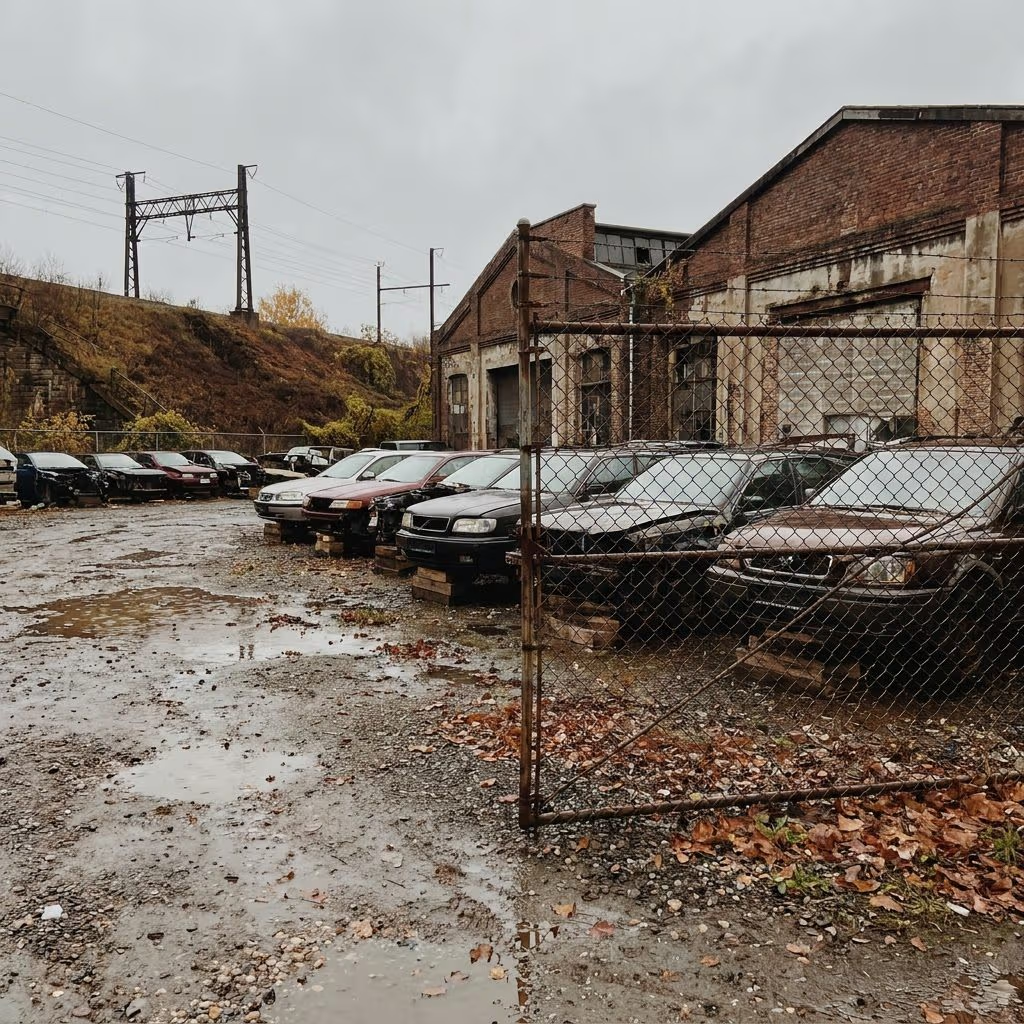
For budget-conscious vehicle owners, purchasing used tires and wheels from salvage yards near me can offer substantial savings of up to 50% compared to new alternatives. While new tires can cost anywhere from $100 to $600+ each, quality used tires typically range from $25 to $75, making them an attractive option for those looking to reduce automotive expenses without compromising safety.
Salvage yards often provide a more reliable source than individual sellers because professionals assess the quality of available items. However, this cost-effective approach requires careful inspection and knowledge to ensure you're making a safe purchase. If you're looking to upgrade your vehicle or need to sell your current one for parts, you can get an instant quote for junk car to help fund your tire replacement project.
Essential Safety Checklist for Inspecting Used Tires
Safety should never be compromised when buying used tires. A thorough inspection is crucial since you're dealing with parts that have an unknown history and potential hidden damage that could lead to dangerous blowouts or accidents.
Checking Tread Depth and Wear Patterns
The tread depth is your first line of defense against wet weather conditions and overall tire safety. According to tire safety experts, the legal minimum in the U.S. is 2/32 of an inch, but this is considered the absolute minimum for safe operation.
The Penny Test: Insert a penny into the tread groove with Lincoln's head upside down. If you can see all of Lincoln's head, the tread is too shallow
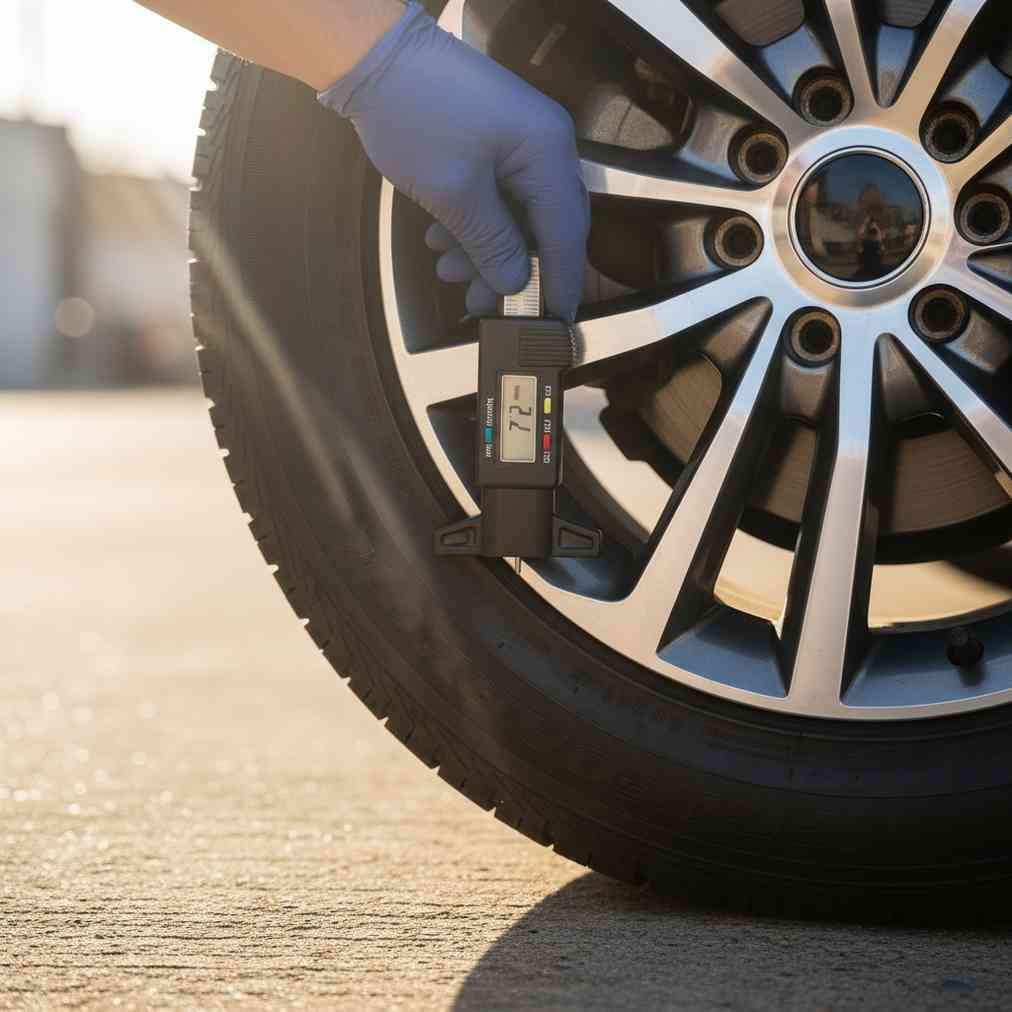
Professional Measurement: Use a tread depth gauge for accurate readings – aim for at least 4/32″ to 6/32″ for better safety margins
Even Wear Check: Inspect multiple grooves across the tire width to identify uneven wear patterns that indicate alignment or suspension issues
Tread Wear Indicators: Look for built-in rubber bars within grooves – if they're flush with the tread, the tire has reached its wear limit
The sidewall inspection is critical since sidewall failures are more likely to cause catastrophic blowouts than tread wear issues. Professional tire inspectors emphasize that sidewall damage is often non-repairable and extremely dangerous.
Bulges and Bubbles: Any visible bulging indicates internal structural damage and imminent failure risk
Cracks and Cuts: Look for deep cuts, large cracks, or dry rot patterns in the rubber
Embedded Objects: Check for nails, screws, or other debris that could cause slow leaks
Previous Repairs: Avoid tires with sidewall patches or plugs, as these are unsafe repair locations
Bead Area: Inspect where the tire meets the wheel for missing rubber chunks that prevent proper sealing
Inspecting Used Wheels and Rims
Don't overlook the wheels when purchasing used tire and wheel combinations. Damaged wheels can compromise vehicle safety just as much as worn tires, affecting everything from air pressure retention to vehicle handling.
Critical Wheel Inspection Points
Structural Integrity: Look for cracks, especially around the lug holes and spoke areas
Bend Detection: Roll the wheel on a flat surface to check for wobbles or hops indicating bends
Lug Hole Condition: Bolt holes must be perfectly round – oval shapes suggest previous over-tightening or balancing issues
Corrosion Assessment: Check for excessive rust or corrosion that could weaken the wheel structure
Mounting Surface: Ensure the mounting surface is flat and free from damage that could affect tire sealing
Cost Comparison: Used vs. New Tires
Understanding the financial benefits of buying used tires helps justify the extra inspection effort required. Auto parts specialists note that the savings can be substantial, especially for vehicle owners on tight budgets.
Tire Type
New Tire Cost
Used Tire Cost
Potential Savings
Standard All-Season
$100-200
$25-50
50-75%
Performance Tires
$200-400
$50-100
50-75%
Truck/SUV Tires
$150-300
$40-75
50-73%
Premium/Luxury
$300-600+
$75-150
50-75%
Expert Safety Recommendations and Industry Standards
Consumer Reports stated in April 2013 that buying used tires is “never a good idea” due to the difficulty in spotting internal damage, highlighting the importance of thorough inspection by knowledgeable buyers.
While some experts express caution about used tire purchases, tire industry professionals acknowledge that with proper inspection and realistic expectations, used tires can be a viable option for budget-conscious consumers.
Professional Recommendations
Never compromise safety for price – if in doubt, don't purchase
Consult tire professionals when uncertain about damage or repairs
Check NHTSA recalls using their online tool before purchasing
Maintain proper tire care after purchase including inflation, rotation, and alignment
Consider professional installation to ensure proper mounting and balancing
Environmental Benefits and Sustainability
Beyond cost savings, purchasing used tires contributes to environmental sustainability by extending tire life and reducing landfill waste. Environmental advocates note that tire recycling and reuse programs help address the millions of tires discarded annually.
Waste Reduction: Extends tire lifespan and delays landfill disposal
Resource Conservation: Reduces demand for new tire manufacturing
Energy Savings: Avoids energy-intensive new tire production processes
Pollution Prevention: Reduces tire burning and improper disposal
Where to Find Quality Used Tires and Wheels
Locating reputable sources for used tires and wheels is crucial for finding quality options. When searching for junkyards near me, focus on established salvage yards with good reputations rather than individual sellers who may lack expertise in assessing tire safety.
Best Sources for Used Tires
Licensed Salvage Yards: Professional assessment and sometimes limited warranties
Tire Shops: Trade-ins from customers upgrading to new tires
Auto Recyclers: Specialized in automotive parts with quality standards
Reputable Used Tire Dealers: Businesses specializing in refurbished tires
Red Flags to Avoid When Buying Used Tires
Automotive safety experts warn against several common issues that should immediately disqualify used tires from consideration, regardless of price.
Tires older than 6 years based on DOT date codes
Any sidewall damage including cuts, bulges, or patches
Tread depth at or below 2/32″ legal minimum
Uneven wear patterns indicating alignment or suspension problems
Visible steel belts or cords showing through the rubber
Multiple repairs or plugs especially in the tread area
Dry rot or cracking in the sidewall or tread blocks
Wheels with cracks or severe bends that affect structural integrity
Installation and Maintenance Tips
Proper installation and maintenance are crucial for maximizing the safety and lifespan of used tires. Professional mechanics recommend specific practices to ensure optimal performance from your used tire investment.
Installation Best Practices
Professional Mounting: Have tires professionally mounted and balanced
Valve Stem Replacement: Install new valve stems with used tires
Wheel Alignment: Check alignment to prevent premature wear
Regular Rotation: Rotate tires according to manufacturer recommendations
Final Safety Considerations
While used tires can offer significant savings, tire safety experts emphasize that no amount of money saved is worth compromising vehicle safety. Always prioritize safety over cost savings, and when in doubt, consult with tire professionals or consider investing in new tires.
Safety Aspect
Minimum Standard
Recommended Standard
Action Required
Tread Depth
2/32 inch
4/32 inch
Measure with gauge
Tire Age
Under 10 years
Under 6 years
Check DOT code
Sidewall Condition
No visible damage
Like-new appearance
Visual inspection
Wheel Integrity
No cracks or bends
Perfect condition
Physical examination
Remember that purchasing used tires and wheels from salvage yards can be an excellent way to save money while maintaining vehicle safety, but only when approached with knowledge, caution, and thorough inspection. Take your time, don't rush the decision, and never hesitate to walk away from questionable tires regardless of the price.