Decoding the Junkyard: Understanding Chalk Marks and Part Codes
The Language of the Junkyard Salvage yards—from self-service "pick-and-pull" operations to full-service auto recyclers—rely on an often cryptic system of grease-pen (chalk) marks, spray paint codes, and location abbreviations to manage inventory, track part origins, and guide customers. Understanding these markings is essential for smart shopping, verifying part freshness, and ensuring compatibility when searching for [...]
Article image
The Language of the Junkyard
Salvage yards—from self-service “pick-and-pull” operations to full-service auto recyclers—rely on an often cryptic system of grease-pen (chalk) marks, spray paint codes, and location abbreviations to manage inventory, track part origins, and guide customers. Understanding these markings is essential for smart shopping, verifying part freshness, and ensuring compatibility when searching for junkyards near me.
Whether you're hunting for high-value used auto parts or looking for specific items like fenders under $100, decoding these mysterious symbols can save you time and money while ensuring you get quality parts.
Common Inventory Marking Systems
Grease-Pen and Spray Paint Codes
These markings serve as the yard's internal communication system, indicating everything from part status to pricing information. Digital inventory management systems are becoming more common, but manual markings remain the backbone of most self-service operations.
Fresh Inventory: A bright color or specific symbol (star or large X) marks recently processed inventory
Sold/Pulled: Parts marked with slashes, circles, or specific colors (often red or orange) indicate sold items
Price Markings: Direct pricing written on parts in grease pen or spray paint
Part Numbers: Internal SKU or interchange numbers for quick identification
Modern yards are increasingly adopting smart inventory tags and barcode systems to complement traditional marking methods, making it easier for customers to find specific parts like OEM Toyota Camry parts.
Location Codes and Abbreviations
Understanding location codes is crucial when hunting for specific auto parts. These standardized abbreviations help both staff and customers quickly identify where parts originated on the vehicle.
Abbreviation
Meaning
Common Parts
LF
Left Front
Fender, bumper, headlight
RF
Right Front
Fender, bumper, headlight
LR
Left Rear
Quarter panel, taillight
RR
Right Rear
Quarter panel, taillight
ENG
Engine
Motor, accessories
TRN/TR
Transmission
Gearbox, related parts
DSH/IP
Dashboard/Instrument Panel
Interior parts, gauges
These codes are particularly useful when shopping for specific items like left fenders or when you need to identify the exact location of parts for vehicles like the Honda CR-V.
Identifying Arrival Date and Freshness
One of the most valuable skills in junkyard navigation is identifying fresh inventory. Newer arrivals typically offer better part quality and more complete selection before other customers have picked through them.
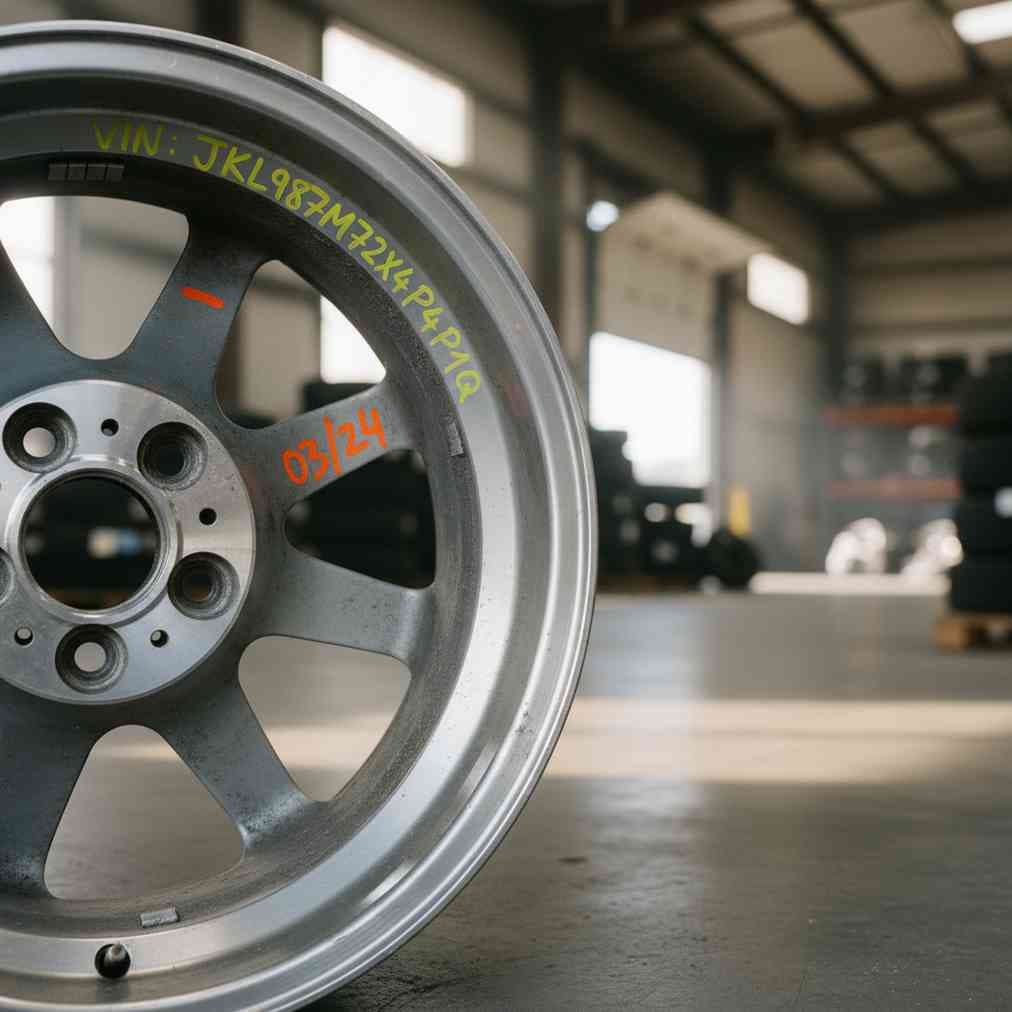
Date Marks: Look for dates written as “10/25” (October 25th) on windshields or doors
Color Coding: New arrivals may use specific colors for set periods (yellow for first week, then switched)
Stock Numbers: Internal numbers sometimes include arrival dates
This information is especially important when shopping for high-demand items or when you need parts in excellent condition for projects involving OEM car parts.
Professional auto recyclers use standardized grading systems to help customers understand part condition before purchase. Industry-standard parts marking follows consistent protocols across most reputable yards.
Grade
Condition
Typical Use
A Grade
Excellent – minimal wear
Like-new appearance, full function
B Grade
Good – moderate wear
Fully functional, some cosmetic issues
C Grade
Fair – significant wear
Functional but cosmetic damage
X Grade
Unknown/ungraded
Sold as-is, buyer inspects
Understanding these grades helps when shopping for specific applications, whether you need pristine parts for a restoration or functional parts for basic repairs involving items like used car doors.
Modern Digital Integration
The auto recycling industry is rapidly evolving with digital technology integration. Modern inventory management systems are revolutionizing how salvage yards track and manage their inventory.
Current Digital Trends
QR Code Systems: Instant access to part details, pricing, and compatibility
Barcode Integration: Real-time tracking from intake to sale
Online Inventory: Search databases before visiting yards
Mobile Apps: Digital tools for price checking and part location
Smart Tags: Next-generation identification with complete part history
These technological advances complement traditional marking systems and make it easier to find specific parts, whether you're looking for electric vehicle parts or conventional automotive parts.
“Accurate real-time inventory management is now possible using digital technology to track the progress of your inventory from receipt at the scale, initial grading, and inspection, through processing and into finished goods. This tracking is made possible through use of barcodes and digital mobile applications.”
—AMCS Group
Expert Shopping Strategies
Successful junkyard shopping requires understanding both traditional marking systems and modern inventory methods. Here are proven strategies from experienced parts hunters:
Before You Visit
Research Online: Check yard websites for inventory databases
Call Ahead: Verify part availability and condition grades
Know Your Needs: Have VIN, year, make, model, and specific part requirements
Check Interchange: Research compatible parts from other vehicles
At the Yard
Look for Fresh Marks: Bright, unweathered markings indicate new inventory
Decode Location Codes: Use abbreviation knowledge to navigate efficiently
Verify Origins: Always check VIN and mileage for compatibility
Ask Questions: Yard staff can clarify local coding systems
These strategies are particularly effective when shopping for specialty items like used turbochargers or when you need specific parts like power brake boosters.
Industry Statistics and Trends
Understanding current industry trends helps predict how marking systems will evolve and what to expect when visiting different types of yards.
Metric
Traditional Methods
Digital Systems
Inventory Accuracy
~60-70%
~95-98%
Processing Time
Manual entry
80% faster
Customer Satisfaction
Standard
Higher turnover rates
Adoption Rate
Universal
Growing rapidly
Despite digital advances, traditional marking methods remain essential, especially in self-service environments where customers need immediate visual reference points.
Practical Example: Visual Walkthrough
Let's walk through a typical junkyard experience to demonstrate how these marking systems work in practice:
Scenario: You're searching for body panels at a self-service yard.
When shopping for expensive auto parts, additional verification steps become crucial. Professional parts marking standards help ensure authenticity and quality.
Engine and Transmission Parts
Multiple VIN Checks: Verify VIN on block, transmission case, and vehicle
Service Records: Look for maintenance stickers and service documentation
Visual Inspection: Check for rebuild marks, aftermarket modifications
Electronic Parts
Part Numbers: Verify exact part number matches
Date Codes: Check manufacturing dates for compatibility
Connector Integrity: Inspect for corrosion or damage
Programming Requirements: Understand if reprogramming is needed
These considerations are particularly important for specialized applications or when working with newer vehicle technologies.
Common Mistakes to Avoid
Understanding what NOT to do can save time, money, and frustration when decoding junkyard markings:
Ignoring Condition Codes: Always check grade markings before purchasing
Skipping VIN Verification: Compatibility issues can be expensive
Misreading Location Codes: Left/right orientation can be confusing
Overlooking Date Marks: Old inventory may have deteriorated
Assuming Universal Systems: Each yard may have unique variations
Avoiding these mistakes is especially important when dealing with critical safety parts or making investments in expensive automotive parts. If you're planning to sell a junk car to fund your parts purchases, understanding market values through proper evaluation can maximize your return.
Future of Junkyard Navigation
The auto recycling industry continues evolving with new technologies that will reshape how customers interact with salvage yards. Advanced software solutions are becoming more accessible to smaller operations.
Emerging Technologies
Augmented Reality: AR apps for part identification and compatibility checking
AI-Powered Search: Machine learning for better part matching
Blockchain Verification: Immutable part history and authenticity records
IoT Integration: Smart sensors for real-time inventory updates
Mobile Integration: Seamless smartphone apps for yard navigation
These technologies will complement rather than replace traditional marking systems, providing multiple ways to verify and locate parts efficiently.
Conclusion: Mastering the Junkyard Code
Understanding grease-pen marks, spray paint codes, and location abbreviations transforms junkyard shopping from a frustrating treasure hunt into an efficient, strategic process. While digital systems continue advancing, traditional marking methods remain the foundation of most salvage operations.
Success in junkyard navigation requires combining knowledge of traditional marking systems with awareness of modern digital tools. Whether you're a DIY mechanic, professional technician, or car enthusiast, mastering these “junkyard codes” will save time, money, and ensure you get quality parts that meet your specific needs.
Remember that each yard may have unique variations in their marking systems, so don't hesitate to ask staff for clarification. The investment in learning these systems pays dividends in better parts, fair prices, and successful automotive projects. From basic maintenance parts to complex rebuilds, understanding the language of the junkyard is your key to automotive success.