EV Drivetrain Parts (motors, inverters): What to salvage and reuse
Why EV Drivetrain Salvage Matters in Today's Market The electric vehicle revolution is creating unprecedented opportunities in the automotive recycling industry. Unlike traditional internal combustion engines, EV drivetrain components contain valuable rare earth materials and sophisticated power electronics that can retain significant value when properly salvaged and tested. Understanding which components to target, how to [...]
Article image
Why EV Drivetrain Salvage Matters in Today's Market
The electric vehicle revolution is creating unprecedented opportunities in the automotive recycling industry. Unlike traditional internal combustion engines, EV drivetrain components contain valuable rare earth materials and sophisticated power electronics that can retain significant value when properly salvaged and tested. Understanding which components to target, how to test them safely, and proper handling procedures is crucial for maximizing returns in this emerging market.
The philosophy driving EV component lifecycle management follows a simple but powerful principle: Reuse, Repurpose, Recycle. This approach not only creates economic value but also addresses critical supply chain concerns, especially given the limited availability of rare earth metals essential for electric motors.
High-Value EV Drivetrain Components to Salvage
Electric Traction Motors: The Crown Jewels
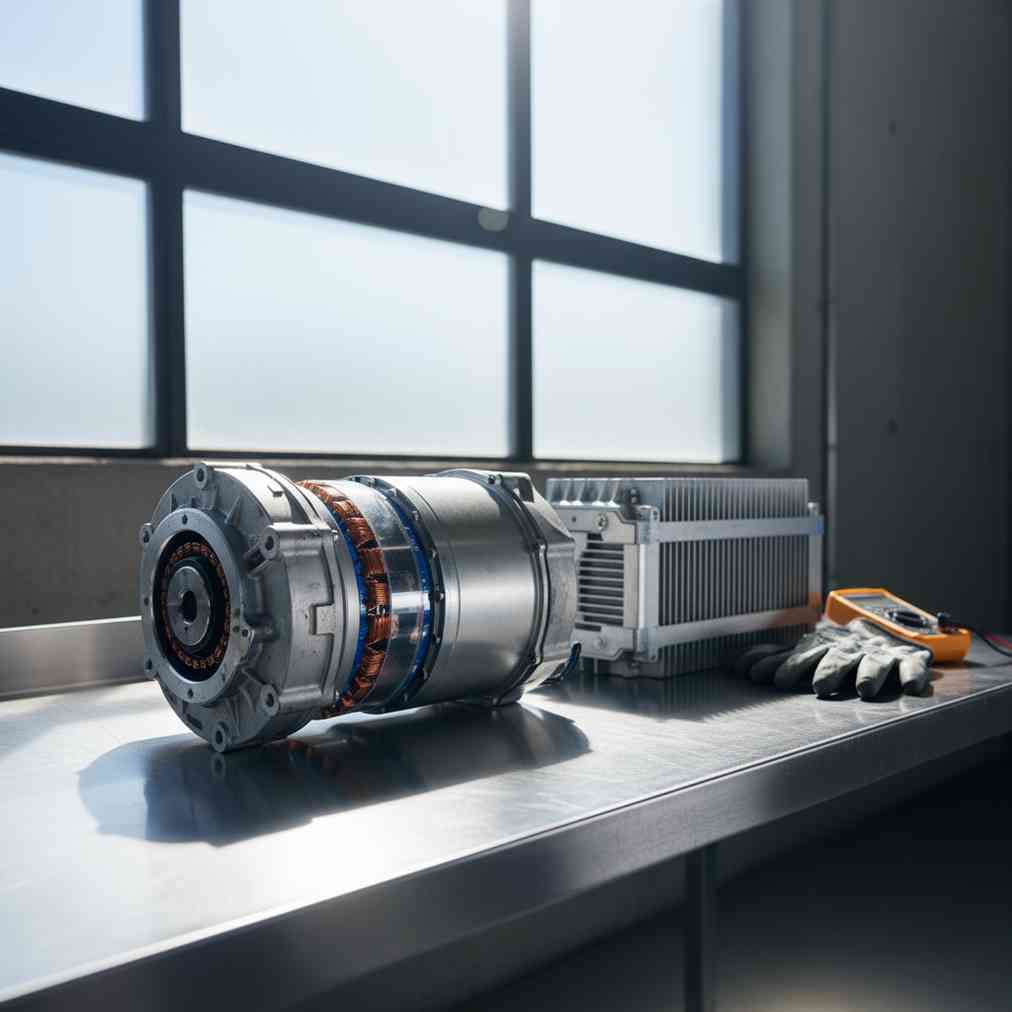
Electric motors represent the highest-value components in EV drivetrains due to their rare earth permanent magnets, which can account for up to 50% of the motor's total value. These motors typically contain 1.5-2 kg of rare earth materials that are extremely difficult and expensive to source new.
Permanent magnet synchronous motors – Most common in EVs, containing neodymium and dysprosium magnets
AC induction motors – Less valuable but still contain copper windings worth salvaging
Motor housings and cooling systems – Often aluminum, valuable for metal recycling
Bearings and rotor assemblies – Can be refurbished for reuse in industrial applications
The global recycling rate for rare earth materials in EV motors is currently less than 3%, indicating massive untapped potential for salvage operations. Projects like the EU-funded REASSERT initiative are developing new motor designs specifically for easier disassembly, making future salvage operations even more profitable.
Inverters and Power Electronics
Inverters, also known as traction control units, are sophisticated electronic modules that convert DC battery power into AC for the motor. These units contain valuable precious metals on their circuit boards, with scrap values exceeding £15k per tonne for high-grade electronics.
Power semiconductor modules – Contain silicon carbide or gallium nitride chips
Control circuit boards – High precious metal content including gold, silver, and palladium
Capacitor banks – Aluminum electrolytic capacitors with resale value
Heat sinks and cooling components – Often made from valuable aluminum or copper alloys
“Inverters are prime candidates for reuse in repairs or modifications of existing EVs, and the sophisticated electronic modules contain valuable precious metals that make them worthwhile to salvage even when the unit cannot be reused intact.”
Other Valuable Drivetrain Components
Beyond motors and inverters, several other EV components command high demand in the used parts market:
DC-DC converters – Convert high-voltage battery power to 12V for accessories
On-board chargers – Power electronics for AC charging from wall outlets
Motor controllers and ECUs – High demand for replacements in existing EVs
High-voltage wiring harnesses – Expensive to manufacture new, valuable when undamaged
Comprehensive Testing Protocols for Salvaged Components
Thorough testing is crucial for validating the viability of salvaged motors and inverters before resale or repurposing. Modern testing utilizes advanced techniques including Power Hardware-in-the-Loop (PHIL) systems where real components interact with simulated parts to precisely measure performance without requiring complete powertrains.
EV Motor Testing Procedures
Testing electric motors involves a comprehensive process chain including inbound inspection, classification, component diagnosis, and end-of-line functionality testing. Advanced testing protocols now incorporate AI decision-making tools that use a motor's “digital twin” data to select the most appropriate value retention strategy.
Test Type
Procedure
Pass Criteria
Visual Inspection
Check for physical damage, discoloration from overheating, shaft play
No cracks, minimal wear, smooth shaft rotation
Winding Resistance
Measure ohmic resistance of motor windings with precision multimeter
Within ±5% of OEM specifications
Insulation Resistance (Megger)
Test insulation between windings and motor housing at 500V DC
Minimum 1 MΩ resistance
Back EMF Test
Spin motor at known RPM, measure generated voltage
Voltage proportional to speed within spec range
Magnet Integrity
Check for demagnetization via performance testing or flux measurement
Magnets secure with expected field strength
Inverter Testing and Diagnostics
Inverter testing focuses on ensuring power electronics operate correctly under expected loads. Engineers increasingly use software like LabVIEW to run motor models with simulated batteries, allowing testing at full power safely and cost-effectively.
Communication Test – Verify CAN bus or other communication protocols function properly
Gate Driver Testing – Ensure IGBT or MOSFET switches operate within timing specifications
Thermal Management – Test cooling system operation and temperature sensors
Output Waveform Analysis – Measure AC output quality using oscilloscope and FFT analysis
Efficiency Mapping – Create efficiency curves across operating range to verify performance
Key data points to monitor include real inverter efficiency, power input/output ratios, and control technique execution while interfacing with simulated or real motors. This data helps determine whether units can be sold as OEM replacement parts or should be sent for materials recovery.
Critical Safety Protocols for Handling High-Voltage Components
Handling high-voltage EV components requires specialized training due to serious risks of electrocution, chemical exposure, and thermal events. The safe dismantling of electric vehicles cannot be overstated – taking shortcuts can increase the chances of causing injuries or even deaths.
Mandatory Training and Personal Protective Equipment
All personnel handling EV drivetrain components must receive specialized training covering electrical safety, high-voltage systems, battery chemistry, and emergency procedures including battery fire response. The Automotive Recyclers Association (ARA) offers comprehensive EV training modules specifically designed for dismantlers.
Lineman gloves – Rubber-insulating gloves rated for high voltage, worn under leather outer gloves
Safety helmet with visor – Protection against electrical arc flash
Safety goggles – Eye protection from chemical splashes or debris
Electrical hazard safety shoes – Non-conductive soles and electrical insulation
Arc-rated clothing – Flame-resistant garments for high-energy electrical work
De-energization and System Checkout Procedures
Critical safety note: EV high-voltage systems may remain powered for up to 10 minutes after being disabled. Never assume an EV is completely de-energized just because it operates silently.
Follow OEM service manual procedures exactly for de-energizing the high-voltage battery
Lock out/tag out the service disconnect and remove keys from premises
Wait minimum 10 minutes after shutdown before beginning work
Use non-contact voltage testers to verify zero energy state
Visually inspect for physical damage, swelling, or electrolyte leakage
Check battery temperature using non-contact infrared thermometer
“Personnel with medical devices like pacemakers should avoid EV motor dismantling due to strong magnetic fields that can interfere with device operation.”
Component-Specific Handling Guidelines
Component
Key Safety Considerations
Handling Requirements
Traction Motors
Strong magnetic fields, heavy weight (50-200 lbs)
Use mechanical lifting aids, keep pacemaker users away
Inverters
Residual charge in capacitors, sharp heat sink fins
Discharge capacitors, handle with cut-resistant gloves
Test with non-contact voltage detector before handling
Pre-Purchase Inspection Checklist
Before purchasing or accepting EV drivetrain components for salvage, conducting a thorough inspection can prevent costly mistakes and safety hazards. This checklist helps identify components worth the investment in testing and refurbishment.
The rapid adoption of electric vehicles is creating a vibrant market for used EV parts driven by sustainability initiatives and cost-conscious repairs. Understanding market trends helps maximize returns from salvage operations.
Current Market Statistics
Rare earth magnets constitute 40-60% of permanent magnet motor costs
Circuit board scrap value exceeds £15k per tonne for high-grade electronics
Repurposing 1 MWh of EV batteries can reduce emissions by 73 MT CO2E
About 70% of EV parts differ from traditional ICE vehicles, creating specialized demand
The growing market for used auto parts in electric vehicles represents a significant opportunity for salvage yards willing to invest in proper training and equipment.
Second Life Applications
Components that cannot be reused directly in vehicles often find profitable second-life applications:
Stationary energy storage – EV batteries repurposed for solar and grid storage
Industrial motor applications – Traction motors used in manufacturing equipment
DIY EV projects – Growing maker community building custom electric vehicles
Research and education – Universities and training centers need components for instruction
Recent Developments in EV Component Reuse
The industry is rapidly evolving with new technologies and business models emerging to maximize component value retention. The REMADE Institute's full EV reuse initiative is leading research into comprehensive remanufacturing strategies.
Technological Advances
Design for Circularity – New EV designs incorporating easier disassembly features
AI-Powered Decision Making – Algorithms determining optimal value retention strategies
Power Hardware-in-the-Loop Testing – More efficient validation of salvaged components
Digital Twin Technology – Virtual component models improving testing accuracy
Industry Initiatives
Major companies are investing heavily in EV component reuse infrastructure. LKQ Corp. is developing programs for refurbishing EV battery packs and other components, while automotive recyclers are creating specialized facilities for handling electric vehicle disassembly.
“The future of EV component reuse depends heavily on developing technologies for efficient rare metals recovery and remanufacturing capabilities.”
REMADE Institute Research Findings
Getting Started in EV Drivetrain Salvage
For salvage yards and recyclers looking to enter the EV market, success requires careful planning and investment in proper training and equipment. The Automotive Recyclers Association is developing eight specialized EV training modules to address the growing influx of electric vehicles in recycling systems.
Component testing stations – Megger testers, oscilloscopes, motor test benches
Material handling equipment – Engine hoists capable of handling heavy motor assemblies
Fire suppression systems – Class D fire extinguishers for battery thermal events
Component storage – Climate-controlled areas for sensitive electronics
Building Market Relationships
Success in EV component salvage requires developing relationships across the supply chain:
Independent EV repair shops – Growing need for cost-effective replacement parts
EV conversion specialists – Companies converting ICE vehicles to electric drive
Research institutions – Universities studying EV technology need components
Industrial equipment manufacturers – Potential users of repurposed motors and electronics
Materials recovery facilities – Partners for components beyond economical repair
The electric vehicle revolution presents unprecedented opportunities for those willing to invest in proper knowledge, equipment, and safety protocols. By following comprehensive testing procedures and maintaining strict safety standards, salvage operations can tap into the growing market for sustainable automotive solutions while contributing to a more circular economy. As EV adoption accelerates, the demand for cost-effective, professionally refurbished drivetrain components will only continue to grow, making this an increasingly attractive market segment for forward-thinking recyclers.