Understanding Different Types of Fuel Injectors Fuel injectors are critical parts that deliver precisely metered, atomized fuel into an engine for efficient combustion. When searching for a reliable used fuel injector set, understanding the different types available is essential for making the right choice for your vehicle. Throttle Body Injection (TBI) This simpler, older system [...]
Article image
Understanding Different Types of Fuel Injectors
Fuel injectors are critical parts that deliver precisely metered, atomized fuel into an engine for efficient combustion. When searching for a reliable used fuel injector set, understanding the different types available is essential for making the right choice for your vehicle.
Throttle Body Injection (TBI)
This simpler, older system uses one or two injectors mounted in the throttle body. Fuel is sprayed into the intake manifold to mix with air before distribution to the cylinders. While an improvement over carburetors, it offers less precise fuel metering than newer systems. TBI systems are commonly found in older vehicles and can be an affordable option when sourcing used parts from local junkyards.
Port Fuel Injection (PFI) / Multi-Point Fuel Injection (MPFI)
This is the most common type in many gasoline engines. Each cylinder has its own dedicated injector located in the intake manifold, positioned near the intake valve. This allows for more precise fuel metering per cylinder, leading to better air-fuel mixing, quicker throttle response, and improved efficiency compared to TBI.
Sequential Fuel Injection (SFI): An advanced form of MPFI where injectors fire according to the specific intake timing of their respective cylinder
Provides better fuel efficiency and reduced emissions
More responsive throttle performance
Gasoline Direct Injection (GDI) / Direct Fuel Injection (DFI)
The modern standard, where injectors spray fuel at extremely high pressure directly into the combustion chamber, bypassing the intake ports. This offers the most precise control over the air-fuel mixture, significantly enhancing fuel efficiency and power output while reducing fuel waste. These high-tech systems require careful inspection when purchasing used parts.
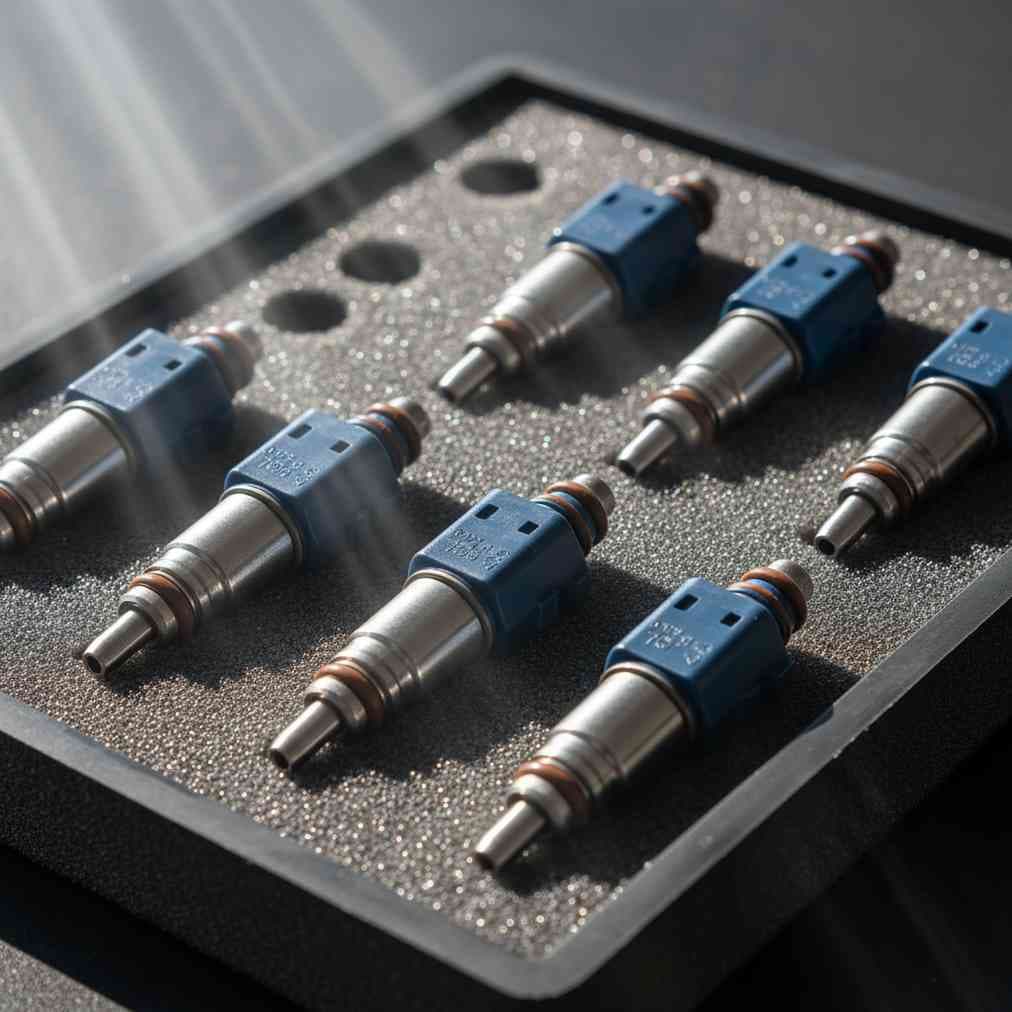
Why Replace Fuel Injectors as a Complete Set
Replacing fuel injectors as a complete set, especially from a single donor engine, is highly recommended over replacing only the single failed unit. This approach offers several critical advantages that can save you money and prevent future problems.
Flow Matching and Engine Balance
Replacing the set ensures that all cylinders receive the same, or very close to the same, amount of fuel. If one injector is worn out, the others are likely in a similar condition. Mismatched flow rates force the Engine Control Module (ECM) to constantly adjust the overall air/fuel ratio, leading to:
Rough idle and hesitation
Poor engine performance
Potential spark plug fouling
Catalytic converter damage
Cost and Time Efficiency
The labor involved in accessing and replacing a single injector is often comparable to replacing the entire set. Replacing them all at once prevents frustrating and costly return trips to the shop for subsequent failures. This approach is particularly valuable when sourcing parts from salvage yards that specialize in fuel system parts.
“A matched set results in better overall engine performance and improved fuel economy because the air-fuel mixture is consistent across all cylinders.”
Visual Inspection Checklist for Used Fuel Injectors
When sourcing used injectors, a thorough visual inspection is crucial before installation. Modern automotive technology requires precise tolerances, and even minor damage can affect performance significantly.
Part
Inspection Point
What to Look For (Damage/Clog Signs)
Injector Body
Physical Integrity
Cracks, warping, or any signs of physical impact or damage to the plastic or metal body
O-Rings (Upper & Lower)
Sealing Surfaces
Cracks, brittleness, flattening, cuts, or signs of being compressed or hardened
Pintle/Nozzle Tip
Spray Port
Visible carbon buildup, bends, or physical obstruction that affects atomization
Electrical Connector
Pins/Housing
Corrosion, bent pins, or signs of melting or damage to the locking tab/clip
Fuel Rail Bores
Port Cleanliness
Fragments of old O-rings or debris lodged in the rail bore where the injector seats
Staining/Residue
Exterior Body
Dark residue or wetness around the seals indicating past or current fuel leaks
Advanced Testing Considerations
While visual inspection is essential, consider these additional factors when evaluating used fuel injectors:
Mileage history: Lower mileage donor vehicles typically yield better injectors
Service records: Evidence of regular fuel system maintenance
Fuel quality exposure: Injectors from vehicles with poor fuel quality may show premature wear
Professional Removal Tips for Fuel Rail Extraction
Handling injectors carefully is vital as they are sensitive parts that require precision engineering. Following proper removal procedures ensures you don't damage valuable used parts and maintain safety throughout the process.
Safety Preparation Steps
Depressurize the fuel system: Always pull the fuel pump relay/fuse and let the engine run until it stalls
Work on cold engine: Avoid burns and ensure safer working conditions
Disconnect battery: Remove negative battery cable to prevent sparks and electrical issues
Gather proper tools: Have quick-connect tools and safety equipment ready
Systematic Removal Process
Follow this step-by-step approach for safe and effective injector removal:
Access and disconnect: Remove obstructing parts like air intake covers
Unplug electrical connectors: Grasp the connector body, never pull on wires
Disconnect fuel lines: Use correct quick-connect tools and have rags ready for spillage
Release retainers: Remove snap-rings with needle-nose pliers or unbolt retaining plates
Extract injectors: Pull straight up and out – never yank or pry forcefully
If injectors are stuck due to binding O-rings, gently twist back and forth while pulling steadily upward. Never pull on the electrical terminal as this can cause irreparable damage to these precision parts.
Post-Removal Handling
Immediately after removal, cover the delicate inlet filter and nozzle tips to prevent contamination. Place the removed injectors on a clean surface, labeled by their original cylinder position. This organization helps maintain the matched set concept and aids in proper installation.
Where to Find Quality Used Fuel Injector Sets
Finding reliable used fuel injector sets requires knowing where to look and what to expect. The automotive recycling industry has evolved significantly, with advanced data science methods now helping salvage yards track inventory and quality metrics more effectively.
Self-Service Salvage Yards
U-pull-it style yards offer the best opportunity to inspect parts thoroughly before purchase. You can examine the entire fuel system, check service records if available, and ensure you're getting a complete matched set from a single donor vehicle.
Professional Auto Recyclers
Many professional recyclers now use sophisticated inventory systems to track part quality and vehicle history. These facilities often provide limited warranties on fuel system parts and can verify compatibility before sale.
Testing and Verification Before Installation
Before installing your used fuel injector set, consider professional testing services. Many automotive shops offer injector flow testing that can verify:
Flow rate consistency: All injectors should flow within 5% of each other
Spray pattern quality: Proper atomization for efficient combustion
Used fuel injector sets can provide significant savings compared to new parts, often costing 50-70% less than OEM replacements. However, factor in potential testing costs and the value of your time when making the decision.
If you're dealing with a vehicle that's reached the end of its useful life, consider whether repair costs justify the investment. Sometimes selling your vehicle for cash and investing in a more reliable car makes better financial sense.
Installation Best Practices
When installing your used fuel injector set, always replace all O-rings and seals with new parts. Use the proper torque specifications for rail bolts and ensure all electrical connections are clean and secure. Consider using fuel system cleaner additives during the first few tank fill-ups to help clear any residual deposits.
Conclusion: Smart Shopping for Reliable Used Fuel Injectors
Finding a reliable used fuel injector set requires patience, knowledge, and careful inspection. By understanding the different types of injection systems, following proper removal techniques, and conducting thorough visual inspections, you can successfully source quality used parts that provide years of reliable service. Remember that investing in a complete matched set from a reputable source often proves more economical than trying to save money on individual injectors that may fail shortly after installation.
The key to success lies in treating fuel injectors as precision instruments that require careful handling and proper evaluation. With modern automotive technology becoming increasingly sophisticated, taking the time to find quality used parts ensures your vehicle continues to run efficiently and reliably for miles to come.