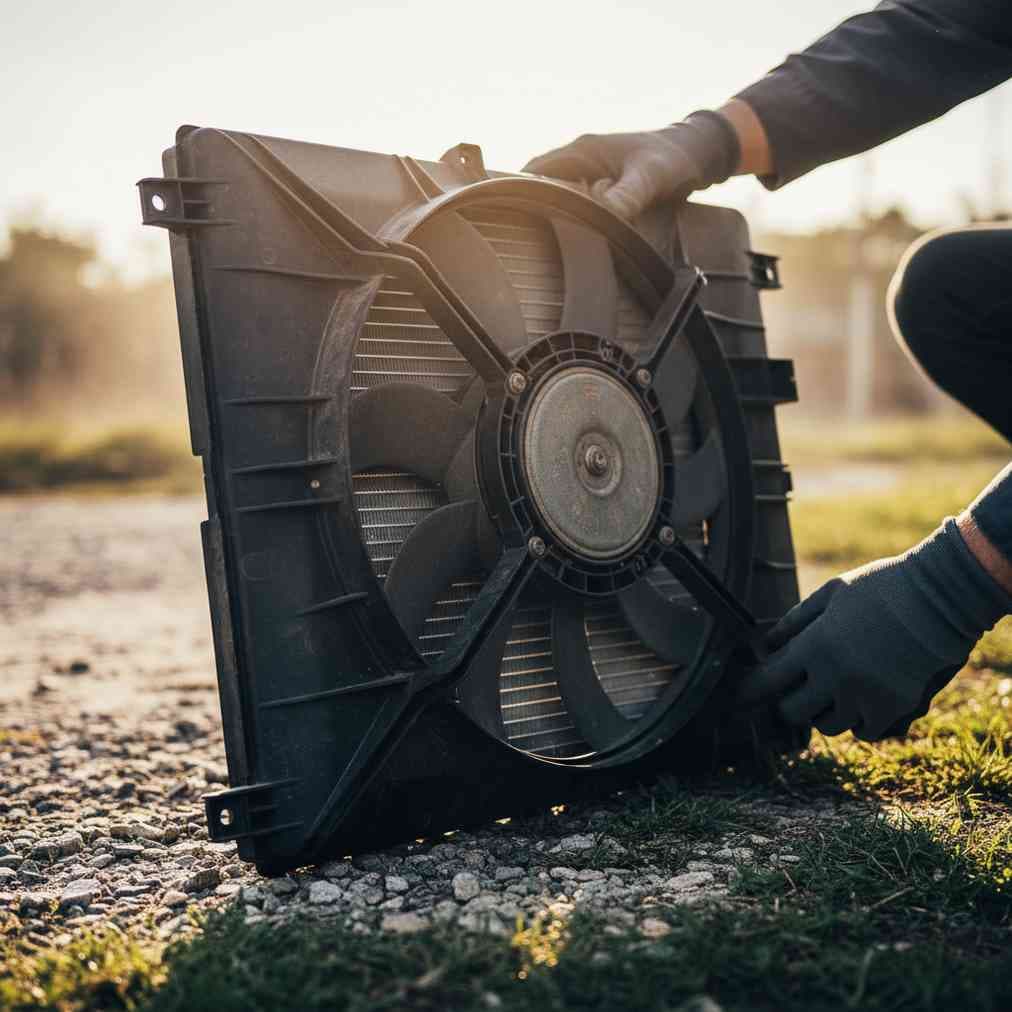
Understanding the Critical Role of Radiator Fan Assemblies
The radiator fan assembly serves as your engine's lifeline, especially when natural airflow can't keep your vehicle cool. This critical cooling system part becomes essential when you're stuck in traffic, idling at red lights, or crawling through parking lots. Without proper air movement across the radiator fins, your engine coolant can't dissipate heat effectively, leading to catastrophic overheating and potentially thousands of dollars in engine damage.
Modern vehicles rely heavily on their cooling systems, and the radiator fan assembly consists of three main parts: the fan motors, the fan blades, and the fan shroud. Each element works together to create a unified system that forces air through the radiator when your vehicle's natural airflow isn't sufficient. When this system fails, engine temperatures can spike rapidly, making timely replacement crucial for vehicle reliability.
Locating Compatible Radiator Fan Assemblies at Salvage Yards
Finding the right radiator fan assembly requires precise matching of your vehicle's specifications. When searching through junkyards near me, always verify the Year, Make, Model, and Engine size before investing time in removal. Many modern vehicles feature dual-fan setups, while older models typically use single fans, making compatibility verification essential.
The fan shroud plays a crucial role in directing airflow efficiently through the radiator. This plastic housing channels air precisely where it's needed and prevents air from bypassing the cooling fins. When possible, acquire the complete assembly including motors, blades, and shroud as one unit. This ensures optimal performance and eliminates compatibility issues between individual parts from different donor vehicles.
- Vehicle compatibility: Match exact year, make, model, and engine specifications
- Fan configuration: Identify single vs. dual fan setups
- Complete assembly: Prioritize getting motors, blades, and shroud together
- Mounting points: Verify attachment points match your vehicle's radiator
Field Testing Fan Motors with 12V Power Sources
Testing radiator fan motors before purchase saves time and prevents disappointment. The most reliable method involves using a portable 12V power source, such as a cordless drill battery, to verify motor functionality directly in the salvage yard. Many yards even rent or loan batteries specifically for this purpose, recognizing the value of pre-purchase testing.
The testing procedure is straightforward and requires minimal equipment. Locate the fan's electrical connector and prepare two jumper wires for the connection. You can either unplug the connector entirely or test with it still attached, depending on accessibility. Connect the positive lead from your 12V battery to one terminal and the negative to the other.
- Required tools: Portable 12V battery and jumper wires
- Success indicators: Strong, smooth spinning without unusual noises
- Polarity flexibility: Reversing connections causes backward rotation without damage
- Failure signs: No movement, weak spinning, or grinding sounds
A functioning motor should start spinning immediately upon power application. Listen carefully for any grinding, clicking, or irregular sounds that might indicate bearing wear or internal damage. Remember that DC motors won't be harmed by reversed polarity – they'll simply spin backward, making this test forgiving for beginners.
Comprehensive Pre-Purchase Inspection Checklist
Visual inspection proves just as important as functional testing when evaluating used radiator fan assemblies. A systematic approach ensures you identify potential problems before removal, saving valuable time and preventing future failures. Advanced data analysis techniques, similar to those used in modern data science research, can help identify patterns in part failure, but hands-on inspection remains irreplaceable for immediate assessment.
| Part to Inspect | What to Check | Why It Matters |
|---|---|---|
| Fan Blades | Cracks, chips, deformation, missing pieces | Damaged blades cause vibration and reduced efficiency |
| Fan Shroud | Structural cracks, missing sections, mounting tabs | Compromised airflow direction reduces cooling effectiveness |
| Wiring Connectors | Broken tabs, corrosion, burn marks, melting | Poor connections lead to intermittent operation or failure |
| Motor Mounting | Loose bolts, worn bushings, cracked brackets | Unstable mounting causes excessive vibration |
| Overall Condition | Rust, debris accumulation, age-related wear | Heavy corrosion suggests shortened remaining lifespan |
Pay special attention to the fan blades, as damaged blades cannot be individually replaced on most assemblies. Even small cracks can propagate under the stress of high-speed rotation, potentially causing complete blade failure. The shroud deserves equal scrutiny since cracks allow air to bypass the radiator, significantly reducing cooling efficiency.