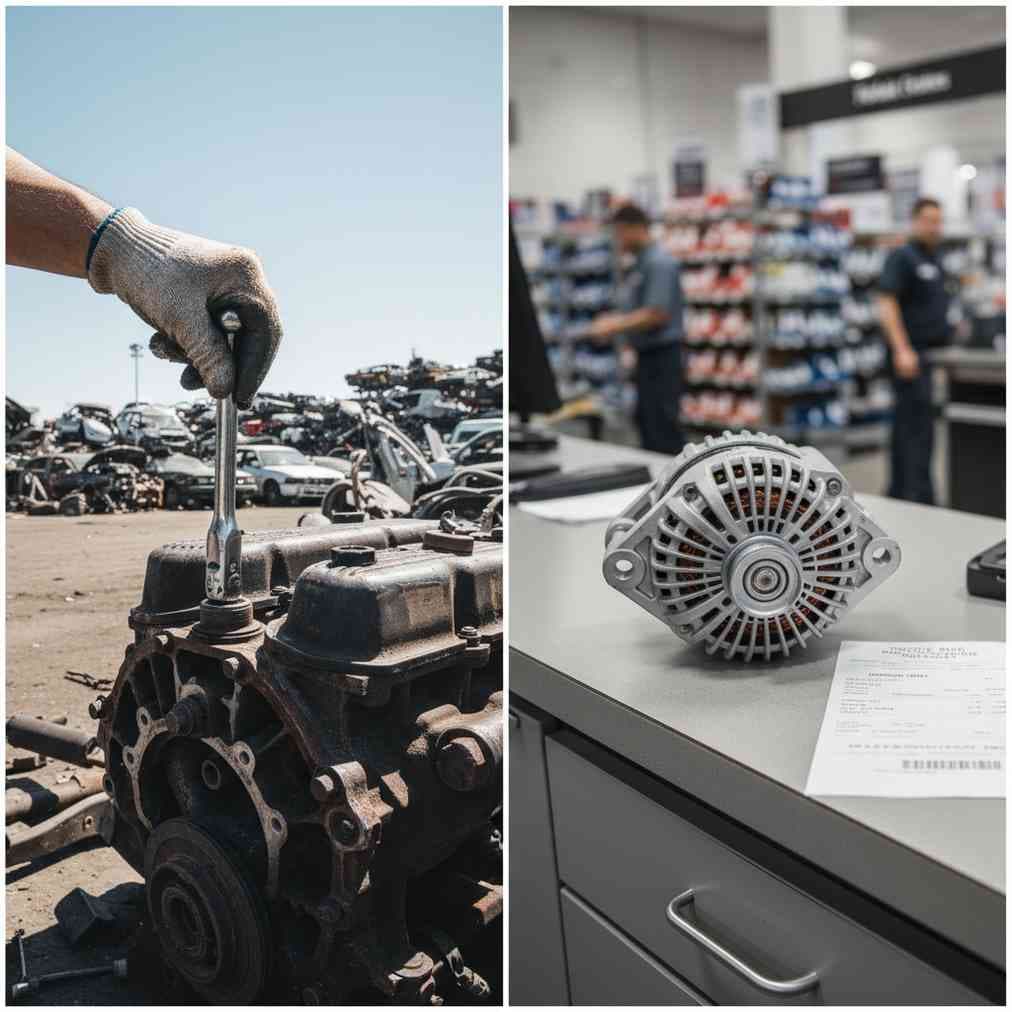
Full-Service vs. Self-Service: Which Salvage Yard is Right for You?
Understanding the Two Main Types of Salvage Yards When you're searching for affordable auto parts, not all salvage yards operate the same way. Understanding the difference between full-service salvage yards and self-service yards (commonly known as "U-Pull-It" or "Pick-and-Pull") is crucial for making the right choice for your specific needs, budget, and mechanical skills. The [...]
Article image
Understanding the Two Main Types of Salvage Yards
When you're searching for affordable auto parts, not all salvage yards operate the same way. Understanding the difference between full-service salvage yards and self-service yards (commonly known as “U-Pull-It” or “Pick-and-Pull”) is crucial for making the right choice for your specific needs, budget, and mechanical skills.
The choice between these two types of salvage yards near you depends heavily on several factors: your mechanical expertise, available time, budget constraints, and the specific part you need. Each model offers distinct advantages and challenges that can significantly impact your parts-buying experience.
Self-Service Yards: The DIY Approach to Auto Parts
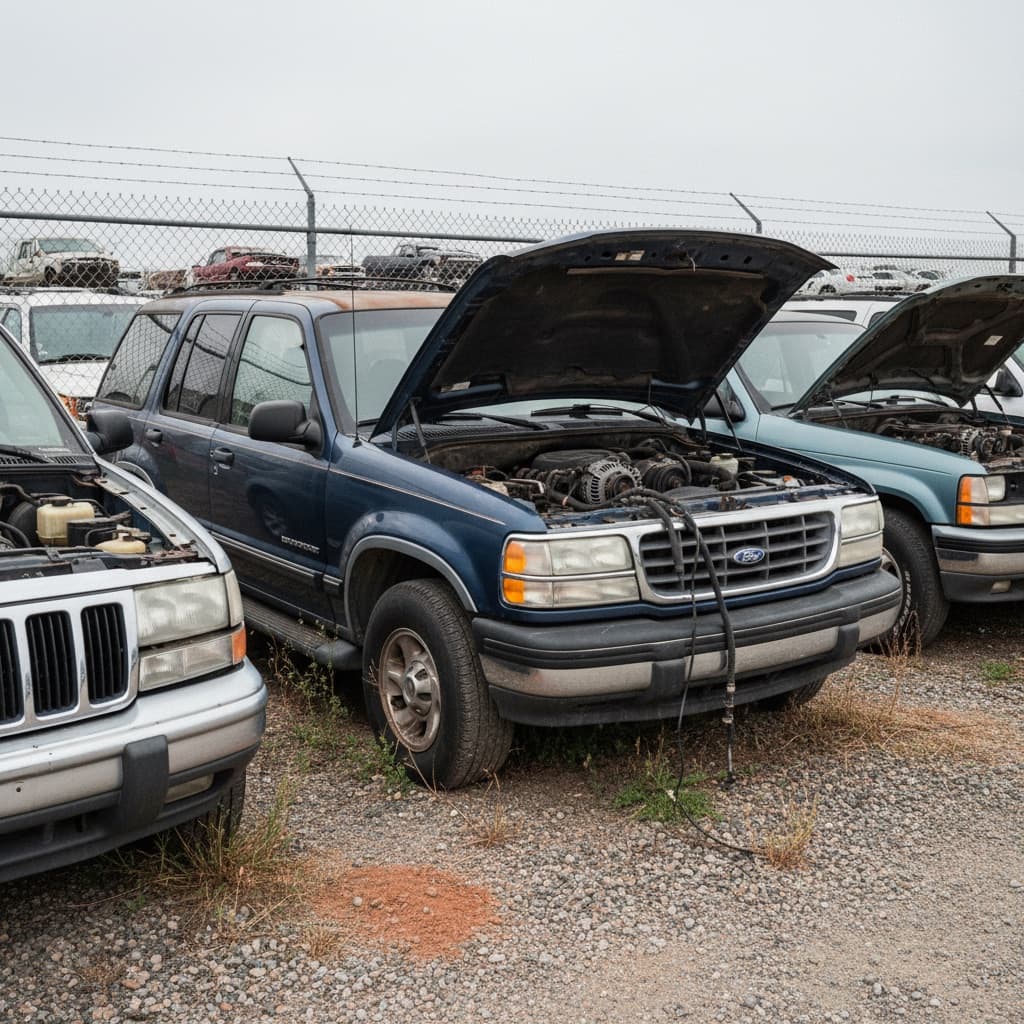
In a self-service salvage yard, customers take full responsibility for locating the correct vehicle, bringing their own tools, and safely removing the desired parts themselves. This hands-on approach has transformed the auto recycling industry by making quality parts accessible to budget-conscious consumers.
Advantages of Self-Service Yards
Benefit
Details
Significantly Lower Prices
Parts cost 50-80% less than new because you provide the labor. Pricing is often standardized by part type rather than vehicle model.
Wide Vehicle Selection
Often maintain broader inventories of older, rare, or less common vehicles that full-service yards might not stock.
Immediate Availability
Walk in, find your part, and leave the same day without waiting for staff to locate and remove parts.
Learning Opportunity
Perfect for DIY mechanics who want hands-on experience understanding how vehicles are assembled.
Challenges of Self-Service Yards
Tool and Skill Requirements: You must bring a complete tool set and possess the mechanical knowledge to remove parts without damage
Time Investment: Searching the entire yard and performing the removal work requires significant time commitment
Safety Concerns: Navigating unstable vehicles and working in potentially hazardous conditions
Unknown Part Quality: Parts are typically not tested, cleaned, or inspected before sale
Limited Warranty Protection: Shorter warranty periods compared to full-service alternatives
Popular self-service chains like Pull-A-Part and LKQ Pick Your Part have revolutionized this model by offering organized inventories and standardized pricing across multiple locations.
Full-Service Salvage Yards: Professional Parts Solutions
A full-service salvage yard handles the entire process from start to finish. Professional staff locates parts, safely removes them using proper equipment, cleans and tests them, and prepares them for sale with appropriate quality assurance measures.
Benefits of Full-Service Operations
Advantage
Value Proposition
Complete Convenience
Professional staff handles all labor, from location to removal to preparation
Quality Assurance
Parts are carefully removed, cleaned, tested, and sometimes refurbished before sale
Online Inventory Systems
Check availability online before visiting, often with same-day service or delivery options
Comprehensive Warranties
Robust warranty coverage, sometimes including labor warranty options
Enhanced Safety
Eliminates customer safety risks associated with yard navigation and part removal
Drawbacks of Full-Service Yards
Higher Costs: Parts are significantly more expensive due to labor, testing, and refurbishment costs
Limited Selection: Many specialize in specific vehicle types or newer models, reducing variety
Small Parts Economics: Low-value items like clips or trim pieces may be cost-prohibitive to stock
Dependency on Staff: Availability depends on staff schedules and workload capacity
According to recent industry data analysis, full-service yards are becoming increasingly sophisticated in their inventory management and quality control processes.
Industry Trends and Market Evolution
The salvage yard industry is experiencing significant transformation driven by multiple factors:
Rising Scrap Metal Demand: Increased global demand for recycled metals affects yard operations and pricing
“Many traditional U-Pull-It yards have transitioned into full-service auto recyclers due to changing market demands and regulatory requirements. This shift reflects the industry's evolution toward more professional, service-oriented operations.”
Hybrid Business Models
Some innovative salvage yards now offer hybrid approaches, such as U-Pull-and-Pay locations, which provide customers the flexibility to choose between self-service savings and professional assistance depending on their specific needs and the complexity of the required parts.
Making the Right Choice: Decision Framework
Selecting between full-service and self-service depends on evaluating several key factors:
Choose Self-Service If You:
Have mechanical experience and proper tools
Prioritize cost savings over convenience
Enjoy hands-on automotive work
Need common parts that are easy to remove
Have flexible time availability
Want to learn more about automotive systems
Choose Full-Service If You:
Lack mechanical experience or tools
Value convenience and time savings
Need complex or high-value parts like engines or transmissions
Require warranty protection and quality assurance
Have safety concerns about yard navigation
Need parts for insurance claims or professional repairs
Quick removal, low cost makes full-service uneconomical
Wheels & Tires
Either
Easy to assess condition, moderate removal complexity
For those looking to sell their junk car for cash, understanding these yard types helps in negotiating better prices and knowing what parts might be most valuable to remove before selling.
Cost Analysis: Real-World Examples
Understanding the financial implications helps make informed decisions:
Used Alternator: Self-service ($25-40) vs Full-service ($75-120)
Car Door: Self-service ($50-75) vs Full-service ($150-300)
Transmission: Self-service ($200-400) vs Full-service ($800-1500)
Engine: Self-service ($300-800) vs Full-service ($1500-3000)
Research from automotive industry analysts shows that self-service customers typically save 60-70% compared to full-service options, but this savings comes with increased time investment and risk.
Safety and Legal Considerations
Both yard types have important safety and legal aspects to consider:
Self-Service Safety Requirements
Proper personal protective equipment (PPE)
Understanding of automotive lift points and stability
Knowledge of hazardous material handling
Basic first aid awareness
Tool safety and proper usage techniques
Legal Protections
Full-service yards typically offer stronger legal protections through comprehensive warranties, professional installation guidance, and established return policies. Self-service yards usually operate under “as-is” conditions with limited recourse for defective parts.
Future of Salvage Yard Operations
The industry continues evolving with technological advances and changing consumer expectations. Data-driven inventory management and digital platforms are making both service models more efficient and customer-friendly.
Key trends shaping the future include:
Integration of AI for parts identification and inventory management
Enhanced online presence with virtual inventory tours
Improved quality grading systems for used parts
Expansion of warranty programs across both service models
Environmental sustainability initiatives and certifications
Expert Recommendations
Industry experts consistently recommend that self-service yards work best for budget-conscious DIY enthusiasts who possess mechanical skills, proper tools, and don't mind investing time for maximum savings. These facilities excel for customers seeking common parts, learning opportunities, and significant cost reductions.
Full-service salvage yards are recommended for customers prioritizing convenience, quality assurance, and warranty protection, especially when dealing with complex or high-value automotive parts. They're particularly valuable for professional mechanics, body shops, and customers lacking mechanical expertise.
The consensus among automotive professionals is that both models serve essential roles in the parts ecosystem. The key is matching your specific needs, skills, and priorities with the appropriate service model to maximize value and satisfaction.
Whether you choose the hands-on approach of a self-service yard like Pick-n-Pull or the convenience of a full-service operation, understanding these differences ensures you make the most informed decision for your automotive parts needs.