Short answer: A U Pull It inventory is a list of vehicles, not parts. It tells you that a 2009 Honda Accord is in row 42 and when it was set in the yard. It does not tell you whether the alternator is still on it. Every large self-service operator publishes its list online for free. The table below links the official search for eleven of them, and each one loaded when we checked.
Last checked: September 29, 2026. Every link in the table was opened and what each search shows is described from the operator's own page. The count of yards and vehicles is from our inventory directory. This article replaces a 2025 version.
Where is the official inventory search for each yard?
| Operator | Official search | What it shows |
|---|---|---|
| Pick-n-Pull | picknpull.com/check-inventory | Search by make, model and year, with a ZIP code and distance, or pick a yard |
| Pick Your Part | pyp.com/inventory | One yard at a time. Section, row and space, VIN and the date the car became available |
| Pull-A-Part | pullapart.com/inventory | Vehicle search, parts interchange and new arrivals. Says it updates every evening |
| U-Pull-&-Pay | upullandpay.com/inventory | The same search as Pull-A-Part. Both brand names appear on the page |
| Wrench-A-Part, Texas | wrenchapart.com/vehicle-search.html | By make and model across its Texas yards. Offers vehicle notifications |
| Harry's U-Pull-It, Pennsylvania | wegotused.com/our-inventory | Yard, yard date, row and VIN, with a parts interchange check. 4,325 vehicles when we looked |
| U Pull It Davie, Florida | upullitdavie.com/inventory | Arrival date, row, space, stock number and VIN |
| Wilbert's U-Pull It, New York | wilberts.com vehicle inventory search | Rochester, Buffalo and Bath. Yard row, VIN and stock number, with a what-fits search by part |
| U Pull-It, Nebraska and Iowa | upullitne.com/search-inventory | Omaha North, Omaha South, Lincoln and Des Moines, by make |
| EZ Pull N Pay, Georgia and Alabama | ezpullnpay.com inventory | Year range, make and model, one yard or all. Row and stock number |
| Express Pull-N-Save, Tennessee | kiosk.expresspullnsave.com | One search per yard. You can search without an account |
If you would rather search many yards from one place, our inventory directory listed 177 yards from 12 operators and 362,886 vehicles when we checked. Use it to find which yard has your model, then confirm on the yard's own page, which is the record that counts.
Why do yards list vehicles and not parts?
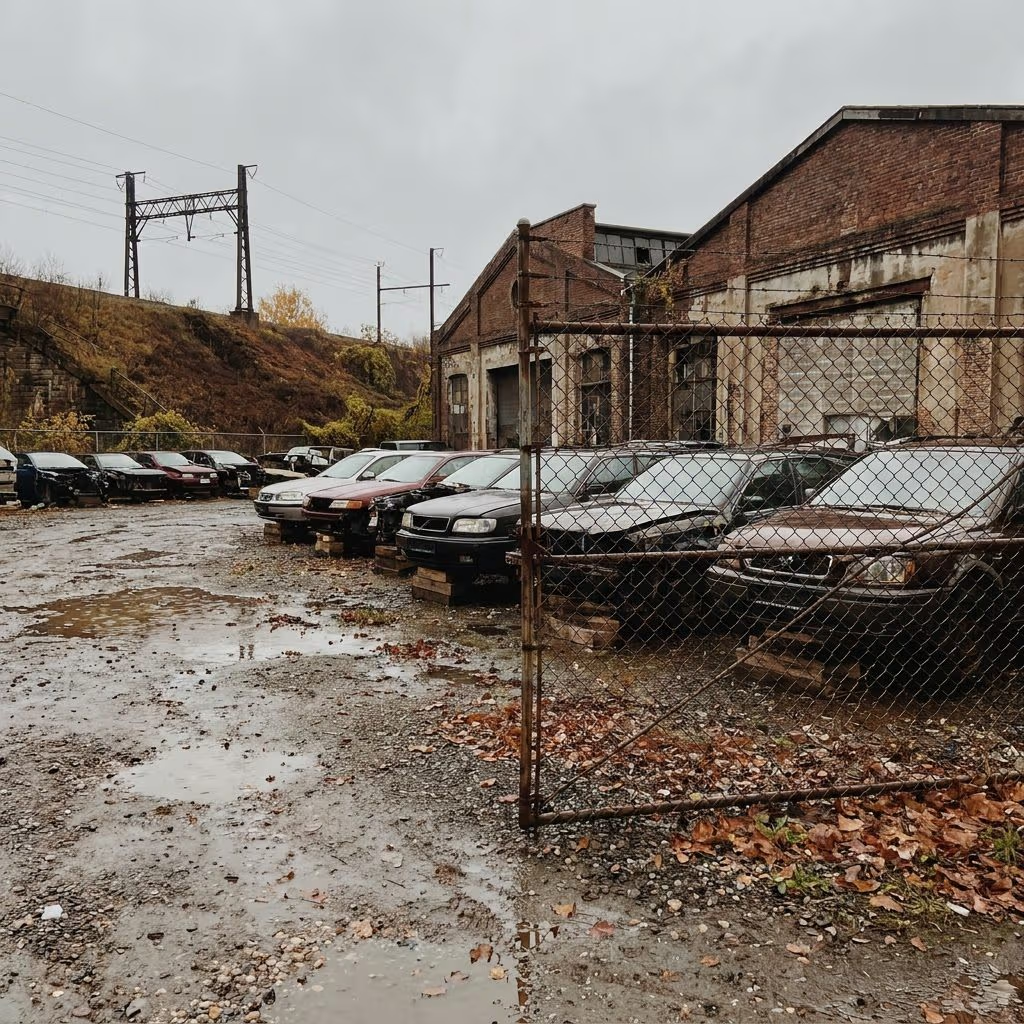
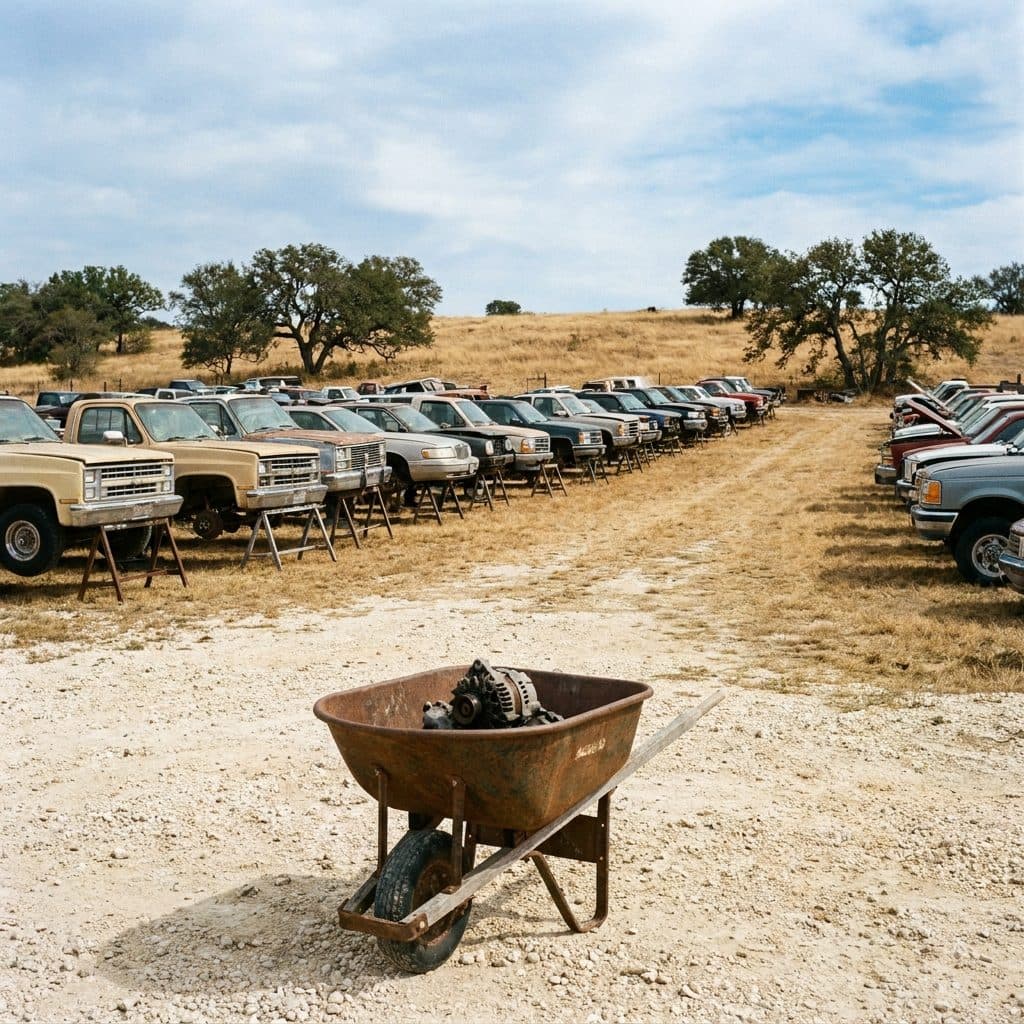
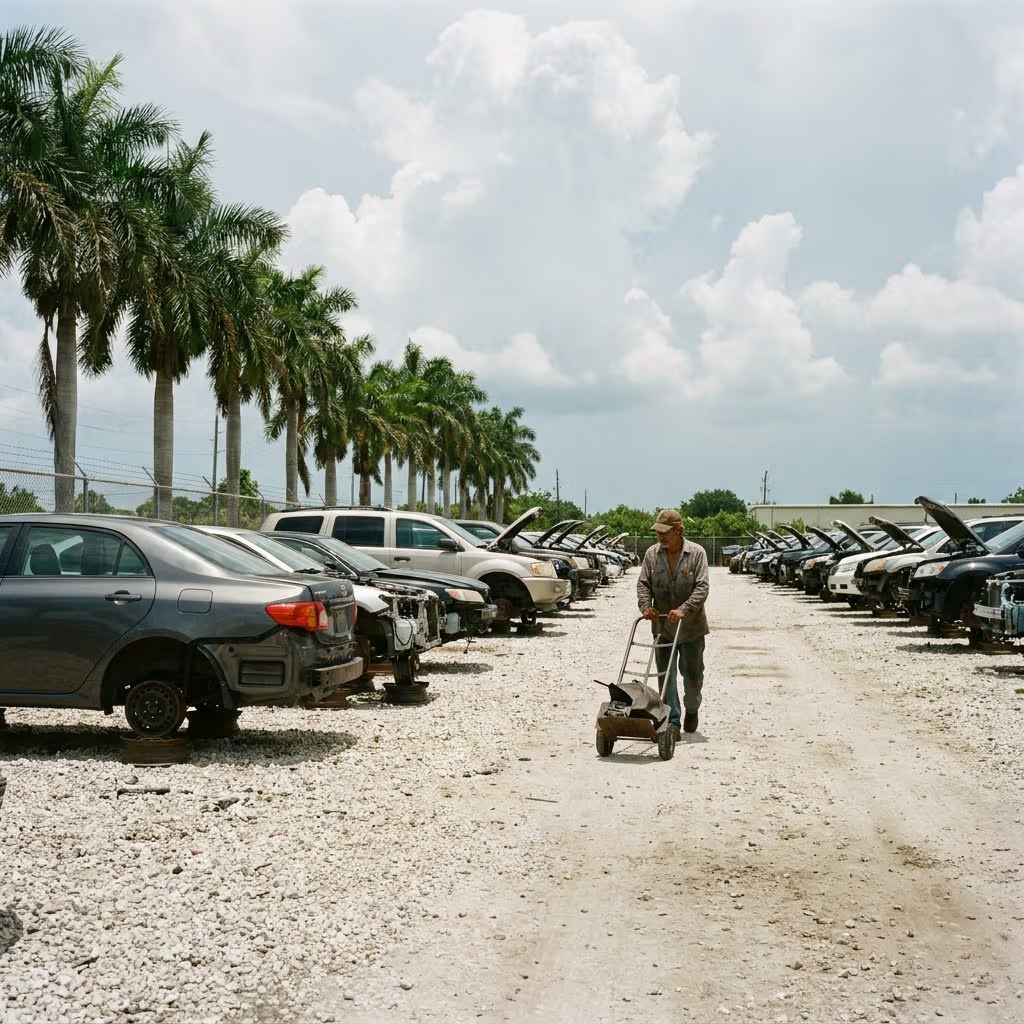
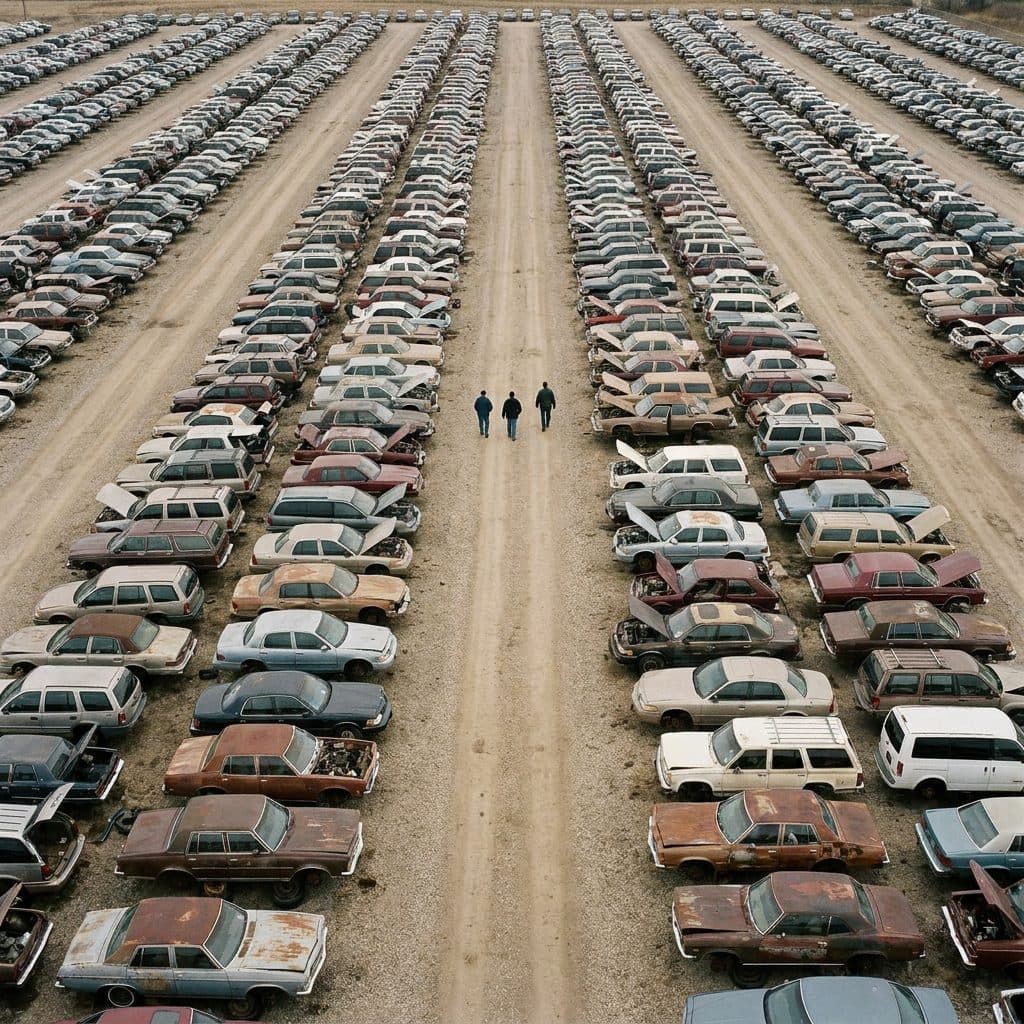
Because nobody at a self-service yard takes the car apart. The yard buys a car, drains the fluids, sets it on stands and records the vehicle. Customers remove the parts, and the yard does not track which ones have gone.
So "in stock" means the car is in the yard. A car that arrived yesterday is nearly complete. One that has sat for six weeks may have no doors. A full-service yard is different: it pulls, tests and shelves parts, and its search lists each part with a price. Our parts search covers that side.
What does each field in a listing mean?
| Field | What it tells you | How to use it |
|---|---|---|
| Year, make, model | The vehicle | Search a range of years, since most parts fit several |
| Set date, yard date or arrival date | The day the car went into the yard | The newer the date, the more parts are left |
| Section, row and space | Where the car sits | Write it down. Yards hold thousands of cars |
| VIN | The exact car | Decode it for the engine, transmission and trim |
| Stock number | The yard's own reference | Give it to the staff if you call |
| Color | Paint | Useful for body panels you do not want to repaint |
The VIN is the field people skip and should not. Two cars of the same model and year can have different engines, and the listing title rarely says which. Characters four to eight of the VIN describe the vehicle, and for most makers that includes the engine.
How often is the inventory updated?
It depends on the operator. Pull-A-Part says it updates its website every evening from each location's own database. Pick Your Part and U Pull It Davie show cars dated the same day we looked. Other yards do not say.
What no list can show is a car that has been stripped. The car stays on the list while it sits in the yard. That is one more reason to read the date.