Understanding Your Car's Cooling System Your car's cooling system is the unsung hero that prevents your engine from turning into a molten block of metal. The engine generates massive amounts of heat during combustion, and without proper cooling, it would destroy itself in minutes. The radiator serves as the heart of this system, acting as [...]
Article image
Understanding Your Car's Cooling System
Your car's cooling system is the unsung hero that prevents your engine from turning into a molten block of metal. The engine generates massive amounts of heat during combustion, and without proper cooling, it would destroy itself in minutes. The radiator serves as the heart of this system, acting as a heat exchanger that transfers heat from the hot coolant to the air flowing through its fins.
The cooling system works by circulating coolant through passages in the engine block to absorb excess heat. This hot coolant then flows to the radiator, where it releases that heat to the surrounding air before returning to the engine. The system maintains optimal operating temperatures around 90 degrees Celsius, ensuring efficient performance while preventing overheating damage.
Key Parts of the Cooling System
Radiator – Primary heat exchanger
Water pump – Circulates coolant throughout the system
Thermostat – Regulates coolant flow based on temperature
Hoses – Transport coolant between parts
Cooling fans – Move air across the radiator
Temperature sensors – Monitor system performance
According to automotive experts, cooling system failure is the number one reason for engine-related breakdowns, making radiator maintenance and replacement critical for vehicle reliability.
Why Choose Used Radiators Over New Ones
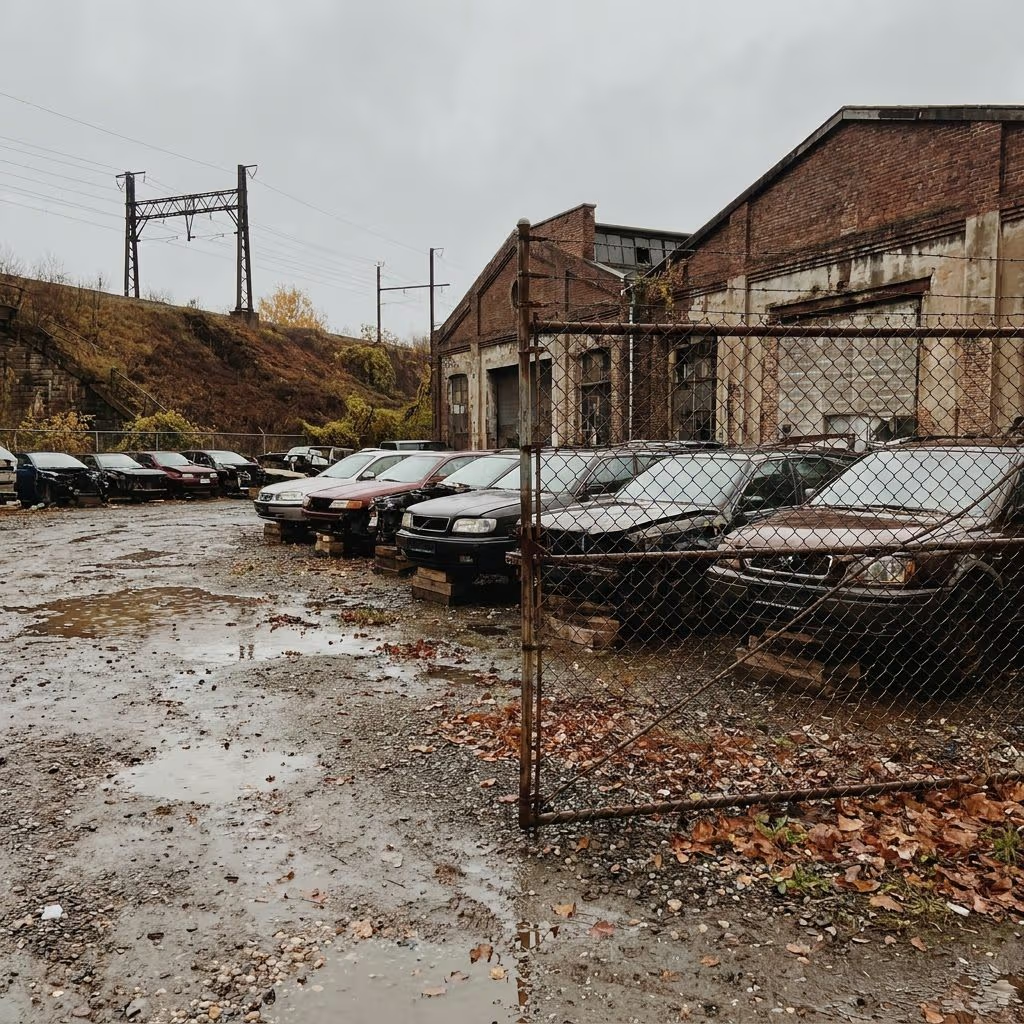
Purchasing a used radiator from salvage yards near you offers compelling advantages over buying new parts. These benefits make used radiators an attractive option for budget-conscious car owners and environmental advocates alike.
Benefit
Description
Cost Savings
Used radiators cost 60-70% less than new parts, saving hundreds of dollars
OEM Quality
Original Equipment Manufacturer parts ensure perfect compatibility
Immediate Availability
No waiting days or weeks for special orders
Environmental Impact
Promotes recycling and reduces manufacturing waste
For older or discontinued vehicle models, OEM parts from junkyards may be the only source for compatible cooling system parts. This availability advantage becomes increasingly important as vehicles age and manufacturers discontinue certain part lines.
Pre-Purchase Visual Inspection Checklist
Before considering any used radiator, conduct a thorough visual inspection following this comprehensive checklist. This initial assessment can save you time and money by eliminating obviously defective units.
Inspection Area
What to Look For
Red Flags
External Surface
Clean, uniform appearance
Corrosion, rust stains, dried coolant residue
Cooling Fins
Straight, evenly spaced, intact fins
Bent, broken, or severely damaged fins
Tanks & Seams
Solid connections between core and tanks
Visible cracks, separation, poor repairs
Inlet/Outlet Necks
Clean, undamaged hose connections
Cracks, chips, deformation at connection points
Mounting Points
Secure, intact mounting brackets
Broken tabs or missing hardware
Examining the Radiator Core
The radiator core is where the actual heat exchange occurs, making its condition critical for proper cooling performance. Use these techniques to assess core integrity:
Flashlight Test – Shine a bright light through the fins to check for internal blockages or tube damage
Airflow Check – Use compressed air to clear debris and test for obstructions
Tube Integrity – Look for collapsed, crushed, or corroded tubes within the core structure
Fin Condition – Ensure fins are straight and not touching each other, which reduces airflow
According to cooling system experts, damaged or clogged fins can significantly reduce cooling efficiency, even if the radiator doesn't leak.
Pressure Testing: The Ultimate Leak Detection Method
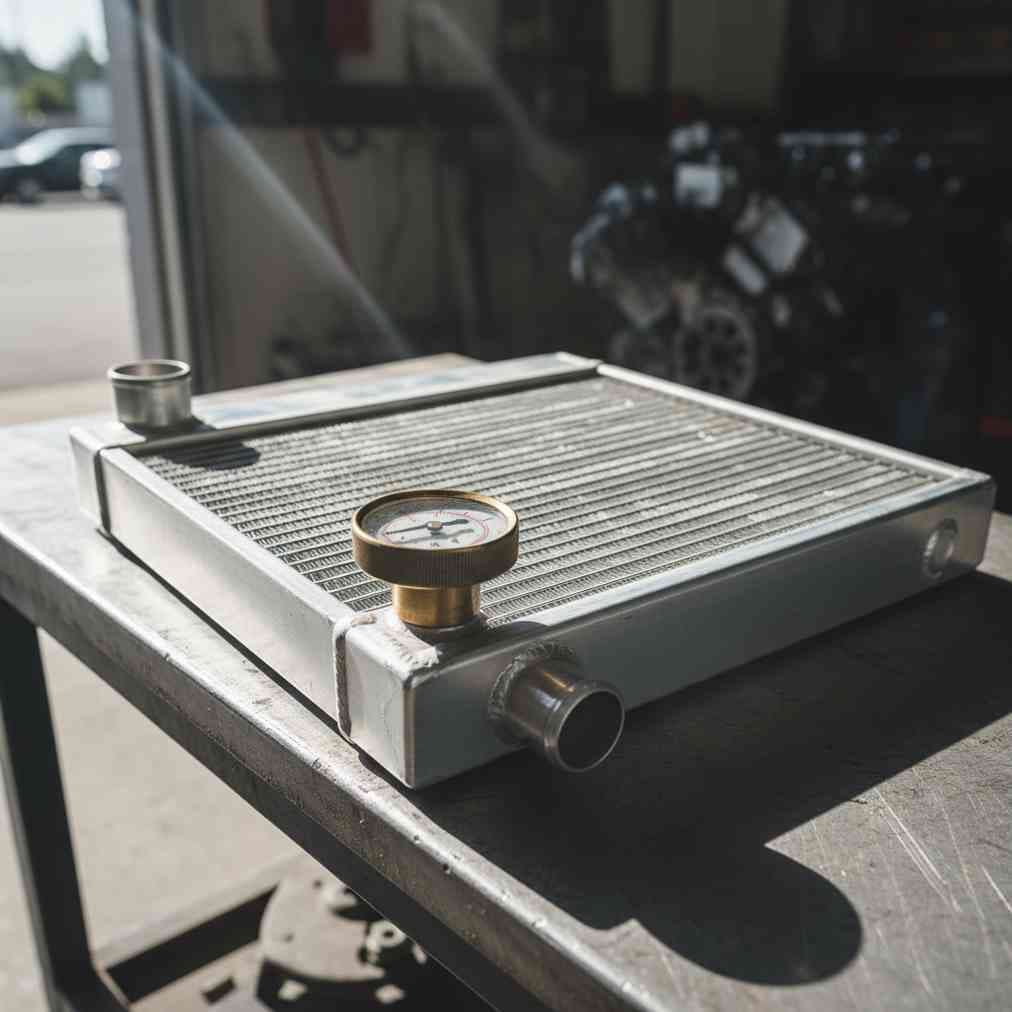
Pressure testing represents the gold standard for detecting radiator leaks, revealing hairline cracks and minor seepage invisible during visual inspection. Professional mechanics consider this test non-negotiable when evaluating used radiators.
“Pressure testing is the absolute best way to test a radiator. Even if a used radiator looks perfect, industry professionals strongly advise performing a pressure test before installation.”
Professional Pressure Testing Steps
Setup – Use a dedicated radiator pressure tester kit with the correct adapter for the radiator cap opening
Dry Test – Plug all openings and build pressure (10-15 PSI) while dry to check for major leaks
Pressure Application – Apply 1.5 to 2 times normal operating pressure (typically 13-16 PSI)
Hold Time – Maintain pressure for 10-15 minutes while monitoring the gauge
Leak Detection – Watch for pressure drops and use soapy water to identify bubble formation
For the most thorough testing, submerge the pressurized radiator in a large tub of water and watch for air bubbles. This method reveals even the smallest leaks that might not show up with other testing methods.
Understanding Pressure Ratings
Most automotive cooling systems operate at 13-16 PSI, but always check your specific vehicle's requirements. According to radiator maintenance experts, each PSI of pressure raises the coolant boiling point by approximately 3°F, improving cooling efficiency and preventing overheating.
Inspecting Related Cooling System Parts
When examining a used radiator, don't overlook related cooling system parts that often come with the unit or need replacement during radiator installation. These parts work together as a system, and failure of any single part can cause cooling problems.
Radiator Hoses Inspection
Radiator hoses are critical for coolant circulation and should be inspected carefully. According to MOTOR's cooling system inspection guide, hoses should typically be replaced every 36,000 to 50,000 miles due to internal corrosion risks, even if they appear okay externally.
External Condition – Check for cracks, bulges, or soft spots
Internal Inspection – Look for deterioration or residue buildup inside
Clamp Integrity – Ensure clamps are tight and free from corrosion
Age Assessment – Consider replacement if hoses show signs of aging
Cooling Fan Evaluation
Cooling fans are essential for drawing air across the radiator, especially at low speeds or idle. Inspect fans for:
Blade Condition – No cracks, breaks, or missing pieces
Motor Function – Smooth operation without excessive noise
Mounting Security – Proper attachment to radiator or shroud
Industry professionals and experienced mechanics offer valuable insights for successfully purchasing used radiators. These expert recommendations can help you avoid common pitfalls and ensure you get a quality part.
Source Selection Strategy
Choose reputable salvage yards or used auto parts stores that inspect and test their inventory. Look for businesses that offer warranties or at least a 30-day return policy. A radiator with no warranty may indicate worse condition than visual inspection reveals.
Target newer vehicles – Focus on radiators from cars less than 10 years old
Ask about testing – Inquire whether the yard pressure tests radiators before sale
Request documentation – Get information about the donor vehicle's maintenance history
Compare prices – Shop multiple sources to ensure fair pricing
Installation Preparation
Even with thorough inspection, perform your own pressure test before installation. This final verification step can save hours of labor if problems are discovered after installation. Consider replacing related parts like hoses, clamps, and thermostat during radiator installation to prevent future failures.
According to cooling system maintenance experts, replacing multiple cooling system parts simultaneously often provides better long-term reliability than piecemeal repairs.
Complete Cooling System Inspection Checklist
Use this comprehensive checklist when evaluating used radiators and related cooling system parts. This systematic approach ensures nothing important gets overlooked during your inspection.
Component
Inspection Points
Pass/Fail Criteria
Radiator Exterior
Leaks, corrosion, damaged fins
No visible damage or leakage signs
Radiator Core
Internal deposits, repair evidence
Clean passages, no obvious repairs
Hose Condition
Cracks, hardness, flexibility
Supple, crack-free, proper shape
Fittings & Clamps
Security, rust, proper size
Tight, corrosion-free, correct fit
Pressure Test
Hold rated pressure 10-15 minutes
No pressure drop, no bubble formation
Cooling Fan
Blade integrity, motor function
Smooth operation, no damage
Current Market Trends and Innovations
The used auto parts market continues evolving, with several trends making it easier to find quality used radiators. Understanding these developments helps buyers make informed decisions and find better deals.
Enhanced Testing Standards
Many salvage yards now perform both visual and pressure testing before resale, significantly reducing the risk of purchasing defective radiators. This quality improvement addresses buyer concerns while increasing confidence in used parts purchases.
Online Marketplace Growth
Digital platforms increasingly provide detailed inspection reports and generous return policies. These developments make it easier to compare options and buy with confidence, even when purchasing remotely.
DIY Testing Equipment Access
More DIY mechanics now use professional-grade pressure testers and inspection checklists to evaluate used parts before installation. This trend reflects growing sophistication among car enthusiasts and cost-conscious owners.
If you're considering whether to repair your current vehicle or sell it for cash, factor in the total cooling system condition along with radiator replacement costs.
Environmental Benefits of Choosing Used Radiators
Purchasing used radiators contributes significantly to environmental conservation efforts. The automotive recycling industry prevents millions of tons of materials from entering landfills annually while reducing the environmental impact of manufacturing new parts.
Resource Conservation – Reduces demand for raw materials like aluminum and copper
Energy Savings – Manufacturing recycled parts requires 85% less energy than new production
Waste Reduction – Keeps functional parts out of landfills
Carbon Footprint – Significantly lower emissions compared to new part production
According to auto recycling industry data, choosing used parts can reduce environmental impact by up to 80% compared to purchasing new equivalents.
Final Recommendations for Success
Successfully buying a leak-free used radiator requires patience, thorough inspection, and proper testing. Follow these final recommendations to maximize your chances of getting a quality part:
Never skip pressure testing – This step reveals problems invisible to visual inspection
Buy from reputable sources – Choose salvage yards with good reputations and return policies
Consider the complete system – Plan to replace hoses, clamps, and other aging parts
Document everything – Keep records of inspections and test results
Have backup options – Identify multiple potential radiators in case your first choice fails testing
Remember that a thorough inspection combined with proper testing provides the best assurance of purchasing a leak-free used radiator. Take time to follow the checklist and testing procedures outlined in this guide, and you'll significantly increase your chances of finding a reliable replacement part that serves your vehicle well for years to come.