How to Find and Remove a Used Car Seatbelt Assembly
Understanding Seatbelt Safety and the Critical Role of Inspection Seatbelts are among the most critical safety components in any vehicle, designed to protect occupants during collisions by restraining them and preventing severe injuries or fatalities. According to the National Highway Traffic Safety Administration (NHTSA), seatbelts reduce the risk of death for front-seat passengers by 45% [...]
Article image
Understanding Seatbelt Safety and the Critical Role of Inspection
Seatbelts are among the most critical safety components in any vehicle, designed to protect occupants during collisions by restraining them and preventing severe injuries or fatalities. According to the National Highway Traffic Safety Administration (NHTSA), seatbelts reduce the risk of death for front-seat passengers by 45% and serious injury by 50%. In 2021, seatbelts saved an estimated 14,955 lives in the United States alone.
Despite these compelling statistics, a significant number of fatalities in 2022 involved passengers not wearing seatbelts, with 44% of vehicle passengers killed in accidents being unrestrained. This underscores the paramount importance of ensuring your seatbelt system is in optimal working condition at all times.
Locating Seatbelt Assemblies in Donor Vehicles
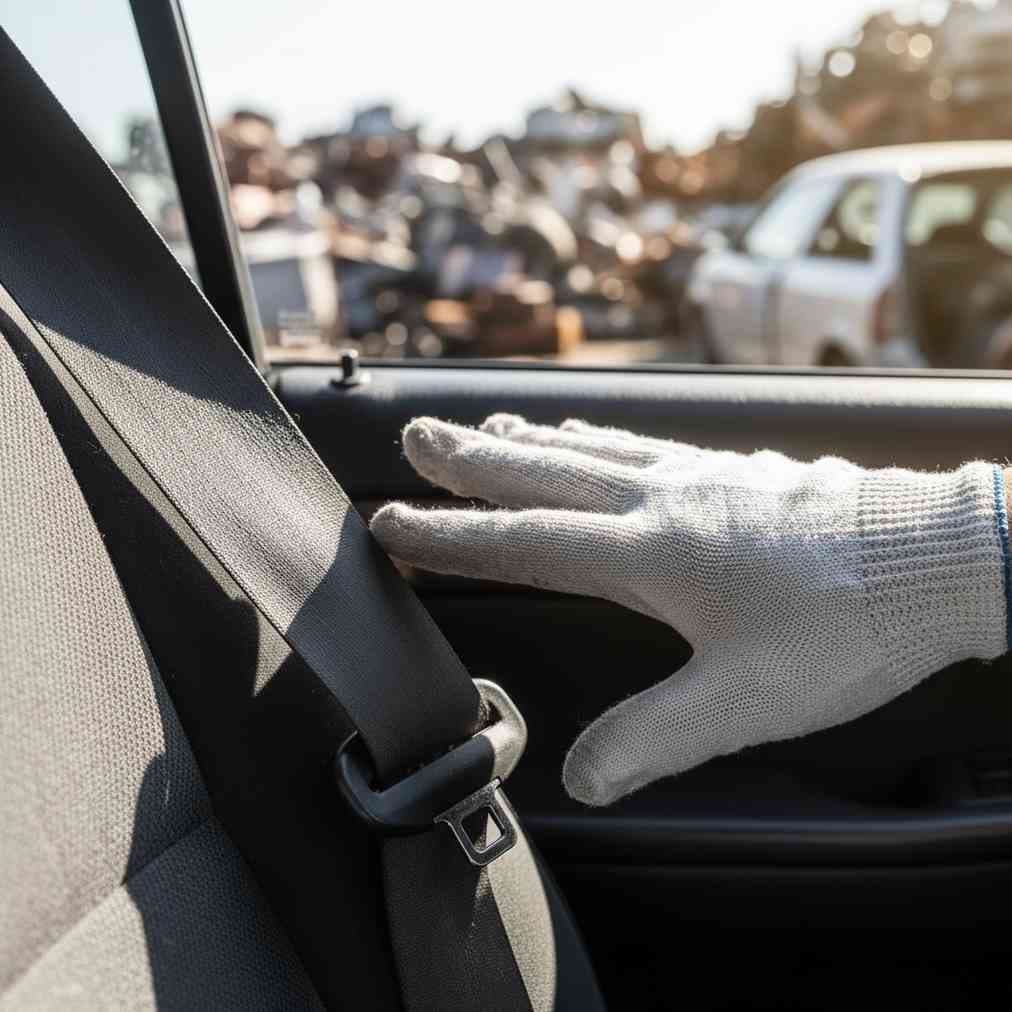
When searching for a used seatbelt assembly at local auto salvage yards, understanding the typical location and mounting configuration is essential. Seatbelt assemblies are typically found in specific areas of the vehicle's structure:
B-pillar location: The retractor mechanism is usually mounted behind the B-pillar trim (the pillar between front and rear doors)
Floor anchor points: The buckle assembly and lower anchor points are secured to the vehicle floor or seat frame
Upper shoulder anchor: Located on the upper portion of the B-pillar or door frame
Pretensioner components: Often integrated with the retractor mechanism or buckle assembly
Before beginning any removal process, it's crucial to understand that buying used auto parts requires careful consideration, especially for safety-critical components like seatbelts.
Comprehensive Inspection Checklist for Used Seatbelts
Unlike other used auto parts that can be visually inspected for basic functionality, seatbelts require meticulous evaluation due to their life-saving role. The California BAR Vehicle Safety Systems Inspection Manual provides detailed guidelines for proper seatbelt inspection.
Visual Inspection of Webbing Material
The seatbelt webbing is the primary load-bearing component and requires thorough examination:
Fraying or cuts: Look for any loose threads, cuts, or worn edges along the entire length
Discoloration: Fading from sunlight exposure can indicate material degradation
Burn marks: Any heat damage compromises webbing strength
Stitching integrity: Check for loose or broken stitching at connection points
Thickness consistency: Feel for any thin spots or areas where the webbing feels different
“Even minor damage can significantly reduce the belt's strength. Sunlight exposure can also degrade webbing, so look for fading patterns that indicate prolonged UV exposure.” – Safety Restore Blog
Smooth extension: Pull the webbing fully out – it should extend without binding or catching
Consistent retraction: Allow the belt to retract completely without slack or hesitation
Emergency locking: Perform a sudden jerk test to ensure the mechanism locks immediately
Angle sensitivity: Test locking when the retractor is tilted at various angles
If any of these tests fail, the retractor mechanism is compromised and should not be used, as it may fail during a collision when proper restraint is critical.
Tools and Preparation for Seatbelt Removal
Proper preparation and the right tools are essential for safely removing a seatbelt assembly without damaging the component or the donor vehicle. Having the right equipment is similar to what you'd need when mechanics recommend for junkyard visits.
Essential Tools Checklist
Socket set: Common sizes include T50 Torx, 17mm, 10mm, 16mm, and 5/8 inch
Screwdrivers: Both Phillips and flathead varieties
Trim removal tools: Plastic pry tools to avoid damage to interior panels
Ratchet and extensions: For accessing bolts in tight spaces
Work gloves: Protection and improved grip
Flashlight or headlamp: Adequate lighting for inspection and removal
Safety Preparations
Before beginning any removal process, especially in vehicles with pretensioner systems, safety preparations are crucial:
Battery disconnection: Disconnect the negative terminal and wait 3-5 minutes
Airbag precautions: Be aware of potential airbag deployment risks
Vehicle history verification: Ensure the donor vehicle wasn't involved in accidents
Documentation: Take photos of the assembly before removal for reference
Step-by-Step Removal Process
The removal process varies between vehicle makes and models, but the general procedure follows a consistent pattern. This process is more complex than removing other components like used car doors due to safety considerations.
Interior Trim Removal
Access to seatbelt mounting points typically requires removing interior trim pieces:
Door sill plates: Remove plastic covers over lower mounting points
B-pillar trim: Carefully pry off upper and lower pillar covers
Seat components: May need to move or remove seats for full access
Floor carpeting: Fold back carpet to access floor anchor points
Identifying and Removing Mounting Hardware
Component
Typical Location
Common Hardware
Retractor Assembly
B-pillar interior
2-3 bolts, usually T50 or 17mm
Floor Anchor
Vehicle floor/seat frame
Single bolt, often 16mm or 5/8″
Upper Anchor
Upper B-pillar
Single bolt, T50 or 17mm typical
Buckle Assembly
Seat or floor mounted
1-2 bolts, varies by vehicle
Electrical Component Disconnection
Modern seatbelt assemblies often include electrical components that must be properly disconnected:
Pretensioner connectors: Usually yellow connectors with safety clips
Buckle sensors: Small connectors for occupancy detection
Warning system wires: Connected to dashboard warning lights
The SCRS YouTube channel provides excellent visual guidance for handling these electrical components safely.
Critical Safety Considerations and Risk Assessment
While crash repair using junkyard parts can be cost-effective for body components, seatbelts present unique safety challenges that require careful consideration.
Hidden Damage Assessment
Unlike visible damage, internal component stress and fatigue may not be detectable through standard inspection methods:
Stress testing limitations: Home inspection cannot replicate crash-force testing
Material fatigue: Repeated use may weaken webbing fibers invisibly
Component aging: Springs and mechanisms may lose effectiveness over time
Previous deployment: Pretensioners may have deployed without visible evidence
Legal and Insurance Implications
Using non-certified safety components can have serious legal and insurance consequences:
Alternative Solutions: Professional Repair vs. New Replacement
Given the risks associated with used seatbelt assemblies, exploring alternative solutions often provides better value and safety assurance. Just as you might consider OEM car parts for quality assurance, seatbelt safety deserves similar consideration.
Professional Seatbelt Repair Services
Specialized repair services can restore seatbelts to OEM standards while providing warranties and certification:
Webbing replacement: New webbing installed on existing retractor mechanisms
Pretensioner rebuilding: Professional restoration of deployment mechanisms
Buckle refurbishment: Internal mechanism cleaning and part replacement
Testing certification: Professional testing to OEM specifications
Warranty coverage: Often includes lifetime warranties on repairs
Cost-Benefit Analysis
Option
Typical Cost
Safety Rating
Warranty
Used Assembly
$50-150
Unknown/Risky
None
Professional Repair
$150-300
OEM Standard
Lifetime typical
New OEM
$300-800
Factory Standard
Manufacturer warranty
New Aftermarket
$200-400
Varies
Limited warranty
Vehicle-Specific Considerations
Different vehicle makes and models have unique seatbelt configurations that affect the removal and replacement process. Understanding these differences is crucial for successful removal and future installation.
Common Vehicle Variations
European vehicles: Often use different mounting hardware and torque specifications
Luxury vehicles: May include additional sensors and electrical components
Older vehicles: Simpler systems but may lack modern safety features
Trucks and SUVs: Heavy-duty mounting systems with higher torque requirements
When working with specific makes like Toyota Camry parts or Honda Accord parts, manufacturer-specific service manuals provide detailed removal procedures.
Age and Technology Considerations
The age of the vehicle significantly impacts seatbelt technology and removal complexity:
Era
Technology
Removal Complexity
Pre-1990
Basic 3-point systems
Simple – mostly mechanical
1990-2000
Basic pretensioners
Moderate – some electrical
2000-2010
Advanced pretensioners, sensors
Complex – multiple systems
2010+
Smart systems, multiple airbags
Very complex – integrated systems
Installation and Testing After Removal
If you decide to proceed with a used seatbelt assembly after thorough inspection, proper installation and testing are critical for safety. The installation process requires the same attention to detail as the removal process.
Proper Installation Procedures
Torque specifications: All mounting bolts must be tightened to manufacturer specifications
Electrical connections: Ensure all connectors are properly seated and secured
Routing verification: Webbing must follow original routing paths without twists
Clearance check: Ensure no interference with seat movement or other components
The Ford Owner Manual provides detailed torque specifications and installation procedures for Ford vehicles.
Post-Installation Testing Protocol
After installation, comprehensive testing ensures the seatbelt functions properly:
Function test: Test extension, retraction, and locking mechanisms
Electrical test: Verify warning lights and sensors function correctly
Load test: Apply moderate force to test mounting security
Integration test: Ensure compatibility with airbag and vehicle systems
Professional testing equipment can verify that the seatbelt meets safety standards, similar to how safety inspections and calibration procedures ensure other safety systems function correctly.
Environmental and Regulatory Compliance
Seatbelt assemblies must meet various regulatory standards and environmental requirements that affect their use and disposal.
Testing compliance: All components must pass standardized testing
State-Specific Requirements
Different states have varying requirements for safety equipment modifications and inspections:
State Category
Inspection Requirements
Compliance Standards
Strict Inspection States
Annual safety inspections
Full FMVSS compliance required
Moderate States
Bi-annual or registration-based
Basic functionality required
No Inspection States
Owner responsibility
Federal standards still apply
Final Recommendations and Expert Opinions
Based on comprehensive research and expert opinions from safety professionals, the consensus strongly favors avoiding used seatbelt assemblies for safety-critical applications. While the process of finding and removing these components is technically possible, the risks often outweigh the potential cost savings.
“For vehicle owners needing seat belt replacement, the safest and most cost-effective long-term approach involves purchasing new, certified components from reputable manufacturers or authorized dealers.” – Safety Restore Technical Team
When Used Seatbelts Might Be Acceptable
Limited scenarios where used seatbelt assemblies might be considered include:
Show vehicles: Non-driving display vehicles where safety isn't a concern
Parts donors: Harvesting specific components like buckles for repair purposes
Research purposes: Technical study or reverse engineering applications
Temporary solutions: Only with professional inspection and immediate replacement planning
Best Practices Summary
If you must work with used seatbelt assemblies, follow these critical guidelines:
Complete documentation: Record all inspection findings and test results
Professional consultation: Have a certified technician review your assessment
Limited use duration: Consider used assemblies as temporary solutions only
Regular re-inspection: Monitor condition more frequently than new components
Replacement planning: Budget for new or professionally repaired replacements
Remember that seatbelts are not typical high-value used auto parts where cost savings justify the risks. The potential consequences of seatbelt failure far exceed any financial benefits of using salvaged components.
For those interested in learning more about automotive safety and finding quality parts, explore other resources like our comprehensive automotive blog for additional guidance on vehicle maintenance and safety.