How to Handle Hazardous Components (airbags, mercury switches) Safely
Understanding Hazardous Vehicle Components When working with vehicles in salvage yards near me or during personal automotive maintenance, understanding how to safely handle hazardous parts is crucial for both personal safety and environmental protection. Parts like airbags and mercury switches require specialized handling procedures to prevent injuries and environmental contamination. According to the EPA Guide [...]
Article image
Understanding Hazardous Vehicle Components
When working with vehicles in salvage yards near me or during personal automotive maintenance, understanding how to safely handle hazardous parts is crucial for both personal safety and environmental protection. Parts like airbags and mercury switches require specialized handling procedures to prevent injuries and environmental contamination.
According to the EPA Guide to Processing End-of-Life Vehicles, proper identification and removal of these Parts is not only a safety requirement but often a legal mandate in many jurisdictions.
Mercury Switches: The Hidden Environmental Threat
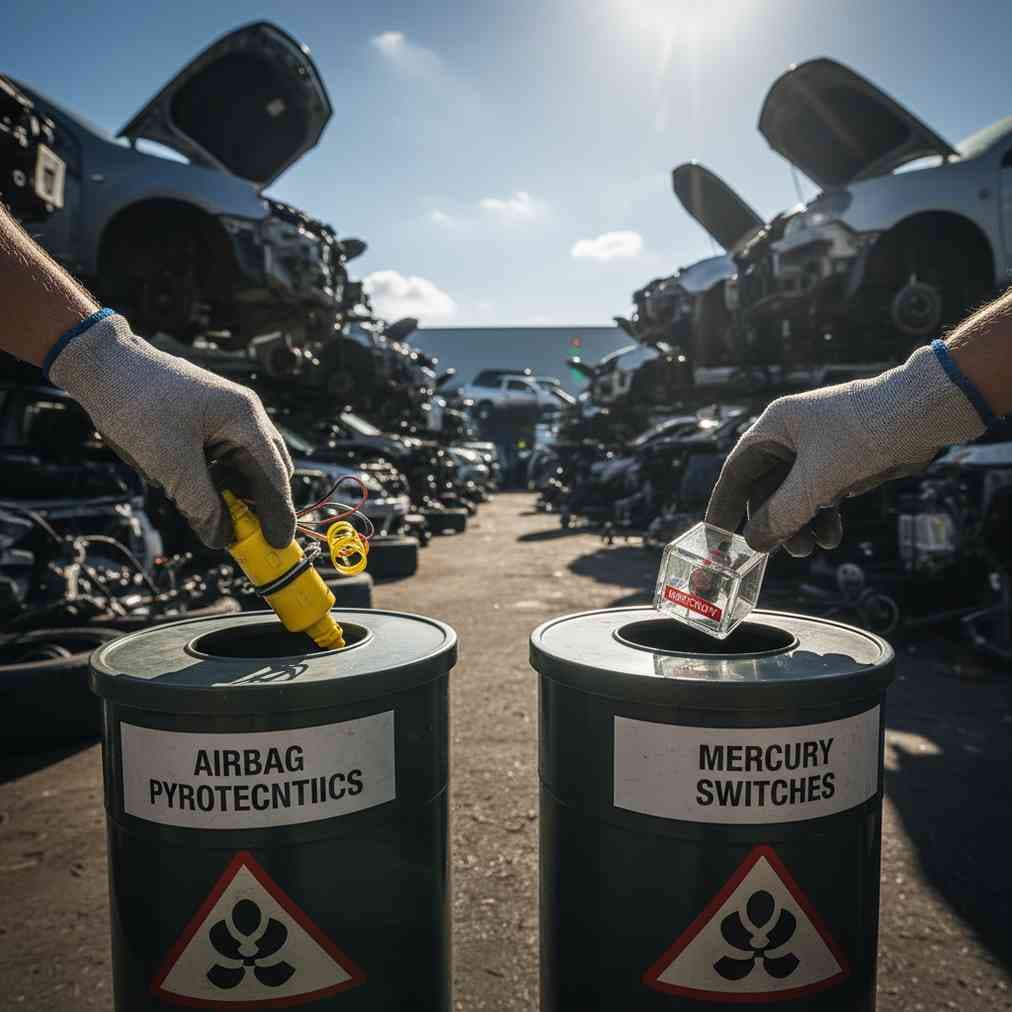
Mercury switches are found in older vehicle models, typically in hood and trunk lighting assemblies, and sometimes in relays for airbags or ABS systems. These small components pose significant environmental risks due to mercury's highly toxic nature.
Identifying Mercury Switches
Located in hood and trunk lighting systems
Found in some ABS and airbag relay systems
Small, metallic switches with mercury visible inside
Common in vehicles manufactured before 2005
Safe Removal Procedures
Legal requirements in many jurisdictions mandate the removal of mercury switches before a vehicle is crushed, baled, sheared, or shredded. Since January 1, 2005, crushing or shredding a car without removing mercury switches has been illegal in California, with similar regulations in other states.
Non-deployed airbags contain explosive materials that can cause serious injury if accidentally triggered. These parts require careful handling by trained personnel before vehicle salvage or disposal operations.
Airbag Hazards and Risks
Explosive deployment can cause severe injuries
Contains sodium azide, a toxic chemical compound
Electrical systems can remain active even after battery disconnection
Requires specialized deactivation procedures
Unlike mercury switches, airbags are not typically classified as hazardous waste, but their explosive nature requires specialized handling facilities. The OSHA guidance manual provides comprehensive safety protocols for handling potentially dangerous automotive parts.
Professional Deactivation Process
Airbag deactivation should only be performed by trained technicians who understand the electrical systems and safety protocols. This process typically involves:
Disconnecting the vehicle battery and waiting for system discharge
Following manufacturer-specific deactivation sequences
Using proper deployment tools in controlled environments
Disposing of deployed airbags through certified facilities
Proper Disposal Channels for Hazardous Materials
Establishing proper disposal channels is essential for environmental protection and regulatory compliance. Different hazardous components require specific disposal methods and certified facilities.
Mercury Switch Disposal
Mercury switches must be managed as hazardous waste or universal waste and cannot be disposed of in regular landfills or incinerated. Many regions participate in programs like the End of Life Vehicle Solutions Corporation (ELVS) program for collection and proper disposal.
The California Resource Manual provides detailed procedures for automotive waste management and disposal requirements.
Disposal Cost Analysis
Component Type
Disposal Method
Average Cost Range
Environmental Benefit
Mercury Switches
Hazardous waste facility
$5-15 per switch
Prevents groundwater contamination
Lead Batteries
Battery recycling center
Often pays $5-20 per battery
90% material recovery rate
Airbags
Specialized disposal facility
$25-50 per airbag
Safe chemical neutralization
Fluids (oil, coolant)
Licensed waste transporter
$0.50-2.00 per gallon
Prevents soil contamination
Leveraging AI Technology for Hazardous Component Identification
Modern AI-powered image recognition technology is revolutionizing how salvage yards and mechanics identify potentially hazardous components. This technology uses machine learning and computer vision to compare uploaded photos against vast databases of known parts.
Benefits of AI Part Identification
Streamlines identification process for damaged or worn parts
Reduces ordering errors and improves safety protocols
Suggests compatible replacements and related components
Saves time compared to manual catalog searching
Particularly valuable when QR codes or barcodes are illegible
Photo-Taking Best Practices for AI Recognition
To maximize the success rate of AI identification, specific photo quality standards must be met:
Photo Element
Best Practice
Why It Matters
Lighting
Use natural light, eliminate shadows
Clearly highlights component features
Focus
Clear, high-quality, sharp focus
Enables accurate detail recognition
Isolation
Single part per photo
Reduces confusion for AI algorithms
Angles
Multiple perspectives when possible
Provides comprehensive component view
Context
Include vehicle make, model, year
Significantly increases accuracy
AI Prompts for Hazardous Component Identification
When using AI tools for component identification, specific prompts can improve accuracy:
General Identification: “Identify this automotive component and indicate if it contains hazardous materials like mercury or explosive compounds.”
Safety Assessment: “Analyze this vehicle part for potential safety hazards and recommend proper handling procedures.”
Disposal Guidance: “Identify this component and provide disposal requirements based on environmental regulations.”
Detail Extraction: “Examine this part for visible serial numbers, manufacturer markings, and condition assessment.”
Legal Requirements and Compliance
Understanding legal requirements for hazardous component handling is essential for regulatory compliance and avoiding penalties. Requirements vary by state and local jurisdiction, but common elements include:
EPA Regulations: Mandate proper handling of toxic materials like mercury
OSHA Standards: Require worker safety protocols for hazardous material exposure
State Laws: Many states have specific requirements for mercury switch removal
Local Ordinances: May have additional restrictions on hazardous waste disposal
Economic Benefits of Proper Hazardous Material Management
Implementing proper hazardous material management practices offers significant economic advantages beyond regulatory compliance. Remanufacturing used parts can save up to 80% of manufacturing costs and reduce material consumption by up to 90%.
AI-driven image recognition is becoming a “MUST-HAVE” for companies selling aftermarket products because it eliminates the need for technical expertise in navigating complex catalogs.
Cost-Benefit Analysis
Benefit Category
Financial Impact
Environmental Impact
Mercury Recovery
$15-25 per pound recovered
Prevents groundwater contamination
Lead Battery Recycling
$0.30-0.50 per pound
95% recyclable material
Avoiding Penalties
$1,000-10,000+ in fines avoided
Regulatory compliance
Insurance Savings
5-15% premium reduction
Reduced liability exposure
Future Trends in Hazardous Material Management
The automotive recycling industry is experiencing significant technological advancement, with increased emphasis on circular economy principles and sustainable practices.
Emerging Technologies
Augmented Reality (AR): Virtual fitting and component identification
AI-Driven Chatbots: Instant customer support and safety guidance
Blockchain Tracking: Complete lifecycle tracking of hazardous materials
Advanced Sensors: Real-time detection of hazardous components
For those looking to get cash for junk cars, understanding proper hazardous material removal can increase vehicle value and ensure compliance with buyer requirements.
Best Practices for Salvage Yard Operations
Implementing comprehensive safety protocols for hazardous component handling protects workers, customers, and the environment while ensuring regulatory compliance.
Operational Safety Checklist
Conduct regular safety training for all personnel
Maintain proper storage containers and labeling systems
Establish relationships with certified disposal facilities
Implement AI-powered identification systems for efficiency
Document all hazardous material removal and disposal activities
Regular safety audits and compliance reviews
Understanding common hazardous waste types and proper handling procedures is essential for maintaining safe operations and protecting both workers and the environment.
Conclusion: Prioritizing Safety and Sustainability
Safe handling of hazardous vehicle components like airbags and mercury switches requires careful attention to proper procedures, regulatory compliance, and environmental responsibility. By implementing AI-powered identification systems, establishing proper disposal channels, and maintaining comprehensive safety protocols, automotive professionals can protect themselves, their customers, and the environment while operating profitable and sustainable businesses.
The integration of modern technology with traditional safety practices represents the future of automotive recycling, offering improved efficiency, accuracy, and environmental protection. As regulations continue to evolve and technology advances, staying informed about best practices and emerging trends will be essential for success in the automotive recycling industry.