How to Pull a Part That's Hard to Reach (Without Getting Hurt)
Essential Safety Preparations Before Reaching Hard-to-Access Parts When working on automotive repairs, some of the most critical parts like starters, alternators, and exhaust systems are often located in the most awkward positions. Whether you're working at home or pulling parts at a salvage yard near me, safety must always be your top priority before attempting [...]
Article image
Essential Safety Preparations Before Reaching Hard-to-Access Parts
When working on automotive repairs, some of the most critical parts like starters, alternators, and exhaust systems are often located in the most awkward positions. Whether you're working at home or pulling parts at a salvage yard near me, safety must always be your top priority before attempting to remove any hard-to-reach part.
Securing Vehicle Stability: Your Life Depends on It
Never work under a vehicle supported only by a jack – this is the golden rule that can save your life. Jacks are designed for lifting, not long-term support. Here's your comprehensive vehicle security checklist:
Safety Measure
Why It's Critical
Proper Technique
Jack Stands
Primary weight support
Use properly rated stands at designated lift points
Level Surface
Prevents rolling/shifting
Park on flat, paved ground – avoid grass or gravel
Wheel Chocks
Additional stability
Place on wheels opposite the lifted end
Parking Brake
Basic immobilization
Always engage before any work
Smart Body Positioning to Prevent Injury
Your body position while accessing hard-to-reach parts can make the difference between a successful repair and a trip to the emergency room. Modern automotive design trends often prioritize aesthetics and aerodynamics over serviceability, making proper positioning even more crucial.
Work between shoulder and knee height whenever possible
Keep tools close to your body to maintain balance and control
Avoid strained postures for extended periods
Take frequent breaks to prevent muscle fatigue
Never work alone – have a partner nearby for assistance and emergency help
Essential Tools for Accessing Awkward Parts Safely
The right tools can transform an impossible job into a manageable one. Instead of contorting your body into dangerous positions, let specialized tools extend your reach and multiply your leverage safely.
Extension Tools and Universal Joints
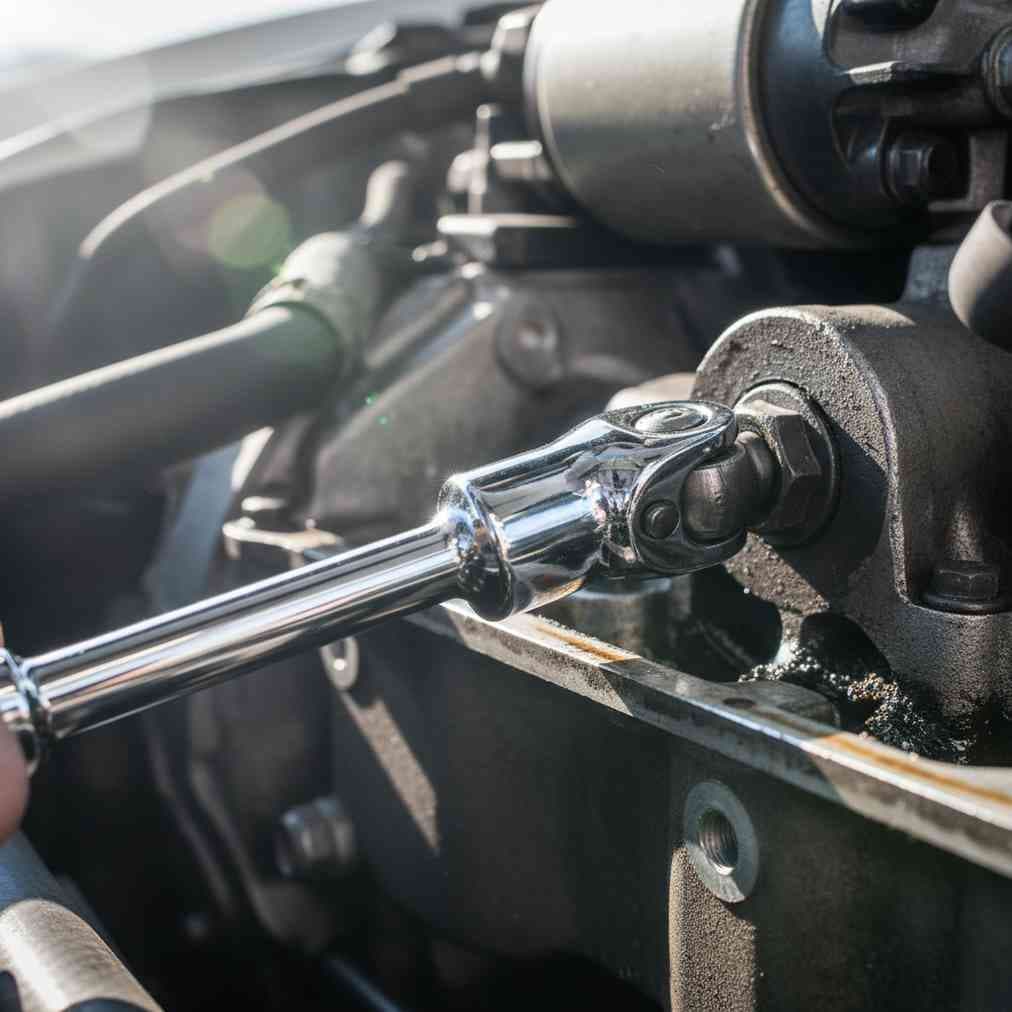
Long extension bars and universal joints are your best friends when dealing with deep-set fasteners. These tools allow you to maintain safe positioning while accessing parts buried behind other systems.
Tool Type
Best Use Case
Important Limitation
Long Extensions
Deep engine bay fasteners
May flex under high torque
Universal Joints
Around corners and obstacles
Best for low-torque applications
Swivel Extensions
Angled access points
Reduce torque transmission efficiency
Crowfoot Wrenches
Very tight spaces
Require careful angle consideration
Leverage Tools for Safe Part Manipulation
Sometimes you need to move or manipulate parts to gain access to your target. The key is using proper leverage tools rather than brute force.
Long-reach pry bars for moving obstructing parts
Ratcheting box wrenches with flex heads for navigating tight spaces
Specialty pullers for removing stuck parts without damage
Magnetic pick-up tools for retrieving dropped fasteners
“Use tools to bring the fastener to you, rather than forcing your body into a position where the car could shift and cause injury.”
Step-by-Step Safe Removal Techniques
Pre-Removal Assessment
Before attempting to remove any hard-to-reach part, conduct a thorough assessment. This planning phase can prevent injuries and save hours of frustration.
Map your approach – identify all fasteners and access points
Check for hidden connections – electrical, fluid lines, or linkages
Plan your tool sequence – have everything ready before starting
Consider part weight – heavy parts may need support during removal
The Three-Point Contact Method
When working in tight spaces, maintain three points of contact with the vehicle or ground at all times. This technique, borrowed from data collection methodologies used in field research, ensures stability and control.
Two hands plus one knee on the ground or vehicle frame
One hand plus both feet when standing and reaching
Both elbows plus chest when lying under the vehicle
Common Hard-to-Reach Parts and Specific Strategies
Starter Motors: The Classic Challenge
Starters are notoriously difficult to access, often requiring removal from underneath the vehicle. When looking for a reliable used starter at wrecking yards, the same access challenges apply.
Access Method
Tools Needed
Safety Considerations
From above
Long extensions, universal joints
Watch for hot exhaust parts
From below
Jack stands, creeper, socket set
Ensure vehicle is properly supported
Wheel well access
Wheel removal, fender liner clips
Support vehicle weight properly
Alternators: Hidden Behind Everything
Modern alternators are often buried deep in the engine bay, requiring removal of multiple obstructing parts. The process demands patience and methodical approach.
Document connections with photos before disconnecting
Remove air intake parts first for better access
Use penetrating oil on stubborn bolts before applying force
Support the alternator before removing the final mounting bolt
Personal Protective Equipment: Your Last Line of Defense
Even with proper vehicle support and tools, automotive work presents numerous hazards. Comprehensive PPE protects you from the unexpected.
Essential PPE Checklist
Safety goggles – protect against rust flakes, debris, and fluid splashes
Work gloves – prevent cuts from sharp edges and chemical exposure
Steel-toed boots – protect feet from dropped parts and tools
Long pants – shield legs from hot parts and sharp edges
Knee pads – essential for extended ground work
When Force Isn't the Answer: Leverage vs. Strength
Many DIY mechanics make the mistake of applying excessive force when parts won't budge. This approach often leads to broken tools, damaged parts, or personal injury.
Smart Force Application
Use penetrating oil and allow time for it to work
Apply heat carefully to expand stubborn fasteners
Use proper-sized tools to avoid slippage
Consider impact tools for extremely tight fasteners
Know when to stop – sometimes professional help is needed
Emergency Procedures and First Aid
Despite all precautions, accidents can happen. Being prepared with emergency procedures can minimize injury and prevent panic.
Vehicle Failure Emergency Response
If jack stands fail or the vehicle begins to shift while you're underneath:
Don't panic – stay calm and assess the situation
Exit immediately if possible, even if it means abandoning tools
Call for help – have someone nearby who can assist or call emergency services
Never try to support a falling vehicle with your body
First Aid Essentials
Keep a well-stocked first aid kit in your workspace and know how to use it:
Injury Type
First Aid Response
When to Seek Professional Help
Cuts and Lacerations
Clean, apply pressure, bandage
Deep cuts requiring stitches
Chemical Exposure
Flush with water immediately
Eye exposure or large skin area
Burns
Cool water, remove from heat source
Second degree burns or larger
Crushing Injuries
Immobilize, don't move victim
Call 911 immediately
Special Considerations for Salvage Yard Work
Working in salvage yards presents unique challenges compared to your home garage. The environment is less controlled, and you may be working with unfamiliar vehicles in various states of disrepair.
Salvage Yard Safety Protocols
Inspect the vehicle before getting underneath – look for structural damage
Be extra cautious with vehicles that have been in accidents
Watch for fluid leaks that could create slippery conditions
Respect other customers and maintain safe distances
Follow yard rules regarding tools and safety procedures
Unknown Vehicle Hazards
When working on unfamiliar vehicles, you may encounter unexpected hazards:
Modified suspension that affects stability
Aftermarket parts with non-standard mounting
Accident damage that has compromised structural integrity
Environmental contamination from long-term storage
Cost-Benefit Analysis: When to DIY vs. Seek Professional Help
Sometimes the safest and most economical choice is to seek professional help, especially for extremely difficult access situations. If you're looking to get cash for cars that need major repairs, professional assessment can help determine if the repair is worth the investment.
Factor
DIY Appropriate
Professional Recommended
Access Difficulty
Moderately difficult with proper tools
Requires vehicle lift or major disassembly
Safety Risk
Standard precautions sufficient
High risk of injury or vehicle damage
Time Investment
Weekend project
Multiple days of work required
Tool Requirements
Standard tools and extensions
Specialized equipment needed
Conclusion: Safety First, Success Second
Successfully removing hard-to-reach automotive parts without injury requires careful planning, proper equipment, and unwavering commitment to safety protocols. Remember that no part is worth risking your health or safety. Take the time to set up properly, use the right tools for the job, and never hesitate to seek professional help when the risk outweighs the benefit.
Whether you're working in your home garage or at a salvage yard, these safety principles remain constant. The investment in proper tools and safety equipment pays dividends in both successful repairs and personal wellbeing. With modern automotive design continuing to prioritize efficiency over serviceability, these skills will only become more valuable for the DIY mechanic.
By following these comprehensive safety guidelines and using the appropriate techniques, you can tackle even the most challenging automotive repair jobs with confidence and success.