How to Pull a Used Engine Mount or Transmission Mount
Understanding the Critical Role of Engine and Transmission Mounts Engine and transmission mounts are essential parts that bridge your vehicle's powertrain to the frame or chassis. These critical parts serve dual purposes that directly impact your driving experience and vehicle safety. Before attempting any removal procedures, it's crucial to understand their primary functions and how [...]
Article image
Understanding the Critical Role of Engine and Transmission Mounts
Engine and transmission mounts are essential parts that bridge your vehicle's powertrain to the frame or chassis. These critical parts serve dual purposes that directly impact your driving experience and vehicle safety. Before attempting any removal procedures, it's crucial to understand their primary functions and how they affect your vehicle's performance.
Primary Functions of Engine and Transmission Mounts
Support and Stability: Secure the heavy engine and transmission in proper alignment with drivetrain parts including the driveshaft
Vibration and Noise Isolation: Most crucial for ride comfort, absorbing constant vibrations generated by the running engine
Prevent Direct Transfer: Stop vibrations and noise from transferring into the vehicle cabin for a smoother, quieter ride
Modern mounts typically use rubber, metal, or hydraulic fluid construction. The rubber or fluid acts as a cushion, dampening shocks naturally produced by engine operation. When these mounts fail, uncontrolled engine movement allows vibrations to transfer directly to the chassis, creating an uncomfortable driving experience.
Visual Identification of Failed Mounts
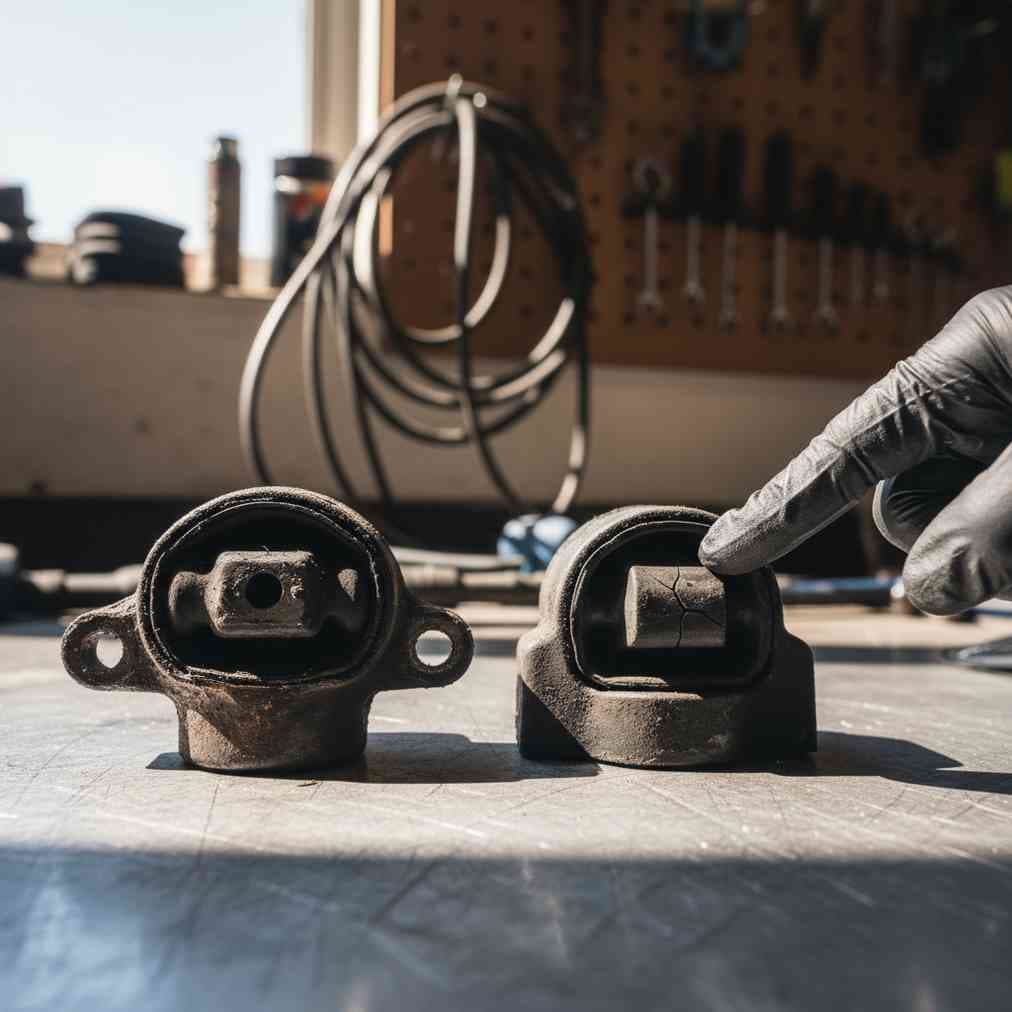
Before attempting to remove any mount, you'll want to confirm failure through visual inspection. Failed mounts exhibit several telltale signs that are easily identifiable with proper knowledge. Learning proper inspection techniques can save you time and ensure you're removing the correct parts.
Key Visual Indicators of Mount Failure
Collapsed Rubber: Cracked, torn, or completely deteriorated rubber parts with possible metal-to-metal contact
Visible Damage: Clear cracking or missing chunks from rubber portions
Fluid Leaks: For hydraulic mounts, wetness or residue around the mount indicates internal failure
Metal Bracket Misalignment: Off-center appearance suggesting engine or transmission movement
Secondary Fluid Leaks: Transmission fluid leaks beneath the car due to excessive mount movement
Pre-Removal Inspection Checklist
A thorough inspection combining visual checks with physical tests confirms mount condition before removal attempts. This systematic approach prevents unnecessary work and ensures safety throughout the process. Many junkyards near me allow customers to inspect parts before removal, making this checklist valuable for salvage yard visits.
Inspection Item
Description/Action
Indication of Failure
Visual Inspection (Rubber)
Look for cracks, tears, hardening, or missing pieces from rubber insulator
Visible physical damage, metal-to-metal contact
Visual Inspection (Hydraulic)
Check for fluid leakage signs around or on the mount
Wetness or residue indicating internal fluid loss
Visual Inspection (Metal)
Check metal brackets for corrosion, damage, and bolt tightness
Corrosion, loose bolts, off-center appearance
Engine Movement Test
Have assistant hold brake while shifting Park to Drive to Reverse with light revving
Excessive rocking or movement beyond slight movement
Pry Bar Test
With vehicle safely supported, gently test transmission mount for play
Mount moves too easily or separates from bracket
Essential Tools and Safety Equipment
Proper preparation ensures safe and efficient mount removal. Having the right tools prevents delays and reduces injury risk during the removal process. Professional mechanics recommend specific tools for mount removal procedures.
Required Tools for Mount Removal
Floor jack and jack stands: Never rely on jack alone for support
Engine support bar or chain hoist: Essential for engine weight support
Socket set and wrenches: Various sizes for different bolt configurations
Pry bar: For separating stuck parts and leverage
Penetrating oil: WD-40 or similar for rusted bolts
Safety equipment: Gloves, safety glasses, and steel-toed boots
Safety Warning: Never attempt mount removal without proper engine support. The engine's weight can cause serious injury or death if it falls unexpectedly.
Step-by-Step Engine Mount Removal Process
Engine mount removal requires systematic approach and careful attention to safety protocols. The process varies slightly depending on mount location and vehicle design, but fundamental steps remain consistent across most applications.
Preparation and Initial Setup
Disconnect battery: Remove negative terminal to prevent electrical accidents
Raise vehicle: Use proper lifting points and secure with jack stands
Drain fluids if necessary: Some mounts require fluid system access
Remove air intake parts: Clear access to upper mount bolts
Install engine support: Use engine support bar or chain hoist before loosening any bolts
Mount Removal Procedure
Locate all mounting bolts: Typically two sets – one to engine, one to frame
Apply penetrating oil: Spray all bolts and allow 15-20 minutes for penetration
Support engine weight: Ensure engine support is properly positioned and secure
Remove upper bolts first: Start with engine-to-mount bolts
Remove lower bolts: Frame-to-mount bolts come out last
Extract the mount: May require gentle prying or rocking motion
During removal, pay close attention to bolt locations and orientations. Some mounts use different length bolts in specific positions, and proper reassembly depends on correct bolt placement.
Transmission Mount Removal Techniques
Transmission mounts present unique challenges due to their location and the transmission's weight distribution. These mounts typically attach to the transmission tail housing and vehicle crossmember, requiring different support methods than engine mounts.
Transmission Mount Access and Support
Locate transmission mount: Usually positioned under transmission tail housing
Support transmission: Use transmission jack or floor jack with wood block
Check crossmember bolts: Some designs require crossmember removal for mount access
Inspect exhaust clearance: Exhaust system may interfere with mount removal
Removal Steps for Transmission Mounts
Position transmission jack: Center jack under transmission oil pan with protective wood block
Raise transmission slightly: Just enough to relieve weight from mount
Remove crossmember bolts: If crossmember removal is necessary
Extract mount bolts: Remove transmission-to-mount and mount-to-crossmember bolts
Lower transmission carefully: Allow controlled descent while removing mount
Common Challenges and Solutions
Mount removal often presents unexpected challenges that can frustrate even experienced mechanics. Understanding common problems and their solutions prevents delays and reduces the risk of damage to surrounding parts.
Dealing with Seized or Rusted Bolts
Heat application: Carefully apply heat with torch, avoiding rubber parts and fuel lines
Impact tools: Use impact wrench for stubborn bolts, but avoid over-torquing
Bolt extraction: Drill out severely damaged bolts as last resort
Thread repair: Use thread repair kits for damaged mounting points
Access and Clearance Issues
Limited access often complicates mount removal, particularly in crowded engine bays. Advanced removal techniques can help overcome these obstacles without damaging surrounding parts.
Remove interfering parts: Air intake, cooling fans, or splash shields may need temporary removal
Use universal joints: Allow socket access in tight spaces
Work from multiple angles: Access bolts from top and bottom when possible
Mark part positions: Document part locations for proper reassembly
Safety Considerations and Best Practices
Mount removal involves significant safety risks due to heavy parts and potential for sudden movement. Following established safety protocols prevents injuries and ensures successful completion of the removal process.
Critical Safety Protocols
Never work under unsupported engine: Always use proper engine support before removing mounts
Check support integrity: Verify all support equipment is rated for engine weight
Maintain clean workspace: Keep tools organized and work area free from trip hazards
Use proper lifting techniques: Mounts can be surprisingly heavy, lift with legs not back
Wear protective equipment: Safety glasses, gloves, and appropriate clothing are essential
Professional Tip: Always have a helper available when removing mounts. Two people can safely manage the process and respond to emergencies more effectively than working alone.
Evaluating Used Mounts at Salvage Yards
When sourcing replacement mounts from salvage yards, careful evaluation ensures you get parts that will provide reliable service. Not all used mounts are suitable for reuse, and proper inspection techniques help identify quality parts.
Inspection Criteria for Used Mounts
Part Condition
Acceptable
Reject
Rubber Condition
Slight surface cracking, firm texture
Deep cracks, soft/mushy texture, missing pieces
Metal Brackets
Surface rust, solid structure
Structural cracks, severe corrosion, bent brackets
Hydraulic Mounts
No visible leaks, proper fluid level
Any signs of fluid leakage or empty reservoir
Bolt Holes
Round, proper thread engagement
Elongated holes, damaged threads, wallowed out
When purchasing used mounts, verify compatibility with your specific vehicle year, make, model, and engine configuration. Mount designs can vary significantly even within the same model year due to different engine options or manufacturing changes.
Special Considerations for Different Vehicle Types
Different vehicle categories present unique challenges during mount removal. Understanding these variations helps prepare for specific requirements and prevents surprises during the removal process.
Front-Wheel Drive Vehicles
Transverse engine layout: Mounts positioned differently than longitudinal engines
CV axle interference: May require axle disconnection for mount access
Subframe considerations: Some mounts attach to removable subframes
Torque struts: Additional engine restraint systems common in FWD applications
Truck and SUV Applications
Higher ground clearance: Better access from below but may require taller jack stands
Frame-mounted designs: Typically more robust mounting points than unibody vehicles
Transfer case mounts: 4WD vehicles have additional mount locations
Heavy-duty construction: Larger bolts and more robust mounting hardware
Environmental and Legal Considerations
Proper disposal of removed mounts and associated fluids ensures environmental compliance and legal operation. Many jurisdictions have specific requirements for handling automotive fluids and rubber parts.
Proper Disposal Methods
Hydraulic fluid: Recycle at automotive fluid collection centers
Rubber parts: Many recycling centers accept automotive rubber
Metal brackets: Separate steel and aluminum for scrap metal recycling
Contaminated parts: Parts soaked in oil require special disposal procedures
If you have a vehicle with failed mounts that isn't worth repairing, consider getting an instant quote for junk car removal rather than attempting repairs that might exceed the vehicle's value.
Cost Considerations and Budget Planning
Understanding the full cost implications helps make informed decisions about mount removal and replacement. Costs vary significantly depending on vehicle type, mount location, and whether you're doing the work yourself or hiring professionals.
Typical Cost Breakdown
Used mount cost: $15-75 depending on vehicle and mount type
Core charges: Some salvage yards charge refundable core fees
Tool rental: Engine support equipment rental if you don't own tools
Professional removal: $150-400 labor if hiring a mechanic
Associated repairs: Additional parts that may need replacement during the process
Conclusion and Final Recommendations
Successfully removing used engine and transmission mounts requires careful preparation, proper tools, and strict adherence to safety protocols. The systematic approach outlined in this guide ensures safe removal while maximizing the chances of obtaining quality replacement parts.
Remember that mount removal is intermediate-level automotive work that requires mechanical aptitude and proper safety equipment. When in doubt, consult with professional mechanics or research additional methods before proceeding with removal attempts.
Whether sourcing parts from salvage yards or removing mounts from your own vehicle, the inspection techniques and removal procedures covered in this guide will help ensure successful completion of your project while maintaining safety throughout the process.