How to Ship Heavy Auto Parts (engines, transmissions) Safely and Cheap
Complete Guide to Shipping Heavy Auto Parts Safely and Affordably Shipping heavy auto parts like engines and transmissions requires specialized knowledge and careful planning to ensure safe delivery while minimizing costs. Whether you're an auto shop, parts dealer, or individual selling components from your local junkyard near me, understanding proper shipping techniques can save you [...]
Article image
Complete Guide to Shipping Heavy Auto Parts Safely and Affordably
Shipping heavy auto parts like engines and transmissions requires specialized knowledge and careful planning to ensure safe delivery while minimizing costs. Whether you're an auto shop, parts dealer, or individual selling components from your local junkyard near me, understanding proper shipping techniques can save you hundreds of dollars and prevent costly damage claims.
The auto parts logistics market is projected to reach $393.71 billion by 2028, with heavy components like engines and transmissions representing some of the most challenging shipments. This comprehensive guide will walk you through proven strategies used by industry professionals to ship these valuable parts safely and cost-effectively.
Understanding the Challenges of Heavy Auto Parts Shipping
Heavy auto parts present unique shipping challenges that require specialized handling. Automotive transmissions typically weigh between 100-400 pounds, while engines can exceed 500 pounds. These components contain fluids, have delicate internal parts, and irregular shapes that make standard packaging insufficient.
According to shipping experts, proper preparation and packaging are crucial for preventing the most common shipping problems: fluid leaks, impact damage, and shifting during transit.
Essential Preparation Steps Before Shipping
Fluid Drainage and Cleaning
Before any heavy auto part can be shipped, all fluids must be completely drained. This includes:
Engine oil and coolant
Transmission fluid
Brake fluid
Power steering fluid
Any remaining fuel
Carriers will refuse shipments that are dripping, as leaks can damage packaging and contaminate other cargo. After draining, clean the parts thoroughly to remove excess grease and oil buildup that could create handling hazards.
Documentation and Photography
Document the condition of your parts before packaging by taking detailed photos from multiple angles. This documentation becomes crucial if you need to file an insurance claim for damage during transit.
Professional Packaging Techniques
Proper packaging forms the foundation of safe heavy parts shipping. Industry best practices recommend a multi-layer approach that protects against impact, moisture, and shifting.
Required Packaging Materials
Material
Purpose
Recommended Type
Plastic Wrap
Moisture protection
Heavy-duty 6-mil thickness
Bubble Wrap
Impact cushioning
Large bubble, 3/16″ size
Foam Padding
Edge protection
2-4 inch thick foam sheets
Packing Tape
Securing layers
3-inch wide reinforced tape
Void Fill
Prevent movement
Packing peanuts or air pillows
Step-by-Step Packaging Process
Primary Protection: Wrap the part in heavy-duty plastic sheeting
Cushioning Layer: Add bubble wrap or foam padding around all surfaces
Edge Protection: Pay special attention to sharp edges and protruding components
Secure Wrapping: Use reinforced tape to hold all layers in place
Final Inspection: Ensure no sharp edges can puncture the packaging
For transmissions, consider removing easily damaged external components like shift linkages and packing them separately with appropriate labeling.
Palletizing for Heavy Parts
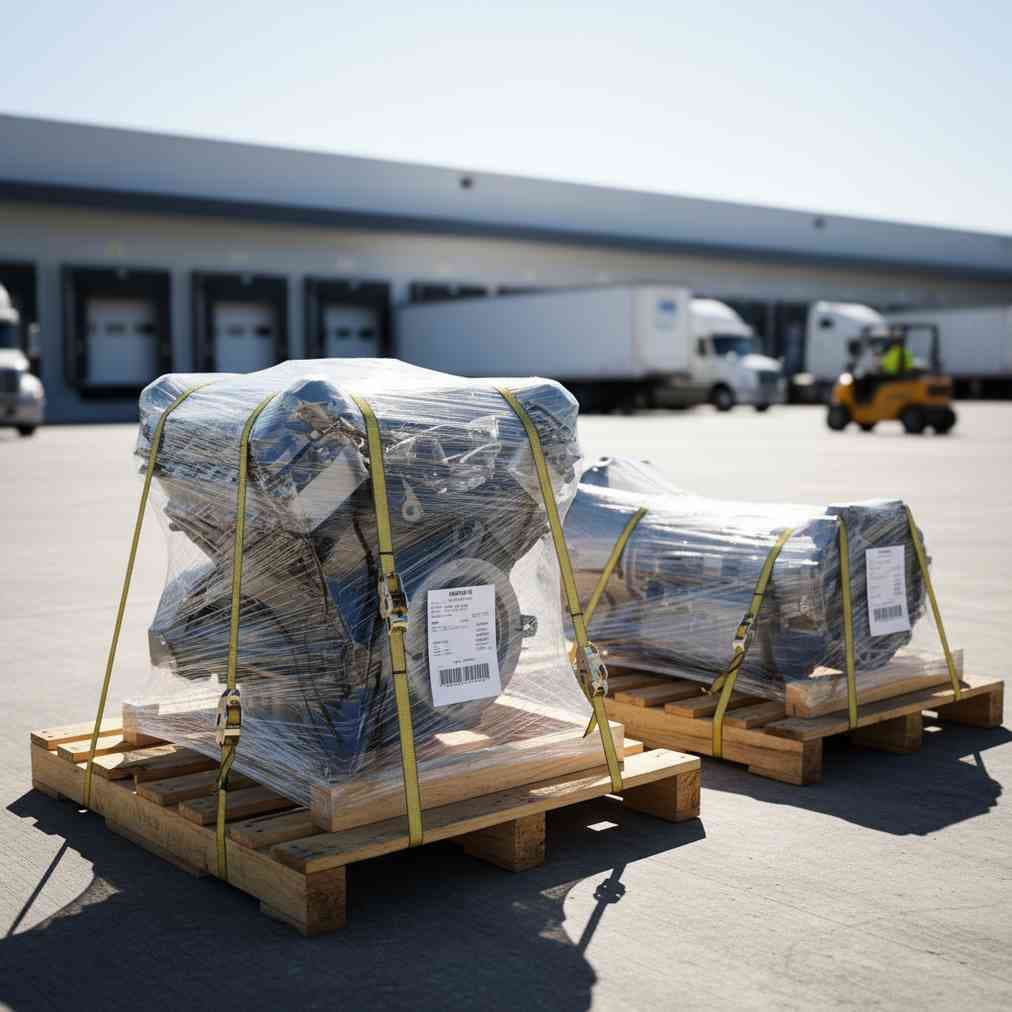
Palletizing is essential for heavy auto parts as it enables forklift handling and provides a stable shipping platform. Professional palletizing techniques can significantly reduce damage rates during transit.
Pallet Selection and Preparation
Use standard 40″ x 48″ pallets for better freight rates and easier handling. Inspect pallets for damage, protruding nails, or broken boards that could compromise the shipment.
Securing Methods
Ratchet Straps: Heavy-duty straps rated for the part's weight
Wooden Bracing: 2×4 lumber secured to the pallet for extra stability
Metal Banding: Steel banding for maximum security on valuable parts
Corner Protection: Cardboard or plastic corner guards to prevent strap damage
The goal is to create a shipping unit where the part and pallet move as one solid piece, eliminating any possibility of shifting during transport.
Final Pallet Preparation
After securing the part, cover the entire assembly with moving blankets or cardboard for additional protection. Apply industrial shrink wrap over everything to create a weather-resistant package and prevent tampering.
Choosing the Right Carrier
Carrier selection significantly impacts both cost and safety outcomes. Different shipping methods serve different needs, and understanding your options helps optimize both price and service.
Less-Than-Truckload (LTL) Freight – The Preferred Method
LTL freight is the most recommended and cost-effective method for shipping engines and transmissions. You pay only for the space your shipment occupies on a truck shared with other cargo, making it ideal for heavy auto parts.
“Consolidated freight is always the most reliable method for shipping your engine or transmission long distance. When you ship something using consolidated freight, your items will share space on the truck with other freight that is heading in the same direction.”
LTL Advantages for Heavy Parts
Carriers experienced with heavy, bulky items
Professional handling equipment at terminals
Cost-effective for weights over 150 pounds
Tracking capabilities throughout transit
Insurance options available
Alternative Shipping Methods
Method
Best For
Weight Limits
Cost Level
Parcel (UPS/FedEx)
Small parts under 150 lbs
Up to 150 lbs
High for heavy items
LTL Freight
Engines, transmissions
Up to 10,000+ lbs
Most economical
Full Truckload (FTL)
Multiple heavy parts
Up to truck capacity
High but fast
Specialty Carriers
Oversized/unusual parts
Varies
Variable
Cost Reduction Strategies
Smart shippers can achieve significant savings through strategic planning and optimization. Industry experts report that LTL freight shipping can offer savings of up to 85% compared to standard parcel rates for heavy items.
Proven Cost-Saving Techniques
Consolidate Shipments: Combine multiple parts into single shipments when possible
Accurate Measurements: Provide precise weight and dimensions to avoid reweigh fees
Multiple Quotes: Compare rates from at least 3-5 different carriers
Flexible Timing: Avoid peak seasons and rush deliveries when possible
Volume Discounts: Negotiate better rates for regular shipping volumes
3PL Partnerships: Third-party logistics providers often offer better rates due to volume
Understanding Freight Classification
Auto parts are typically classified as freight class 85-100, but proper packaging can sometimes qualify for better classifications. Dense, well-packaged items often receive more favorable ratings, directly impacting shipping costs.
Insurance and Risk Management
Protecting your investment through appropriate insurance coverage is crucial when shipping valuable heavy auto parts. Understanding carrier liability and supplemental insurance options prevents costly losses.
Carrier Liability Limitations
Most LTL carriers provide limited liability coverage, typically $0.60 per pound for general freight. For a 300-pound transmission worth $2,000, this would only provide $180 in coverage – clearly insufficient protection.
Supplemental Insurance Options
Declared Value Coverage: Increase carrier liability for a small percentage fee
Third-Party Cargo Insurance: Comprehensive coverage through specialized insurers
Annual Cargo Policies: Cost-effective for regular shippers
Per-Shipment Coverage: Flexible option for occasional shippers
Documentation for Claims
Proper documentation is essential for successful insurance claims:
Pre-shipment photographs showing part condition
Detailed packing lists with part numbers and descriptions
Bills of lading with accurate weight and dimensions
Delivery receipts noting any visible damage
Professional damage assessments when applicable
Complete Shipping Checklist
Use this comprehensive checklist to ensure nothing is overlooked when preparing your heavy auto parts shipment. Following proven protocols minimizes the risk of delays, damage, or additional charges.
Pre-Shipping Preparation
☐ Drain all fluids completely (oil, coolant, transmission fluid)
☐ Clean parts thoroughly to remove grease and debris
☐ Remove loose or easily damaged external components
☐ Document part condition with detailed photographs
☐ Gather all relevant part numbers and documentation
Packaging Requirements
☐ Wrap in heavy-duty plastic sheeting for moisture protection
☐ Add cushioning layer (bubble wrap or foam padding)
☐ Protect all sharp edges and protruding components
☐ Secure all wrapping with reinforced packing tape
☐ Fill any voids to prevent internal movement
Palletizing Steps
☐ Select undamaged standard 40″ x 48″ pallet
☐ Center packaged part on pallet
☐ Secure with heavy-duty ratchet straps or banding
☐ Add wooden bracing if needed for stability
☐ Install corner protection to prevent strap damage
☐ Cover with moving blankets or cardboard
☐ Apply shrink wrap over entire assembly
Shipping Arrangements
☐ Obtain quotes from multiple LTL carriers
☐ Verify carrier experience with automotive parts
☐ Confirm pickup and delivery appointments
☐ Arrange appropriate insurance coverage
☐ Provide accurate weight and dimensions
☐ Include proper handling instructions on shipping labels
Working with Freight Brokers and 3PL Providers
For shippers who regularly move heavy auto parts, partnering with experienced logistics professionals can provide significant advantages in both cost and service quality.
Benefits of Professional Logistics Partners
Rate Negotiations: Volume discounts not available to individual shippers
Carrier Relationships: Established connections with reliable carriers
Expertise: Knowledge of regulations and best practices
Problem Resolution: Professional assistance when issues arise
Technology: Advanced tracking and management systems
When to Consider Professional Help
Consider working with freight brokers or 3PL providers if you:
Ship more than 5 heavy parts per month
Handle high-value components requiring specialized care
Need to ship oversized or unusual parts
Want to focus on your core business rather than logistics
Require consistent, predictable shipping costs
Common Mistakes to Avoid
Learning from common shipping mistakes can save both money and headaches. These errors frequently result in damaged parts, insurance claim denials, and unexpected charges.
Packaging Errors
Insufficient Drainage: Leaving fluids that leak during transport
Inadequate Cushioning: Using too little or wrong type of protective material
Poor Edge Protection: Allowing sharp edges to puncture packaging
Loose Packaging: Parts that shift during transport due to inadequate securing
Shipping Mistakes
Inaccurate Weights: Underestimating weight leading to reweigh charges
Wrong Carrier Choice: Using parcel service for heavy items
Insufficient Insurance: Relying only on basic carrier liability
Poor Documentation: Lacking proper paperwork for claims
No Tracking: Failing to monitor shipment progress
Industry Trends and Future Developments
The auto parts shipping industry continues evolving with new technologies and changing market demands. Understanding current trends helps shippers adapt their strategies for better results.
Technology Integration
Real-Time Tracking: GPS monitoring and automated updates
Digital Documentation: Electronic bills of lading and proof of delivery
Rate Comparison Platforms: Online tools for instant carrier comparisons
IoT Sensors: Monitoring temperature, humidity, and impacts during transit
Sustainability Focus
Environmental concerns are driving changes in packaging materials and shipping methods:
Reusable packaging systems for regular routes
Biodegradable cushioning materials
Optimized routing to reduce fuel consumption
Consolidated shipping to minimize environmental impact
Regional Considerations
Shipping costs and transit times vary significantly by region. Understanding these differences helps optimize shipping strategies and set realistic customer expectations.
High-Volume Shipping Lanes
Routes between major automotive manufacturing centers typically offer:
More carrier options and competitive pricing
Faster transit times due to regular service
Better handling facilities familiar with auto parts
Specialized equipment for heavy components
Remote Area Challenges
Shipping to or from remote locations may require:
Additional handling and transfer fees
Extended transit times
Special arrangements for delivery
Higher insurance rates due to increased risk
Emergency and Rush Shipping
When customers need heavy auto parts urgently, standard shipping methods may not suffice. Understanding emergency shipping options helps serve critical needs while managing costs.
Expedited LTL Services
Guaranteed Delivery: Service commitments with penalty clauses
Direct Routes: Minimal handling and transfers
Priority Handling: First on/off loading at terminals
Enhanced Tracking: More frequent status updates
Alternative Emergency Options
Hot Shot Delivery: Dedicated trucks for urgent shipments
Air Freight: For smaller components that must arrive immediately
Team Driver Service: Continuous movement without rest stops
Charter Services: Dedicated transportation for critical parts
Building Long-Term Shipping Success
Whether you're selling parts from cash for cars acquisitions or running a professional auto parts business, developing efficient shipping processes creates competitive advantages and improves customer satisfaction.
Developing Standard Procedures
Create documented procedures for common shipping scenarios:
Standard packaging protocols for different part types
Preferred carrier relationships and backup options
Insurance coverage strategies for various value ranges
Quality control checklists for consistent results
Measuring and Improving Performance
Track key metrics to identify improvement opportunities:
Metric
Target
Improvement Actions
Damage Rate
Under 2%
Review packaging methods
On-Time Delivery
Over 95%
Evaluate carrier performance
Cost per Pound
Benchmark vs. market
Renegotiate rates, consolidate volume
Customer Satisfaction
Over 90%
Improve communication, tracking
Conclusion
Successfully shipping heavy auto parts like engines and transmissions requires attention to detail, proper planning, and the right partnerships. By following the comprehensive guidelines outlined in this article, you can achieve safe delivery while minimizing costs.
Remember the key principles: thorough preparation through complete fluid drainage and cleaning, professional packaging with adequate cushioning and protection, strategic carrier selection favoring experienced LTL providers, and appropriate insurance coverage for your investment protection.
The auto parts shipping landscape continues evolving with new technologies and service options. Stay informed about industry developments, maintain relationships with reliable carriers, and continuously refine your processes based on experience and results. With proper execution, shipping heavy auto parts can become a competitive advantage rather than a source of problems and extra costs.
Whether you're shipping a single transmission or managing regular shipments of heavy components, these proven strategies will help ensure your parts arrive safely, on time, and within budget. Investment in proper shipping practices pays dividends through reduced damage claims, satisfied customers, and sustainable business growth.