How to Start a Small Mobile Parts Buying Business with Junkyard Sourcing
The Foundation: Business Planning and Market Research Starting a successful mobile parts buying business requires thorough planning and understanding your local market dynamics. The foundation of your venture lies in creating a comprehensive business plan that outlines your objectives, operational logistics, market strategy, and financial projections. Market research is crucial for identifying opportunities in your [...]
Article image
The Foundation: Business Planning and Market Research
Starting a successful mobile parts buying business requires thorough planning and understanding your local market dynamics. The foundation of your venture lies in creating a comprehensive business plan that outlines your objectives, operational logistics, market strategy, and financial projections.
Market research is crucial for identifying opportunities in your area. Focus on regions with high concentrations of older vehicles, DIY enthusiasts, or areas underserved by traditional parts retailers. Consider that mobile parts businesses often thrive in lower-income areas where customers actively seek affordable alternatives to new parts.
Identifying Your Niche
Specialization is key to success in the mobile parts buying business. Consider focusing on specific areas such as:
JDM (Japanese Domestic Market) vehicles and rare imports
Classic cars from the 1960s-1980s
High-demand components like turbochargers and transmissions
Specific makes like Honda, Toyota, or Ford trucks
Performance parts and aftermarket modifications
Specializing allows you to become an expert in your chosen area, facilitating faster identification and removal of valuable parts while building a reputation among enthusiasts.
Legal Requirements and Business Registration
Operating a legitimate mobile parts buying business requires proper licensing and legal compliance. Most states mandate specific licenses for businesses that buy, recycle, and resell used auto parts.
License Type
Requirement
Estimated Cost
Business License
Required in all states
$50-$300
Auto Parts Dealer License
State-specific requirements
$200-$1,000
Sales Tax Permit
Required for resale activities
$0-$100
Commercial Vehicle Registration
For business vehicle use
$100-$500
In some states like Illinois, if you acquire five or more vehicles per year for disposal or dismantling, you may need to be licensed as an automotive parts recycler. Research your local requirements thoroughly, as regulations vary significantly by state and municipality.
Insurance Requirements
Proper insurance coverage is essential for protecting your business and complying with legal requirements:
General Liability Insurance – Covers property damage or injury during operations
Commercial Auto Insurance – Required for business vehicle use
Professional Liability – May be required if performing diagnostic work
Some states, like California, mandate at least $50,000 in liability coverage for mobile automotive service providers.
Building Junkyard Relationships for Sourcing Success
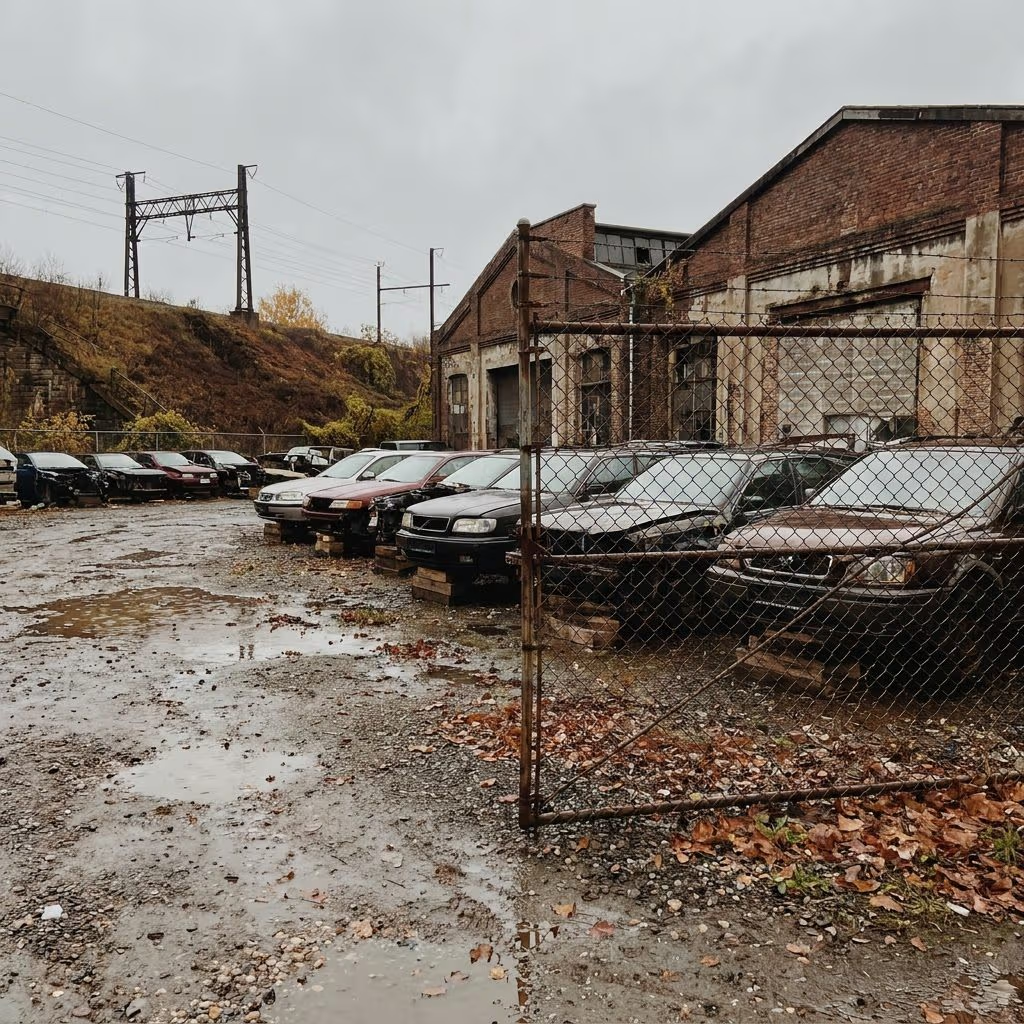
The heart of your mobile parts buying business lies in establishing strong relationships with junkyards near me and auto salvage facilities. These partnerships will determine your access to quality inventory and competitive pricing.
Success stories from experienced buyers show that consistent visits and rapport-building with junkyard managers can lead to special pricing arrangements. Some sellers report gaining 40% discounts after establishing long-term relationships with yard operators.
Sourcing Strategy
Focus on parts that meet these criteria:
High demand – Frequently needed for repairs
Expensive when new – Significant cost savings for customers
Easy to remove and ship – Operational efficiency
Durable and testable – Quality assurance
High-value components that consistently perform well include climate control units, starters, alternators, and certain wheels and tires. These items typically offer the best return on investment.
“Focus on parts you know have demand. A starter that costs $47 at the yard can easily yield $100 profit when sold to the right customer.”
Essential Tools and Equipment
Efficient part removal and quality assessment require the right tools and equipment. Your mobile operation should be equipped for both sourcing and selling activities.
Transportation
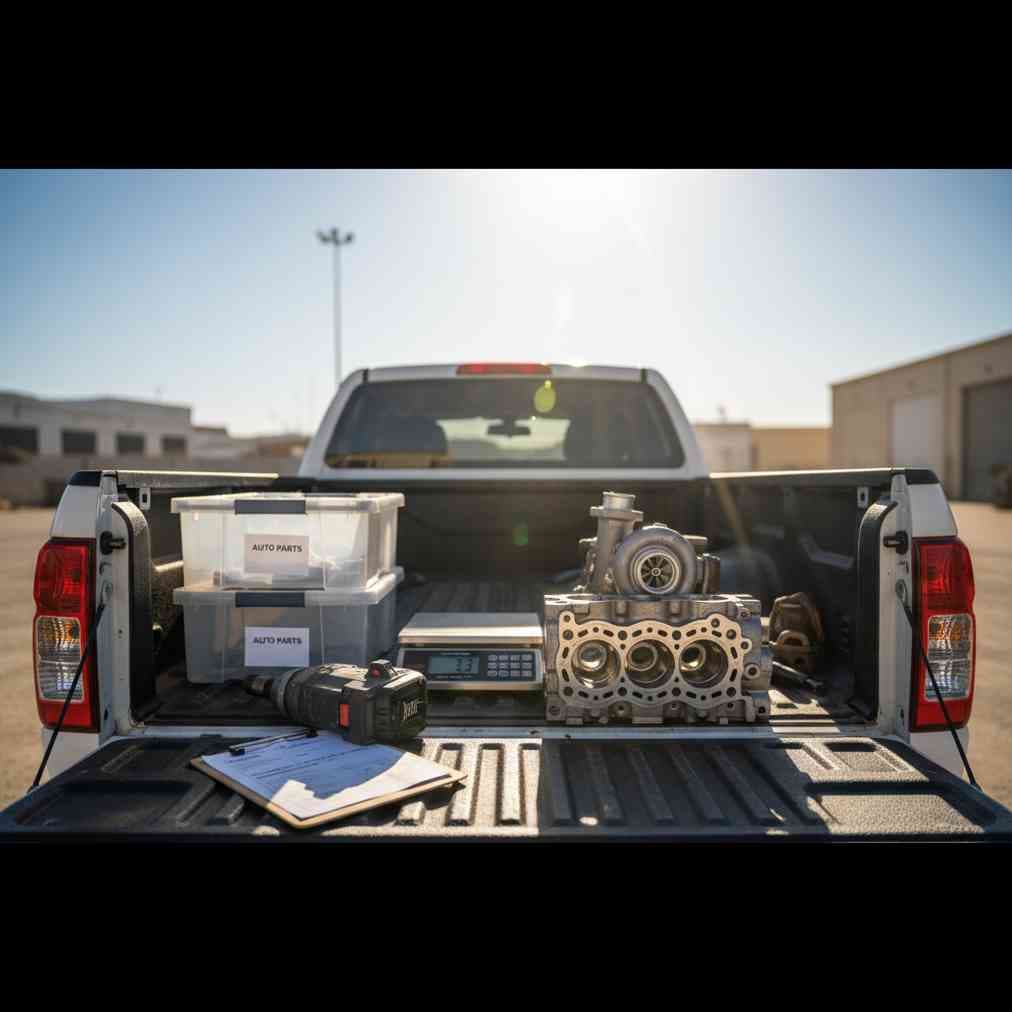
A reliable vehicle is crucial for mobile operations. Consider these options:
Vehicle Type
Capacity
Best For
Cost Range
Cargo Van
Medium
Small to medium parts
$8,000-$25,000
Pickup Truck
Medium-High
Engines, transmissions
$10,000-$30,000
Box Truck
High
Large parts, multiple items
$15,000-$40,000
Hand Tools and Equipment
Invest in quality tools for efficient part removal and testing:
Basic hand tools – Screwdrivers, wrenches, pliers, socket sets
Having the right tools not only speeds up part removal but also helps you assess part condition accurately, reducing returns and customer complaints.
Inventory Management and Storage Solutions
Effective inventory management is crucial for maximizing profits and maintaining customer satisfaction. You'll need organized storage space and systems for tracking your parts inventory.
Storage Requirements
Your storage facility should provide:
Security – Locked facility with alarm system
Climate control – Prevents rust and deterioration
Organization systems – Shelving, bins, labeling
Workspace – Area for cleaning and testing parts
Shipping area – Packing and staging space
Many successful operators start with a garage or small warehouse space, expanding as the business grows. Consider proximity to major shipping hubs if you plan to sell online extensively.
Inventory Tracking Systems
Implement a system to track inventory levels and automate reorder alerts. Options range from simple spreadsheets to specialized auto parts inventory software. Key data to track includes:
Part numbers and descriptions
Source location and date acquired
Cost basis and selling price
Condition assessment
Storage location
Sales Platforms and Marketing Strategy
Choosing the right sales platforms is crucial for reaching your target customers and maximizing profits. Different platforms work better for different types of parts.
Platform
Best For
Fees
Audience
eBay
Small, shippable parts
10-13%
National/International
Facebook Marketplace
Large, local pickup items
0-5%
Local
Craigslist
Engines, transmissions
$5/listing
Local
Specialty Forums
Niche/performance parts
Varies
Enthusiasts
Direct Sales
Repeat customers
0%
Local shops
Bulky items like wheels and tires are often better sold locally to avoid high shipping costs, while smaller components can be sold nationally through online platforms.
Building Relationships with Repair Shops
Establishing relationships with local auto repair shops can provide a steady customer base for your mobile parts business. Many shops appreciate having a reliable source for hard-to-find parts, especially for older vehicles.
Offer competitive pricing and quick delivery
Provide warranties on major components
Maintain consistent communication and availability
Be knowledgeable about part compatibility
Pricing Strategy and Profit Margins
Developing a profitable pricing strategy requires understanding market dynamics and customer expectations. A common guideline for pricing used, serviceable parts is 30% to 45% of the new part's value, though this varies significantly based on demand and availability.
Some operators prefer quick turnover pricing at around 15-20% of new part cost to maintain cash flow, while others hold out for higher margins on rare or high-demand items.
Profit Potential Examples
Real-world examples demonstrate the profit potential:
Small electronic modules: $5 cost → $25-30 sale
Starters/Alternators: $47 cost → $150+ sale
Climate control units: $25 cost → $150-200 sale
Seats from newer vehicles: $100 cost → $500+ sale
When parting out whole vehicles purchased for a lump sum (e.g., $500), treat the total vehicle cost as your Cost of Goods Sold (COGS) against all revenue from parts sold from that vehicle.
Financial Planning and Startup Costs
Understanding the financial requirements for starting your mobile parts buying business is crucial for success. Initial investment needs vary based on your chosen scope and specialization.
Expense Category
Low Estimate
High Estimate
Vehicle Purchase
$5,000
$40,000
Tools and Equipment
$1,500
$5,000
Licensing and Legal
$500
$2,000
Initial Inventory
$2,000
$10,000
Storage Setup
$500
$3,000
Insurance (Annual)
$2,000
$5,000
Marketing/Website
$500
$2,000
Total startup costs typically range from $12,000 to $67,000, depending on your scale and specialization. Many successful operators start small and reinvest profits to grow their operations.
Ongoing Operating Costs
Budget for monthly expenses including:
Fuel and vehicle maintenance – $300-800/month
Storage rent – $200-1,000/month
Insurance premiums – $200-500/month
Platform fees – 5-15% of sales
Inventory acquisition – Variable based on finds
Operational Best Practices
Implementing efficient operational procedures will maximize your profitability and customer satisfaction while minimizing risks and complications.
Part Identification and Assessment
Develop expertise in quickly identifying valuable parts and assessing their condition. This skill separates successful operators from those who struggle. Focus on learning:
Part number identification systems
Visual inspection techniques for damage assessment
Testing procedures for electrical components
Market values for different part categories
Compatibility across model years and variants
Understanding OEM parts quality standards will help you identify genuine parts and avoid counterfeit components that could damage your reputation.
Quality Control and Customer Service
Maintaining high standards for part quality and customer service will build your reputation and encourage repeat business:
Thorough cleaning of all parts before sale
Honest condition descriptions in listings
Clear photos showing any defects or wear
Prompt communication with potential buyers
Fair return policies for defective items
Leveraging Technology for Growth
Modern technology can significantly improve your operational efficiency and expand your market reach. Consider implementing these technological solutions:
Mobile Apps and Software
Inventory management apps for real-time tracking
Mobile payment systems for on-site transactions
VIN lookup tools for part compatibility verification
Price comparison apps for competitive pricing
Route optimization for efficient junkyard visits
Many successful operators use smartphone apps to quickly research part values and demand while at junkyards, helping them make faster purchasing decisions.
Building an Online Presence
Even for a mobile sourcing business, maintaining a strong online presence is crucial for success. Consider establishing:
Professional website with inventory search functionality
Social media profiles showcasing finds and expertise
Email newsletters for regular customers
Online reviews management across platforms
Monetizing Your Junk Car Knowledge
As you develop expertise in identifying valuable vehicles and parts, consider expanding your services beyond just parts sales. Many operators successfully diversify their income streams by offering additional services.
You can help vehicle owners understand the value of their end-of-life vehicles by providing cash for cars evaluations and purchase services. This creates additional inventory sources while providing a valuable service to the community.
Additional Revenue Streams
Vehicle purchasing for complete part-out operations
Consulting services for other parts dealers
Mobile diagnostic services for customers
Parts locating services for hard-to-find items
Scrap metal collection from unusable parts
Industry Trends and Future Opportunities
The automotive parts industry continues evolving, creating new opportunities for mobile parts buyers. Several trends are shaping the market:
Electric vehicle components as EVs age into the used parts market
Advanced driver assistance systems (ADAS) sensors and modules
Infotainment systems from newer vehicles
Hybrid vehicle components with specialized knowledge requirements
Classic car restoration parts for vintage enthusiasts
Environmental regulations increasingly favor recycled auto parts usage, potentially boosting demand for quality used components over new alternatives.
Risk Management and Common Pitfalls
Understanding potential risks and common mistakes helps protect your investment and ensure long-term success.
Common Pitfalls to Avoid
Overpaying for parts without researching market values
Buying damaged goods that can't be resold profitably
Poor record keeping leading to tax and legal issues
Inadequate insurance coverage exposing you to liability
Neglecting customer service damaging your reputation
Risk Mitigation Strategies
Maintain detailed records of all transactions and expenses
Test all electrical components before purchase when possible
Build relationships with multiple junkyard suppliers
Diversify your inventory across multiple vehicle types
Stay current with industry regulations and best practices
Getting Started: Your Action Plan
Ready to launch your mobile parts buying business? Follow this step-by-step action plan to get started:
Month 1: Foundation
Complete market research and choose your specialization niche
Register your business and obtain necessary licenses
Secure appropriate insurance coverage
Begin building relationships with local junkyards
Month 2: Setup
Purchase or lease your mobile vehicle
Acquire essential tools and equipment
Set up storage space and inventory system
Create online selling accounts and profiles
Month 3: Launch
Begin sourcing initial inventory
List first batch of parts for sale
Establish operational routines and procedures
Start marketing to local repair shops and enthusiasts
Success in the mobile parts buying business comes from combining industry knowledge, strong relationships, efficient operations, and excellent customer service. While the physical work can be demanding, the financial rewards and entrepreneurial freedom make it an attractive opportunity for the right individual.
Remember that building a successful business takes time and persistence. Start with a focus on learning the market, building relationships, and providing value to your customers. With dedication and smart business practices, your mobile parts buying venture can become a profitable and sustainable enterprise.