How to Test Used Fuel Pumps and Senders Before Purchase
Why Testing Used Fuel Pumps and Senders Before Purchase Is Critical Testing used fuel pumps and fuel senders before purchase is essential to avoid costly failures and unnecessary installation work. Since these parts often come from donor vehicles with unknown maintenance histories, pre-purchase verification can save hundreds of dollars in labor costs and prevent roadside [...]
Article image
Why Testing Used Fuel Pumps and Senders Before Purchase Is Critical
Testing used fuel pumps and fuel senders before purchase is essential to avoid costly failures and unnecessary installation work. Since these parts often come from donor vehicles with unknown maintenance histories, pre-purchase verification can save hundreds of dollars in labor costs and prevent roadside breakdowns. Whether you're shopping at junkyards near me or buying from private sellers, proper testing ensures you get functional parts that will serve your vehicle reliably.
The main advantage of buying used fuel system parts is significant cost savings – typically 50-70% less than new parts. However, the risk of purchasing faulty parts makes testing procedures absolutely crucial for any successful purchase.
Essential Tools for Testing Fuel Pumps and Senders
Before you head out to test used parts, gather these essential tools to perform accurate diagnostics:
Digital multimeter – for voltage, continuity, and resistance measurements
Fuel pressure gauge – to verify pump output pressure
12V power source or jumper wires connected to a vehicle battery
Vehicle service manual or resistance specifications for your specific model
Safety equipment – gloves and eye protection
Small container for fuel or water during bench testing
How to Test Fuel Sending Units Before Purchase
Fuel sending units operate as variable resistors (potentiometers) that change electrical resistance based on float position. This resistance change translates to fuel gauge readings in your dashboard. Testing the sending unit requires measuring these resistance values across the float's full range of motion.
Visual Inspection Checklist
Start with a thorough visual examination before electrical testing:
Check for corrosion or rust on metal parts
Inspect electrical terminals for damage or melting
Ensure the float arm moves freely without binding
Look for cracks in the housing or float
Verify mounting tabs are intact
Resistance Testing Procedure
Follow these steps to test sender resistance accurately:
Set your multimeter to the ohms (Ω) setting
Identify the sender terminals (usually thinner wires, separate from pump power wires)
Connect multimeter probes to the appropriate pins
Gently move the float arm from empty position (down) to full position (up)
Record resistance readings at both extremes
Check for smooth resistance changes without sudden jumps or dead spots
Float Position
Typical Resistance Range
What to Look For
Empty (Float Down)
10-30 ohms
Low, stable reading
Full (Float Up)
150-200+ ohms
Higher, stable reading
Movement Test
Gradual change
Smooth transition, no jumps
Pro Tip: Always consult your vehicle's service manual for exact resistance specifications, as values vary significantly between manufacturers and models. This testing method ensures accurate diagnosis before installation.
Comprehensive Fuel Pump Testing Methods
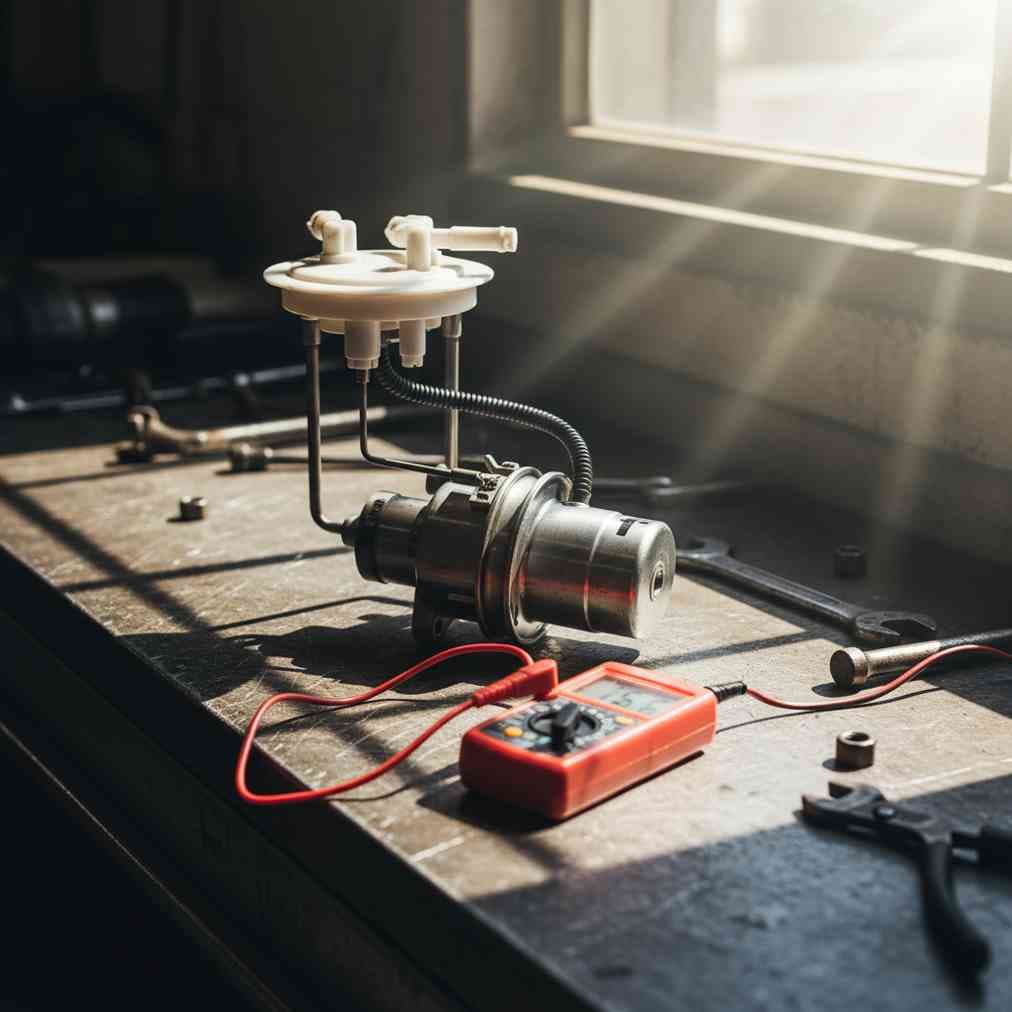
Fuel pumps are essentially DC motors that must move fuel at consistent pressure and flow rates. Testing involves both electrical verification and pressure output measurement. Proper fuel pump testing combines multiple diagnostic approaches for complete verification.
Electrical Testing Steps
Start with basic electrical tests to verify motor functionality:
Continuity Test: Set multimeter to continuity mode and test between power and ground terminals
Resistance Test: Measure motor resistance (typical range: 0.5-5 ohms)
Direct Power Test: Apply 12V directly to pump terminals and listen for motor operation
Amp Draw Test: Use amp clamp to measure current draw during operation
Pressure and Flow Testing
The most critical test for fuel pumps is pressure output verification. Even if the motor runs, inadequate pressure indicates internal wear or damage:
Pressure Test: Connect fuel pressure gauge to pump outlet
Flow Rate Test: Time how long it takes to pump a specific volume
Prime Test: Verify pump builds pressure quickly when energized
Sustained Pressure: Check if pump maintains pressure under load
If the parts are still installed in the donor vehicle, you can perform preliminary tests before removal. This saves time and helps you avoid purchasing obviously faulty parts.
Quick Function Tests
Prime Test: Turn ignition to “ON” position and listen for pump priming (2-3 second hum from fuel tank area)
Fuel Gauge Test: Check if fuel gauge responds accurately to tank level
Voltage Supply Test: If accessible, verify 12V power reaches pump connector during prime cycle
Engine Performance: If vehicle runs, note any fuel delivery issues like hesitation or stalling
These preliminary tests can quickly eliminate obviously faulty parts before you invest time in removal and bench testing.
Benefits of Buying Used Fuel System Parts
Despite the need for careful testing, used fuel pumps and senders offer significant advantages for many repair situations. Understanding these benefits helps you make informed purchasing decisions while managing the associated risks.
Cost Savings Analysis
Part Type
New Part Price
Used Part Price
Potential Savings
Basic Fuel Pump
$200-$400
$50-$150
60-75%
High-End Fuel Pump
$400-$800
$100-$300
62-75%
Fuel Sending Unit
$100-$300
$30-$100
65-70%
Complete Assembly
$500-$1,000
$150-$400
60-70%
Additional Advantages
Immediate Availability: No waiting for special orders or shipping
OEM Quality: Original equipment parts often superior to aftermarket alternatives
Environmental Benefits: Reduces manufacturing waste and conserves resources
Discontinued Parts: May be the only option for older or rare vehicles
Perfect Fit: Exact match to original specifications
Many auto salvage yards now offer 30-90 day warranties on electrical parts, providing additional peace of mind for your purchase. If you need to sell your old vehicle for parts, consider getting an instant quote for junk car to offset your repair costs.
Complete Pre-Purchase Inspection Checklist
Use this comprehensive checklist when evaluating used fuel pumps and senders to maximize your chances of purchasing reliable parts:
Inspection Area
Specific Checks
Pass/Fail Indicators
External Condition
Cracks, dents, physical damage
Any cracks or major dents = FAIL
Electrical Connectors
Melting, corrosion, bent pins
Corrosion or melting = FAIL
Fuel Line Fittings
Thread condition, sealing surfaces
Cross-threaded or damaged = FAIL
Float Mechanism
Free movement, no binding
Sticking or binding = FAIL
Corrosion Level
Rust on metal parts
Heavy corrosion = FAIL
Electrical Tests
Resistance, continuity, pressure
Out of spec readings = FAIL
Questions to Ask Sellers
Vehicle mileage when parts were removed
Reason for removal (accident, normal wear, upgrade)
Storage conditions since removal
Return policy or warranty offered
Installation history or known issues
Expert Warning: Some mechanics advise against used fuel pumps for daily drivers due to unpredictable lifespan and high labor costs. Consider your vehicle's importance and your risk tolerance when making the decision.
Common Failure Modes to Watch For
Understanding typical failure patterns helps you identify problematic parts during testing. Recognizing these warning signs can save you from purchasing parts that will fail shortly after installation.
Fuel Pump Failure Indicators
Low pressure output despite normal motor operation
Excessive amp draw indicating internal resistance
Intermittent operation or inconsistent pressure
Unusual noises during operation (grinding, squealing)
Fuel contamination evidence in pump housing
Sending Unit Failure Signs
Dead spots in resistance sweep (sudden jumps or drops)
When used parts show multiple red flags during testing
Consider the total cost of ownership including potential failure risks and labor costs for re-installation when making your decision.
Final Testing Tips and Best Practices
Successful testing of used fuel pumps and senders requires systematic approach and attention to detail. These final recommendations ensure you get the most reliable parts possible:
Test multiple candidates if available to compare performance
Document test results for future reference and warranty claims
Consider complete assemblies when sender and pump are integrated
Verify compatibility with your specific year, make, and model
Plan for proper installation including new seals and filters
Remember that thorough testing before purchase is far more cost-effective than discovering problems after installation. The time invested in proper testing pays dividends in reliability and peace of mind. Whether you're sourcing parts for a restoration project or keeping a daily driver running, these testing procedures help ensure you get the best value from used fuel system parts.
For additional guidance on automotive testing procedures and more money-saving tips for car repairs, explore our comprehensive resources on used auto parts and vehicle maintenance strategies.