How to Use Generative AI to Identify Parts from Photos Taken at JY
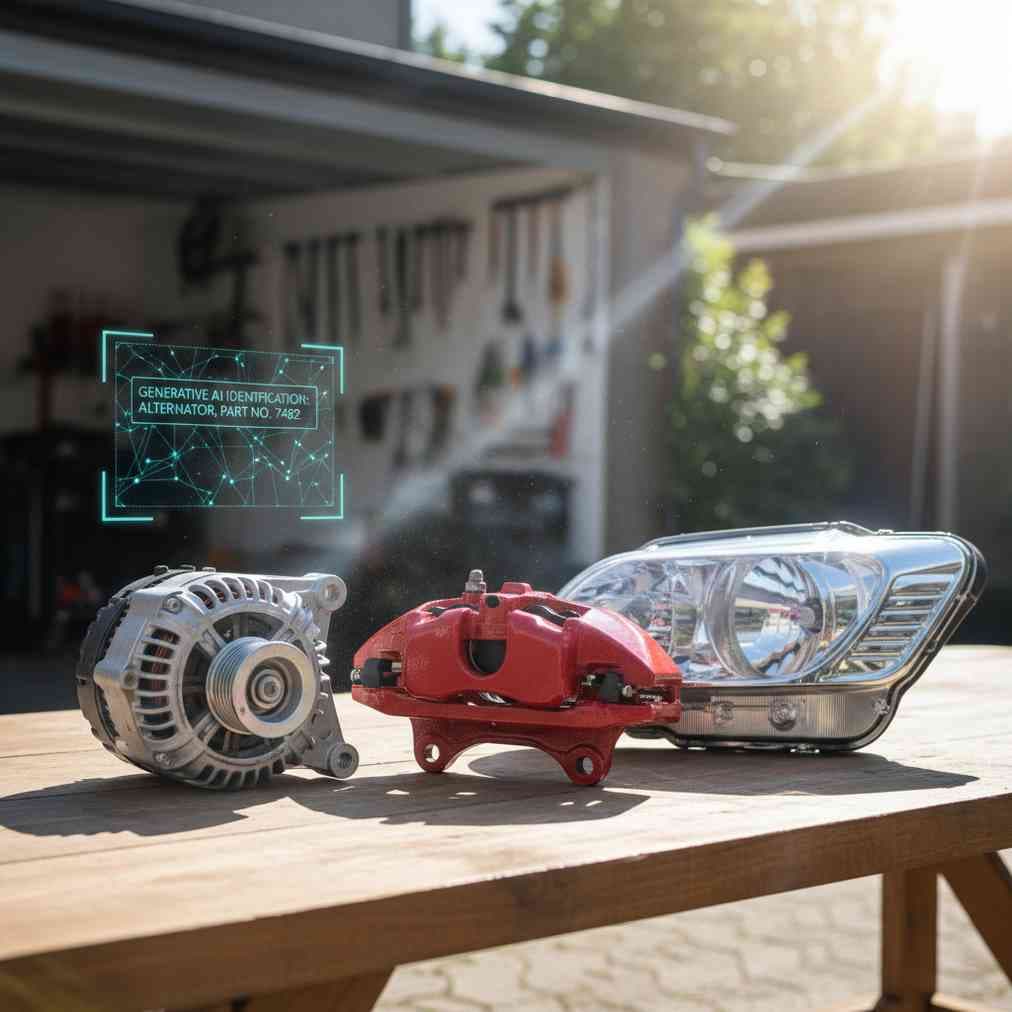
Understanding Generative AI for Auto Parts Identification The automotive salvage industry is experiencing a technological transformation through generative AI and computer vision systems that can accurately identify auto parts from photographs taken at junkyards. This revolutionary approach combines machine learning algorithms, computer vision, and optical character recognition (OCR) to analyze images and match them against [...]
Article image
Understanding Generative AI for Auto Parts Identification
The automotive salvage industry is experiencing a technological transformation through generative AI and computer vision systems that can accurately identify auto parts from photographs taken at junkyards. This revolutionary approach combines machine learning algorithms, computer vision, and optical character recognition (OCR) to analyze images and match them against extensive automotive databases, providing detailed identification and specifications almost instantly.
Traditional part identification methods in salvage yards relied heavily on manual expertise and trial-and-error approaches, which were time-consuming and often inaccurate. Modern AI-powered systems now achieve 85-95% identification accuracy while reducing lookup times by up to 90%, making them essential tools for anyone working with OEM car parts from junkyards.
Core Technologies Behind AI Parts Recognition
Computer Vision Analysis
The foundation of AI parts identification lies in computer vision algorithms that analyze visual characteristics including shapes, contours, patterns, and design elements. These systems compare photographed parts against vast databases of known automotive parts, examining:
Shape and geometry – Overall part dimensions and structural features
Surface textures – Material properties and manufacturing patterns
Connection points – Mounting holes, bolts, and attachment mechanisms
Wear patterns – Damage assessment and condition evaluation
Optical Character Recognition Integration
OCR technology works alongside computer vision to extract critical text information from parts, including manufacturer logos, part numbers, and serial codes. This integration is particularly valuable for identifying obscure or damaged parts where visual analysis alone might fall short.
“OCR technology can reduce manual lookup time by 90% by automating the reading of printed or stamped characters on parts, making it indispensable for modern salvage operations.”
Photography Best Practices for Optimal AI Recognition
The quality and composition of photographs directly impact AI recognition accuracy. Following proven best practices can significantly improve identification results when sourcing parts from junkyards near you.
Photography Element
Best Practice
Impact on Recognition
Lighting
Even, natural lighting without harsh shadows
Improves detail visibility by 40%
Angles
Minimum 3 angles: front, side, close-up markings
Increases accuracy by 25-30%
Resolution
High resolution showing fine details
Essential for OCR functionality
Background
Clean, uncluttered background
Reduces false positives by 60%
Essential Photo Capture Guidelines
Single part focus – Frame only one part per photograph to prevent AI confusion
Multiple angle coverage – Capture front-facing, side profile, and detail shots of markings
Clear manufacturer labels – Ensure all visible text and numbers are in sharp focus
Scale reference – Include a ruler or coin to help AI estimate part dimensions
Steady positioning – Use stable camera positioning to avoid blur and motion artifacts
When photographing parts for projects like crash repair using junkyard fenders, these practices become especially important since damaged parts require more detailed analysis for proper identification.
Crafting Effective AI Prompts for Parts Identification
While images provide the primary input for AI analysis, contextual text prompts can significantly enhance identification accuracy. Providing vehicle context such as make, model, and year can improve accuracy by up to 40% compared to image-only submissions.
Prompt Templates for Different Scenarios
Scenario
Example Prompt
Expected Outcome
General Identification
“Identify this automotive part and provide specifications”
Basic part name and function
Location Context
“This part was removed from the engine bay of a 2015 Honda Civic, please identify”
Enhanced accuracy with vehicle-specific details
Condition Assessment
“Analyze this brake caliper for damage and estimate usability”
Part ID plus condition evaluation
Compatibility Check
“Identify this alternator and list compatible vehicle models”
Cross-reference compatibility data
For specialized applications like identifying used turbochargers from junkyards, specific prompts mentioning engine type and vehicle specifications can dramatically improve results.
Industry Applications and Real-World Implementation
Generative AI for parts identification has found widespread adoption across various sectors of the automotive industry, from professional salvage operations to individual car enthusiasts seeking high-value used auto parts.
Professional Salvage Yard Operations
Inventory management – Automated cataloging of incoming vehicles and parts
Customer service – Instant part lookups and availability checking
Quality control – Automated condition assessment and grading
Pricing optimization – Market-based pricing through parts database integration
Mobile Applications and Consumer Tools
Consumer-facing applications have made AI parts identification accessible to anyone with a smartphone. Tools like AI-powered identification apps allow users to photograph unknown parts and receive instant identification results, specifications, and purchasing options.
“AI-driven image recognition is becoming a MUST-HAVE for companies selling aftermarket products as it offers unparalleled accuracy and efficiency, eliminating the need for technical expertise in part searching.”
Performance Metrics and Success Rates
Understanding the capabilities and limitations of AI parts identification helps set realistic expectations and optimize usage strategies. Current technology delivers impressive performance across multiple metrics.
Metric
Performance Range
Key Factors
Base Identification Accuracy
85-95%
Photo quality and database completeness
Context-Enhanced Accuracy
Up to 40% improvement
Vehicle make, model, year provided
OCR Text Recognition
90% time reduction
Clear, well-lit text and markings
False Detection Reduction
9x improvement
Advanced synthetic training data
These performance improvements have practical implications for various scenarios, from professional operations dealing with used transmissions to individuals seeking specific parts for restoration projects.
Advanced Features and Emerging Capabilities
Modern AI systems extend far beyond simple identification to provide comprehensive part analysis and additional services that enhance the overall parts sourcing experience.
Synthetic Defect Generation
Cutting-edge systems like GenX synthetic defect image generation can create training data that improves defect detection capabilities. This technology compresses months of inspection data preparation into hours, enabling rapid adaptation to new part types and damage patterns.
Cross-Vehicle Compatibility Analysis
Part interchange databases – Identify which vehicles can use the same part
Fit verification – Visual confirmation of mounting points and connections
Performance specifications – Technical data matching for optimal compatibility
Upgrade pathways – Identify improved or performance versions of standard parts
This capability is particularly valuable when working with parts from different vehicle generations or when seeking OEM Toyota Camry parts that might be compatible across multiple model years.
Implementation Strategies for Different Users
Individual Enthusiasts and DIY Mechanics
For individual users, mobile apps and web-based tools provide the most accessible entry point into AI parts identification. These platforms typically offer:
Free identification services with basic part information
Premium features including detailed specifications and sourcing options
Community integration with user reviews and experiences
Local inventory connections to nearby salvage yards and suppliers
Professional Repair Shops and Fleet Operators
Commercial users benefit from integrated solutions that connect directly with inventory management systems and supplier networks. When dealing with volume operations or seeking specific parts like used brake boosters, professional-grade systems provide enhanced accuracy and detailed reporting capabilities.
Future Trends and Technological Evolution
The field of AI parts identification continues evolving rapidly, with several emerging trends promising to further transform the automotive salvage industry.
Augmented Reality Integration
AR technology is being integrated with AI identification systems to provide virtual fitting capabilities, allowing users to visualize how parts will fit in their specific vehicle before purchase. This technology reduces return rates and improves customer satisfaction.
Blockchain-Based Part History
Emerging systems combine AI identification with blockchain technology to create immutable part history records, tracking:
Original vehicle information and manufacturing data
Service history and maintenance records
Previous ownership and usage patterns
Quality certifications and inspection results
Economic Impact and Market Transformation
The adoption of AI parts identification technology is reshaping the economics of the automotive aftermarket, creating new opportunities for both buyers and sellers in the used parts ecosystem.
Beginning your journey with AI parts identification requires understanding the available tools and selecting the right approach for your specific needs.
Recommended Starting Steps
Choose your platform – Research available apps and web tools based on your requirements
Practice photo techniques – Experiment with lighting, angles, and composition
Start with clear examples – Begin with well-marked, undamaged parts for optimal results
Build contextual knowledge – Learn to provide helpful vehicle and location context
Validate results – Cross-reference AI suggestions with traditional resources when learning
Integration with Traditional Methods
The most successful approach combines AI technology with traditional automotive knowledge and expertise. While AI provides rapid initial identification and filtering, human expertise remains valuable for final verification and quality assessment, particularly when dealing with specialty applications or unusual conditions.
As this technology continues advancing, the integration of AI-powered image search for spare parts will become increasingly sophisticated, offering even more accurate identification and expanded capabilities for automotive professionals and enthusiasts alike.
Maximizing ROI and Efficiency Gains
Understanding how to maximize the return on investment from AI parts identification technology involves strategic implementation and optimization of existing workflows. The most successful users combine technological capabilities with refined processes that leverage AI strengths while maintaining quality control standards.
Whether you're managing inventory at a salvage yard, running an auto repair business, or simply working on personal vehicle projects, implementing these AI-powered identification systems represents a significant step toward modernizing automotive parts sourcing and achieving better outcomes in less time.