Hybrid Car Parts: What to Look for and How to Stay Safe
Understanding Hybrid Car Parts: Your Complete Safety Guide Hybrid vehicles represent a growing segment of the automotive market, offering eco-friendly alternatives to traditional gasoline engines. However, when it comes to salvaging hybrid car parts or purchasing used components, understanding the unique characteristics and safety requirements is crucial. Whether you're a DIY enthusiast or a professional [...]
Article image
Understanding Hybrid Car Parts: Your Complete Safety Guide
Hybrid vehicles represent a growing segment of the automotive market, offering eco-friendly alternatives to traditional gasoline engines. However, when it comes to salvaging hybrid car parts or purchasing used components, understanding the unique characteristics and safety requirements is crucial. Whether you're a DIY enthusiast or a professional mechanic, this comprehensive guide will help you navigate the world of hybrid parts safely and effectively.
The Advantages of Buying Used Hybrid Car Parts
Purchasing used hybrid car parts offers several compelling benefits that make it an attractive option for vehicle owners and repair professionals alike.
Cost-Effectiveness
One of the most significant advantages of buying used hybrid parts is the substantial cost savings. Hybrid-specific components, particularly batteries and inverters, can be exceptionally expensive when purchased new. Used parts from reputable salvage yards near me can reduce repair costs by 40-60%, making hybrid vehicle maintenance more accessible to average consumers.
Hybrid batteries: Can cost $3,000-$6,000 new vs $800-$2,000 used
Inverters: Range from $2,000-$4,000 new vs $500-$1,500 used
Electric motors: Cost $1,500-$3,000 new vs $400-$1,200 used
Environmental Benefits
Choosing used hybrid parts supports environmental sustainability by extending the lifecycle of automotive components. This practice reduces waste in landfills, decreases demand for new manufacturing, and conserves natural resources. When you buy recycled parts, you're contributing to a circular economy that aligns with the eco-friendly principles of hybrid vehicle ownership.
Availability for Older Models
For older hybrid models, finding new replacement parts can be challenging or impossible. Salvage yards often become the primary source for these rare components, helping keep older hybrids on the road longer.
Understanding High-Voltage Systems in Hybrid Vehicles
The most critical aspect of working with hybrid vehicles is understanding their high-voltage electrical systems. These systems distinguish hybrids from conventional vehicles and require specialized knowledge and safety precautions.
Key High-Voltage Components
Component
Voltage Range
Primary Function
Safety Considerations
Battery Pack
200-650V
Energy storage
Risk of shock, fire, chemical exposure
Inverter
200-650V
DC to AC conversion
High-voltage capacitors retain charge
Electric Motor
200-650V
Propulsion/generation
Rotating magnetic fields
DC/DC Converter
12-400V
Voltage conversion
Multiple voltage levels
Orange Cable Identification System
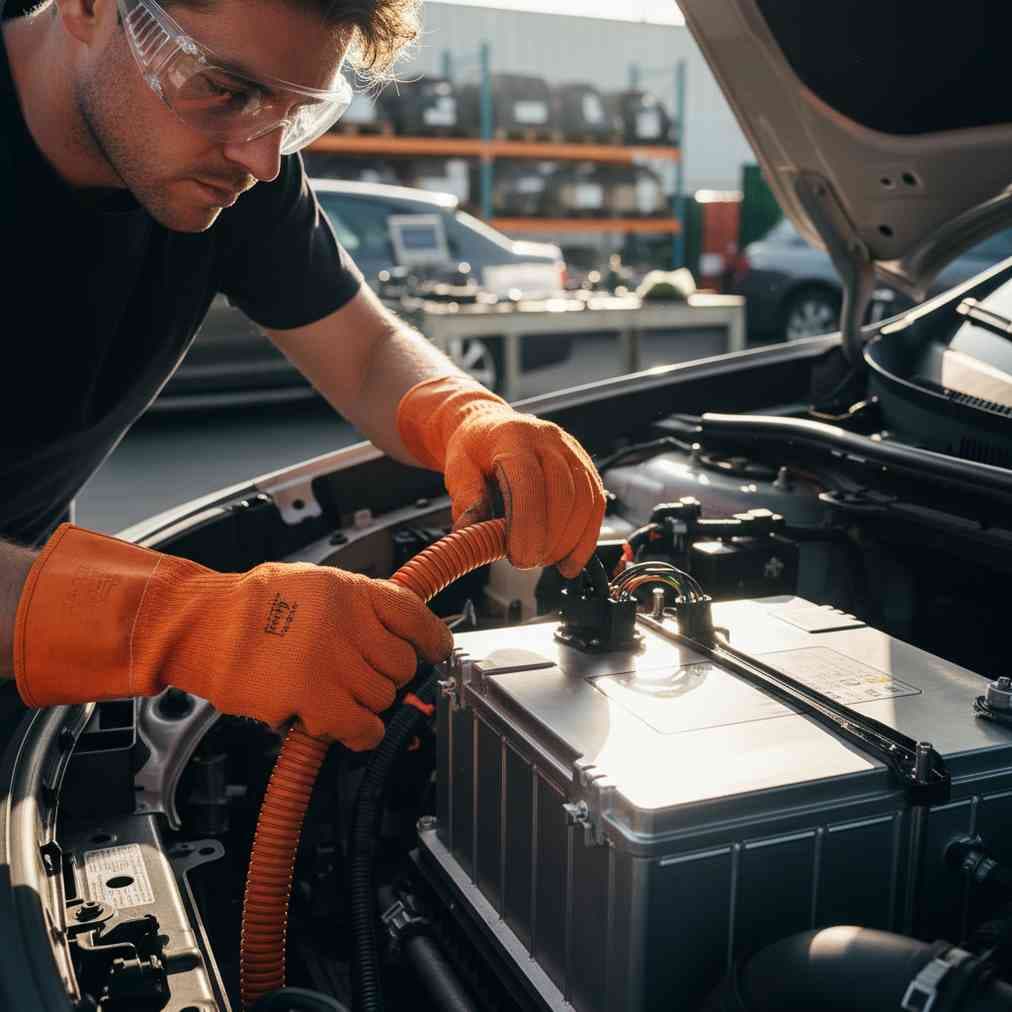
Hybrid vehicles use a standardized color-coding system to identify high-voltage components. Bright orange insulation or covers indicate high-voltage systems that require special handling. This visual identification system is crucial for safety and should never be ignored when working with hybrid parts.
Safety Alert: Always treat orange-colored cables and components as potentially live and hazardous. Never touch, cut, or open them without proper safety precautions.
Critical Safety Precautions for Handling High-Voltage Components
Working with hybrid vehicle components demands extreme caution to prevent electrocution, burns, and other serious injuries. Following proper safety protocols is not optional—it's essential for personal safety and legal compliance.
Personal Protective Equipment (PPE) Requirements
High-voltage insulated gloves: Rated to 1000 volts minimum (Class 0)
Before using any PPE, inspect equipment thoroughly. Test insulated gloves by inflating them to check for pinholes or damage that could compromise their protective capabilities.
System De-energizing Procedures
Before working on any high-voltage components, the system must be safely de-energized following manufacturer-specific procedures:
Turn off the vehicle and remove the key
Disconnect the 12V battery
Remove the high-voltage service plug or main disconnect
Wait for capacitor discharge (typically 5-10 minutes)
Verify zero energy state using appropriate test equipment
Apply lockout/tagout procedures
According to safety experts from salvage yard safety resources, never assume a system is safe without proper verification using calibrated voltage testing equipment.
Comprehensive Inspection Checklist for Used Hybrid Parts
When evaluating used hybrid car parts, a systematic inspection approach ensures you're purchasing components that are both safe and functional. This checklist covers general inspection principles and component-specific requirements.
General Visual Inspection
Physical damage assessment: Look for cracks, dents, corrosion, burn marks, or impact damage
Cleanliness evaluation: Parts should be reasonably clean and free from excessive contamination
Connector integrity: Check all electrical connectors for corrosion, bent pins, or seal damage
Manufacturer verification: Confirm part numbers and compatibility with your specific vehicle
Component-Specific Inspection Guidelines
Hybrid Battery Packs
Hybrid battery inspection requires particular attention to detail, as these are typically the most expensive and critical components:
Inspection Area
What to Look For
Red Flags
Exterior Casing
Intact housing, proper seals
Cracks, swelling, rust, fluid leaks
Terminals
Clean connections, no corrosion
White powder, green corrosion, burning
Cooling System
Clear passages, intact fans
Blockages, damaged cooling components
Service Records
Maintenance history, diagnostic reports
Unknown history, multiple replacements
Inverters and Power Electronics
Cooling system integrity: Inspect heat sinks and cooling fins for damage or blockage
High-voltage connectors: Look for signs of arcing, overheating, or connector damage
Case integrity: Ensure housing is secure and weatherproof seals are intact
Internal component access: If accessible, check for blown fuses or damaged circuit boards
Electric Motors and Generators
When inspecting electric motor components:
Check motor shaft for play, damage, or excessive wear
Inspect resolver/encoder connections for integrity
Verify cooling system components are undamaged
Test rotation by hand (when safe to do so)
Recent Regulatory Developments and Safety Standards
The landscape of hybrid vehicle safety regulations continues to evolve as these vehicles become more prevalent. Recent developments have significant implications for parts buyers and salvage operations.
According to industry leader Rodney Pierini, President & CEO of CAWA, these enhanced inspections “protect consumers from hidden defects in revived vehicles, including hybrid systems,” representing a significant step forward in salvage vehicle safety.
Training and Certification Resources
Professional organizations now offer specialized training programs for those working with hybrid and electric vehicle components. Resources include:
I-CAR EV/Hybrid repair courses: Professional certification programs
NFPA emergency responder guides: First responder safety protocols
ISRI high-voltage vehicle recycling training: Recycler and dismantler education
Mobile safety applications: Real-time access to vehicle-specific safety information
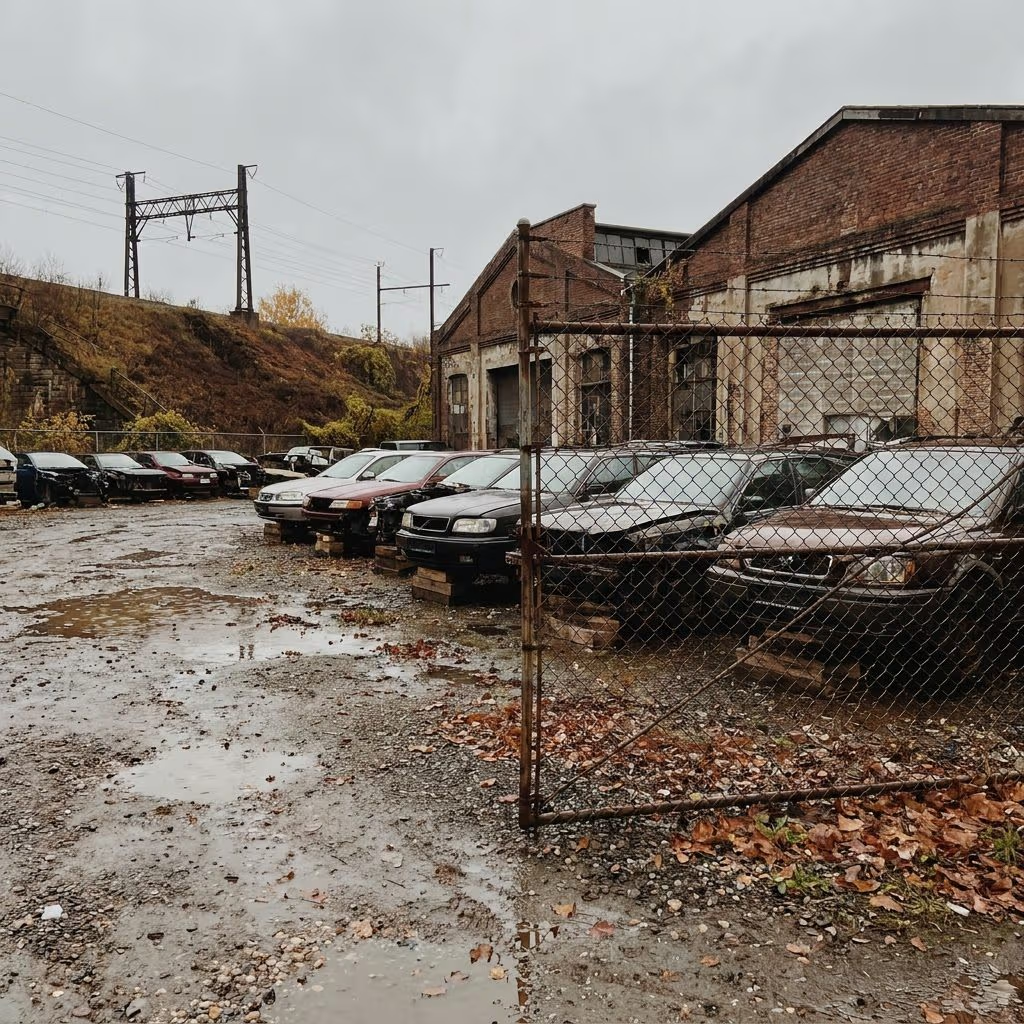
When visiting salvage yards to source hybrid parts, following established safety protocols protects both you and the facility. These guidelines are particularly important when dealing with hybrid vehicles due to their unique hazards.
Pre-Visit Preparation
Research the facility: Verify they handle hybrid vehicles safely
Bring proper tools: Insulated tools rated for electrical work
Wear appropriate clothing: Long pants, closed-toe shoes, safety glasses
Review vehicle information: Know the specific hybrid system in your target vehicle
On-Site Safety Protocols
Professional salvage facilities like those found through established salvage yard networks emphasize these critical safety practices:
Follow facility rules: Adhere to all posted safety regulations
Use proper lifting techniques: Hybrid components can be extremely heavy
Avoid working alone: Particularly when removing heavy or dangerous components
Maintain clean work areas: Remove oils, debris, and potential slip hazards
No smoking or open flames: Risk of igniting flammable substances
Expert Tip: Many salvage yards now offer specialized safety orientations for customers working with hybrid vehicles. Take advantage of these educational opportunities.
Common Mistakes to Avoid When Buying Hybrid Parts
Learning from common mistakes can save time, money, and prevent safety incidents when purchasing used hybrid components.
Technical Compatibility Errors
Assuming universal compatibility: Hybrid systems vary significantly between manufacturers and model years
Ignoring software versions: Control modules may require specific firmware versions
Overlooking calibration requirements: Many hybrid components require professional calibration after installation
Inadequate safety equipment: Using standard tools instead of insulated alternatives
Rushing the de-energizing process: Not allowing sufficient time for capacitor discharge
Skipping professional testing: Assuming components are safe without verification
Improper transportation: Not securing heavy components or protecting electrical connections
Professional Installation and Testing Considerations
Successfully installing used hybrid car parts often requires professional expertise and specialized equipment. Understanding when to seek professional help is crucial for safety and system performance.
Components Requiring Professional Installation
Component
DIY Feasibility
Professional Requirements
Special Tools Needed
Battery Pack
Not Recommended
High-voltage certification
Lifting equipment, diagnostic scanners
Inverter
Not Recommended
Electrical expertise
Oscilloscopes, insulation testers
Electric Motor
Advanced DIY
Mechanical knowledge
Torque specifications, alignment tools
Sensors
Possible
Calibration knowledge
Code readers, multimeters
Post-Installation Testing
After installing used hybrid parts, comprehensive testing ensures proper operation and safety:
System diagnostic scans: Check for fault codes and system integration
High-voltage system tests: Verify proper voltage levels and insulation integrity
Cooling system verification: Ensure thermal management systems function correctly
Road testing: Validate performance under actual driving conditions
Future Trends in Hybrid Parts Recycling
The hybrid parts recycling industry continues to evolve with technological advances and changing market demands. Understanding these trends helps buyers make informed decisions about current and future parts purchases.
Technology Improvements
Battery refurbishment techniques: Advanced methods for restoring battery pack performance
Component remanufacturing: Professional rebuilding of inverters and motor-generators
Digital diagnostic tools: Improved testing capabilities for used components
Mobile applications: Real-time access to component specifications and safety data
Market Developments
Industry experts predict significant growth in the hybrid parts aftermarket as more vehicles reach end-of-life age. This growth drives improvements in:
Quality standardization for recycled components
Extended warranties for remanufactured parts
Specialized salvage facilities focusing exclusively on hybrid/electric vehicles
Enhanced traceability for component history and performance
Making Smart Purchasing Decisions
Successfully purchasing used hybrid car parts requires balancing cost savings with safety requirements and quality considerations. When you need to get cash for cars or source replacement components, following established best practices ensures positive outcomes.
Key Decision Factors
Component criticality: Prioritize safety-critical systems for professional installation
Cost-benefit analysis: Compare used part costs with new part prices and installation requirements
Facility reputation: Choose salvage yards with hybrid experience and safety protocols
Warranty coverage: Seek suppliers offering guarantees on used hybrid components
Professional support: Maintain relationships with qualified hybrid technicians
Following established salvage yard safety guidelines and working with experienced professionals ensures that your hybrid parts purchasing experience is both successful and safe.
By understanding the unique characteristics of hybrid systems, following proper safety protocols, and conducting thorough inspections, you can successfully navigate the world of used hybrid car parts while maintaining safety and achieving significant cost savings. Remember that when dealing with high-voltage systems, professional expertise often represents the most cost-effective approach when considering both safety and long-term reliability.