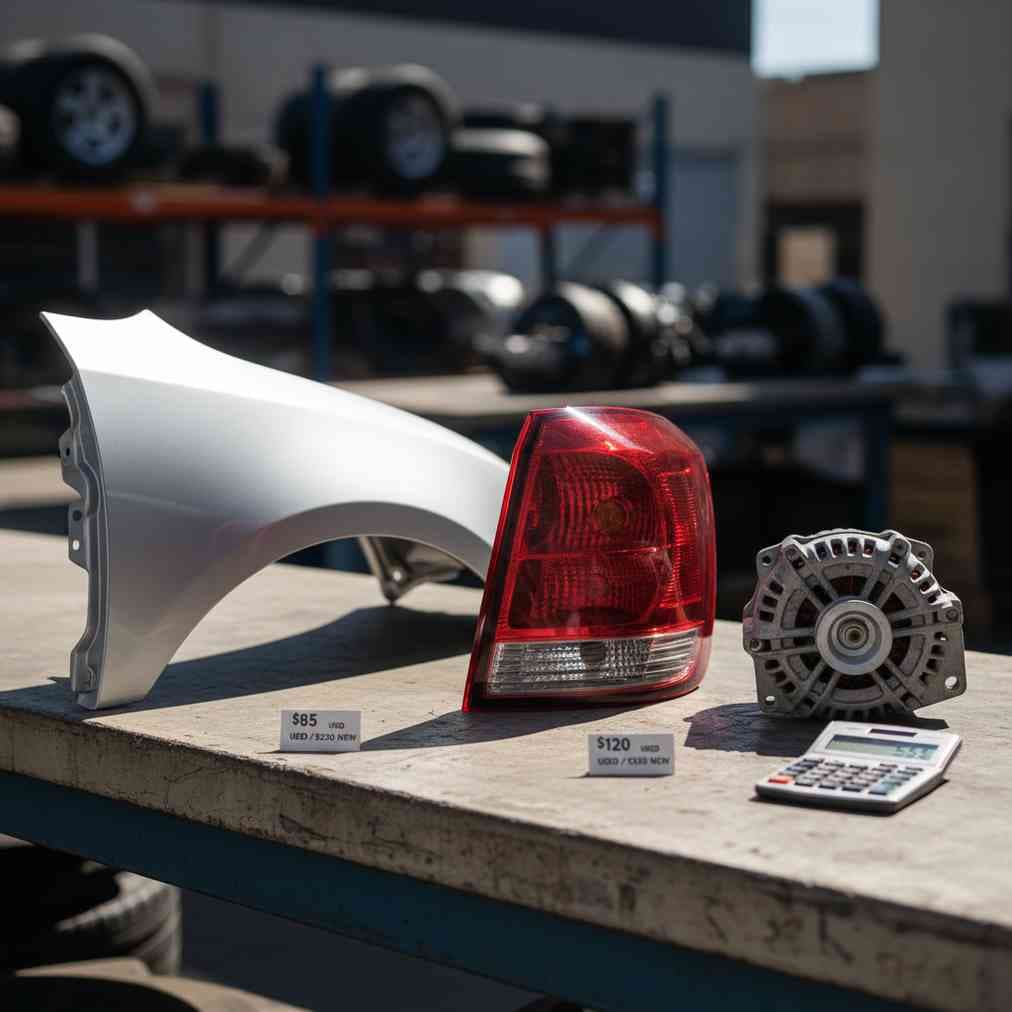
Junkyard vs. RockAuto vs. Dealer: A Price Comparison for Common Parts
Understanding the Three Main Sources for Auto Parts When your car needs a replacement part, you're faced with three primary options: hunting through a junkyard near me, ordering from an online retailer like RockAuto, or purchasing new OEM parts from a dealer. Each option offers distinct advantages and price points that can significantly impact your [...]
Article image
Understanding the Three Main Sources for Auto Parts
When your car needs a replacement part, you're faced with three primary options: hunting through a junkyard near me, ordering from an online retailer like RockAuto, or purchasing new OEM parts from a dealer. Each option offers distinct advantages and price points that can significantly impact your wallet and your vehicle's performance.
The automotive parts market has evolved dramatically, giving consumers more choices than ever before. However, with these options comes the challenge of determining which source provides the best value for your specific situation. This comprehensive comparison will help you make informed decisions about where to purchase common replacement parts.
Price Comparison: The Numbers That Matter
The most striking difference between these three sources lies in their pricing structure. Understanding these price variations can help you save hundreds or even thousands of dollars on automotive repairs.
Part Example
Junkyard/Salvage (U-Pull-It)
Online Retailer (RockAuto/eBay)
New Dealer Price (OEM)
Savings Potential
Alternator
$50 – $200 (Used)
$200 – $475 (Rebuilt/New Aftermarket)
$450 – $1,000+ (New OEM)
Over 50% vs. Dealer
Taillight
$25 – $50 (Used)
$80 – $300 (New Aftermarket)
$200 – $2,000+ (New OEM LED)
Up to 95% for LED lights
Fender
Fraction of new cost
Varies, often cheaper than dealer
Highest cost option
Significant savings on body parts
These price differences become even more pronounced when dealing with newer vehicles equipped with advanced technology. For instance, a modern LED taillight assembly from a dealer can cost upwards of $1,500, while a similar used part from a salvage yard might cost less than $100.
Junkyard Advantages: Maximum Savings with Some Trade-offs
Self-service salvage yards, commonly known as U-Pull-It facilities, offer the most cost-effective option for replacement parts. These facilities allow customers to remove parts themselves, resulting in significant labor savings that translate to lower prices.
Massive cost savings: Parts often cost 50-80% less than new alternatives
OEM authenticity: All parts are genuine manufacturer components
Environmental benefits: Promotes recycling and reduces manufacturing demand
Perfect for older vehicles: Ideal when new parts are discontinued or cost more than the car's value
Learning opportunity: Hands-on experience with automotive systems
However, junkyard shopping requires more effort and comes with certain limitations. Inventory depends on what vehicles are currently in the yard, and part condition varies significantly. Most reputable yards offer warranties ranging from 30 days to 6 months, but these are typically shorter than warranties on new parts.
“For older cars, buying a new, expensive part may not be financially justifiable when a properly inspected used part is available for a fraction of the cost.”
Online Retailers: The Middle Ground Solution
Online auto parts retailers like RockAuto have revolutionized parts purchasing by offering vast selections with competitive pricing. These platforms provide multiple quality tiers, from budget aftermarket options to OEM-equivalent parts.
The convenience factor cannot be overstated. Online retailers offer detailed part specifications, compatibility checks, and customer reviews that help ensure proper fitment. Many provide same-day or next-day shipping, making them ideal for urgent repairs.
Extensive inventory: Access to parts for virtually any vehicle
Multiple quality options: Choose from budget, mid-range, or premium parts
Convenience: Shop from home with detailed product information
Competitive pricing: Often significantly cheaper than local auto parts stores
Customer support: Technical assistance and return policies
Online pricing for common parts falls between junkyard and dealer prices. For example, a quality rebuilt alternator might cost $200-475 online, compared to $50-200 used or $450+ new from a dealer.
Dealer Parts: Premium Quality at Premium Prices
New car dealers represent the premium end of the parts market, offering exclusively new OEM (Original Equipment Manufacturer) parts with full manufacturer warranties. While significantly more expensive, dealer parts guarantee perfect fitment and come with comprehensive support.
Dealers also offer installation services and can provide technical support for complex repairs. For newer vehicles under warranty, using dealer parts may be necessary to maintain coverage. Some dealers also stock remanufactured parts at lower prices than new OEM options.
Guaranteed authenticity: Only genuine OEM parts
Full warranties: Comprehensive manufacturer backing
Perfect fitment: Exact specifications for your vehicle
Professional installation: Expert service and support
Latest updates: Access to improved part designs
Real-World Examples: When Each Option Makes Sense
Understanding when to choose each option depends on various factors including vehicle age, part complexity, budget constraints, and urgency of repair.
Scenario
Best Option
Reasoning
2005 Honda Civic alternator replacement
Junkyard
Common part, older vehicle, maximum savings
2020 BMW brake pads
Online Retailer
Quality aftermarket options, good warranty, convenience
2023 Tesla under warranty
Dealer
Warranty requirements, specialized technology
Classic car restoration
Junkyard + Online
Authentic period parts + reproduction items
Expert Strategies for Maximum Savings
Savvy automotive enthusiasts often combine multiple sourcing strategies to optimize both cost and quality. The key lies in understanding which parts are suitable for each source and when to prioritize savings versus reliability.
Safety-critical parts: Consider new or professionally remanufactured options for brakes, airbags, and steering parts
Electronic modules: Research compatibility carefully; some require programming
Wear items: Filters, belts, and fluids are often best purchased new online
The DIY approach maximizes savings potential. Removing parts yourself at a U-Pull-It yard can save hundreds in labor costs, while online tutorials and technical resources help ensure proper installation.
Quality Considerations: What to Expect from Each Source
Quality expectations should align with source selection. Junkyard parts are sold “as-is” but many yards offer limited warranties. Online retailers provide various quality tiers, while dealer parts offer maximum reliability with comprehensive warranties.
Some remanufactured parts, particularly from reputable brands, can perform nearly as well as new parts. High-quality rebuilds often include updated components that address known failure points in the original design.
Environmental and Economic Impact
Choosing used parts from salvage yards provides significant environmental benefits by reducing manufacturing demand and keeping functional parts out of landfills. This circular economy approach aligns with growing sustainability awareness while delivering substantial cost savings.
The economic impact extends beyond individual savings. Salvage yards support local employment and provide affordable transportation solutions for lower-income households who might otherwise struggle with vehicle maintenance costs.
Making the Right Choice for Your Situation
The optimal parts sourcing strategy depends on multiple factors including budget, vehicle age, repair urgency, and personal comfort level with used parts. Consider these guidelines when making your decision:
Budget-conscious repairs: Start with junkyard options for non-safety-critical parts
Convenience priorities: Online retailers offer the best balance of price and convenience
Maximum reliability needs: Dealer parts provide peace of mind for critical systems
Mixed approach: Combine sources based on specific part requirements
If you're considering selling an old vehicle to fund repairs on a newer one, getting an instant quote for your junk car can help determine whether repair or replacement makes more financial sense.
The automotive parts market offers unprecedented choice and value for informed consumers. By understanding the strengths and limitations of each source, you can make decisions that optimize both your budget and your vehicle's performance. Whether you choose the adventure and savings of junkyard hunting, the convenience of online shopping, or the reliability of dealer parts, the key is matching your choice to your specific needs and circumstances.