Meet the "Vultures": Who Are the Resellers Sniping All the Good Parts?
Understanding the Professional Auto Salvage Reseller Subculture In the world of auto salvage yards, a specialized group of entrepreneurs has emerged, often referred to as "flippers" or sometimes pejoratively as "vultures." These professional resellers have transformed the traditional junkyard experience into a high-stakes treasure hunt, where timing and expertise determine success or failure. These individuals [...]
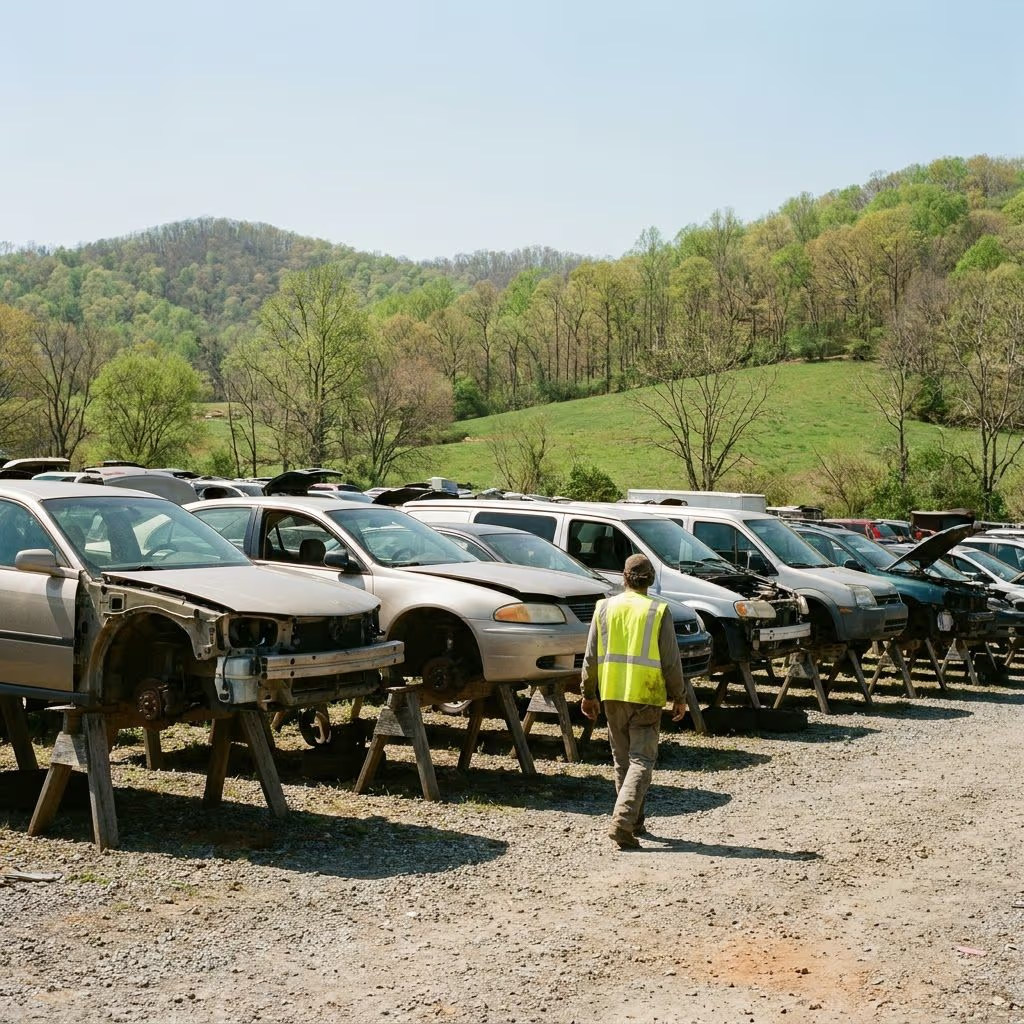
Article image
Understanding the Professional Auto Salvage Reseller Subculture
In the world of auto salvage yards, a specialized group of entrepreneurs has emerged, often referred to as “flippers” or sometimes pejoratively as “vultures.” These professional resellers have transformed the traditional junkyard experience into a high-stakes treasure hunt, where timing and expertise determine success or failure.
These individuals treat salvage yards near them not as casual parts sources, but as their primary inventory pools for sophisticated resale operations. Their business model capitalizes on the significant price disparity between yard prices and online market values, particularly on platforms like eBay and Facebook Marketplace.
Who Are These Professional Part Flippers?
Professional auto salvage part resellers are individuals or small operations that have turned scavenging for used auto parts into a lucrative business. Unlike casual DIY mechanics or weekend warriors, these professionals approach salvage yards with the precision and strategy of retail buyers sourcing inventory.
Early Birds: They arrive at yard opening times to secure first access to newly arrived vehicles
Specialists: Most focus on specific makes, models, or part categories where they've developed expertise
Market Analysts: They research sold listings and market trends before pulling any parts
Volume Operations: Some report earning $10,000+ monthly through systematic part flipping
Target Parts and High-Value Components
Success in part flipping depends heavily on targeting the right components. Professional resellers focus on parts that are expensive when purchased new, have high failure rates, or are difficult to source as New Old Stock (NOS).
Part Category
Yard Cost Range
Potential Resale Value
Profit Margin
Electric Steering Rack
$70
$920
$850
LS Engines
$500-800
$2,000-4,000
$1,500-3,200
ECU/PCM Modules
$50-100
$300-600
$250-500
Gauge Clusters
$25-75
$150-400
$125-325
Brake Boosters
$40-80
$200-350
$160-270
Most Sought-After Components
Electronic Control Units: ECUs, PCMs, and BCMs from popular models
Performance Parts: Turbochargers, superchargers, and sport suspension components
AC Components: Compressors, condensers, and complete HVAC systems
OEM Wheels and Calipers: Factory alloy wheels and performance brake systems
Switches and Modules: Window switches, door lock actuators, and climate controls
Operating Methods and Strategies
Professional part flippers operate with military-like precision, employing sophisticated strategies that maximize their profit potential while minimizing time investment.
Timing is Everything
“The difference between profit and loss often comes down to being first through the gate when a good car hits the yard. By the time casual customers arrive, the gold is already gone.”
Understanding that valuable parts disappear within hours of a vehicle's arrival, successful flippers:
Build relationships with yard employees who text them photos of desirable arrivals
Arrive at opening time to scan new inventory
Can strip a vehicle of valuable parts in minutes, not hours
Sometimes offer cash incentives to employees for early access or information
Specialized Knowledge Base
Modern technology has revolutionized how these professionals operate. Many now utilize advanced data analysis techniques to identify profitable opportunities and track market trends.
Parts Interchangeability: Understanding which parts fit multiple applications increases market value
Quick Identification: Ability to spot valuable parts within minutes of entering a vehicle
Removal Expertise: Professional-level disassembly skills for rapid extraction
Market Research: Real-time price checking using mobile apps and eBay sold listings
Business Operations and Profit Models
Beyond simple extraction, professional resellers operate sophisticated businesses that rival established auto parts retailers in their efficiency and market reach.
Revenue Streams and Profit Potential
The financial rewards for successful part flippers can be substantial. Some established operators report impressive monthly earnings:
eBay Sales: Average $10,000 monthly for top performers
Minimum Thresholds: Many maintain $90+ resale value minimums per part
Volume Operations: Advanced recyclers manage inventories of 71,000+ individual items
Professional Business Practices
Successful flippers treat their operations like legitimate businesses, implementing best practices from retail and e-commerce:
Professional Photography: High-quality images that showcase part condition and features
Multi-platform Listings: Simultaneous presence on eBay, Facebook, Mercari, and other platforms
Efficient Logistics: Streamlined cleaning, packaging, and shipping processes
Inventory Management: Sophisticated tracking systems for large part inventories
Technology Integration and Modern Trends
The salvage industry is experiencing significant technological transformation, with both challenges and opportunities for professional part flippers.
Digital Inventory Systems
Modern salvage yards are adopting digital inventory systems that level the playing field by making information more accessible to casual buyers. Some facilities now implement data science approaches to optimize their operations and inventory management.
Real-time Inventory: Mobile apps showing available parts and locations
Price Transparency: Online pricing that reduces negotiation advantages
Compatibility Verification: Digital tools for checking part fitment
Reservation Systems: Online part holding that eliminates first-come advantages
Factory-Style Dismantling Operations
Some advanced recyclers now implement factory-style dismantling processes that directly compete with independent flippers:
Cars stripped and cataloged within hours of arrival
Parts photographed and uploaded to eBay immediately
Professional packaging and quality grading systems
Elimination of the time advantage that flippers traditionally relied upon
Market Trends and Consumer Behavior
Several market trends are driving the success of professional part flippers and validating their business model.
Growing Demand for OEM Quality
There's an increasing consumer trend toward purchasing used Original Equipment Manufacturer (OEM) parts over new aftermarket alternatives, driven by several factors:
Cost Savings: Significant price advantages over new OEM parts
Environmental Benefits: Reduced CO2 from manufacturing new parts
Quality Assurance: OEM parts often outlast aftermarket alternatives
Expert Recommendations for Newcomers
“Pick a few types of cars… Learn all you can about them, online, forums, eBay etc…. Completed sales on eBay is a great guide.”
Established flippers advise newcomers to focus their efforts rather than attempting to become experts in all vehicle types. This specialized approach allows for:
Deeper knowledge of specific model quirks and valuable parts
Understanding of part interchangeability within vehicle families
Recognition of rare or high-demand components
Efficient removal techniques for target vehicles
Impact on Traditional Salvage Yard Operations
The presence of professional part flippers has significantly impacted how traditional salvage yards operate and how casual customers experience these facilities.
Challenges for Casual Customers
Weekend DIY mechanics and casual customers often find that the best parts have been removed by professional flippers before they arrive:
Popular components disappear within hours of vehicle arrival
Increased competition for high-value parts
Need for earlier arrival times to find desired components
Pressure to make quick decisions about part purchases
Yard Adaptations and Responses
Salvage yards have adapted their operations to accommodate and sometimes limit the impact of professional flippers:
Pricing Adjustments: Higher prices for known high-value components
Access Restrictions: Limits on daily visits or parts removal
Professional Partnerships: Direct relationships with established flippers
Enhanced Security: Better monitoring to prevent theft or damage
The Economics of Part Flipping
Understanding the economics behind professional part flipping reveals why this subculture has become so prominent in the auto salvage industry.
Cost-Benefit Analysis
Professional flippers operate on margin calculations that justify their time investment and business expenses:
Business Expense
Monthly Cost
Impact on Profitability
Yard Entry Fees
$200-400
Direct reduction in margins
Tool Maintenance
$100-200
Efficiency enabler
Vehicle/Gas
$300-500
Transportation necessity
Storage Space
$200-800
Inventory capacity
eBay/Platform Fees
$800-1,500
Market access cost
Scaling Strategies
Successful flippers employ various strategies to scale their operations beyond individual effort:
Multiple Yard Relationships: Building connections across several salvage facilities
Team Operations: Employing helpers for removal and processing
Specialized Equipment: Investing in efficient removal and transport tools
Technology Integration: Using advanced analytics for market prediction and inventory optimization
Future Outlook and Industry Evolution
As the automotive industry continues to evolve, professional part flippers must adapt to changing market conditions and technological advances.
Electric Vehicle Impact
The growing presence of electric vehicles in salvage yards presents both opportunities and challenges for professional flippers:
New Part Categories: Battery modules, inverters, and electric drivetrain components
Safety Concerns: High-voltage systems requiring specialized knowledge
Value Uncertainty: Rapidly evolving technology affecting part longevity
Market Development: Growing demand for EV parts as adoption increases
Regulatory Considerations
As the industry matures, regulatory oversight may impact how professional flippers operate:
Potential licensing requirements for commercial parts resellers
Environmental regulations affecting certain part categories
Safety standards for airbags and other critical components
Tax implications for significant business income
Conclusion: A Legitimate Business Model
Professional auto salvage part resellers, despite sometimes being viewed negatively as “vultures,” represent a legitimate and efficient market force in the automotive recycling industry. Their expertise, business acumen, and systematic approach have created a specialized niche that serves consumer demand for quality used parts while maximizing the value extraction from salvage vehicles.
For consumers looking to sell their junk cars for the best possible price, understanding this dynamic market can help them time their sales strategically and potentially capture more value from their vehicles.
As the automotive industry continues to evolve with new technologies and changing consumer preferences, these professional resellers will likely adapt and continue to play an important role in the circular economy of automotive parts, ensuring that valuable components find their way to customers who need them most.