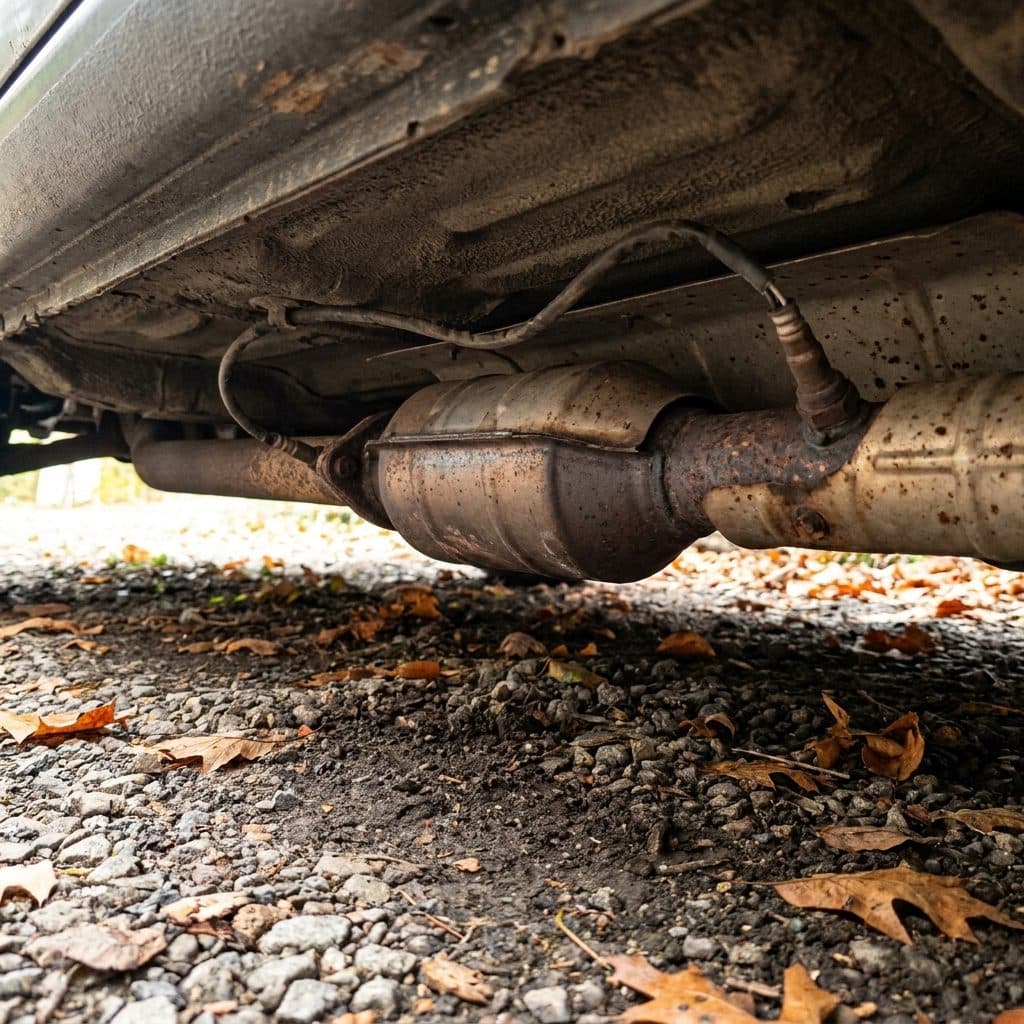
Short answer: Ohio House Bill 210 takes effect on October 6, 2026. From that day, stealing a catalytic converter is a fifth-degree felony whatever it is worth, and anyone who buys used converters as a business must see proof of ownership, keep records and pay by check or another traceable method, never cash. Licensed motor vehicle salvage dealers may no longer buy or accept catalytic converters at all.
Last checked: October 5, 2026. Sources: the enrolled text of House Bill 210 and its status and vote pages on legislature.ohio.gov, the Legislative Service Commission analysis, and the Ohio Judicial Conference enactment summary. Section numbers are Ohio Revised Code sections as amended.
What is Ohio House Bill 210?
HB 210, sponsored by Reps. Bill Roemer and Phil Plummer, regulates the sale of used catalytic converters. The Senate passed it 32 to 1 on June 10, 2026, and the House agreed to the Senate's changes 92 to 2 the same day. Governor DeWine signed it on July 7, 2026, and the Legislature's bill page lists October 6, 2026 as the effective date.
The law treats diesel particulate filters, diesel oxidation catalysts and converter cores as catalytic converters too (section 4737.04(A)(5)). This page is a plain-language summary, not legal advice. Read the enrolled bill text or the HB 210 page on the Ohio Legislature site before you rely on any detail.
What changes on October 6, 2026?
| Rule | Before October 6 | From October 6 |
|---|---|---|
| Stealing a converter | Graded by value; under $1,000 was a first-degree misdemeanor | Fifth-degree felony at any value (2913.02(B)(10)) |
| Receiving a stolen converter | Graded by value | Fifth-degree felony (2913.51(F)) |
| Business caught doing either | General fines for organizations | Fine of up to $7,500 per violation |
| Proof of ownership when selling | No converter-specific list | Title, registration, a shop invoice, or a state affidavit (4737.041(A)(3) and (C)) |
| How the buyer pays | No converter-specific rule | Check or other traceable method, no cash (4737.041(A)(4)) |
| Who must follow the buyer rules | Scrap metal dealers | Also any business that takes used converters in the ordinary course of business, except licensed car dealers (4737.041(B)) |
| Licensed motor vehicle salvage dealers | Could buy converters | May not purchase or accept them (4738.03(A)(2)) |
| Converters per seller per day at a scrap dealer | One, except from car dealers | Unchanged (4737.04(F)(6)) |
| Holding period before payment | None for converters | Still none. The two-day hold covers only "special purchase articles," and converters were not added to that list |
For other states, see our catalytic converter theft laws by state.
Can you still sell a used converter in Ohio?
Yes, but bring paperwork. If you own the car the converter came off, the buyer can accept the vehicle's title or registration, or a bill from a collision repair shop or a car dealer that shows the converter was removed and replaced and lists the make, model, year and VIN. A shop or dealer selling converters it removed shows its own registration or license number plus that invoice.
Without those, a person (not a company) can sign an Ohio Department of Public Safety affidavit explaining why. The department has 90 days after October 6 to publish the form, so it may not exist on day one. Lying on it counts as falsification.
Expect the buyer to copy your ID, take your photo, note your license plate and pay by check or another traceable method. A licensed auto salvage yard cannot buy the converter at all. Our post on selling a catalytic converter to a junkyard covers grading, and the catalytic converter value page explains what drives the price.
If a shop replaces your converter, ask for an invoice that names the removal and the VIN. That is your proof later.
What if you junk the whole car?
Section 4737.043(B) says the converter-specific rules in sections 4737.04 and 4737.041 do not apply to the sale of a motor vehicle, even when a converter is part of it. Normal title rules still apply, which our Ohio junk car title and paperwork rules post explains.
The salvage dealer ban in 4738.03(A)(2) is worded differently. It does not repeat that whole-vehicle exception, and the bill does not say how it applies to a car that arrives with its converter on. Ask the yard how it handles this before the tow. Leave the converter on the car; cutting it off to sell separately puts you under the proof-of-ownership rules. To compare offers, start at cash for junk cars or check a junk car value estimate, and read what to remove before scrapping a car.