The Junkyard as Your Classroom: How to Practice Auto Repairs for Less
Why Choose the Junkyard as Your Auto Repair Training Ground Learning automotive repair doesn't have to break the bank or risk damaging your daily driver. The concept of using self-service salvage yards as educational environments has revolutionized how aspiring mechanics and DIY enthusiasts develop their skills. This practical approach leverages discarded vehicles as real-world training [...]
Article image
Why Choose the Junkyard as Your Auto Repair Training Ground
Learning automotive repair doesn't have to break the bank or risk damaging your daily driver. The concept of using self-service salvage yards as educational environments has revolutionized how aspiring mechanics and DIY enthusiasts develop their skills. This practical approach leverages discarded vehicles as real-world training models, offering invaluable hands-on experience without the financial stress of potential mistakes.
The automotive recycling industry represents a massive $25 billion per year market in the United States, with approximately 26 vehicles recycled every minute. This abundance of available vehicles creates perfect learning opportunities for those willing to get their hands dirty.
The Strategic Approach to Junkyard Learning
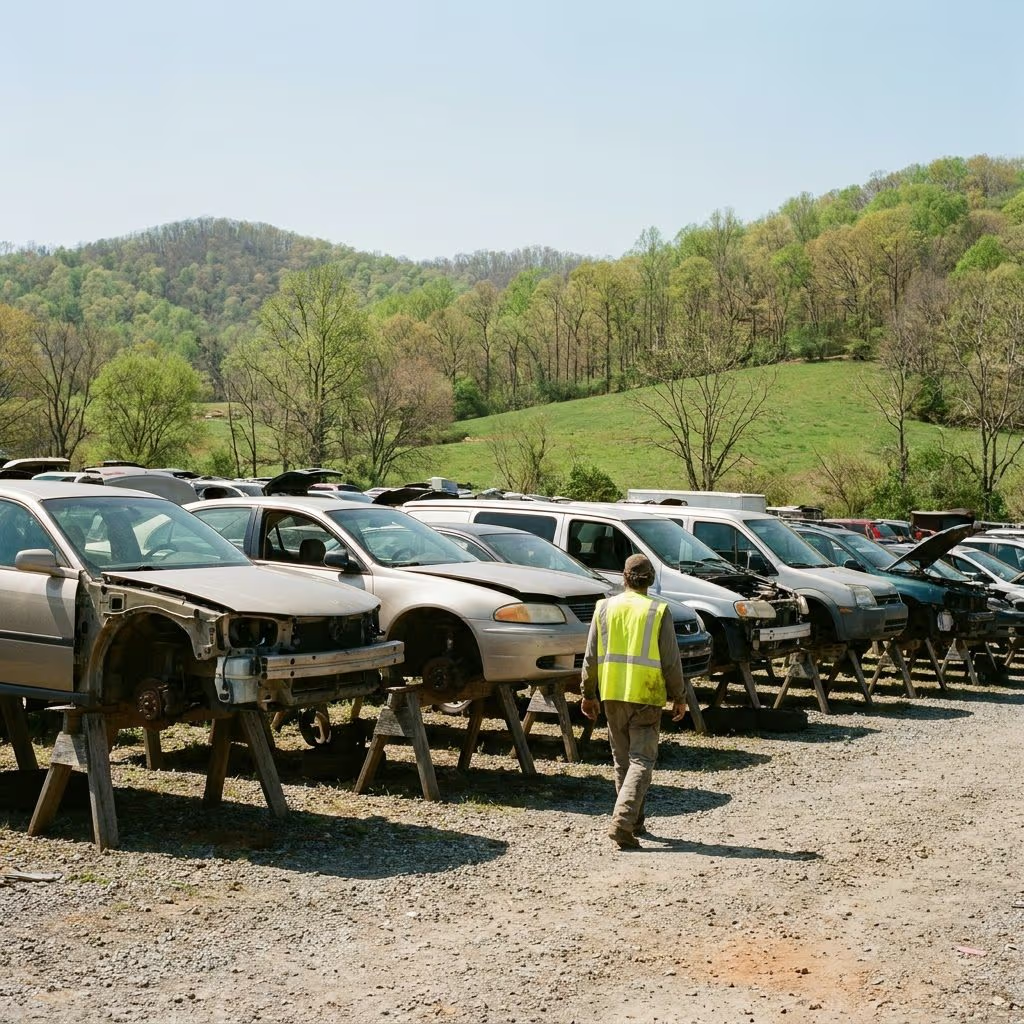
The core strategy involves visiting salvage yards near you specifically for practice rather than parts acquisition. This mindset shift transforms your junkyard visit from a shopping trip into a comprehensive learning experience.
Essential Steps for Effective Practice Sessions
Vehicle Selection: Choose cars similar to your own or models requiring repairs you anticipate needing
Tool Preparation: Bring your complete toolkit to master tool usage in realistic conditions
Disassembly Focus: Concentrate on learning proper removal sequences and fastener handling techniques
Theoretical Foundation: Study service manuals and online resources before attempting hands-on practice
Modern research methodologies support the effectiveness of experiential learning in technical fields, making junkyard practice sessions scientifically validated educational experiences.
Key Benefits of Junkyard-Based Learning
Benefit
Traditional Learning
Junkyard Learning
Risk Level
High (your car)
Minimal (scrap vehicle)
Cost
Expensive mistakes
Low entry fees
Learning Pace
Rushed repairs
Self-directed timing
Tool Mastery
Limited practice
Extensive hands-on use
Zero-Risk Learning Environment
The most significant advantage of junkyard practice lies in the elimination of financial consequences from mistakes. Breaking bolts, stripping threads, or damaging delicate parts becomes a learning experience rather than a costly error. This psychological freedom allows for genuine experimentation and skill development.
Physical Familiarity and Muscle Memory
Working with actual vehicles provides irreplaceable spatial understanding and muscle memory development. Understanding how parts physically relate to each other, the actual weight of assemblies, and the real-world challenges of accessing tight spaces cannot be replicated through theoretical study alone.
“The junkyard serves as an invaluable classroom where mistakes become lessons rather than expensive repairs.”
Complex Procedures Perfect for Junkyard Practice
Certain automotive procedures carry high stakes due to their complexity, cost, or potential for causing additional damage. These repairs benefit tremendously from junkyard practice sessions before attempting them on your vehicle.
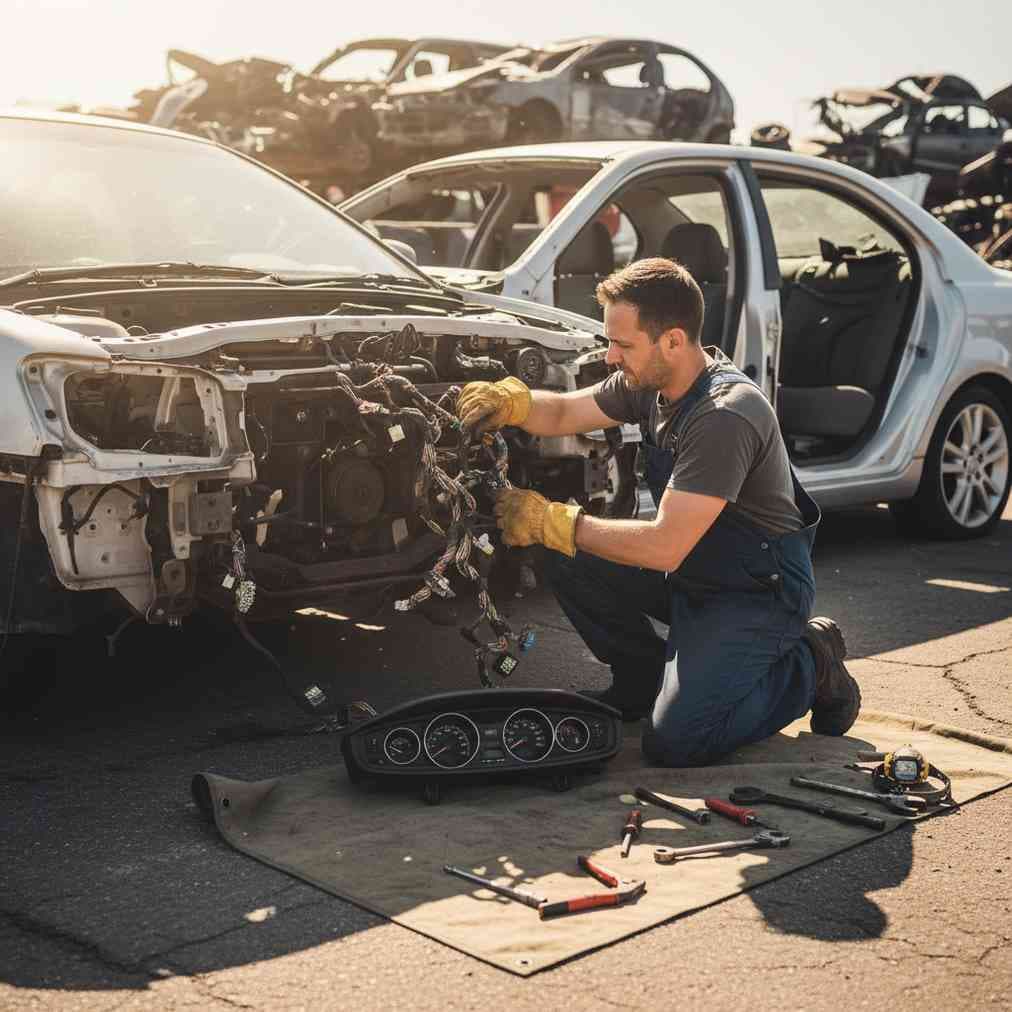
Dashboard and Instrument Cluster Removal
Modern vehicle dashboards involve intricate networks of hidden fasteners, airbag systems, and coded electronics. Practicing this procedure on junk vehicles allows you to:
Learn proper removal sequences without breaking plastic tabs
Understand airbag system disconnection procedures
Practice handling electronic modules without coding concerns
Develop techniques for accessing hard-to-reach fasteners
Engine Wiring Harness Work
Engine harness removal and installation requires meticulous attention to detail. Junkyard practice helps master:
Connector identification and proper disconnection techniques
Harness routing patterns around engine bay obstacles
Labeling systems for complex reassembly
Techniques for preventing connector damage
Intake Manifold and Top-End Engine Work
These procedures expose critical engine internals and require precise torque sequences and gasket handling. Practice sessions provide experience with:
Proper bolt removal patterns to prevent warping
Gasket preservation and replacement techniques
Recognition of internal engine conditions
Understanding of sealing surface preparation
Advanced diagnostic techniques can be practiced alongside these mechanical procedures, providing comprehensive learning experiences.
Essential Tools and Safety Equipment
Successful junkyard learning requires proper preparation and safety awareness. Self-service yards require you to bring all necessary tools, making tool mastery an integral part of the learning process.
Basic Tool Requirements
Socket sets in metric and standard sizes
Combination wrenches and adjustable wrenches
Screwdrivers (flathead and Phillips, various sizes)
Pliers set including needle-nose and diagonal cutters
Torx and Allen key sets
Specialized Equipment for Advanced Practice
Digital multimeter for electrical testing
Compression gauge for engine assessment
Brake line flaring tools
Bearing pullers and installation tools
Panel removal tools for interior work
Safety Considerations
Junkyard environments present unique safety challenges that require appropriate protective equipment and awareness:
Safety glasses and work gloves for hand protection
Steel-toed boots for foot protection from heavy parts
Long pants and sleeves to prevent cuts and scratches
First aid supplies for minor injuries
Awareness of fluid leaks and environmental hazards
Maximizing Your Learning Investment
To get the most educational value from your junkyard visits, strategic planning and systematic approaches enhance the learning experience significantly.
Pre-Visit Preparation
Effective junkyard learning begins before you arrive at the yard. Research and preparation multiply your educational gains:
Study service manual procedures for your target repairs
Watch instructional videos to understand general approaches
Identify specific vehicles that match your learning goals
Plan your tool requirements based on anticipated procedures
Set realistic time expectations for complex disassembly
Documentation and Learning Retention
Capturing your learning experience ensures long-term retention and reference value:
Photograph disassembly sequences for future reference
Take notes on unexpected challenges or discoveries
Document tool requirements for specific procedures
Record part numbers and interchange information
Note common failure points or wear patterns
Modern research documentation methods can enhance your learning retention and provide valuable reference materials for future projects.
Understanding the Limitations
While junkyard practice provides invaluable hands-on experience, it's important to understand the boundaries of this learning approach and complement it with other educational methods.
Disassembly vs. Assembly Skills
Junkyards excel at teaching disassembly techniques, but true mechanical proficiency requires understanding proper reassembly procedures. The junkyard classroom should be paired with:
Formal technical training for theory and diagnostics
Supervised practice on functional vehicles
Study of torque specifications and assembly procedures
Understanding of quality control and testing methods
Modern Vehicle Complexity
Contemporary automobiles incorporate sophisticated electronic systems designed to discourage amateur repair attempts. However, fundamental mechanical skills learned through junkyard practice remain highly relevant and transferable.
“While the junkyard teaches disassembly well, true repair proficiency comes from learning correct reassembly procedures and diagnostic techniques.”
Cost-Effectiveness Analysis
The economic benefits of junkyard-based learning extend far beyond the low entry fees. Understanding the full cost picture helps justify this educational approach.
Learning Method
Initial Cost
Risk Factor
Long-term Value
Junkyard Practice
$2-10 entry fee
Very Low
High skill development
Trade School
$10,000-30,000
Low
Formal certification
Trial and Error
Variable
Very High
Expensive mistakes
Professional Training
$5,000-15,000
Low
Structured learning
Hidden Cost Savings
Beyond the obvious educational benefits, junkyard practice provides substantial indirect cost savings:
Reduced repair costs through improved DIY capabilities
Better understanding of fair pricing for professional repairs
Ability to source affordable replacement parts
Prevention of costly mistakes on personal vehicles
Development of diagnostic skills reducing unnecessary parts replacement
Advanced Learning Techniques
Experienced junkyard learners develop sophisticated approaches that maximize educational value while minimizing time investment.
Systematic Progression Methods
Effective learning requires structured progression from simple to complex procedures:
Begin with exterior parts removal (bumpers, lights, trim)
Progress to interior disassembly (seats, panels, electronics)
Advance to engine bay procedures (accessories, manifolds)
Master transmission and drivetrain work
Tackle complete engine removal and disassembly
Comparative Analysis Techniques
When multiple similar vehicles are available, comparative analysis enhances learning significantly:
Compare different model years of the same vehicle
Analyze variations between trim levels and options
Study evolution of design and manufacturing methods
Identify common failure points across vehicle populations
Practice adaptation techniques for parts interchange
Advanced evaluation methods can be applied to systematically assess your learning progress and identify areas for improvement.
Building Real-World Applications
The ultimate goal of junkyard practice is developing skills transferable to real-world automotive repair scenarios. Strategic application of learned techniques bridges the gap between practice and practical implementation.
Diagnostic Skill Development
Junkyard vehicles provide excellent opportunities to practice diagnostic reasoning and failure analysis:
Analyze visible damage and wear patterns
Practice identifying symptoms of common failures
Develop systematic inspection procedures
Learn to correlate multiple system interactions
Practice electrical testing and measurement techniques
Professional Preparation
For those considering automotive careers, junkyard experience provides valuable preparation for professional environments:
Familiarity with wide variety of vehicle makes and models
Experience with challenging working conditions
Development of problem-solving methodologies
Understanding of parts sourcing and cost considerations
Practice with time management and efficiency techniques
Environmental and Economic Impact
Utilizing junkyards as educational resources supports broader environmental and economic benefits beyond personal skill development.
Sustainability Benefits
Junkyard-based learning promotes sustainable practices and environmental awareness:
Extended vehicle lifecycle through parts reuse
Reduced demand for new parts manufacturing
Support for local recycling industries
Education about materials recovery and processing
Development of repair-versus-replace mindset
Economic Contribution
Your educational activities support local businesses and contribute to economic development:
Revenue for local salvage yard operations
Job creation in automotive recycling sector
Reduced burden on municipal waste systems
Support for skilled trade development
Contribution to circular economy principles
Understanding data analytics in automotive recycling helps appreciate the broader economic impact of these educational activities.
Getting Started: Your First Junkyard Classroom Experience
Beginning your junkyard educational journey requires careful planning and realistic expectations. Follow these steps to ensure a productive and safe first experience.
Preparation Checklist
Research local yards and their policies before visiting
Verify operating hours and entry requirements
Prepare appropriate tools and safety equipment
Study basic procedures for your target practice areas
Set realistic time and learning objectives
Bring cash for entry fees and any unexpected part purchases
First-Visit Focus Areas
For your initial junkyard classroom experience, concentrate on manageable procedures that build confidence:
Simple electrical connector disconnection
Basic trim panel removal techniques
Fluid reservoir identification and access
Belt and hose inspection and removal
Basic fastener identification and removal
If you have an older vehicle that's reached the end of its useful life, consider getting a cash quote to contribute to the educational ecosystem while earning money for your next project.
Long-term Learning Strategy
Developing automotive expertise through junkyard practice requires commitment to long-term skill development and continuous learning.
Progressive Skill Building
Create a structured learning path that builds upon previous experiences:
Skill Level
Focus Areas
Time Investment
Beginner
Basic disassembly, tool familiarity
2-4 visits
Intermediate
Complex systems, electrical work
6-10 visits
Advanced
Engine work, complete assemblies
12+ visits
Expert
Diagnostic practice, teaching others
Ongoing
Complementary Learning Resources
Maximize your junkyard education by combining hands-on practice with other learning methods:
Online technical forums and communities
Manufacturer service information and bulletins
Technical training courses and certifications
Mentorship from experienced mechanics
Participation in automotive hobby groups
Recent developments in research methodologies provide new frameworks for understanding the effectiveness of experiential learning in technical fields.
Conclusion: Transforming Scrap into Skill
The junkyard classroom represents one of the most accessible and effective methods for developing automotive repair skills. By transforming discarded vehicles into learning opportunities, this approach democratizes automotive education while providing invaluable hands-on experience.
The benefits extend far beyond personal skill development, contributing to environmental sustainability, economic development, and the preservation of practical knowledge. Whether you're preparing for a career in automotive repair or simply seeking to become more self-sufficient with vehicle maintenance, the junkyard offers an unparalleled educational resource.
Remember that effective junkyard learning requires proper preparation, safety awareness, and realistic expectations about the scope of skills that can be developed through this method. When combined with theoretical study and formal training, junkyard practice provides the foundation for comprehensive automotive expertise.
Take advantage of this unique educational opportunity to build practical skills, develop problem-solving abilities, and gain the confidence to tackle complex automotive repairs. The investment in time and minimal costs will pay dividends throughout your automotive journey, whether professional or personal.