Understanding Interchangeable Auto Parts Automotive parts interchangeability refers to the ability to substitute a part from one vehicle (the "donor") into another vehicle (the "recipient") without requiring significant modification, ensuring the part performs its intended function correctly. This concept is foundational to the used auto parts industry, particularly for sourcing compatible parts from junkyards near [...]
Photo by U-Pull-It
Understanding Interchangeable Auto Parts
Automotive parts interchangeability refers to the ability to substitute a part from one vehicle (the “donor”) into another vehicle (the “recipient”) without requiring significant modification, ensuring the part performs its intended function correctly. This concept is foundational to the used auto parts industry, particularly for sourcing compatible parts from junkyards near me.
Key Insight: Interchangeability extends beyond an exact year/make/model match; it often links parts across different platforms, brands, and even generations of vehicles. Understanding this concept can save you hundreds of dollars on automotive repairs.
Why Manufacturers Design Shared Parts
Manufacturers intentionally design and produce interchangeable auto parts for several strategic reasons that ultimately benefit both the industry and consumers:
Cost Reduction: Producing a single part in massive quantities for multiple platforms drastically lowers the per-unit manufacturing cost. This principle stems from the “American system of manufacturing,” which gained prominence in the early 1800s.
Efficiency and Speed: Using common parts streamlines the assembly line, reduces design complexity, and simplifies inventory management for manufacturers.
Repair Simplification: For consumers and repair shops, interchangeability means faster repairs and lower costs because the required part is more widely available in the used/salvage market.
Wider Availability: Standardization ensures that a part needed for repair is more likely to be found, whether as a new aftermarket part or a used OEM part from a different donor vehicle.
The Hollander Interchange System: Industry Standard
The Hollander Interchange System is the industry standard for cataloging parts interchangeability, particularly within the used auto parts and salvage industry. This comprehensive database has been serving the automotive recycling industry for decades.
What is the Hollander System?
A vast, proprietary database that cross-references millions of auto parts and lists their interchangeable equivalents across different vehicle makes and models
Assigns a specific Hollander number to a part grouping, linking parts that perform the same function across different vehicles
Covers parts dating back to the 1920s, making it invaluable for classic car restoration
Used by over 2,500 salvage yard management companies in North America alone
“The Hollander interchange system is a vast database containing cross-references for a massive range of automotive parts. This capability is especially valuable when dealing with obsolete parts, where finding original analogs is difficult.”
Free Online Resources for Parts Interchange Lookup
While the comprehensive Hollander manual is often a paid subscription for businesses, several resources offer free lookup capabilities that leverage interchange data:
The process involves leveraging online tools that utilize interchange data, often based on the Hollander system, or by understanding shared platforms between vehicles.
Example: Finding a Compatible Headlight Assembly for a 2012 Honda Civic
Step 1: Identify Your Part and Vehicle – Note the exact Year, Make, and Model: 2012 Honda Civic
Step 3: Review Results – The tool might show compatibility with 2013-2015 Honda Civic or related models like the 2012 Acura ILX
Step 4: Verify Details – Check any notes about differences like “Coupe vs. Sedan” or “Halogen vs. HID”
Step 5: Search Salvage Inventory – Look for donor vehicles at local self-service yards
Step 6: Physical Inspection – Always compare mounting points, connectors, and overall fitment before purchase
“If you go on rockauto.com and look up the specific part you're looking for, for your car you can click ‘part number' and it will bring up a list of cars it also belongs to.”
Advanced Techniques for Finding Compatible Parts
Platform Sharing Knowledge
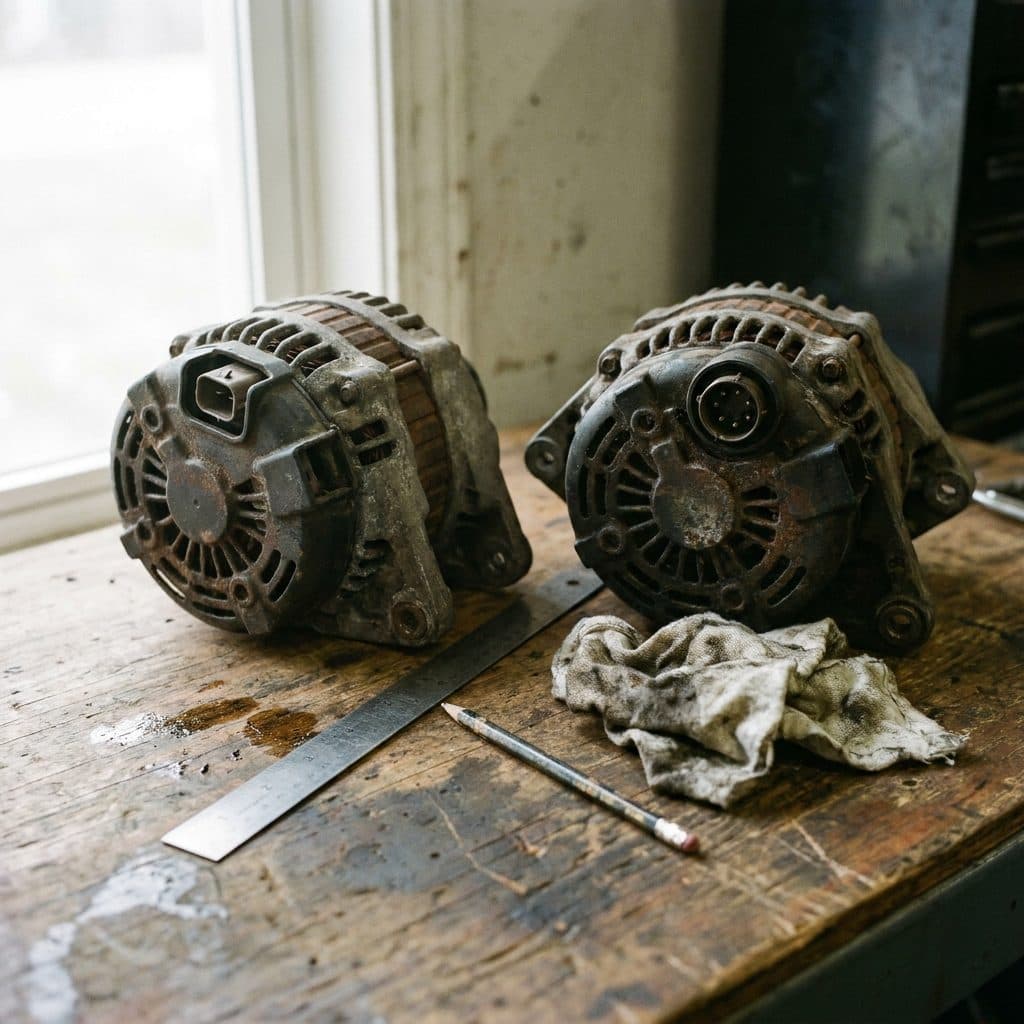
Understanding which vehicles share platforms can dramatically expand your parts options. For example, many GM vehicles built on the same platform share interchangeable parts like alternators, starters, and brake parts.
Research Vehicle Platforms: Look up which other models share your car's platform
Check Engine Families: Same engines often share sensors, pumps, and accessories
Corporate Siblings: Brands under the same manufacturer often share parts (Toyota/Lexus, Ford/Lincoln/Mercury)
Using VIN Decoders
Vehicle Identification Numbers (VINs) contain valuable information about engine type, transmission, and factory options that can help you find exact compatibility matches.
Cost Savings and Industry Statistics
The financial benefits of understanding parts interchangeability are substantial:
Cost Savings: Using remanufactured and interchangeable parts can save customers 10% to 40% or more compared to new OEM parts
Availability: Parts interchangeability increases the likelihood of finding needed parts by 300% or more
Repair Time: Access to more part options can reduce repair time by 50% in many cases
Environmental Impact: Reusing interchangeable parts prevents thousands of tons of waste annually
Common Interchangeable Part Categories
Part Category
Interchange Likelihood
Key Considerations
Alternators & Starters
High
Check amperage and mounting points
Brake Pads & Rotors
Very High
Verify disc diameter and thickness
Sensors (O2, MAF, etc.)
High
Match connector type and resistance
Headlights & Taillights
Medium
Check body style and bulb type
Interior Parts
Medium
Verify trim level and color match
Body Panels
Low
Usually model-specific
Expert Tips for Successful Parts Interchange
Always Verify: Use interchange databases as a starting point, but always physically verify compatibility
Bring Tools: Come prepared with basic tools to remove and test parts at the salvage yard
Check Multiple Sources: Cross-reference parts compatibility across multiple databases for accuracy
Document Part Numbers: Always record OEM part numbers for future reference
Consider Generations: Parts from the same generation of vehicles typically have the highest interchange success rate
Recent Developments and Trends
The automotive parts interchange industry continues to evolve with new technologies and practices:
Digital Integration: The Hollander system is increasingly available in digital formats, integrated into yard management systems rather than relying solely on printed manuals
AI-Powered Matching: New artificial intelligence tools are being developed to improve parts identification and matching accuracy
Sustainability Focus: The ability to reuse parts across different vehicles contributes significantly to automotive repair sustainability by decreasing waste
Global Database Expansion: Interchange databases are expanding to include more international vehicle models and brands
Safety Considerations and Quality Assurance
When working with interchangeable auto parts, safety should always be your top priority:
Critical Safety Parts: Be extra cautious with brake parts, airbags, and steering parts – always verify exact compatibility
Electrical Compatibility: Ensure electrical parts match voltage and amperage requirements
Wear Patterns: Check used parts for excessive wear or damage before installation
Professional Installation: Consider professional installation for complex or safety-critical parts
Maximizing Your Junkyard Experience
Understanding parts interchangeability transforms your approach to finding replacement parts. Instead of searching for one specific vehicle, you can now identify multiple donor candidates, dramatically increasing your chances of finding the parts you need at better prices.
Whether you're looking to sell a junk car or find replacement parts, knowledge of interchangeable parts gives you a significant advantage in the automotive marketplace. This expertise not only saves money but also contributes to environmental sustainability through parts recycling and reuse.
Modern aftermarket suppliers focus on “First Time Fit” manufacturing to or above OE (Original Equipment) standards, ensuring that interchangeable aftermarket options offer the reliability you need while maintaining cost savings of 10-40% compared to new OEM parts.
By leveraging the tools, techniques, and knowledge outlined in this guide, you'll be well-equipped to navigate the world of interchangeable auto parts successfully, saving money while maintaining the quality and safety of your vehicle repairs.