How to Use Vehicle Identification Numbers (VIN) to Verify Used Auto Parts
Understanding Vehicle Identification Numbers (VIN) and Their Role in Parts Verification A Vehicle Identification Number (VIN) is a unique 17-character code that serves as your vehicle's fingerprint. This alphanumeric sequence contains critical information about your car's manufacturer, model year, engine type, transmission, and assembly plant details. When buying used auto parts, the VIN becomes your [...]
Article image
Understanding Vehicle Identification Numbers (VIN) and Their Role in Parts Verification
A Vehicle Identification Number (VIN) is a unique 17-character code that serves as your vehicle's fingerprint. This alphanumeric sequence contains critical information about your car's manufacturer, model year, engine type, transmission, and assembly plant details. When buying used auto parts, the VIN becomes your most reliable tool for ensuring both authenticity and compatibility.
The VIN system was standardized in 1981, meaning virtually all vehicles in the current used parts market utilize this comprehensive identification method. Understanding how to decode and use your VIN can save you hundreds of dollars in incompatible parts and prevent potential safety hazards from incorrect installations.
Why VIN Verification Matters for Used Auto Parts
Using your VIN to verify used auto parts provides several critical advantages that go far beyond basic part compatibility:
Precise Fitment Guarantee: Ensures components match your vehicle's exact specifications, including engine size, transmission type, and trim level variations
Authenticity Verification: Helps identify genuine OEM parts and avoid counterfeit or incompatible aftermarket components
Recall Information: Links to manufacturer recalls and service bulletins that may affect specific part types
Streamlined Shopping: Eliminates guesswork when browsing used auto parts stores or online inventories
“A significant percentage of car breakdowns and mechanical failures are attributed to the use of incompatible or substandard parts, making VIN verification more critical than ever for consumer safety and satisfaction.”
Decoding Your VIN: Understanding the 17-Character Structure
Your VIN contains three distinct sections, each providing specific vehicle information essential for parts verification:
VIN Section
Characters
Information Provided
Parts Relevance
World Manufacturer Identifier (WMI)
1-3
Country, manufacturer, vehicle type
Brand-specific part compatibility
Vehicle Descriptor Section (VDS)
4-9
Model, body type, engine, transmission, safety systems
Critical for exact part matching
Vehicle Identifier Section (VIS)
10-17
Model year, plant, serial number
Production year variations
The ninth character serves as a check digit calculated using a government-developed mathematical formula. This security feature helps detect invalid or fraudulent VINs, providing an additional layer of protection against counterfeit parts.
Step-by-Step Guide to Using VIN for Parts Verification
Step 1: Locate Your Vehicle's VIN
Your VIN can be found in several standard locations:
Dashboard: Near the windshield on the driver's side (visible from outside)
Driver's door jamb: On the manufacturer's sticker
Vehicle documents: Registration, insurance papers, or title
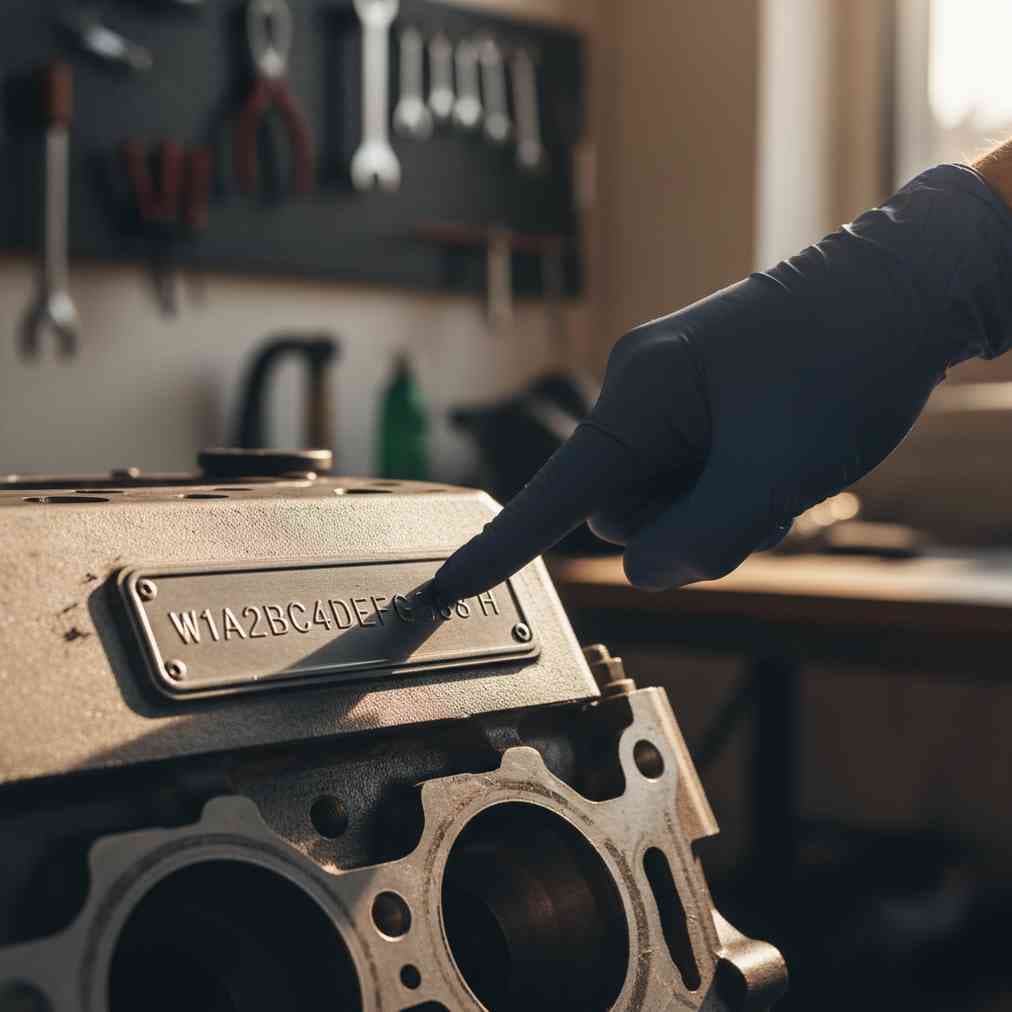
Engine bay: On the engine block or frame (less accessible)
Step 2: Use a Reliable VIN Decoder
Several trusted resources provide free VIN decoding services:
Drive type (FWD, RWD, AWD affects many components)
Step 4: Cross-Reference Parts with VIN Data
When shopping for used parts, always provide your complete VIN to sellers or use it in online search filters. This practice is especially important when purchasing high-value used auto parts like engines, transmissions, or electronic control modules.
Essential Tools and Databases for VIN Verification
Government Resources
The National Highway Traffic Safety Administration (NHTSA) provides the most authoritative VIN decoding service. Their database ensures accuracy for safety recalls and part compatibility verification, making it the gold standard for VIN-based parts research.
Commercial VIN Services
Many auto parts retailers have integrated VIN lookup tools into their systems:
CashNCarryParts: Offers comprehensive VIN-based parts lookup with compatibility guarantees
Salvage yard databases: Connect parts to specific donor vehicle VINs
When purchasing major drivetrain components, VIN verification becomes absolutely critical. For example, buying a used Chevy Silverado 1500 transmission requires matching not just the model year, but also the specific engine size and drive configuration encoded in your VIN.
Electronic Control Modules
Modern vehicles rely heavily on computer control modules that must match exact VIN specifications. Even minor trim level differences can result in incompatible programming or connector variations.
Body Parts and Panels
Whether you're looking for fenders under $100 or used car bumpers, your VIN helps ensure proper fit and finish. Body style variations within the same model year can significantly affect part compatibility.
Red Flags: When VIN Verification Reveals Problems
Be cautious of these warning signs during the VIN verification process:
Missing or damaged VIN labels on parts or vehicles
VIN numbers that don't decode properly through official channels
Parts prices significantly below market value without clear explanation
Sellers reluctant to provide VIN information for donor vehicles
Mismatched manufacturing years between parts and claimed compatibility
Maximizing Savings with VIN-Verified Parts
Smart shoppers use VIN verification to find the best deals while ensuring quality:
Part Category
VIN Critical?
Potential Savings
Key Considerations
Engines
Essential
50-70% off new
Match exact displacement and configuration
Transmissions
Essential
60-80% off new
Verify gear ratios and drive type
Body Panels
Important
70-90% off new
Check for trim-specific mounting points
Interior Components
Moderate
60-85% off new
Match color codes and option packages
Brand-Specific VIN Considerations
Different manufacturers encode unique information in their VINs. Popular models like Toyota Camry, Honda Civic, and Honda CR-V have specific VIN patterns that reveal important option packages and regional variations affecting part compatibility.
Luxury and European Vehicles
German and luxury vehicles often have more complex VIN structures with additional option codes. Junkyards typically pay more for German cars because their parts command higher prices and require more precise matching.
Future Trends in VIN-Based Parts Verification
The automotive industry continues evolving toward more sophisticated verification methods:
Integration with e-commerce platforms: Automated compatibility checking during online purchases
Mobile scanning technology: Instant VIN recognition through smartphone cameras
Blockchain verification: Tamper-proof part history tracking from manufacture to resale
Electric vehicle adaptations: New VIN codes for electric vehicle parts and battery systems
Best Practices for Successful VIN-Based Parts Shopping
Follow these expert-recommended practices to maximize your success:
Always verify VIN authenticity before making significant purchases
Cross-reference part numbers with VIN-derived specifications
Document all VIN verification steps for warranty and return purposes
Consider multiple verification sources for expensive components
Conclusion: VIN Verification as Your Parts-Buying Superpower
Understanding how to use your Vehicle Identification Number for parts verification transforms you from a hopeful parts shopper into an informed consumer. Whether you're browsing pick and pull junkyards or shopping online, VIN verification ensures compatibility, authenticity, and value in every purchase.
The 17-character VIN serves as your vehicle's unique fingerprint, containing all the information needed to find exactly the right parts. By taking the time to decode your VIN and understand its implications, you protect yourself from costly mistakes while accessing the substantial savings available in the recycled auto parts market.
Remember, successful parts verification starts with a properly decoded VIN and ends with parts that fit perfectly, function reliably, and provide years of dependable service. Make VIN verification your standard practice, and enjoy the confidence that comes with informed auto parts purchasing.