What is the process for checking in, paying, and removing parts from the yard?
Understanding the U-Pull-It Self-Service Experience The self-service auto salvage yard experience, commonly known as U-Pull-It or Pick-and-Pull yards, offers an affordable way to acquire used auto parts while putting the work in your own hands. This comprehensive guide walks you through every step of the process, from preparation to checkout, ensuring you get the most [...]
Article image
Understanding the U-Pull-It Self-Service Experience
The self-service auto salvage yard experience, commonly known as U-Pull-It or Pick-and-Pull yards, offers an affordable way to acquire used auto parts while putting the work in your own hands. This comprehensive guide walks you through every step of the process, from preparation to checkout, ensuring you get the most value from your salvage yard visit.
Whether you're a seasoned DIY mechanic or visiting a junkyard near me for the first time, understanding the complete process helps you save time, money, and avoid common mistakes that can turn a simple parts run into a frustrating experience.
Pre-Visit Preparation: Setting Yourself Up for Success
Research Your Parts and Vehicle Compatibility
Before heading to the yard, thorough preparation can save you hours of searching and ensure you find the right parts. Identify your exact vehicle specifications including year, make, model, and engine size to ensure compatibility with donor vehicles.
Check the yard's online inventory system if available
Research part removal procedures using factory service manuals
Create a checklist of compatible vehicle models
Verify part numbers and specifications
Compare salvage yard prices with new parts to ensure value
Essential Tools and Safety Equipment
Most salvage yards operate on a bring-your-own-tools policy, so come prepared with the right equipment for safe and efficient part removal.
Flashlight, penetrating oil, plastic bags for hardware
Some yards provide wheelbarrows
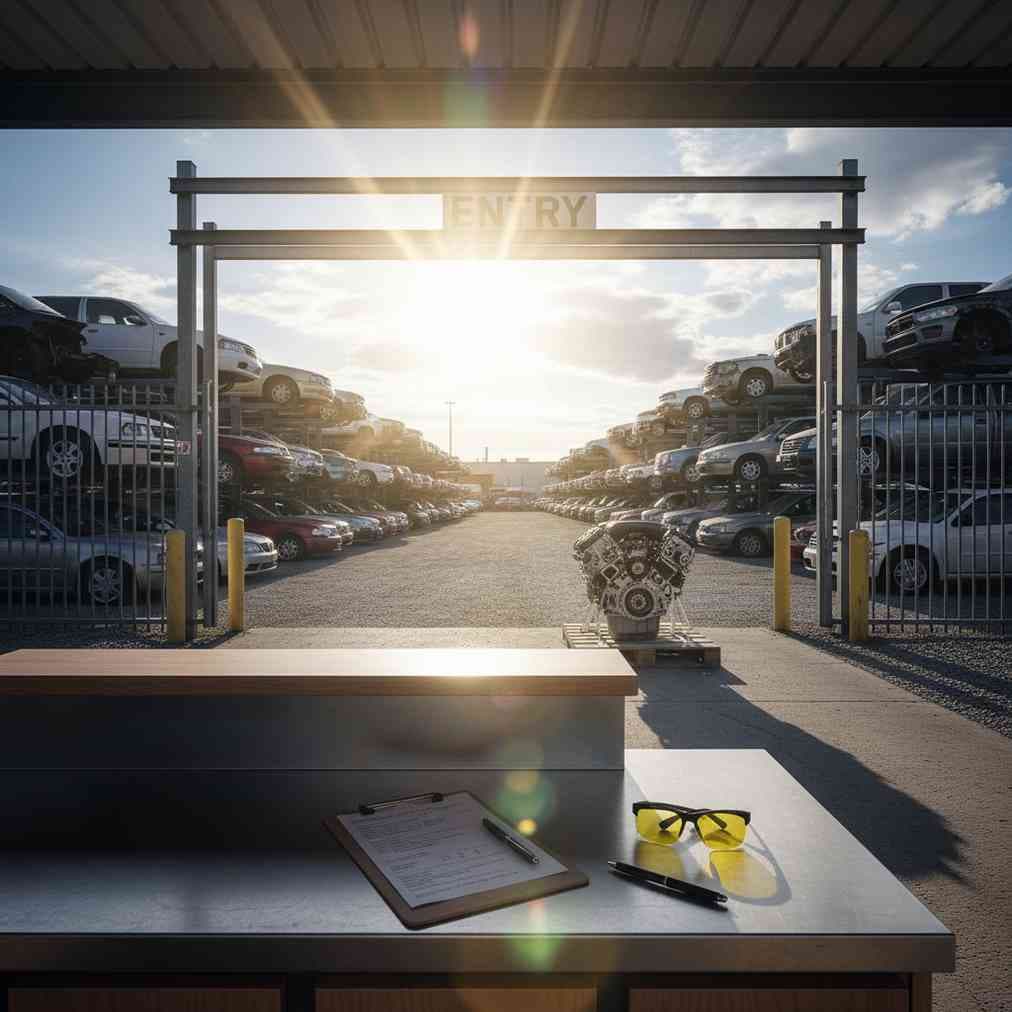
The Check-In Process: Your Entry to the Yard
Upon arrival at the salvage yard, you'll go through a standardized check-in process designed to ensure safety and legal compliance. Understanding what to expect streamlines your entry and gets you searching for parts faster.
Documentation and Liability Requirements
Sign the liability waiver – This is mandatory at all reputable yards
Present valid identification when requested
Pay the entrance fee (typically $1-$5, non-refundable)
Undergo tool inspection if required by yard policy
Receive yard map or vehicle location assistance
“The key to a successful salvage yard visit is preparation: check online inventory, bring the right tools, and plan your search. Always ask for a map if it's your first time—it can save hours.”
—Ace Auto Parts
Understanding Yard Organization and Layout
Most professional salvage yards organize their inventory systematically to help customers locate vehicles efficiently. Yard layouts typically follow one of these organizational methods:
By manufacturer – Ford, Chevrolet, Toyota sections
By vehicle type – Cars, trucks, SUVs separated
By popularity/demand – High-demand models in accessible areas
By arrival date – Newer acquisitions in designated zones
Locating and Removing Parts: The Hands-On Phase
Once you've located the appropriate donor vehicle, the real work begins. Successful part removal requires patience, the right technique, and respect for other customers who may need adjacent parts.
Inspection and Assessment Protocol
Before removing any part, conduct a thorough inspection to avoid wasting time on damaged or incompatible items. This step is crucial since most sales are final.
Check for physical damage, rust, or excessive wear
Verify part numbers and compatibility markings
Test electrical parts if possible (bring a multimeter)
Examine mounting points and connection integrity
Take photos for reference during installation
If you're looking for specific parts like OEM car parts or need guidance on when to buy used auto parts, our detailed guides provide valuable insights for making informed decisions.
Safe Removal Techniques
Professional part removal protects both you and the parts you're acquiring. Follow these best practices for safe and efficient removal:
Part Type
Removal Strategy
Special Considerations
Body Parts
Remove fasteners systematically, support weight
Check for hidden clips or adhesives
Engine Parts
Drain fluids first, label connections
Bring containers for fluids
Electrical Parts
Disconnect battery, cut wires cleanly
Leave enough wire for connections
Suspension Parts
Support vehicle properly, use penetrating oil
Never work under jack-only support
Payment Process and Checkout Procedures
After successfully removing your desired parts, the checkout process determines your final cost and completes the transaction. Understanding pricing structures and payment policies helps avoid surprises at the counter.
Understanding Pricing Models
Most salvage yards use standardized pricing boards that list common parts and their fixed prices. This transparent system allows customers to know costs upfront and budget accordingly.
Fixed pricing – Posted prices for common parts (alternators, starters, etc.)
Weight-based pricing – Charged per pound for metal parts
Vehicle-specific pricing – Higher prices for luxury or rare vehicle parts
Bulk discounts – Reduced rates for multiple parts from same vehicle
Accepted Payment Methods and Policies
Modern salvage yards typically accept multiple payment methods, though policies vary by location. Cash remains king at most yards, but card payments are increasingly common.
Accepted: Cash, debit cards, major credit cards (Visa, MasterCard, Discover)
Usually not accepted: Personal checks, payment apps, financing
Keep receipts: Required for warranty claims or returns
Sales tax: Applied according to local regulations
If you're considering selling your junk car instead of buying parts, many yards also purchase vehicles and can provide instant quotes for your unwanted vehicle.
Exit Process and Post-Purchase Considerations
The final phase of your salvage yard visit involves completing your exit and understanding your warranty rights and return policies. Proper documentation and understanding policies protect your investment.
Receipt Verification and Exit Procedures
Present receipt to gate staff for verification
Allow inspection of parts against receipt if requested
Double-check for personal tools and belongings
Secure parts properly for transport
Note any yard-specific return policies
Warranty and Return Policies
While most used parts are sold “as-is,” many reputable yards offer limited warranty programs that provide some protection against defective parts.
Policy Type
Typical Terms
Requirements
Exchange Program
30-day exchange for store credit
Original receipt, part in similar condition
Testing Period
48-72 hours for electrical parts
Professional testing documentation
No Returns
All sales final
Inspect thoroughly before purchase
Key Statistics and Market Insights
The salvage yard industry processes approximately 5 million totaled vehicles annually in the United States, creating a massive inventory of available parts for consumers and repair shops.
Cost savings: Self-service yards offer parts at 50-80% below retail prices
Time efficiency: Prepared customers spend 50% less time searching
Environmental impact: Auto recycling saves 85 million barrels of oil annually
Customer satisfaction: 85% of customers return for future purchases when properly prepared
Recent Industry Developments and Technology Integration
The salvage yard industry continues evolving with technological innovations that improve customer experience and operational efficiency.
Digital Transformation Trends
Online inventory systems – Real-time part availability checking
Mobile applications – Dedicated apps for inventory lookup and navigation
Digital payment integration – Contactless payment options at checkout
GPS-enabled yard maps – Smartphone navigation to specific vehicles
Virtual part inspection – High-resolution photos of available parts
Sustainability and Environmental Focus
Modern salvage yards increasingly emphasize environmental responsibility through proper fluid disposal, metal recycling programs, and compliance with EPA regulations.
“Not all yards are created equal. Look for ones with strong environmental practices and positive reviews to ensure a smooth, responsible experience.”
—Willson Auto
Expert Tips for Maximizing Your Salvage Yard Experience
Professional mechanics and experienced DIYers recommend these proven strategies for successful salvage yard visits:
Time-Saving Strategies
Visit during weekday mornings for less crowded conditions
Build relationships with yard staff for insider knowledge
Keep a running list of needed parts for future visits
Take photos of your work area before starting removal
Bring a helper for heavy or complex parts
Quality Assessment Techniques
Experienced parts buyers use specific techniques to identify high-quality used parts that will provide reliable service:
Check vehicle history – low mileage, well-maintained donor cars
Inspect for accident damage that might affect part integrity
Look for recent maintenance indicators (new belts, clean fluids)
Test moving parts for smooth operation before removal
Verify gasket and seal conditions on critical parts
Safety Protocols and Legal Considerations
Salvage yards maintain strict safety protocols to protect customers and comply with insurance requirements. Understanding and following these rules ensures a safe experience for everyone.
Mandatory Safety Requirements
Safety Category
Required Actions
Prohibited Items/Actions
Personal Protection
Closed-toe shoes, safety glasses recommended
Sandals, shorts, loose clothing
Vehicle Support
Use provided jack stands, never work under jack-only support
Personal jacks, climbing on unstable vehicles
Tool Restrictions
Hand tools only, battery-powered tools sometimes allowed
Professional salvage yards maintain environmental compliance through proper handling of automotive fluids and hazardous materials. Customers must follow established procedures for fluid disposal.
Use designated fluid collection containers only
Never dump fluids on the ground or in drains
Report spills to yard staff immediately
Follow posted procedures for battery disposal
Respect contaminated soil barriers and warnings
Common Mistakes and How to Avoid Them
First-time visitors often make predictable mistakes that can be easily avoided with proper preparation and understanding of yard procedures.
Preparation-Related Mistakes
Insufficient research – Arriving without knowing part compatibility
Wrong tools – Bringing SAE tools for metric vehicles
Poor timing – Visiting during peak hours or closing time
No backup plan – Failing to identify multiple donor vehicles
Unrealistic expectations – Expecting perfect parts at bargain prices
Removal and Purchase Mistakes
Avoiding these common removal mistakes saves time, prevents injury, and ensures you get functional parts:
Rushing the inspection process
Forcing stuck fasteners instead of using penetrating oil
Failing to support heavy parts during removal
Not taking reference photos before disassembly
Forgetting to collect all associated hardware
Building Long-Term Relationships with Salvage Yards
Regular customers who build positive relationships with yard staff often receive better service, advance notice of new inventory, and assistance locating hard-to-find parts.
Be respectful of yard property and other customers
Follow all posted rules and safety procedures
Provide feedback on your experience
Refer other customers when appropriate
Consider the yard's perspective on difficult requests
Future of Self-Service Auto Salvage
The salvage yard industry continues adapting to changing customer needs, environmental regulations, and technological capabilities. Future developments likely include:
Enhanced online inventory with 3D part visualization
Automated part removal and processing systems
Integration with electric vehicle recycling programs
Expanded tool rental and specialized equipment access
Improved customer education and training programs
Understanding the complete process for checking in, paying, and removing parts from salvage yards empowers you to make informed decisions and maximize value from every visit. Whether you're seeking routine maintenance parts or hard-to-find restoration pieces, following these proven procedures ensures a successful and safe experience while supporting sustainable automotive recycling practices.