What to Wear to the Junkyard: A Head-to-Toe Guide for Safety & Comfort
Understanding Junkyard Hazards: Why Safety Gear Matters When visiting an auto salvage yard or junkyard near you, your safety should be the top priority. Unlike a typical retail environment, junkyards present unique hazards including sharp metal edges, heavy machinery, unstable car stacks, and potentially hazardous fluids. The industrial nature of these facilities means that proper [...]
When visiting an auto salvage yard or junkyard near you, your safety should be the top priority. Unlike a typical retail environment, junkyards present unique hazards including sharp metal edges, heavy machinery, unstable car stacks, and potentially hazardous fluids. The industrial nature of these facilities means that proper protective equipment isn't just recommended—it's essential for preventing serious injury.
According to recent safety studies, proper personal protective equipment (PPE) can prevent up to 85% of workplace injuries in industrial environments. This statistic becomes even more relevant when you consider the unpredictable nature of self-service salvage operations, where customers navigate through areas filled with vehicles in various states of disrepair.
Essential Footwear: Your Foundation for Safety
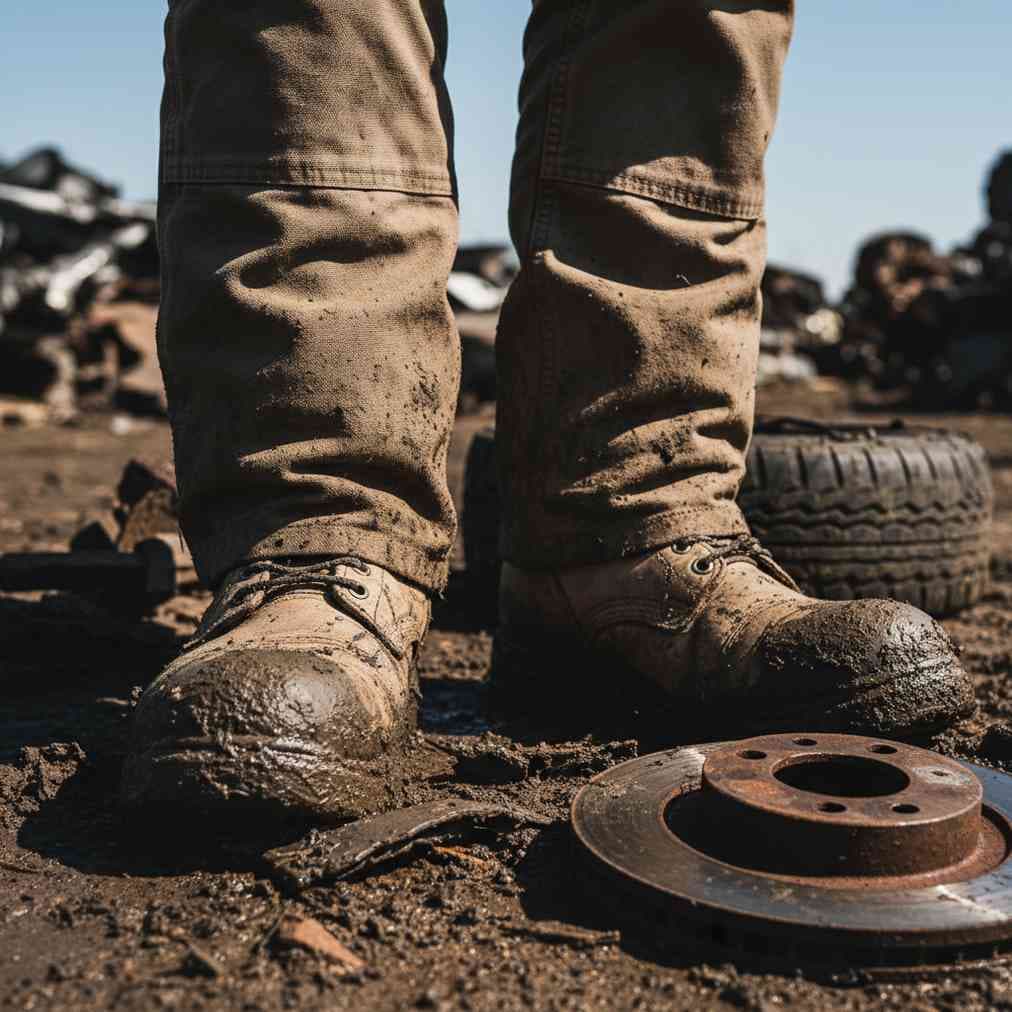
Closed-toe boots are mandatory for entry into virtually all salvage yards, and this requirement exists for good reason. Your feet are constantly exposed to puncture hazards from hidden nails, screws, and metal fragments scattered throughout the yard.
Steel-Toe Boots: The Gold Standard
Impact protection: Steel-toe or composite-toe boots protect against falling objects weighing up to 75 pounds
Puncture resistance: Thick, reinforced soles prevent sharp objects from penetrating through to your feet
Slip resistance: Deep treads provide traction on oily, muddy, or uneven surfaces
Electrical safety: Many work boots include electrical hazard protection
Ankle support: High-top boots prevent twisted ankles on uneven terrain
Footwear Type
Safety Rating
Junkyard Suitability
Steel-Toe Work Boots
Excellent
Highly Recommended
Composite-Toe Boots
Very Good
Recommended
Regular Work Boots
Good
Acceptable
Sneakers/Tennis Shoes
Poor
Not Recommended
Sandals/Open-toe
Dangerous
Prohibited
What to avoid: Flip-flops, sandals, canvas shoes, or any open-toe footwear are strictly prohibited at most facilities. Even regular sneakers provide insufficient protection against the hazards commonly found in salvage environments.
Protective Clothing: Covering Your Body
Durable Pants Are Non-Negotiable
Long pants made of sturdy material form the cornerstone of junkyard body protection. Denim jeans or work coveralls provide the best balance of protection and mobility for navigating through tight spaces between vehicles.
Heavy denim jeans: 14-ounce or heavier denim provides excellent protection against cuts and scrapes
Work coveralls: Offer full-body protection and often include reinforced knees
Cargo pants: Heavy cotton or cotton-blend work pants with reinforced stress points
Carhartt-style work pants: Purpose-built for industrial environments
Shorts offer completely inadequate protection and should never be worn in salvage yard environments. Exposed skin is vulnerable to cuts from jagged metal, burns from hot surfaces, and contact with automotive fluids.
Upper Body Protection Strategy
Layered clothing provides the best approach for comfort and protection. Start with a base layer and add or remove clothing as conditions change throughout your visit.
Base layer: Long-sleeved shirt to protect arms from cuts and sun exposure
Work shirt: Heavy cotton or canvas work shirt for durability
Jacket or coveralls: For cooler weather and additional protection
High-visibility vest: Recommended when working near active equipment
“Never wear expensive or sentimental clothing to a junkyard. You should expect to get dirty, greasy, and possibly tear your clothing. Always wear something you're prepared to throw away afterward.”
Hand Protection: Heavy-Duty Gloves Are Essential
Work gloves are absolutely essential for handling parts and tools safely in salvage environments. Your hands face constant exposure to sharp edges, chemical residues, and abrasive surfaces.
Types of Protective Gloves
Glove Type
Protection Level
Best Use Case
Leather Work Gloves
Excellent
Heavy lifting, sharp metal
Mechanics Gloves
Very Good
Precision work, tool use
Cut-Resistant Gloves
Excellent
Handling sharp parts
Chemical-Resistant
Good
Fluid exposure
Disposable Nitrile
Poor
Light contamination only
While modern data analytics help optimize safety protocols in industrial settings, the fundamental principle remains unchanged: heavy-duty gloves provide essential protection against cuts, punctures, and chemical exposure.
Cut protection: Prevents lacerations from sharp metal edges and glass
Puncture resistance: Protects against protruding screws, nails, and wire
Chemical barrier: Shields hands from oils, coolants, and other automotive fluids
Improved grip: Textured palms provide better control of tools and parts
Heat protection: Insulation against hot metal surfaces
Head and Eye Protection
Hard Hats for Overhead Hazards
Many salvage yards require or strongly recommend hard hats when working around stacked vehicles or using overhead lifts. These protect against falling objects, which represent one of the most serious hazards in junkyard environments.
Type I hard hats: Protect against top impacts and penetration
Type II hard hats: Additional protection from lateral impacts
Class E hard hats: Electrical protection up to 20,000 volts
Suspension systems: Distribute impact forces away from the skull
Safety Glasses and Eye Protection
Safety goggles or protective eyewear shield your eyes from flying debris, fluid splashes, and wind-blown particles common in outdoor salvage environments.
Impact resistance: ANSI Z87.1 rated lenses protect against flying objects
Side shields: Wraparound protection from peripheral hazards
Anti-fog coating: Maintains visibility in humid conditions
UV protection: Essential for extended outdoor work
Weather Considerations and Seasonal Gear
Weather conditions significantly impact both safety and comfort during junkyard visits. Advanced analytics used by modern facilities help predict optimal visiting conditions, but you should always prepare for changing weather.
Hot Weather Protection
Lightweight, long-sleeved shirts: Protect from sun while allowing air circulation
Wide-brimmed hats: Shade face and neck from intense sun
Moisture-wicking fabrics: Keep body cool and dry
Sunscreen: SPF 30 or higher for exposed skin
Electrolyte replacement: Stay hydrated in hot conditions
Cold Weather Adaptations
Insulated work boots: Maintain foot warmth and dexterity
Layered clothing system: Adjust for activity level and temperature changes
Insulated gloves: Maintain grip while protecting from cold metal
Thermal underlayers: Moisture-wicking base layers for warmth
Wet Weather Preparations
Waterproof boots: Non-slip soles for muddy conditions
Rain gear: Waterproof jacket and pants
Extra grip gloves: Maintain tool control in wet conditions
Visibility enhancement: Bright colors or reflective elements
Clothing You Should Never Wear
Understanding what not to wear is equally important for junkyard safety. Certain clothing items can actually increase your risk of injury or entanglement.
Prohibited Items
Safety Risk
Recommended Alternative
Loose jewelry
Entanglement hazard
Remove or secure under clothing
Loose-fitting clothing
Catch on protruding metal
Well-fitted work clothing
Synthetic fabrics
Melt against hot surfaces
Natural fiber work clothes
Shorts or skirts
Exposed skin vulnerability
Full-length pants
Open-toe shoes
Foot injury risk
Steel-toe work boots
Tools and Accessories to Bring
Beyond clothing, certain tools and accessories enhance both safety and efficiency during your junkyard visit.
Essential Safety Accessories
First aid kit: Basic wound care supplies for minor cuts
Flashlight or headlamp: Illuminate dark areas inside vehicles
Work apron: Protect clothing and organize small tools
Knee pads: Protect knees when crawling under vehicles
Hand cleaner: Remove grease and grime before leaving
Basic Tool Kit
Socket set: Standard and metric sizes for common bolts
Screwdrivers: Flathead and Phillips in various sizes
Pliers: Standard, needle-nose, and wire cutters
Utility knife: For cutting zip ties and tape
Work light: Portable LED work light for dark areas
Special Considerations for Different Vehicle Types
Different types of vehicles present unique safety challenges that may require specialized protective equipment.
Hybrid and Electric Vehicles
When working around hybrid or electric vehicles, additional safety precautions are necessary due to high-voltage systems that may remain energized even when the vehicle is off.
Electrical safety gloves: Class 0 or Class 00 rated for automotive work
Warning labels: Identify high-voltage parts clearly
Diesel and Commercial Vehicles
Heavy-duty boots: Extra protection against larger, heavier parts
Chemical-resistant clothing: Protection from diesel fuel and hydraulic fluids
Respiratory protection: Dust masks for older vehicles with asbestos parts
Understanding Junkyard-Specific Hazards
Auto salvage environments present unique risks that require specific safety measures beyond general industrial protection.
Environmental Hazards
Fluid contamination: Motor oil, coolant, brake fluid, and gasoline residues
Heavy metals: Lead from batteries and old paint
Asbestos: Brake pads and gaskets in pre-1980 vehicles
Sharp metal: Rusted edges, broken glass, and protruding parts
Unstable stacking: Improperly supported vehicles and parts
Biological Hazards
Vehicles may contain biological contaminants that require additional protective measures.
Mold and mildew: Common in flood-damaged vehicles
Rodent droppings: Disease transmission risk
Insect nests: Wasps, bees, and spiders in undisturbed vehicles
Decomposition odors: May indicate biological contamination
Preparing for Different Weather Conditions
Weather significantly impacts both safety requirements and comfort during junkyard visits. Proper preparation ensures you can work safely regardless of conditions.
Weather Condition
Primary Concerns
Recommended Gear
Hot/Sunny
Heat exhaustion, UV exposure
Sun hat, sunscreen, lightweight long sleeves
Cold
Reduced dexterity, hypothermia
Insulated boots, thermal layers, warm gloves
Wet/Rainy
Slip hazards, reduced visibility
Non-slip boots, waterproof gear, bright colors
Windy
Flying debris, dust
Eye protection, secure loose items
Post-Visit Safety and Cleanup
Safety doesn't end when you leave the junkyard. Proper cleanup and decontamination procedures are essential for health and safety.
Immediate Cleanup Steps
Hand washing: Thorough cleaning with industrial hand soap
Tool cleaning: Remove grease and debris from tools
Clothing inspection: Check for tears, contamination, or embedded debris
Boot cleaning: Remove mud, grease, and potential contaminants
Eye irrigation: Flush eyes if dust or debris exposure occurred
Clothing Care and Storage
Separate contaminated clothing: Don't mix with regular laundry
Pre-treat stains: Use degreasing agents before washing
Hot water wash: Helps break down oils and kill bacteria
Air dry when possible: Heat setting may set stains permanently
Disposal consideration: Heavily contaminated items may need disposal
Economic Benefits of Proper Safety Gear
While safety gear represents an upfront investment, the long-term benefits far outweigh the costs. Medical bills from preventable injuries often exceed the cost of proper protective equipment by orders of magnitude.
“A complete safety outfit including steel-toe boots, work gloves, safety glasses, and durable clothing typically costs less than $200, while a single emergency room visit for a preventable injury can cost thousands of dollars.”
Additionally, business intelligence trends in the automotive recycling industry show that facilities with strong safety cultures tend to offer better customer experiences and more competitive pricing.
Building Your Junkyard Safety Kit
Creating a dedicated safety kit ensures you're always prepared for junkyard visits. Store these items together so you can quickly grab everything needed.
Essential Safety Kit Contents
Item Category
Specific Items
Estimated Cost
Footwear
Steel-toe work boots, extra socks
$80-150
Hand Protection
Work gloves, backup pair
$15-30
Eye/Head
Safety glasses, hard hat
$25-50
Clothing
Work pants, long-sleeve shirt
$40-80
Accessories
First aid, flashlight, hand cleaner
$20-40
Conclusion: Safety as Your Top Priority
Visiting a junkyard safely requires preparation, proper equipment, and constant awareness of your surroundings. The comprehensive safety approach outlined in this guide—from steel-toe boots to protective eyewear—forms your defense against the unique hazards present in automotive salvage environments.
Remember that no salvaged part is worth risking your safety. When you're ready to sell your junk car or need to find quality used parts, choose facilities that prioritize safety and maintain clean, organized operations.
The investment in proper safety gear pays dividends not only in injury prevention but also in increased confidence and efficiency during your junkyard visits. As data science research continues to improve safety protocols across industries, the fundamental principles remain unchanged: proper preparation and protective equipment are your best defense against workplace hazards.
Whether you're a DIY mechanic looking for affordable parts or a professional in the automotive industry, following these safety guidelines ensures that every junkyard visit is both productive and safe. Take the time to invest in proper gear, develop good safety habits, and always prioritize protection over convenience.