Where to Find Affordable Used Airbags and How to Verify Safety
Understanding the Market for Affordable Used Airbags When your vehicle's airbag system requires replacement, the cost of new OEM airbags can be overwhelming, ranging from $1,000 to $2,000 per unit, plus installation fees. For older vehicles, this expense might exceed the car's value, making affordable used airbags an attractive option. However, purchasing used airbags requires [...]
Article image
Understanding the Market for Affordable Used Airbags
When your vehicle's airbag system requires replacement, the cost of new OEM airbags can be overwhelming, ranging from $1,000 to $2,000 per unit, plus installation fees. For older vehicles, this expense might exceed the car's value, making affordable used airbags an attractive option. However, purchasing used airbags requires careful consideration of safety standards, legal compliance, and proper verification methods.
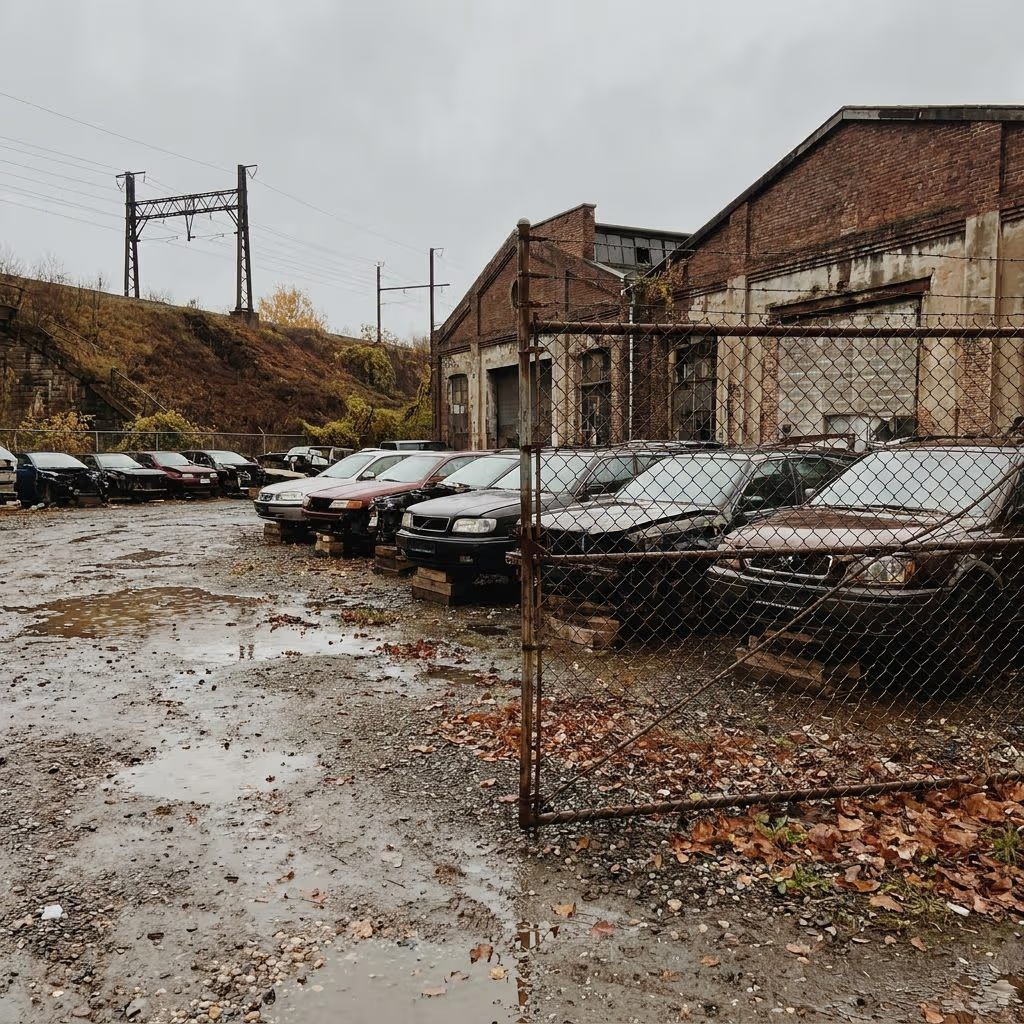
The market for used automotive parts has grown significantly, with many consumers seeking cost-effective alternatives to expensive OEM replacements. When searching for reliable sources, it's essential to work with reputable salvage yards near you that maintain high standards for part quality and safety verification.
Where to Find Legitimate Used Airbag Suppliers
Certified Salvage Yards and Auto Recyclers
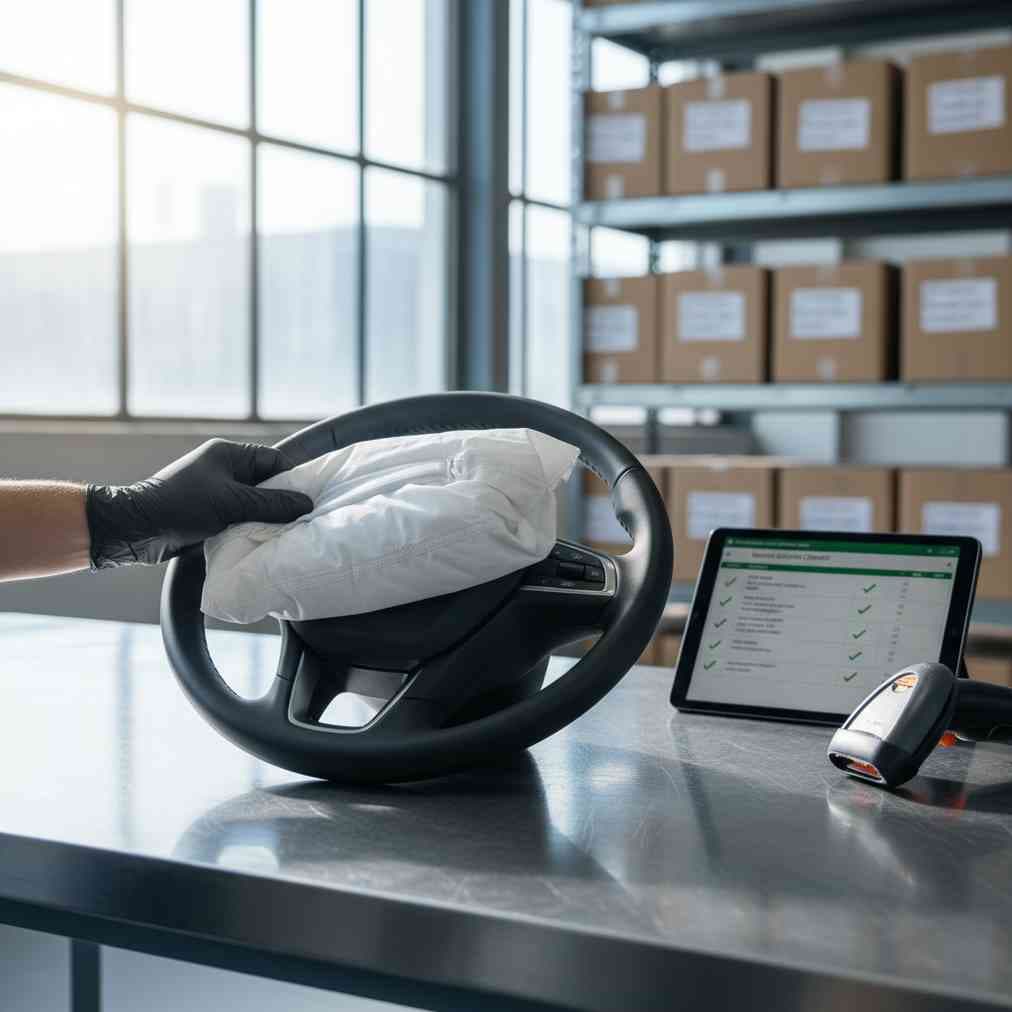
Reputable salvage yards represent the most reliable source for used airbags. These facilities specialize in high-quality auto parts and work with professional auto recyclers to ensure proper part handling and storage. When visiting salvage yards, look for facilities that:
Maintain detailed inventory records with vehicle history information
Store airbags in climate-controlled environments
Provide documentation of the donor vehicle's accident history
Offer some form of testing or inspection certification
Follow proper removal and handling procedures
Focus on finding vehicles that show no signs of frontal impact, water damage, or fire damage. The ideal donor vehicle should have been in a rear-end collision or have been scrapped for mechanical reasons rather than accident damage.
Specialized Online Marketplaces
Several online platforms specialize in used automotive safety components. These marketplaces often provide:
Detailed part compatibility information
High-resolution photos from multiple angles
Seller verification and rating systems
Return policies and buyer protection programs
Professional inspection reports
When using online marketplaces, be extremely cautious of prices that seem too good to be true, especially from overseas sellers. Counterfeit and salvage airbags pose serious safety risks and may not deploy correctly during an accident.
Certified Used Parts Suppliers
Some specialized suppliers focus exclusively on tested and certified used airbags. These businesses typically:
Employ trained technicians for airbag inspection
Use diagnostic equipment to verify system integrity
Provide warranties on their used parts
Maintain relationships with insurance companies and repair shops
Follow strict quality control procedures
Critical Safety Verification Methods
Visual Inspection Techniques
Before purchasing any used airbag, conduct a thorough visual inspection to identify signs of previous deployment or damage. Professional inspection guides recommend examining the following components:
Read fault codes from the Airbag Control Module (ACM)
Verify sensor communication throughout the system
Test circuit continuity without triggering deployment
Confirm system readiness and proper calibration
Identify any hidden damage or malfunction
Standard OBD-II scanners are not sufficient for comprehensive airbag system diagnosis. Professional-grade diagnostic tools or manufacturer-specific scan tools are required for accurate testing.
Documentation and History Verification
Request comprehensive documentation when purchasing used airbags, including:
Vehicle history reports showing no airbag deployment
Inspection certificates from qualified technicians
Part number verification and compatibility confirmation
Storage and handling documentation
Chain of custody records from removal to sale
Legal Compliance and Federal Safety Standards
All airbags sold in the United States must comply with Federal Motor Vehicle Safety Standards (FMVSS). NHTSA testing and validation procedures establish strict requirements for airbag performance, and violations can result in serious legal consequences.
Understanding Legal Requirements
Federal law prohibits the sale of counterfeit or non-compliant airbags
Installation must be performed by qualified technicians
Some states have specific regulations regarding used airbag sales
Proper disposal of old airbags is legally mandated
Documentation must be maintained for liability protection
“No manufacturer, distributor, dealer, or motor vehicle repair business shall knowingly render inoperative, in whole or in part, any device or element of design installed on or in a motor vehicle in compliance with an applicable Federal motor vehicle safety standard.”
Using AI Technology for Part Identification
Modern AI-powered image recognition tools are revolutionizing how consumers identify and verify automotive parts at salvage yards. These technologies can help ensure you're purchasing the correct airbag for your specific vehicle.
Photography Best Practices for AI Analysis
To maximize the accuracy of AI part identification, follow these photography guidelines:
Lighting: Use natural light or bright, even artificial lighting
Multiple angles: Capture front, back, sides, and connector views
Close-ups: Photograph part numbers, labels, and identifying marks
Clean surface: Remove dirt, grease, and debris before photographing
Stable shots: Avoid blurry images that obscure important details
Plain background: Use contrasting backgrounds to highlight the part
Effective AI Prompts for Airbag Identification
When using AI tools for part identification, use specific prompts that provide context:
“Identify this airbag module from a 2015 Honda Civic, focusing on part number and compatibility”
“Analyze this automotive airbag for signs of deployment or damage”
“Compare this airbag part number with OEM specifications for authenticity verification”
“Identify the manufacturer and model year compatibility for this steering wheel airbag”
“Assess the condition and authenticity of this passenger airbag module”
Quality Testing Standards in Manufacturing
Understanding how airbags are tested during manufacturing helps consumers appreciate the importance of proper verification. Production quality testing procedures include:
Professional Testing Methods
Test Type
Purpose
Equipment Required
Drop Tower Testing
Simulate crash impact forces
Specialized impact testing equipment
X-ray Imaging
Examine internal ignition components
Industrial X-ray systems
Circuit Testing
Verify electrical connectivity
Multimeters and continuity testers
Deployment Validation
Confirm proper inflation timing
High-speed cameras and sensors
While consumers cannot perform these advanced tests, understanding these standards emphasizes the importance of working with suppliers who maintain professional testing capabilities.
Warning Signs of Counterfeit or Dangerous Airbags
The National Highway Traffic Safety Administration has issued numerous warnings about substandard replacement airbags that pose serious safety risks. Professional inspection guides help identify these dangerous products.
Red Flags to Avoid
Unusually low prices compared to market rates
Missing or altered manufacturer labels and serial numbers
Poor quality packaging or unprofessional presentation
Sellers unwilling to provide documentation or history
Parts shipped from questionable overseas locations
No warranty or return policy offered
Pressure tactics or “limited time” offers
Airbag Warning Light Diagnosis
The airbag warning light provides crucial information about system status. Proper airbag testing procedures include understanding warning light behavior:
Normal operation: Light illuminates briefly during startup, then turns off
System fault: Light remains on or flashes after engine start
Critical error: Light stays off completely (potential bulb or system failure)
Intermittent issues: Light turns on and off randomly while driving
Installation and Professional Service Requirements
Even the highest-quality used airbag requires proper installation by qualified professionals. Industry deployment test procedures establish standards that must be followed during installation.
Beyond the Airbag Module
Airbag replacement often involves more than just the inflatable module. Consider these additional components:
Clock spring assembly – Maintains electrical connection during steering wheel rotation
Wiring harnesses – May require replacement if damaged in the original accident
Impact sensors – Multiple sensors throughout the vehicle detect collision forces
SRS control module – The “brain” that determines when to deploy airbags
Seat belt pretensioners – Work in conjunction with airbags for comprehensive protection
Professional Installation Requirements
Certified automotive technicians must handle airbag installation because:
Improper handling can cause accidental deployment
Specific tools and procedures are required for safe installation
System calibration and testing must be performed after installation
Liability and warranty coverage require professional installation
When considering used airbags, evaluate the total cost of ownership beyond just the initial purchase price. Similar to other decisions about when to buy used auto parts, this choice requires careful financial analysis.
Factor
New OEM Airbag
Quality Used Airbag
Initial Cost
$1,000 – $2,000
$200 – $600
Warranty Coverage
Full manufacturer warranty
Limited or no warranty
Installation Time
Standard procedure
May require additional verification
Long-term Reliability
Maximum expected lifespan
Unknown remaining lifespan
Insurance Coverage
Full coverage typically
May have coverage limitations
Making the Right Decision for Your Vehicle
The decision to purchase used airbags should consider multiple factors beyond cost savings. For vehicles approaching the end of their useful life, quality used airbags from reputable sources can provide adequate safety protection at a reasonable cost. However, for newer or high-value vehicles, the peace of mind and warranty protection offered by new OEM parts may justify the additional expense.
Remember that airbags are critical safety components designed to protect you and your passengers in the event of an accident. Whether you choose new or used airbags, never compromise on quality, proper installation, or thorough verification of their safety and authenticity.
If you're looking to offset the cost of airbag replacement, consider getting an instant quote for your junk car to help fund the repair or potentially invest in a different vehicle altogether.
By following the guidelines outlined in this article and working with reputable suppliers and certified technicians, you can make an informed decision about used airbag purchases that prioritizes both safety and affordability.