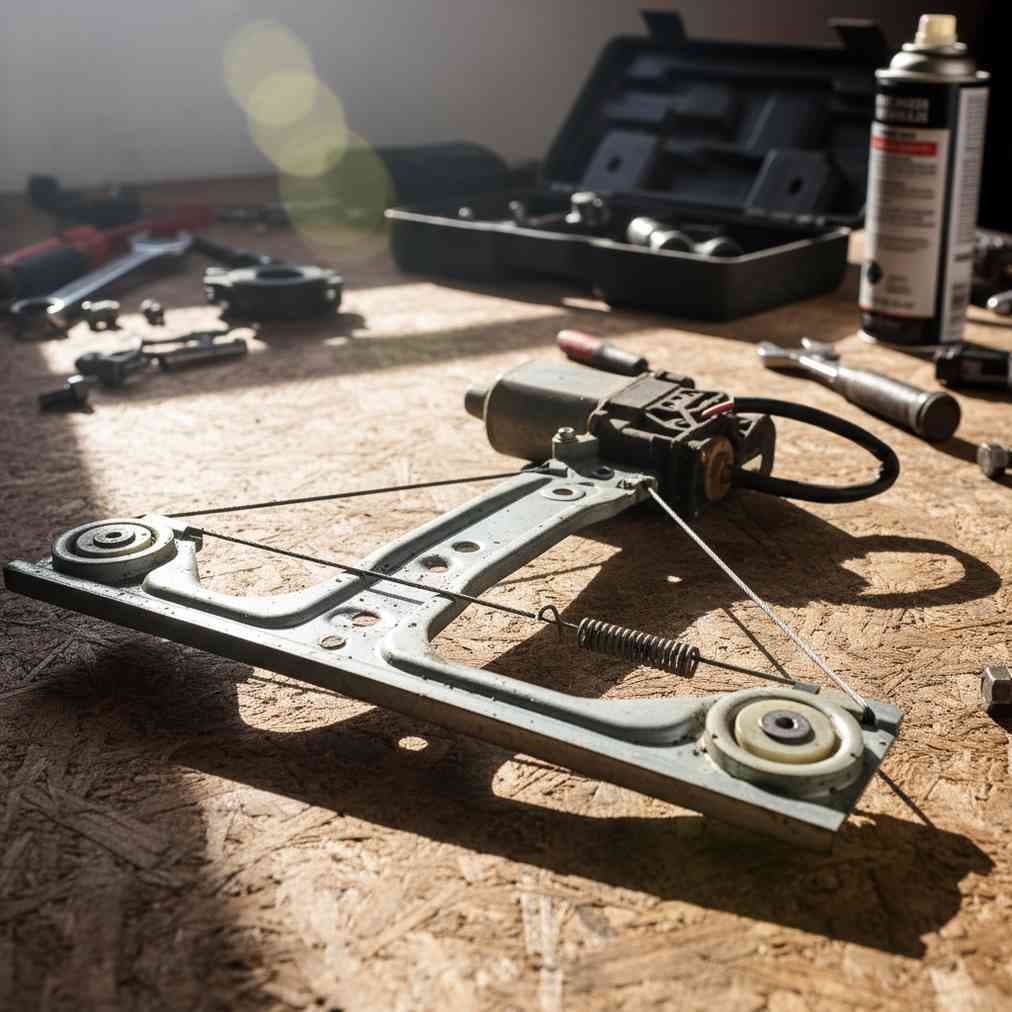
Window Stuck? The Junkyard Fix for a Bad Window Regulator
Understanding Window Regulator Problems: Why Your Window is Stuck A stuck car window can be incredibly frustrating, especially during extreme weather conditions. When your power window fails to move up or down, the culprit is often a faulty window regulator or motor. Before rushing to an expensive dealership repair, consider the budget-friendly alternative: sourcing replacement [...]
Article image
Understanding Window Regulator Problems: Why Your Window is Stuck
A stuck car window can be incredibly frustrating, especially during extreme weather conditions. When your power window fails to move up or down, the culprit is often a faulty window regulator or motor. Before rushing to an expensive dealership repair, consider the budget-friendly alternative: sourcing replacement parts from a junkyard near you. This comprehensive guide will walk you through diagnosing the problem, finding the right parts, and implementing the perfect junkyard fix.
Common Window Regulator and Motor Failure Modes
Understanding what typically goes wrong with window systems is crucial for a successful repair. The power window system relies on several key parts: the motor, regulator mechanism, switch, and wiring harness. Failures can occur in any of these areas, but some problems are more common than others.
Window Regulator Failures
The broken regulator cable stands out as the most common problem affecting window regulators. This critical failure can bring your entire window system to a complete halt.
Broken Regulator Cable: The most frequent issue, often caused by cables getting jammed in the door mechanism
Worn Out Cables: Result of overuse, abuse, or cold weather operation leading to abnormal noises and incomplete window movement
Cable Detachment: Pulley system wear causing the window to quit during closing attempts
Mechanical Wear: Internal parts degradation causing slow movement, sticking, or window drooping
Window Motor Failures
Motor problems present differently than regulator issues and require specific diagnostic approaches.
Complete Motor Failure: No response when pressing the window switch
Gradual Wear: Slow, sluggish movement or stalling halfway through operation
Environmental Damage: Moisture from snow and ice affecting internal workings
Related System Failures
Issue Type
Symptoms
Common Causes
Faulty Switch
No motor response
Worn contacts, electrical failure
Wiring Problems
Intermittent operation
Corrosion, frayed wires
Environmental
Seasonal failures
Ice, moisture, forced operation
Safety First: Preparing for Door Panel Removal
Before accessing your window regulator, proper safety preparation is essential. Disconnecting the vehicle's battery is highly recommended to prevent electrical shocks or accidental window movement during your repair process.
“Safety should always be your top priority when working on electrical systems. A few minutes of preparation can prevent hours of problems.”
Step-by-Step Door Panel Removal Guide
Accessing the window regulator requires careful removal of the interior door panel. While specific procedures vary by make and model, these general steps apply to most vehicles.
Initial Preparation Steps
Remove Trim Pieces: Carefully pry off decorative covers using plastic trim removal tools
Locate Hidden Screws: Check under armrests, behind handles, and along panel edges
Handle Window Cranks: For manual windows, remove the crank handle by prying off the center cover
Panel Removal Process
The actual panel removal requires patience and the right technique to avoid damaging brittle plastic parts.
Start from Bottom: Work upward using plastic trim tools to release clips
Avoid Force: Never pull hard on the panel itself – this breaks clips
Disconnect Cables: Carefully remove electrical connectors and mechanical cables
Access Weather Barrier: Remove the plastic panel covering the window mechanism
Field-Testing Your Window Motor
Before investing time in a junkyard part, testing the motor functionality is crucial. This process can save hours of installation work if you discover the part is faulty.
In-Car Testing Method
Testing the motor while still in the vehicle provides the most accurate assessment of functionality.
Locate Motor Connector: Find the electrical connector after removing the door panel
Check for Power: Use a multimeter or 12V test light while pressing the window switch
Interpret Results: 12V present but no movement indicates motor failure
No Voltage: Points to switch, fuse, or wiring harness problems
Bench Testing for Junkyard Parts
When evaluating a potential replacement part at the salvage yard, bench testing provides definitive proof of functionality.
“If you ever go to a junkyard or a salvage yard and you go buy one of these used… this is how you check them real quick to see if they're good.”
Direct Power Application: Connect a 12V battery directly to motor terminals
Test Both Directions: Swap positive and negative connections to test up/down movement
Listen for Smooth Operation: Motor should run quietly without grinding or binding
Inspecting Regulator Cables and Mechanisms
A thorough visual inspection of the regulator assembly can reveal problems that aren't immediately apparent during testing.
Cable Inspection Points
Inspection Area
What to Look For
Red Flags
Cables
Smooth, intact strands
Fraying, kinks, breaks
Plastic Guides
Solid, uncracked material
Wear, cracks, damage
Window Mounts
Secure tabs and clips
Broken or missing fasteners
Manual Movement Test
With the motor disconnected, you should be able to manually operate the regulator mechanism. Stiffness or binding indicates internal damage that could cause premature failure of your replacement motor.
Finding Quality Parts at Your Local Salvage Yard
Not all salvage yards are created equal. Major chains like LKQ Pick Your Part often provide better organized inventory and more consistent part quality than smaller operations. When searching for window regulator parts, focus on vehicles with similar mileage and from regions with less harsh weather conditions.
Modern diagnostic approaches are incorporating AI and data science trends to better predict part failure patterns, helping salvage yards stock the most in-demand items.
Installation Tips and Common Pitfalls
Successfully installing your junkyard find requires attention to detail and proper technique.
Pre-Installation Checklist
Verify Compatibility: Confirm part numbers match your vehicle specifications
Clean All Connections: Remove corrosion from electrical contacts
Lubricate Moving Parts: Apply appropriate grease to cables and guides
Test Before Closing: Verify operation before fully reassembling the door
Common Installation Mistakes
Avoiding these frequent errors can save you from having to repeat the entire repair process.
Incorrect Motor Timing: Ensure window is in proper position before connecting motor
Cable Routing Errors: Follow original cable paths to prevent binding
Inadequate Fastening: Properly torque all mounting bolts to specification
Rushed Testing: Allow full up/down cycles before final assembly
When to Consider Professional Help
While many window regulator repairs are within the scope of DIY mechanics, certain situations warrant professional intervention.
If your diagnostic efforts reveal multiple system failures or if the vehicle's ECU is involved in window operation, professional diagnosis might be more cost-effective than multiple junkyard trips.
Cost Analysis: Junkyard vs. New Parts
The financial benefits of using salvaged parts become clear when comparing costs across different repair scenarios.
Part Source
Window Motor
Complete Regulator
Labor Savings
New OEM
$200-400
$300-600
$0
Aftermarket
$100-200
$150-300
$0
Junkyard
$25-75
$50-150
$150-300
Environmental Benefits of Choosing Salvaged Parts
Beyond cost savings, using junkyard parts contributes to environmental sustainability. Recycled auto parts reduce manufacturing demand and keep functional parts out of landfills. This circular economy approach aligns with modern sustainability research topics focusing on resource conservation.
Troubleshooting Post-Installation Issues
Even with careful installation, you might encounter problems after completing your repair.
Common Post-Installation Problems
Slow Operation: Usually indicates insufficient lubrication or binding cables
Intermittent Function: Often points to poor electrical connections
Grinding Noises: May indicate misaligned or damaged internal gears
Preventive Maintenance for Window Systems
Extending the life of your junkyard repair requires ongoing attention to your window system's health.
Regular Lubrication: Apply silicone spray to window tracks monthly
Gentle Operation: Avoid forcing windows when they encounter resistance
Weather Protection: Keep door seals in good condition to prevent moisture intrusion
Periodic Cleaning: Remove debris from window tracks and drainage holes
Planning Your Next Junkyard Visit
Success at the salvage yard requires preparation and strategy. Research has shown that systematic approaches to problem-solving yield better results than random searching.
If you're considering selling your current vehicle for cash due to multiple window problems, get an instant online quote to understand your options before investing in extensive repairs.
Essential Tools for Your Trip
Basic Hand Tools: Screwdrivers, wrenches, pliers
Testing Equipment: Multimeter, 12V test light, jumper wires
Documentation: Vehicle specifications, part numbers, measuring tools
Conclusion: Making the Junkyard Fix Work
A stuck window doesn't have to result in an expensive dealership repair. With proper diagnosis, careful part selection, and methodical installation, junkyard parts can provide reliable, cost-effective solutions. The key to success lies in thorough testing before purchase and attention to detail during installation.
Remember that window regulator problems are among the most common automotive issues, making replacement parts readily available at most salvage yards. By following this comprehensive guide, you can confidently tackle your window repair project while saving hundreds of dollars in the process.
Whether you're dealing with a broken regulator cable – the most common failure mode – or a completely dead motor, the junkyard fix offers a practical path forward. Take your time with diagnosis, invest in quality used parts, and enjoy the satisfaction of a successful DIY repair that keeps your vehicle comfortable and secure in all weather conditions.