Auto TipsFeb 28, 2026By U-Pull-It Staff

What Tools Do You Need at a Junkyard? The Complete Puller's Checklist

Missing that one 10mm socket is the difference between a successful pull and a wasted trip. Here's the exact tool list — organized by experience level — so you never leave empty-handed.

What Tools Do You Need at a Junkyard? The Complete Puller's Checklist
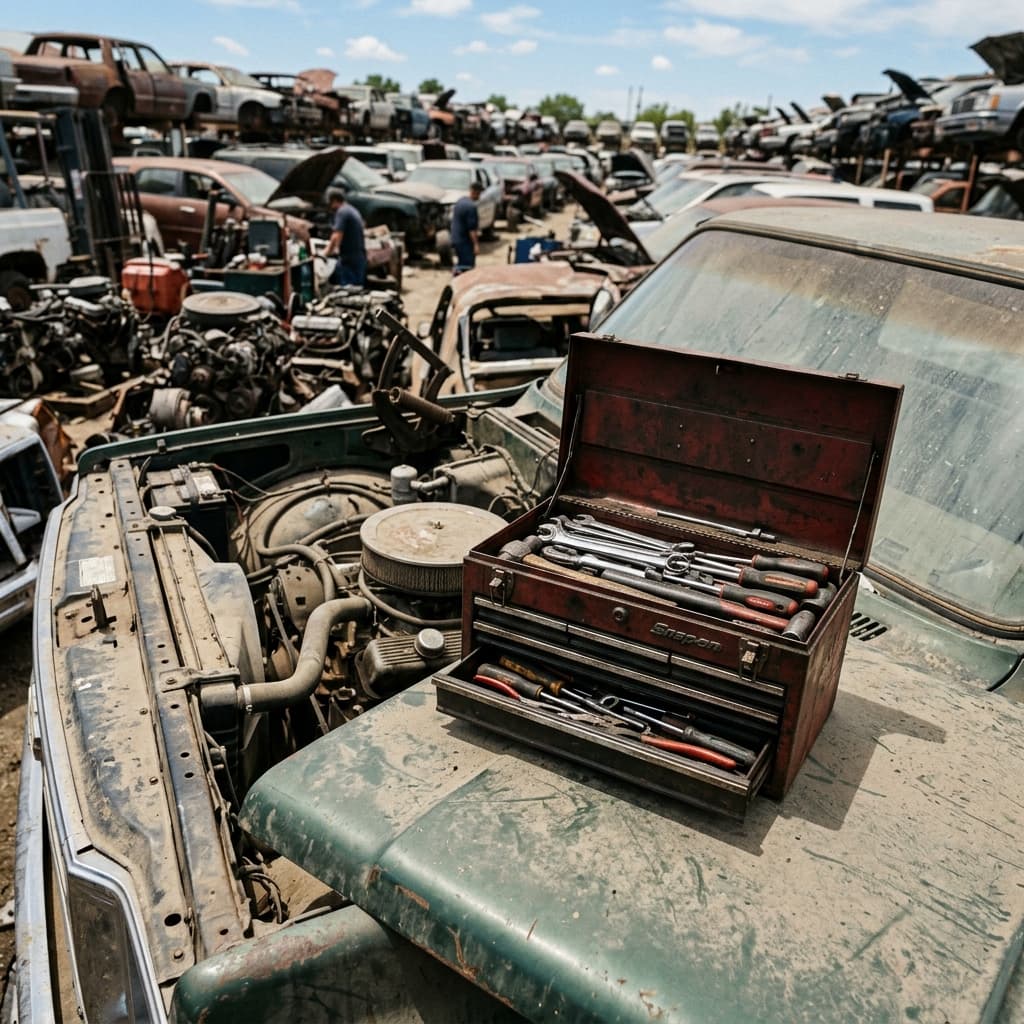
Photo by U-Pull-It
Flat-lay of junkyard tools including ratchet sets, breaker bar, pry bars, and impact wrench on a garage floor
The tools that actually matter. Everything else is weight you're carrying across a muddy yard for no reason.

Missing that one 10mm socket is the difference between a successful pull and a wasted trip.

I've watched people show up to the yard with a single adjustable wrench and absolute confidence. Three hours later they're still trying to remove a caliper bolt that a proper 14mm would have handled in thirty seconds. Don't be that person. This list is organized by experience level — start with the Starter Kit if you're new, add from the Pro section when you know what you're pulling.

⚠️ Yard Safety Rules — Read Before You Pull

  • Closed-toe shoes required. Steel-toed boots are ideal. Flip-flops are how you lose a toe to a falling door panel.
  • Watch for sharp edges. Cut sheet metal, broken glass, and exposed battery terminals are everywhere. Leather gloves are non-negotiable.
  • Don't go under unsupported vehicles. Yard cars are not on proper jack stands. Never crawl under anything without checking stability first.
  • No open flames near the fuel system. Old cars can have leaky fuel lines. Leave the lighter in the truck.

What tools do you need at a junkyard? (The short answer)

For most pulls, you need: a 3/8" drive ratchet with metric and SAE sockets (8mm–19mm), a breaker bar, two flathead screwdrivers (one large, one small), needle-nose pliers, a trim panel removal tool, and a flashlight. That covers 80% of parts you'll ever pull.

The Starter Kit — what to bring every time
Organized tool kit laid out for a junkyard visit including ratchets, sockets, pry bars and flashlight
  • 3/8" drive ratchet + metric socket set (8–19mm) — This is the single most-used tool at any u-pull yard. Bring the full set; you won't always know what size the bolt is until you're looking at it.
  • 1/2" drive breaker bar — For anything that's been on the car since the factory. Rusted lug nuts, suspension bolts, exhaust bolts. A 3/8" ratchet will round them; a breaker bar will break them loose.
  • Flathead screwdrivers (large + small) — Prying, popping clips, battery terminal removal. Bring both sizes.
  • Phillips screwdrivers (#1 and #2) — Interior trim, underhood covers, battery hold-downs.
  • Needle-nose pliers — Hose clamps, wire connectors, small retaining clips in tight spaces.
  • Trim panel removal tool (plastic pry) — $4 at any auto parts store. Saves door panels and dashboards from scratches. Worth it.
  • Bright flashlight or headlamp — You'll be looking inside dark wheel wells, under dashes, and behind engine bays. Your phone flashlight won't cut it. A headlamp keeps both hands free.
  • Leather work gloves — Sheet metal edges and dried-up rubber seals will cut you. Wear them from the moment you get out of the car.

Pro-Puller Upgrades — when you're serious about the yard
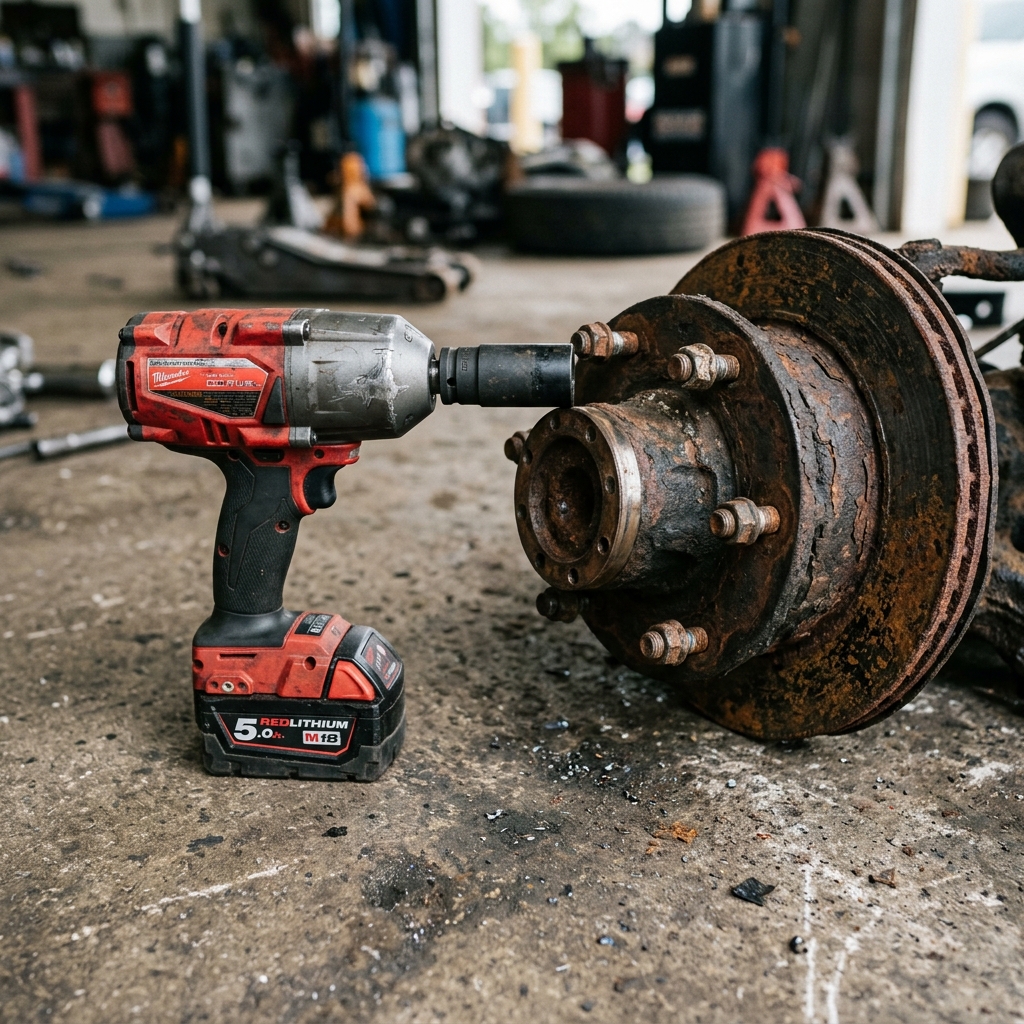
Cordless impact wrench removing a bolt from a vehicle at a junkyard
The impact wrench is the single biggest upgrade from the starter kit. What takes 10 minutes by hand takes 10 seconds with one of these.
  • Cordless impact wrench (Milwaukee M18 or DeWalt 20V) — Game-changer. Lug nuts, caliper bolts, strut bolts — all come off in seconds. The M18 Mid-Torque is the sweet spot for yard work: enough power without destroying threads.
  • Penetrating oil (Kroil or PB Blaster) — Spray it on stubborn fasteners, wait 5 minutes, pull. Kroil is worth the price; it genuinely outperforms generic penetrating oil on serious rust.
  • Digital multimeter — For testing alternators, sensors, switches, and window motors before you pull them. Saves you from buying a bad part. Set it to DC voltage, probe both ends of the component.
  • Pry bar set (18" + 30") — For separating body panels, popping CV axles, leveraging stuck rotors. The long bar gives mechanical advantage that saves your back.
  • Harmonic balancer puller kit — If you're pulling an engine or crank-related parts, you cannot do it without this. Rental is fine; buy if you do it regularly.
  • Stubby ratchet + stubby screwdrivers — For tight spaces: under dashboards, behind firewalls, inside door panels. Full-length handles won't fit.
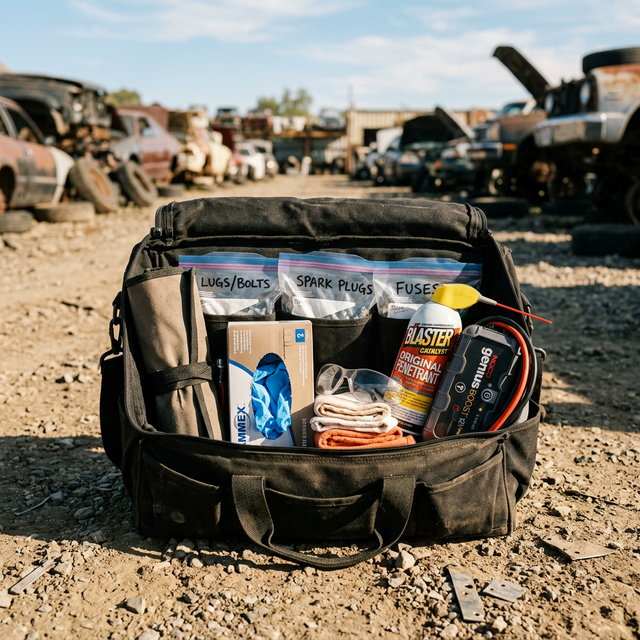
Supplies and consumables — the stuff most people forget

Packed tool bag with supplies for a junkyard visit including bags, rags, and tape
The bag matters as much as the tools. Keep parts and fluids separated.
  • Zip-lock bags (various sizes) — For bolts, clips, and small parts. Label them with a Sharpie as you pull. Nothing worse than a bag of mystery hardware.
  • Shop rags / paper towels — Fluids will drip. Every part you pull will be wet with something. Bring more than you think you need.
  • Painter's tape + Sharpie — Mark wire connectors before you unplug them. Electrical connectors look identical until you're trying to reinstall at midnight.
  • Rubber gloves (nitrile, disposable) — Under the leather work gloves for parts soaked in transmission fluid, coolant, or brake fluid. Your skin absorbs all three in ways that aren't good for you.
  • Water + snacks — Yards are big. You'll be out there longer than you think, especially in summer heat. Stay hydrated.

The Savings Factor: A complete professional brake job (pads + rotors, 2 axles) at a shop costs $350–$600. Pulling rotors and calipers from a matching donor at the yard runs $20–$45 for the parts. The tools to do it: a one-time $80 investment. The math works out fast.

How to read a donor car before you start pulling

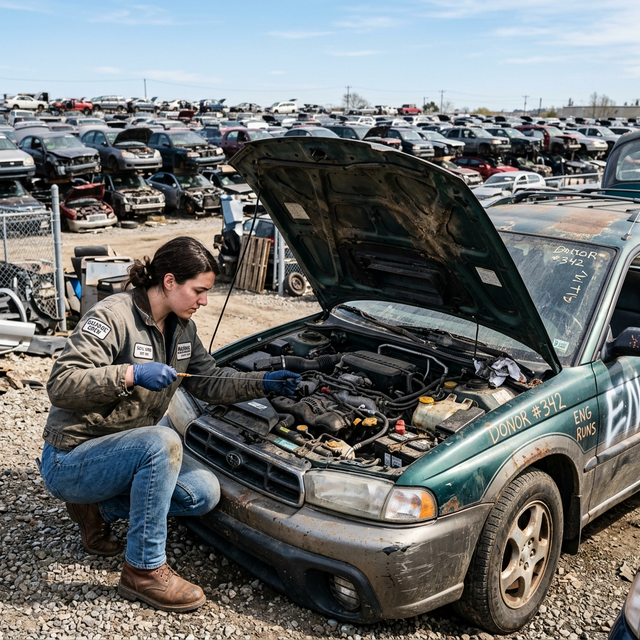
Person inspecting the engine bay of a donor car at a junkyard before pulling parts
Two minutes of inspection before you pull saves an hour of work on a bad part.

Before you put one wrench on a car, spend 2 minutes evaluating it:

  1. Check the oil cap and dipstick. Milky residue = coolant contamination = the engine probably overheated badly. Avoid pulling any engine components from this car.
  2. Look at the catalytic converter location. If it's missing, someone has already been here. Check what else they took.
  3. Open every door and check for water intrusion. Flood cars rust from the inside out. Soggy carpet means the wiring harness is corroded.
  4. Check body panel gaps. Uneven gaps suggest prior collision repair. Frame-damaged cars may have bent subframes and suspension components — don't pull steering or suspension from these.
  5. Test electrical components before pulling (if you have a multimeter). An alternator that reads 13.8–14.4V at the battery leads is good. One that reads 12V or less is not charging.

Frequently asked questions about junkyard tools

Can I bring power tools to a u-pull-it yard?

Yes — most U-Pull-It yards allow cordless power tools. Corded tools are generally not permitted (no power outlets in the yard anyway). Always confirm with the specific yard's rules at the front desk. Battery-powered impact wrenches, reciprocating saws, and drills are standard and allowed.

What size socket do I need most at a junkyard?

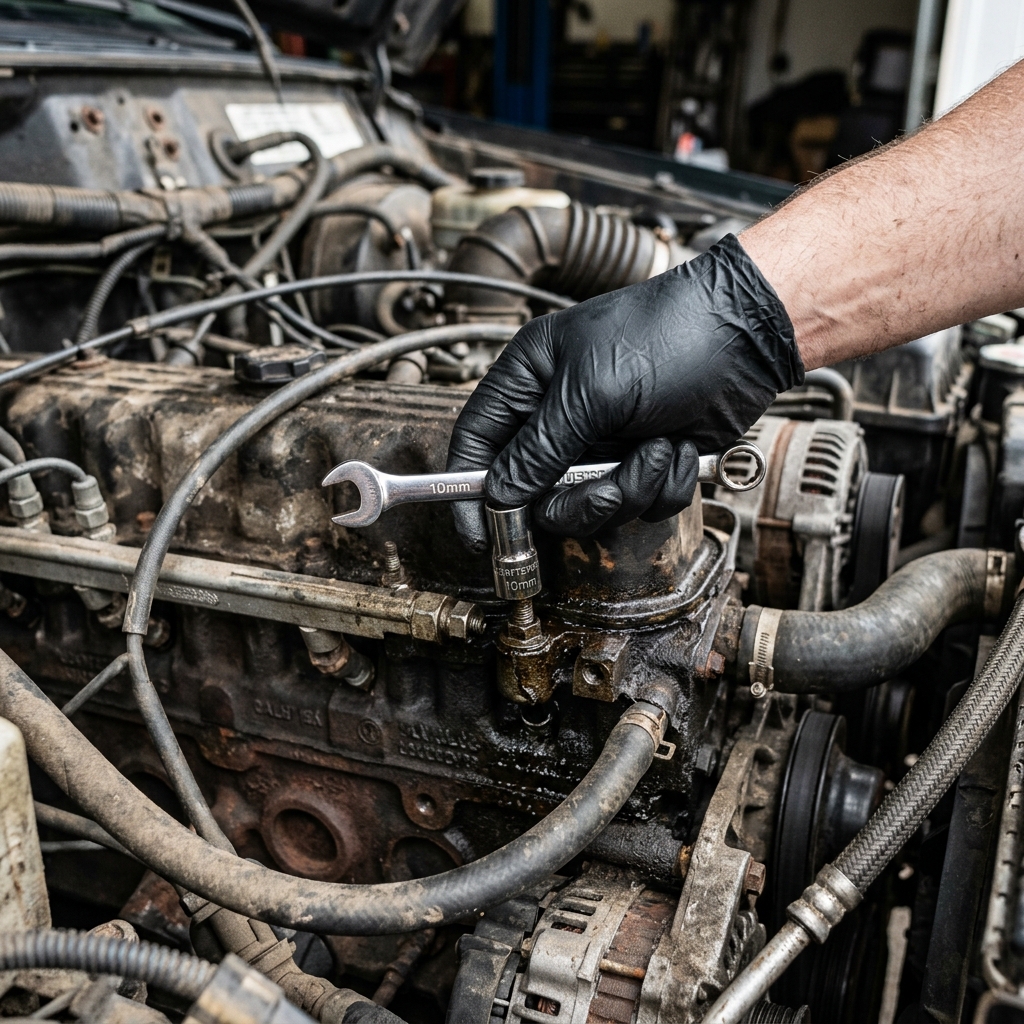
The 10mm is the running joke — it's on everything, everywhere, in every Japanese and Korean vehicle ever made. After that: 12mm, 14mm, and 17mm cover the majority of metric fasteners. For American trucks, add 9/16" and 5/8" to your SAE set.

Do you need to bring your own tools to a junkyard?

At most self-service yards, yes — you pull the parts yourself with your own tools. Some yards rent basic tools at the front desk for a small fee, but selection is limited. Bring everything on the Starter Kit as a baseline.

What's the best bag to carry tools at the junkyard?

A rolling tool bag or a standard 18" canvas tool bag works well. Avoid tool boxes (heavy to carry across the yard). A backpack with side pockets is great for long pulls — keeps your hands free and your tools organized. Many regulars use a Harbor Freight canvas bag for exactly this reason.

Related Articles

Leave a Comment