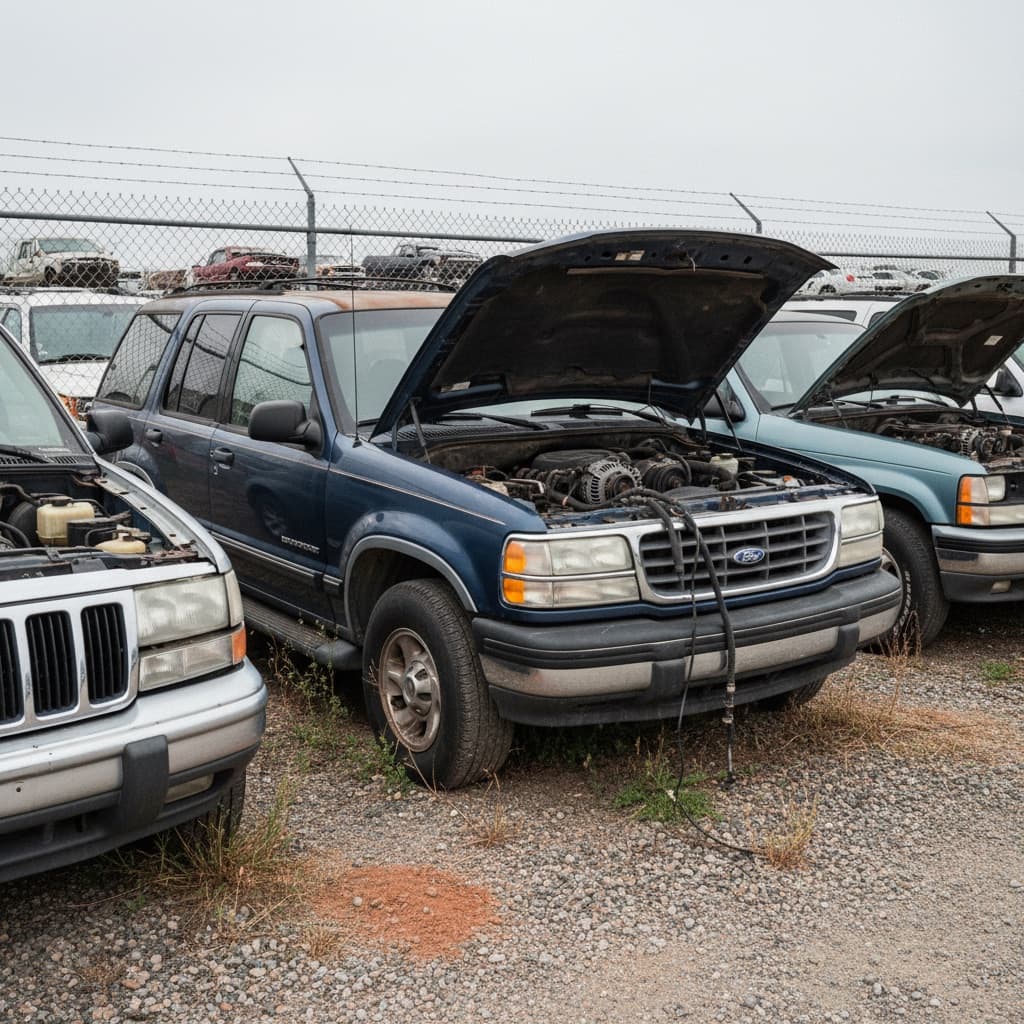
Junk vs. Used: How to Know If Your Car Is Ready for the Scrapyard
Not sure if your car is a fixer-upper or a lost cause? Here's the honest breakdown: the 70% repair rule, the diagnostic red flags mechanics look for, and what your scrap car is actually worth in parts.
Article image
Published: March 4, 2025
·
Updated: March 4, 2025
· By U-Pull-It Editorial Team
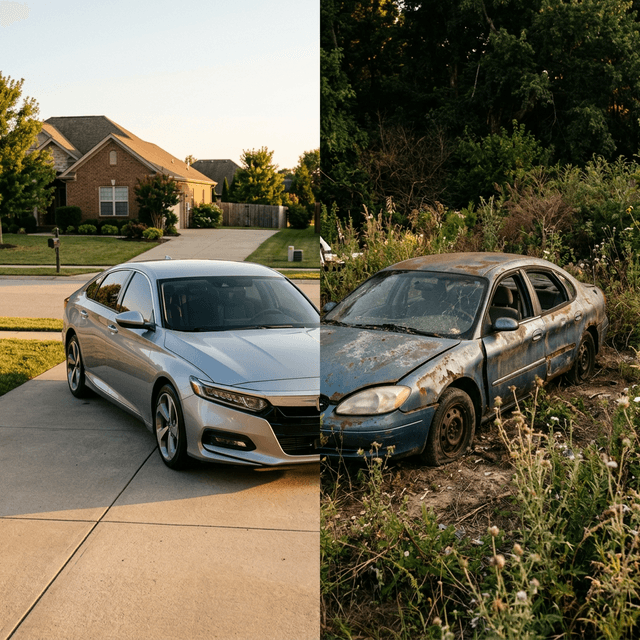
A car is "junk" when repairs cost more than 70% of its market value, or when it has a terminal failure — blown engine, deployed airbags, frame damage — that makes a private sale impossible.
I talk to people every week who are pouring money into cars that crossed the scrap line two repairs ago. It's a sunk-cost trap, and once you're in it, it's hard to see clearly. A $1,200 head gasket job on a 2008 Altima feels reasonable until you realize the car is worth $3,800 on its best day — and that head gasket fix doesn't solve the rust eating through the rocker panels.
Here's how to actually tell the difference between a car worth fixing and one worth scrapping.
Quick Facts: Key Terms
Junk car
A vehicle whose repair costs exceed 70% of its fair market value, or that has terminal damage (blown engine, structural failure, deployed airbags).
The 70% rule
The repair-to-value threshold used by mechanics and insurance adjusters to determine when a vehicle is an economic total loss.
Certificate of Destruction
A document issued by a licensed salvage yard that permanently retires a VIN from the road system, releasing you from future liability on the vehicle.
Scrap metal value
The price a recycler pays based on the weight of steel and aluminum in a vehicle body. At 2025 rates, typical sedans yield $150–$300 as scrap metal alone.
What are the signs your car is junk (and not just old)?
1. The 70% repair rule
This is the number mechanics and insurance adjusters use internally. If a repair quote hits 70% or more of the car's fair market value in good condition, the math stops working. You won't recoup the investment.
Example: spending $3,500 on a new transmission for a 2010 Altima that books at $4,000 clean. That's 87% of the car's value — for one repair. At that point, you're paying for someone else's future parts.
How to check your car's value: Look up your year, make, model, and mileage on Kelley Blue Book or NADA Guides. Use the "Fair" condition estimate — be honest. Then compare that number to the repair quote. If the quote is 70%+ of that value, call a salvage yard for a counter-offer before you authorize anything.
Certain failures are terminal for older vehicles. Here's what to look for:
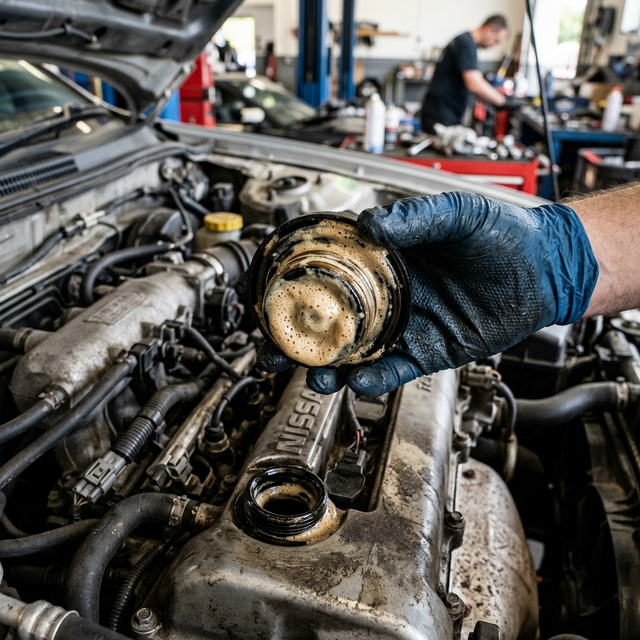
The "milkshake test." If the underside of your oil cap looks like this, coolant is mixing with oil. That's a blown head gasket or cracked block — usually a $2,500+ repair on most engines.
The "Milkshake" test
Pull your oil cap. Frothy, light-brown residue means coolant is mixing with your oil — a blown head gasket or cracked block. Most shops won't warranty a head gasket repair on a car over 150K miles, because the block integrity is already suspect.
Deployed airbags
Once the bags fire, the car is a total loss in insurance terms. Replacing an SRS system properly costs $2,000–$5,000 on most vehicles — sensors, clock spring, module, cosmetics. It's almost never worth it on a car under $8,000.
The flood line
A visible watermark on interior door trim or a musty smell means water reached the electrical modules. Wiring harness corrosion is nearly impossible to trace and fix completely — gremlins will resurface for years.
Rod knock
A rhythmic metallic knocking from the engine block that gets louder with RPM. This means a connecting rod bearing is failing. An engine replacement is the only real fix. If the car isn't worth $3,000+, junk it.
If you have a "Parts Only" bill of sale or no title at all, private buyers will walk. Licensed salvage yards are often the only realistic option — they have the legal frameworks to process title-less vehicles for dismantling. We've written a full guide on selling without a title covering state-specific options.
What is a junk car actually worth?
Most people are surprised. The car that "nobody wants" usually has $400–$1,000+ in recoverable value when you count individual components plus scrap metal weight.
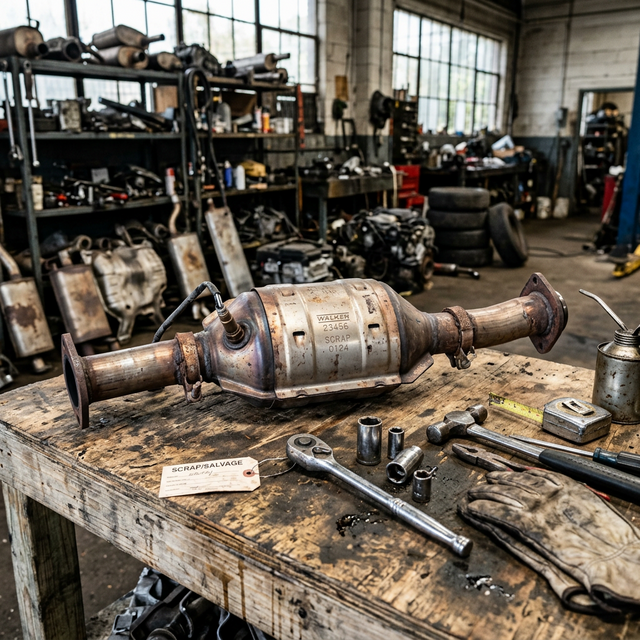
A single catalytic converter can be worth $100–$1,000+ depending on the precious metals inside. It's often the most valuable single component on a scrap car.
Scrap car component values (2025 estimates)
Component
Typical Value
Why
Catalytic Converter
$100 – $1,000+
Contains platinum, palladium, and rhodium. Truck and SUV cats pay more than sedan cats at current precious metal prices.
Aluminum Wheels
$50 – $200 (set)
Recycled as high-grade aluminum. OEM alloys in good condition often sell for more on the used parts market before scrapping.
Engine / Transmission
$200 – $800+
Sold as "cores" to rebuilders or for parts inventory. A running engine commands 3–4x the value of a seized one.
Wiring Harnesses
$20 – $100
High copper content. Even stripped cars retain harness value at copper scrap rates (~$3.50/lb in 2025).
Battery
$5 – $20 (core)
Lead-acid batteries are always accepted for core credit at parts stores and metal recyclers.
The real math: A 2009 Honda Accord with a blown engine typically yields $400–$700 in parts plus $150–$300 in scrap metal weight — so $550–$1,000 sitting in your driveway losing value every month to weather and further deterioration. That number drops as components get stolen or the body rusts through.
What should I do when I decide to scrap my car?
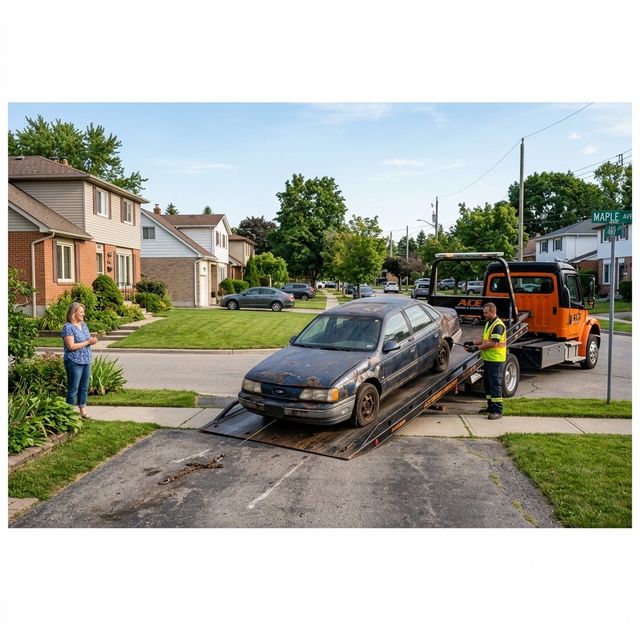
Most reputable salvage yards offer free towing for non-running vehicles. The car leaves your driveway, you get cash — usually same day.
Once the car has crossed the line, you have three realistic paths:
Sell to a licensed salvage yard.
Fastest option. Most yards — including U-Pull-It — offer free pickup, same-day payment, and handle the title paperwork. The offer accounts for the vehicle's weight, condition, and current component values. Call with your year, make, model, and condition for an immediate quote.
Part it out yourself.
Pull the high-value components (catalytic converter, alternator, starter, wheels) and sell them individually on eBay or Facebook Marketplace. You'll net more money — but expect 10–20 hours of work, a yard or driveway commitment, and you'll still need to scrap the shell afterward.
Donate it.
Some charities accept non-running vehicles. Your tax deduction is based on the actual sale price the charity gets for the car (not book value). Realistic deduction for most junk cars: $200–$500.
Before you call anyone: Remove your plates, cancel your insurance, and pull everything personal from the car. People regularly forget to cancel insurance on a vehicle that gets crushed the next day and end up paying months of premiums.
Frequently asked questions about junk vs. used cars
How do I know if my car is junk or used?
A car is junk when repairs cost more than 70% of its market value, or when it has a terminal condition — blown engine, frame damage, or deployed airbags. If it's over 10 years old and needs a repair exceeding $2,000, get a scrap quote before you authorize the work. The salvage offer might surprise you.
What parts are most valuable on a scrap car?
The catalytic converter is usually the most valuable single part ($100–$1,000+ depending on precious metal content). After that: engine cores ($200–$800), transmission, aluminum wheels ($50–$200/set), and wiring harnesses. The battery always has core credit value regardless of condition.
Can I sell a car that doesn't run?
Yes. Most licensed salvage yards provide free towing for non-running vehicles. The offer is based on weight and remaining component value. You don't need to fix anything — the evaluator assesses the car as-is, usually over the phone when you provide your VIN and describe the condition.
How do I know if my engine is blown?
Three signs: (1) a rhythmic knocking sound from the block that worsens with RPM — rod knock; (2) white or blue-gray smoke from the exhaust on startup — coolant or oil burning in the cylinders; (3) the engine won't crank at all — seized. Any one of these on a car over 10 years old is effectively a total loss for the powertrain.
Do I need a title to sell my car to a junkyard?
Many yards accept vehicles without a title if you provide a valid photo ID and current registration, especially for cars over 10–15 years old. A clean title always yields a higher offer. Check our no-title selling guide for state-specific paperwork requirements.
Is it better to junk a car or fix it?
If the repair quote is under 50% of the car's fair market value and the car has no other known issues, fixing is usually better. Once you cross 70%, the economics flip — especially if the car is depreciating. On a $4,000 car needing a $3,200 repair, you're making a $3,200 bet on a vehicle that will be worth $3,000–$3,500 afterward and may have more issues within a year.
About this guide: Written by the U-Pull-It editorial team based on experience processing thousands of junk vehicle purchases across Florida and surrounding states. U-Pull-It is a licensed salvage facility operating full-service and self-service junkyard locations.