Your first trip to a U-Pull-It yard is a lot less intimidating when you know the language. Yard clerks, eBay listings, and Car-Part.com all use the same jargon — and knowing it upfront means you stop overpaying, stop grabbing the wrong part, and stop accepting "no" when the right answer is just a Hollander number away.
1. Parts & Identification Terms
OEM (Original Equipment Manufacturer)
Parts built by or for the vehicle's original manufacturer — Ford, Toyota, GM. At a salvage yard, almost everything is OEM because it came off a real production vehicle. OEM parts fit exactly, match the vehicle's safety ratings, and typically outlast aftermarket replacements on high-stress components. A $400 dealer alternator becomes a $40–$65 pulled part at a U-Pull yard.
Hollander Number
The industry-standard ID used by salvage yards worldwide to confirm two parts are interchangeable. Every yard's computer runs Hollander's database. Two vehicles sharing the same Hollander number for a part are confirmed bolt-on compatible. When you give a clerk a Hollander number, they can search their entire inventory for matching donors — including cars that haven't been listed yet.
Interchange
Using a part from a different vehicle that fits yours. Automakers share platforms heavily: a Chevy Silverado and a GMC Sierra share thousands of identical parts. A Pontiac Vibe and a Toyota Matrix have nearly identical engines and transmissions. Knowing your interchange pool expands your donor vehicle options from 3 cars to 30.
Donor Vehicle
Any car in the yard you're pulling parts from. Reading a donor's history before you pull is a real skill: tire wear, oil on the dipstick, rust on the undercarriage, and crash damage tell you whether its drivetrain is worth harvesting. See our
Donor Vehicle Guide for the full inspection protocol.
Platform Sharing
When two or more vehicles are built on the same chassis architecture and share suspension geometry, mounting points, and often engines and transmissions. Examples: Ford Fusion / Mazda 6 (CD3 platform), Toyota Corolla / Pontiac Vibe (MC platform), VW Golf / Audi A3 (MQB platform).
Casting Number
A number stamped directly into a metal part during manufacturing — on engine blocks, cylinder heads, differentials, and brake calipers. Casting numbers are the most reliable way to confirm two parts are truly identical, since sticker part numbers can be wrong or missing.
VIN (Vehicle Identification Number)
A 17-character code unique to every vehicle. The 8th character is the engine code — critical for sourcing engine-specific parts like ECUs, transmissions, and accessories. For expensive components, always get the donor VIN and run it on vincheck.info (free) or Carfax to check for flood or fire history.
RPO Code (Regular Production Option)
Three-character codes on the door jamb sticker of GM vehicles that identify factory options: limited-slip differential, heavy-duty cooling, tow packages, and specific engine management. Critical when buying GM axles, transmissions, or suspension components where the option package changes the part.
Long Block vs. Short Block
Two ways to buy a replacement engine. A short block is the bottom half only: bare block, crank, pistons, rods. A long block adds the cylinder head(s) and valvetrain. Salvage yards almost always sell long blocks because that's how they come off the car.
REMAN (Remanufactured)
A part rebuilt to OEM specifications using a mix of new and refurbished components — alternators, starters, power steering racks, brake calipers, torque converters. Usually sold with a 1–2 year warranty. More expensive than junkyard pulls but cheaper than new OEM. RockAuto is the standard price benchmark for reman parts.
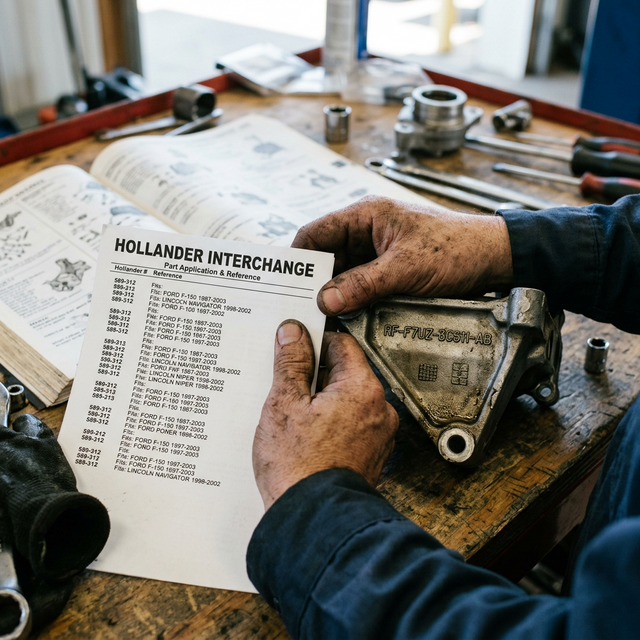
Hollander Interchange references are how yard clerks confirm compatibility instantly. The casting number on the part itself is the secondary verification step.
2. Pricing & Transaction Terms
Core Charge
A refundable deposit collected on parts that can be rebuilt: alternators, starters, brake calipers, power steering racks. The "core" is your old broken part. Return it and you get the deposit back. Core charges exist because rebuilders need a supply of worn units to remanufacture. At U-Pull yards, core charges are rare; they mainly appear at full-service yards on tested electrical assemblies.
Scrap Value
What a vehicle is worth as raw metal, calculated by weight category and current commodity prices. A typical 2005 sedan weighs around 3,100 lbs. At $200/ton for shredded steel, raw scrap value is roughly $310. Yards that part out before scrapping make significantly more than that per vehicle.
AS IS
The default condition of almost every used part at a salvage yard. Sold in whatever condition it's in, with no warranty. Most yards offer a 30-day exchange for store credit — not cash refunds. "AS IS" doesn't mean broken; test electrical parts in the yard before pulling them.
Bundle Discount
A price reduction when you purchase multiple parts at once. U-Pull yards have fixed per-part pricing, but the counter has flexibility on bundles. Pulling a door, mirror, regulator, and window seal? Ask: "What's your best on all four together?" Most yards will do 10–20% off the total.
Market Price / Sold Listing
The actual price buyers paid for a comparable part, not the asking price. On eBay Motors, filter to "Sold Items" to see what people actually paid. This is real market data. Know sold prices before any negotiation — it's the strongest leverage you have at the checkout counter.
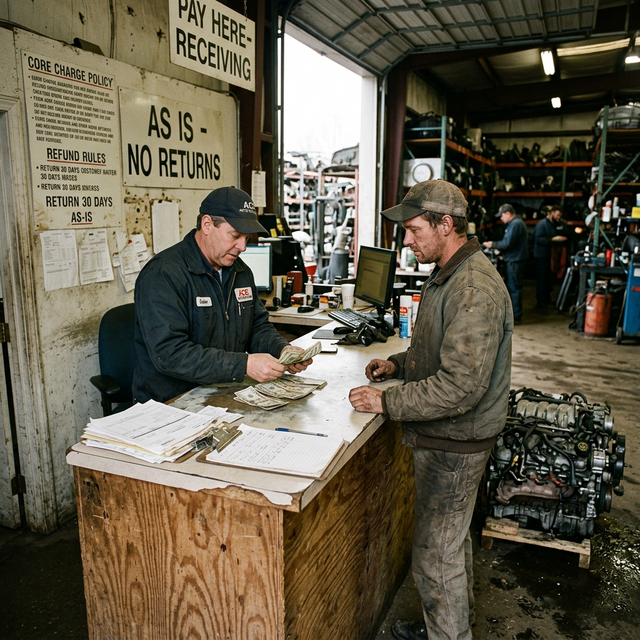
Knowing terms like Core Charge, AS IS policy, and bundle pricing before you reach the checkout counter saves both time and money.
3. Yard Types & Operations
U-Pull-It (Self-Service)
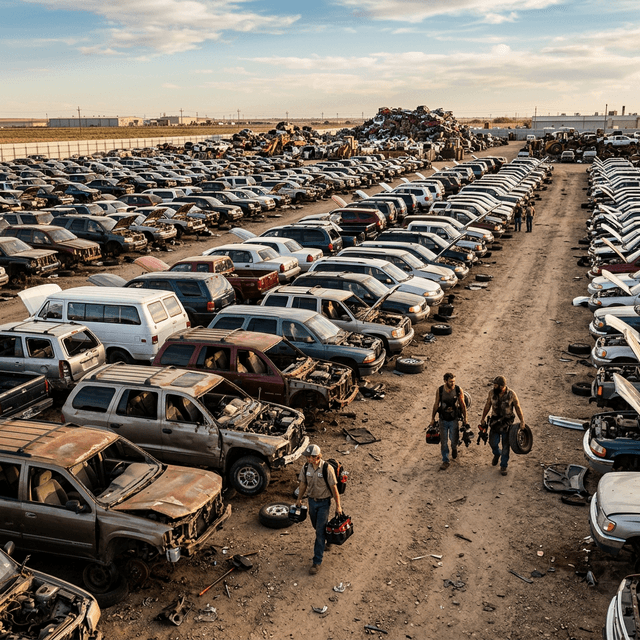
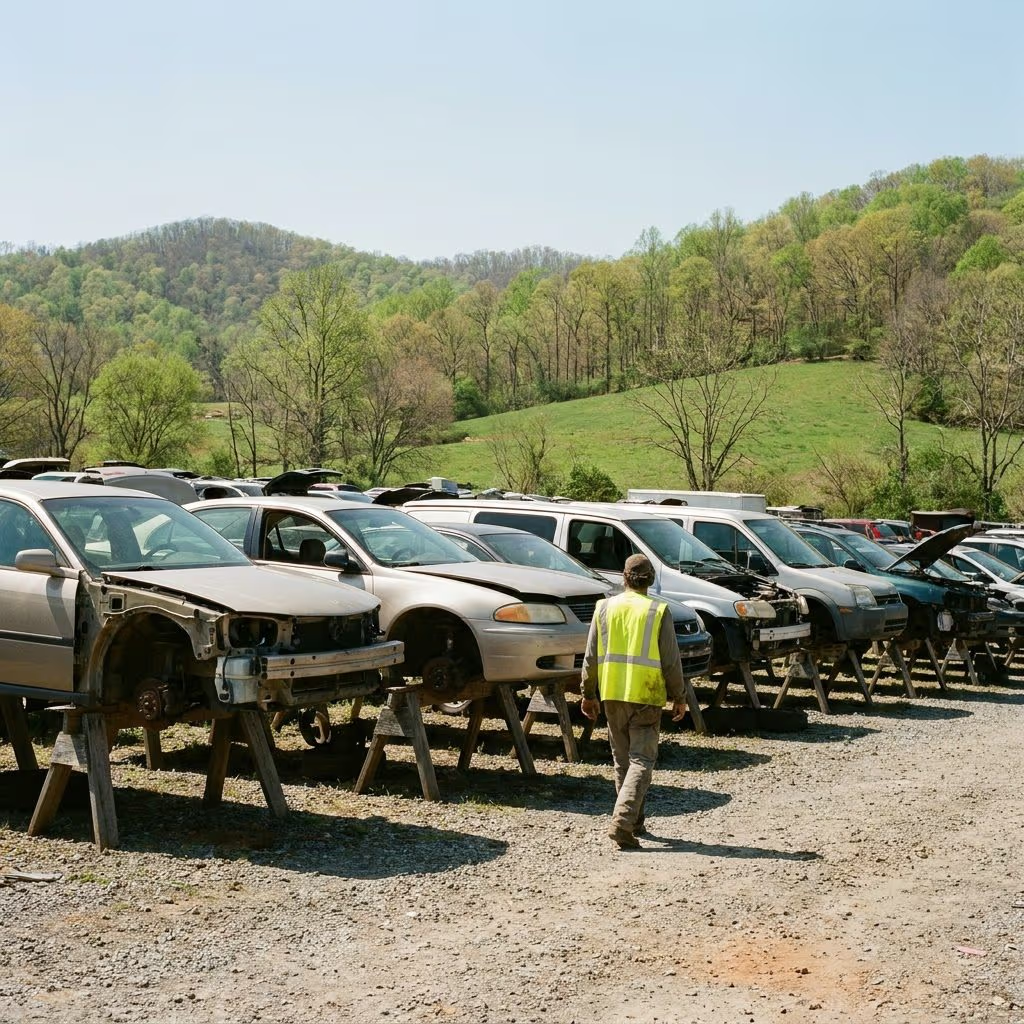
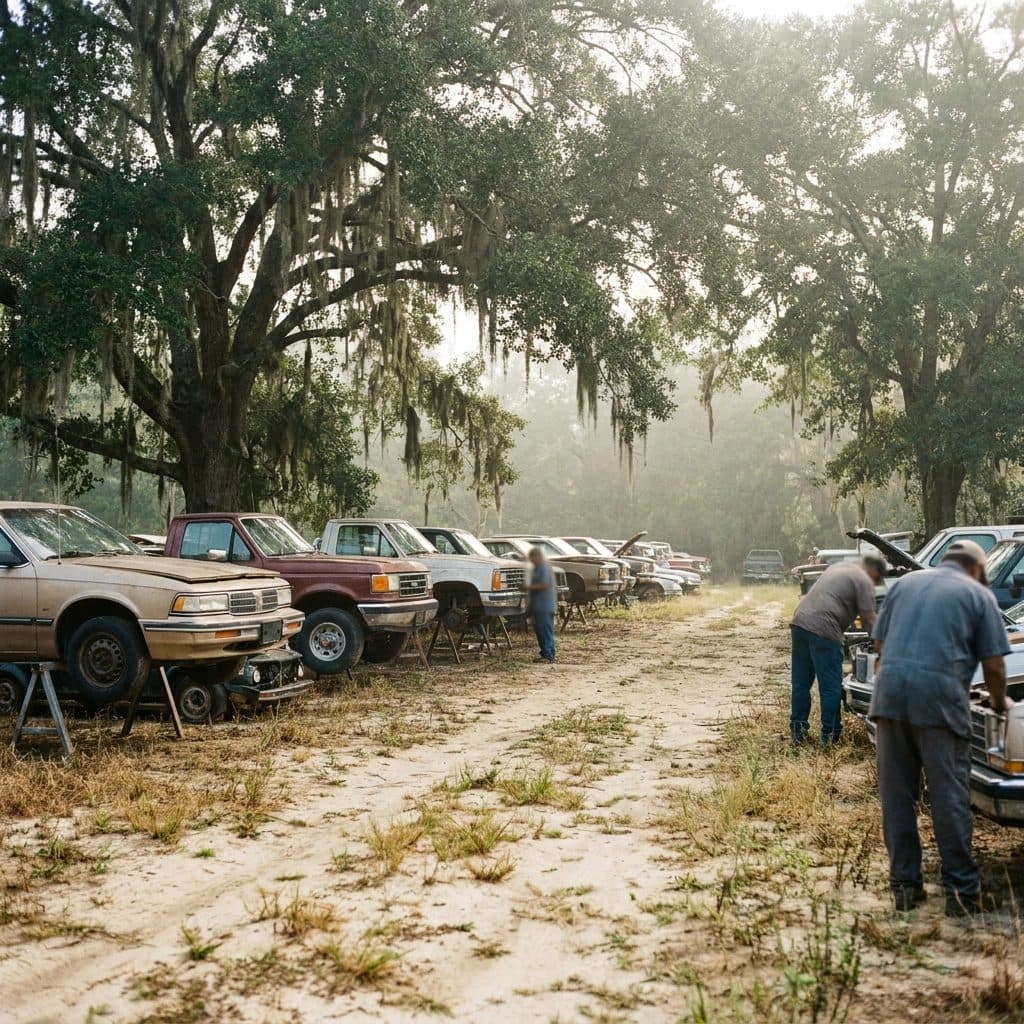
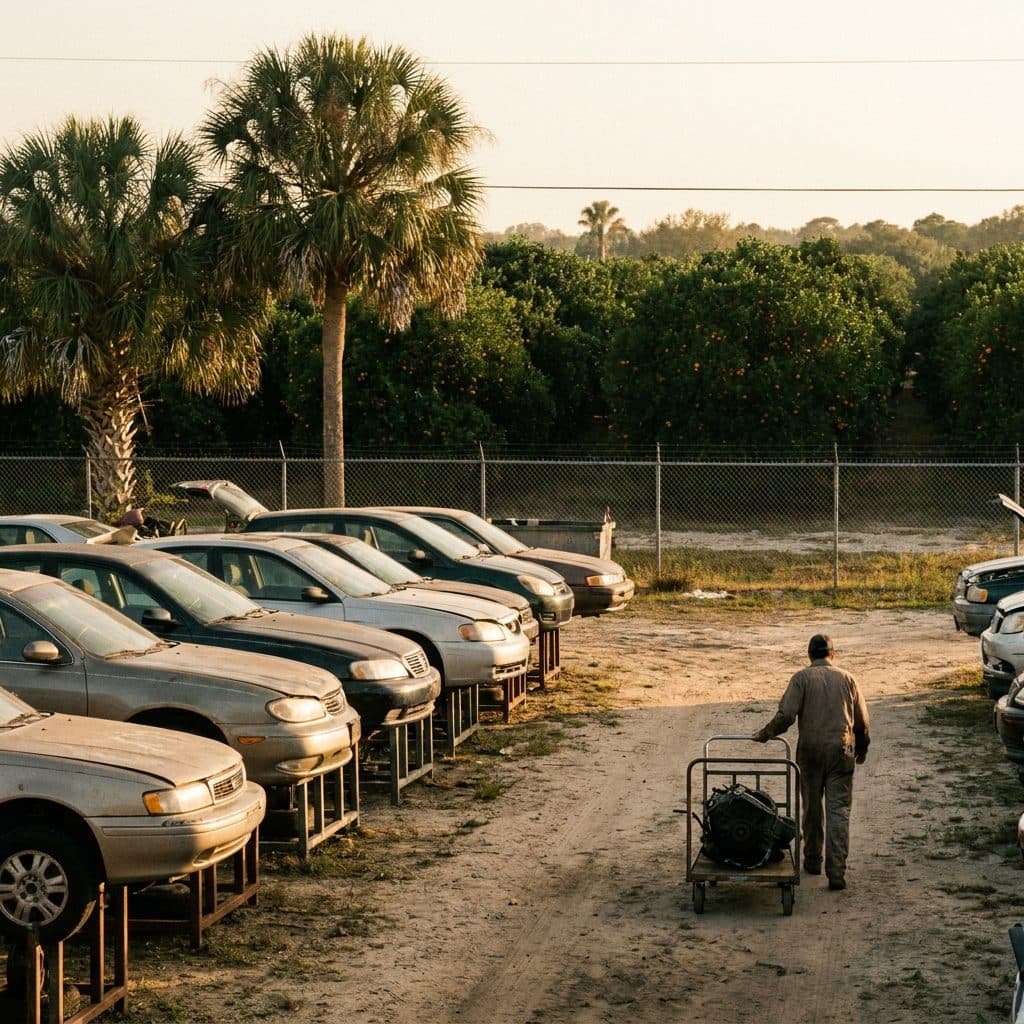
A yard where customers bring their own tools, walk the lot, find the donor vehicle, remove the part, and pay a fixed price at the counter. Because you supply the labor, prices are 50–80% lower than full-service yards. Most charge a small entry fee ($1–$3) applied to your purchase.
Full-Service Yard (Dismantler)
Staff removes and tests parts for you. Prices are higher than U-Pull but parts typically come with a 30–90 day warranty. Better for electrical components and tested assemblies. Most online salvage listings on Car-Part.com originate from full-service yards.
Specialty Recycler
Focuses on one brand or type — BMW-only yards, classic car recyclers, diesel truck specialists. Parts are usually in better condition and more thoroughly inventoried. If you're working on a European vehicle or niche platform, a specialty yard often has what general yards don't.
Stripped Car
A donor vehicle that already had its most valuable parts removed. Engines, transmissions, alternators, and catalytic converters go first. A stripped car isn't worthless — it may still have doors, glass, interior, or suspension — but call ahead before making the drive.
Fluid Drain / Hazmat
The regulated process of draining coolant, oil, brake fluid, and fuel before a car enters inventory, per EPA guidelines. As a U-Pull customer, treat every car as if it still has fluid — many newer arrivals do.
4. Vehicle Condition Terms
Milkshake Oil
Oil that appears light brown, creamy, or frothy — indicating coolant has mixed into the engine oil, usually from a blown head gasket or cracked block. A milkshake dipstick means the engine is compromised. Do not buy drivetrain parts from a car showing this.
Sludge
A thick tar-like buildup inside an engine from neglected oil changes. Lift the oil fill cap and shine a flashlight in — clean engines look metallic; sludged engines look like a forgotten coffee pot. Engines with heavy sludge have compromised oil passages. Avoid all drivetrain parts from heavily sludged donors.
Flood Car
A vehicle that sustained water damage. Flood cars are the most dangerous parts source — water wicks into every connector and module, with corrosion that may not show up for 6–18 months. Signs: musty smell, waterline staining on interior trim, corroded ground straps, rust inside door panels. Always run the donor VIN before buying electrical components.
T-Bone / Side Impact
A collision where one vehicle hits the side of another. In parts sourcing, a T-bone is a green flag for the non-impact side: the engine, transmission, and opposite-side suspension are almost always undamaged. A car with severe passenger-side damage often has a perfectly good driver-side door, mirror, and front suspension.
Zero Body Damage (Red Flag)
Counterintuitively, a car with no visible damage can be the worst donor for mechanical parts. If there's no visible reason the car is in the yard, it was likely totaled for a mechanical failure — blown engine, seized transmission. Approach zero-damage cars with more scrutiny on drivetrain, not less.
Hydrolocked Engine
An engine that seized because liquid entered the cylinder and the piston couldn't compress it. Quick test: try to rotate the engine by hand at the crankshaft pulley bolt. If it won't turn, walk away — bent connecting rods or a cracked block are certain.
Rust Belt Car
A vehicle that spent its life in northern states that salt roads in winter. For body panels and interior parts, rust belt cars can be decent donors. For brake hardware and undercarriage suspension bolts, expect a fight with corrosion every step of the way.
5. Legal & Title Terms
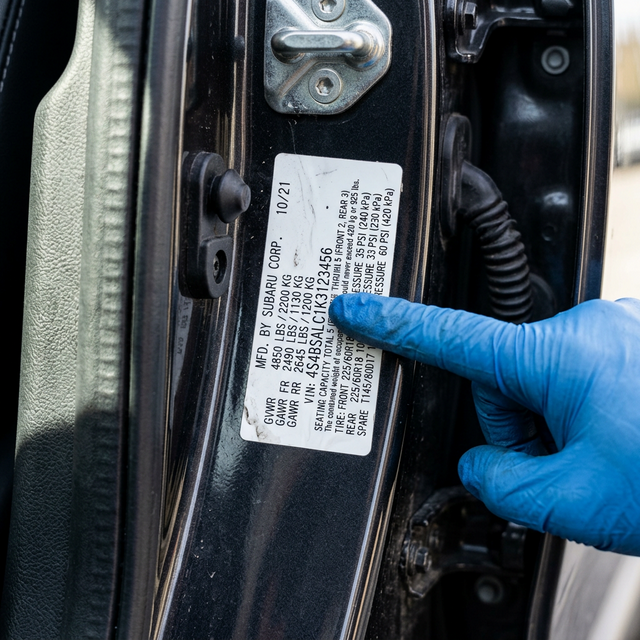
The door jamb sticker contains the VIN, manufacturing date, and factory options. Cross-reference with the dashboard VIN plate any time you're buying a major mechanical component.
Salvage Title
A title branding applied by the DMV when an insurance company declares a vehicle a total loss — meaning repair costs exceeded roughly 75–80% of the vehicle's market value. Salvage-titled cars can't be driven legally until repaired and passed a state inspection. Most junkyard donors carry a salvage title.
Rebuilt Title
Issued after a salvage vehicle has been repaired and passed state inspection. Rebuilt title cars are legal to drive but carry a permanent brand. In a junkyard, a rebuilt title car was totaled a second time after being repaired — its history is more complex than a first-time salvage vehicle.
Junk Title
A title issued specifically for vehicles that will never be driven again — parts only or scrap. Once a vehicle receives a junk title, it can only be recycled, not returned to the road. This is what most salvage yards apply when they receive a car for their inventory.
Authority to Abate
A legal process allowing a licensed salvage yard to dispose of an abandoned or title-less vehicle after a state-mandated waiting period and notification attempt to the last registered owner. Yards generally cannot sell cars still in Authority to Abate status.
VTR-34 (Texas)
The Texas DMV form for requesting a certified copy of a title when the original is lost. Required when legally selling or junking a Texas vehicle without original paperwork. Available at any Texas DMV office or at TxDMV.gov.
NMVTIS
National Motor Vehicle Title Information System — a federal database tracking title history across all 50 states, including salvage, flood, and junk branding. Free to query at vincheck.info. Critical for checking donor vehicle VINs before buying an engine, transmission, or airbag module.
6. Metals & Scrap Grade Terms
HMS (Heavy Melting Steel)
The most common scrap category at auto salvage yards. HMS 1 is thick ferrous steel from vehicle frames and engine blocks. HMS 2 includes thinner steel sheets and body panels. Most of a vehicle's weight is HMS — this is the commodity price you'll find in scrap market reports.
Zorba / Twitch
The mixed non-ferrous fraction from auto shredders — mostly aluminum from engine blocks and wheels, plus copper, zinc, and magnesium. More valuable per ton than HMS. Vehicles with aluminum-intensive construction (modern F-150, Audi) have higher Zorba fractions and are worth more as scrap.
PGM (Platinum Group Metals)
The precious metals inside catalytic converters: platinum, palladium, and rhodium. A single converter typically contains 3–7 grams of PGMs, worth $100–$800+ at 2025–2026 spot prices. This is why catalytic converter theft remains one of the most common vehicle crimes in the country.
Commodity Market
The global exchange that sets daily prices for steel, aluminum, copper, and precious metals. Scrap car prices follow these markets directly — when steel drops, your junk car is worth less. Most recyclers check LME (London Metal Exchange) and CME (Chicago Mercantile Exchange) prices daily to set buying offers. See our
2026 Scrap Metal Price Trends guide for current benchmark data.
7. Online Sourcing Terms
Car-Part.com
The largest aggregator of salvage yard inventory in North America. Thousands of yards upload real-time inventory. Search by part, filter by mileage and distance, click "Interchange" to expand donor vehicle compatibility, and get the yard's phone number to confirm availability before driving. Free for consumers.
Sold Listings Filter (eBay)
An eBay Motors feature showing completed transactions with the final price actually paid — not asking prices. This is the most accurate price benchmark available to private buyers. Always check sold listings before negotiating with a yard or eBay seller.
OR Search Syntax (eBay)
A search technique where related terms in parentheses separated by commas return multiple donors in one search. Example:
(Accord, TSX, Element) 2.4 alternator — finds all three compatible models at once instead of running three separate searches.
Pigtail / Wiring Connector
A short length of wiring harness kept attached to a sensor or module when removed. Critical when replacing components with unusual connectors — splice the donor pigtail onto your harness rather than repinning the connector. Most U-Pull yards allow pigtails up to 6–12 inches; some charge per wire.
Best Offer (eBay)
A listing format where the seller accepts or declines counteroffers. Most sellers list with 15–25% wiggle room. Standard play: first offer at 20–30% below asking, expect a counteroffer, meet somewhere in the middle. If a seller auto-declines immediately, try a higher number or move on.
Quick Reference Table
| Term |
One-Line Definition |
Where You'll Hear It |
| OEM | Factory-original part from the vehicle's manufacturer | Everywhere |
| Hollander # | Interchange database ID confirming cross-vehicle compatibility | Yard clerk, Car-Part.com |
| Core Charge | Refundable deposit returned when you bring back your old part | Checkout counter |
| AS IS | No warranty; sold in current condition | Every yard |
| Salvage Title | Insurance-declared total loss; can't be driven until rebuilt | DMV, yard paperwork |
| Casting Number | Manufacturer's ID stamped into metal for exact verification | Engine, trans, differential |
| HMS | Heavy Melting Steel — primary scrap category for vehicle frames | Scrap yard, recycler |
| PGM | Platinum group metals inside catalytic converters | Recycler, theft reports |
| U-Pull | Self-service yard where you remove the part yourself | Signs, apps, listings |
| Donor Vehicle | The junkyard car you're pulling parts from | Mechanics, hobbyists |
| Interchange | Using a compatible part from a different vehicle | Mechanics, yard staff |
| Milkshake Oil | Creamy oil indicating coolant contamination — avoid that engine | Inspection, diagnostics |
| Flood Car | Water-damaged vehicle; electronics unreliable | Insurance, auction listings |
| NMVTIS | Free federal database for vehicle title history | vincheck.info |
| Pigtail | Short wiring section kept attached to a connector when removing a part | Electrical repairs |
| REMAN | Rebuilt part meeting OEM specs, usually with warranty | RockAuto, auto parts stores |
| Rust Belt Car | Northern vehicle with road-salt corrosion on frame and hardware | Junkyard evaluations |
| Car-Part.com | Primary yard inventory aggregator for North America | Part searches |
Get a Cash Offer for Your Junk Car
Now that you know the language, find out what your vehicle is actually worth. Free offer in under 60 seconds.
Get My Free Cash Offer →
Frequently Asked Questions
What does "AS IS" mean at a junkyard?
"AS IS" means the part is sold in its current condition with no guarantee of functionality. Most yards offer a 30-day exchange for store credit. Test electrical parts with a jump box before pulling them — you won't have that option once you're at the checkout counter.
What is a core charge at an auto parts store?
A refundable deposit collected when you buy a remanufactured part — alternator, starter, brake caliper. Return your old broken part and you get the deposit back. At U-Pull yards, core charges are rare; they mainly show up at full-service yards on tested electrical assemblies.
How do I look up a Hollander number?
Ask the yard clerk — they can pull it up on the spot. You can also check Car-Part.com (click "Interchange" on any listing) or RockAuto's catalog, which shows all compatible vehicle applications. Some eBay parts sellers include Hollander numbers in their listings for popular components.
Is a Pull-a-Part the same as a junkyard?
Yes. "Pull-a-Part" is both a national chain brand name and a generic descriptor for self-service U-Pull yards where you remove your own parts and pay at the counter. LKQ's Pick-n-Pull chain operates the same way. The concept is identical regardless of whether it's a chain or an independent yard.
What is a VIN and what does the 8th digit mean?
A VIN is a 17-character code unique to every vehicle. The 8th position is the engine code — it identifies which engine was installed at the factory. A Chevy truck with a 5.3L engine has a different 8th digit than the same truck with a 6.0L, and many parts don't interchange between them. Always check this when buying drivetrain components.
How do I check if a junkyard car is a flood vehicle?
Run the donor's VIN on vincheck.info (free NMVTIS report) before you trust the car. In the yard, watch for musty interior odor, waterline staining on door trim, corroded wiring connectors and ground straps, and rust inside door panels. If you see any of these, avoid all electrical components from that vehicle.
About this glossary: Written by the U-Pull-It.com Editorial Team. Terminology reflects industry-standard usage at U.S. salvage yards and is consistent with Hollander Interchange System definitions, NMVTIS federal guidelines, and standard salvage industry practices as of 2026.